
Castles in County Mayo: Four OPW Tower Houses and Hall-Houses
Rockfleet Castle is closed for conservation works. The other three OPW-guardianed Mayo castles in this guide are exterior-viewing only, best seen as landscape stops.
On this page
None of the four County Mayo castles covered here can be entered. Rockfleet Castle is closed outright while conservation works are underway, and Kildavnet Castle, Clare Island Castle and Castlecarra Castle are each listed as external viewing only, with internal access not permitted. That single fact should shape how you plan a visit: these are outdoor heritage stops, not wet-afternoon attractions with rooms to walk through.
All four are National Monuments in state guardianship, protected under the National Monuments Acts 1930 to 2014 and documented by Heritage Ireland on behalf of the Office of Public Works. The OPW is the guardian of these structures, not their medieval builder, and it publishes neither tours nor visitor facilities for them. Heritage Ireland adds a general caution that unguided sites require care, so treat each stop as a view from safe ground at your own risk.
How to Read the Four Sites
Group the castles by landscape rather than by a single driving loop. Rockfleet and Clare Island Castle sit off Clew Bay, Kildavnet looks over Achill Sound, and Castlecarra lies near Lough Carra inland. That geography naturally splits a trip into western coastal outings and a separate inland stop, and it means no itinerary can promise you four interiors in a day.
Because every site is exterior-only or closed, your visit is really an encounter with walls, silhouettes and setting. Bring binoculars if you want to study details such as gun loops from a distance, and check the official site page for each castle before setting out, since access notices are the one thing most likely to change. If your wider trip crosses the country, browse our castles in ireland guide to compare which Irish sites do open their doors.
Rockfleet Castle (Carraig a Chabhlaigh): Closed for Conservation
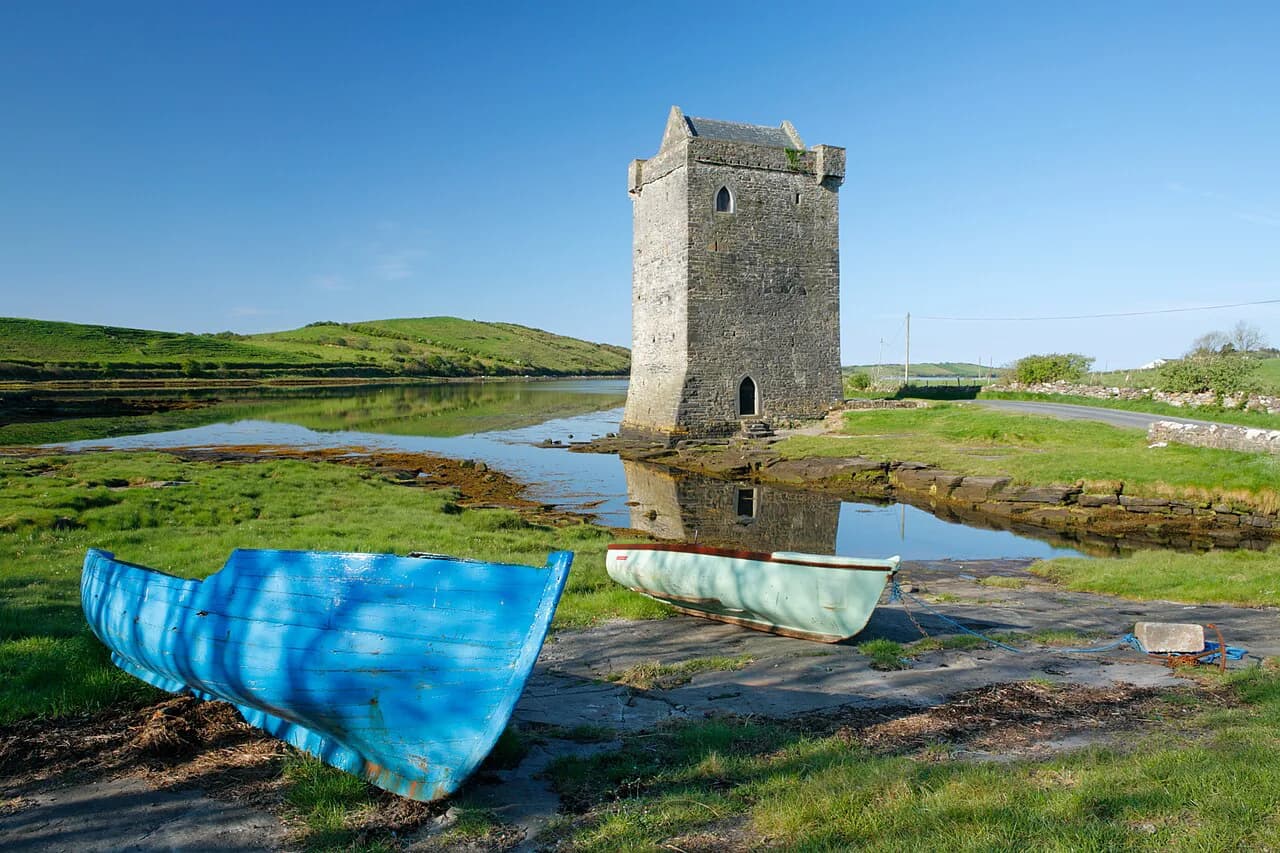
Rockfleet Castle, known in Irish as Carraig a Chabhlaigh, or Rock of the Fleet, is a four-storey tower on an inlet of Clew Bay where, at high tide, the water brushes against the castle walls. Heritage Ireland states plainly that access is not permitted because conservation works are underway, so any plan must treat the tower as a view from outside the restricted area rather than a stop you can walk up to. Do not expect to enter, and do not assume a reopening date until the guardian publishes one.
The tower belonged to the MacWilliam Burkes, but it is best known for its association with the Pirate Queen Grace O'Malley. Legend and history tangle here, and the responsible approach is to treat the colourful stories as tradition rather than settled fact. Even with access barred, the setting on the Clew Bay inlet explains why a sea-going family chose the spot, and the exterior remains legible from a respectful distance.
Grace O'Malley at Rockfleet
The documented chronology is worth knowing when you look at the tower. Grace married her second husband, Richard an Iarainn Burke, in 1566 and moved into the castle a year later; the family left for Lough Mask in 1580, and after her husband died in 1584 she returned to Rockfleet. The same year brought the appointment of Sir Richard Bingham as Governor of Connaught, whose actions cost her a fleet and properties and eventually led to her request for an audience with Queen Elizabeth I, granted in 1593. It is said that Grace O'Malley died at Rockfleet in 1603.
Partial restoration in the 20th century was carried out by Sir Owen O'Malley, described as a direct descendant of Grace, which is a reminder that this monument has had a long afterlife beyond the medieval period. Reading those dates against the closed gate lets you weigh whether a passing look at the exterior is worth your time; if you want interiors and formal presentations, look instead at sites such as Huntington Castle, Clonegal, in County Carlow.
Kildavnet Castle on Achill Sound
Kildavnet Castle, also called Carrickkildavnet and known locally as Granuaile's Tower, is a four-storey 15th-century tower house overlooking Achill Sound. The O'Malley clan built in this position for the views over water and hills, and remnants of a bawn wall, a defensive enclosure, can still be found nearby. Heritage Ireland lists the castle as external viewing only, with internal access not permitted.
The tower was raised before Grace O'Malley's lifetime but was probably built by her ancestors, which makes it a family landmark rather than a personal residence. Tradition holds that she is buried on Clare Island. When you are on the Achill side, look for the bawn remnants and read the tower's proportions against the sound; the building's story is one of coastal defence and lordship, not of furnished rooms.
Clare Island Castle: Gráinne O'Máille's Island Association
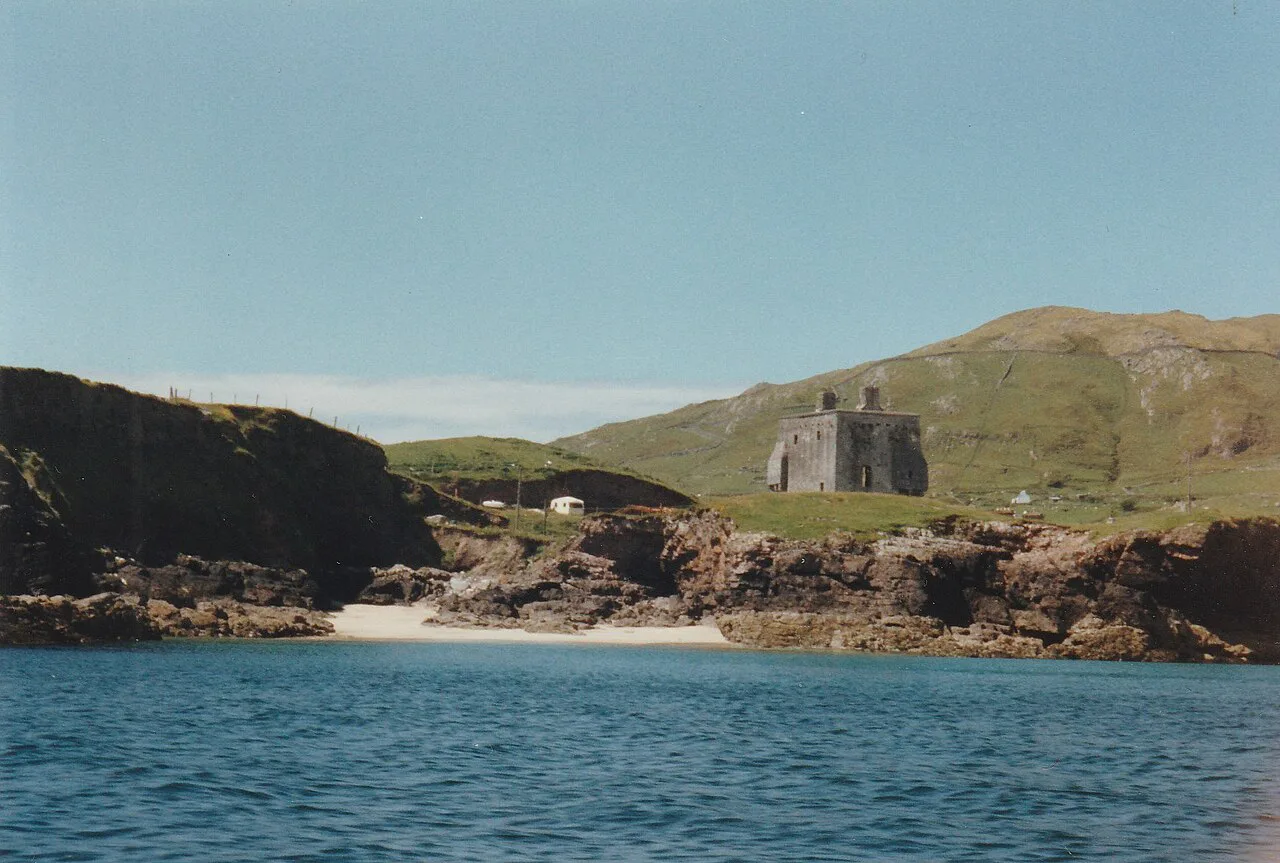
Known locally as Granuaile's Castle, the three-storey tower house on Clare Island is believed to have been built in the 16th century by the O'Malley family, a powerful Gaelic clan in Connaught. It is said that Gráinne O'Máille, the famous Pirate Queen, grew up on the island, and the guardian's history records that she established the castle as her base to launch a career in piracy after her first husband died in 1565. Heritage Ireland allows an external view only, with internal access not permitted.
Two exterior details repay close attention from outside: blocked-up gun loops and a parapet walk along the north and south walls, features that made the tower a defensible base. In the 1820s the castle was converted into a police barracks, a reminder that these buildings were reused long after the medieval period. Reaching the castle means travelling to Clare Island, so confirm ferry arrangements with the operator rather than relying on any fixed timetable.
Castlecarra near Lough Carra: A Different Family Story
Castlecarra takes its name from Lough Carra and follows a lineage unrelated to the O'Malleys. It was built in the 13th century by the de Stauntons, extensively remodelled in the 15th century by the M'Evillys, a branch of that family who held it until 1574, and later passed to the crown before being granted to Captain William Bowen, remaining with his family until the Cromwellian period. Heritage Ireland again permits an external view only, with no internal access.
Between the 1950s and 1960s the OPW carried out conservation works on this three-storey building, which is likely an example of a hall-house, a rare castle type with features similar to a tower house. For a visitor, that classification is the interesting part: the exterior shows a form that differs from the tall tower houses on the coast, and the later state work explains why the structure has survived to be seen at all.
The Grace O'Malley Thread and Where It Stops
Three of these four monuments carry an O'Malley association: Rockfleet, Kildavnet and Clare Island Castle. Keeping that thread straight helps you interpret what you see, but it also warns against overreach, because the Castlecarra record belongs to the de Stauntons, M'Evillys and Bowens and has no Grace O'Malley connection. Where the sources say something is believed or said, treat it as tradition rather than proven fact.
If the legends are what draw you, it is fine to enjoy them as stories attached to real buildings, but do not let them fill gaps the record leaves. For travellers interested in how such reputations attach to ruins more broadly, the collection on haunted castles ireland shows how tradition and place become intertwined, while the guide to castle ruins ireland sets exterior-only monuments in a wider context.
Seeing Them on the Ground: Three Landscapes
Clew Bay, Achill Sound and Lough Carra form three distinct outings rather than one route. A sensible plan pairs Rockfleet's inlet and the Clare Island tower as a Clew Bay day, saves Kildavnet for an Achill Sound drive, and treats Castlecarra as a separate inland stop near Lough Carra. Because none of the sites offers an interior to spend time in, your schedule should be built around views and the surrounding landscape.
Cross-border comparisons are useful if you are assembling a longer castle trip. Neighbouring counties offer documented alternatives, such as the castles in roscommon and the castles in county galway, where Aughnanure Castle appears, while the castles in sligo page covers northerly sites. These do not replace the Mayo stops but help you decide how much exterior viewing your trip can absorb, and if a city stop is on your route, the Museums in Galway City: Two Places Worth Your Time guide offers an indoor counterpart.
Responsible Visiting at Protected Monuments
These buildings are protected under the National Monuments Acts 1930 to 2014, and that legal status is why access rules are set by the guardian rather than by demand. At Rockfleet, respect the conservation works and keep clear of the closed site; at the other three, stay on safe ground outside the walls rather than seeking a way in. Heritage Ireland's caution about unguided sites applies throughout.
Treat these places as monuments first and attractions second. There are no managed facilities, no tours and no interior displays documented here, so carry what you need and never assume shelter or services. If your interests lean toward parkland settings with more organised visiting, Glenveagh National Park and its castle in County Donegal offer a different model for comparison.
Finally, be precise about what you have seen when you talk about the trip. Exteriors, silhouettes and settings are the honest descriptions; claims to have walked the stair or stood on a parapet would be inaccurate at these four sites. That precision also makes for better travel writing and better memories.
Plan Around Access, Not Interiors
Decide first what you want from a County Mayo castle. If it is rooms, stairs and presentations, these four OPW monuments will disappoint; if it is coastal and inland landscapes framed by documented masonry, they reward a detour. The single most important check before travelling is each site's current access notice on Heritage Ireland, which is where any change to the Rockfleet closure or the exterior-only rules would appear.
Build the day around the setting and the record rather than an imagined tour. That means an outdoor stop at Rockfleet, exterior views at Kildavnet and Clare Island Castle, and a separate inland look at Castlecarra, with the Grace O'Malley traditions enjoyed as tradition. Travellers comparing alternatives can browse our castles in ireland collection for other sites around the country.
Explore more Ireland guides
Frequently Asked Questions
Can you go inside any of these County Mayo castles?
No. Rockfleet Castle is closed while conservation works are underway, and Kildavnet Castle, Clare Island Castle and Castlecarra Castle are each listed as external viewing only, with internal access not permitted. Heritage Ireland publishes these restrictions directly on each site page, so check before travelling.
Is Rockfleet Castle open to visitors?
Not at present. The guardian states that access is not permitted because conservation works are underway, and it gives no reopening date. Treat a stop there as a view of the exterior and surrounding Clew Bay ground from outside the restricted area.
Why is Kildavnet Castle called Granuaile's Tower?
The local name reflects the tower's association with Grace O'Malley, known as Gráinne O'Máille or the Pirate Queen. The castle was built before her lifetime but was probably raised by her ancestors, so the connection is one of family and later tradition rather than personal construction.
Which Mayo castle is linked to Grace O'Malley's second marriage?
Rockfleet Castle. Grace married Richard an Iarainn Burke in 1566 and moved into the castle a year later; after a period at Lough Mask she returned following his death in 1584. The guardian's site history records these movements alongside her later dealings with the crown.
What is a hall-house and why is Castlecarra described as one?
Heritage Ireland describes Castlecarra as likely an example of a hall-house, a rare castle type whose architectural features resemble those of a tower house. The classification matters because it sets the Lough Carra building apart from the tall tower houses on the Mayo coast.
Are these castles guided or unguided?
All four are unguided National Monuments, and the guardian carries a general warning that such sites require care and caution. There are no documented tours, visitor centres or facilities, so you view them independently and at your own risk.
Which of the four castles has no Grace O'Malley connection in the sources?
Castlecarra. Its recorded story belongs to the de Stauntons, then the M'Evillys until 1574, and later the crown grant to Captain William Bowen. Extending the O'Malley legends to Castlecarra would go beyond what the guardian's history supports.
Sources
You might also like



Continue reading
More guides you'll find useful





