
Castle Ruins in Ireland: Five Ancient East Sites
Castle ruins in Ireland differ by access, not just architecture. Compare five Ancient East sites, from a guided keep to a farm-gate ruin.
On this page
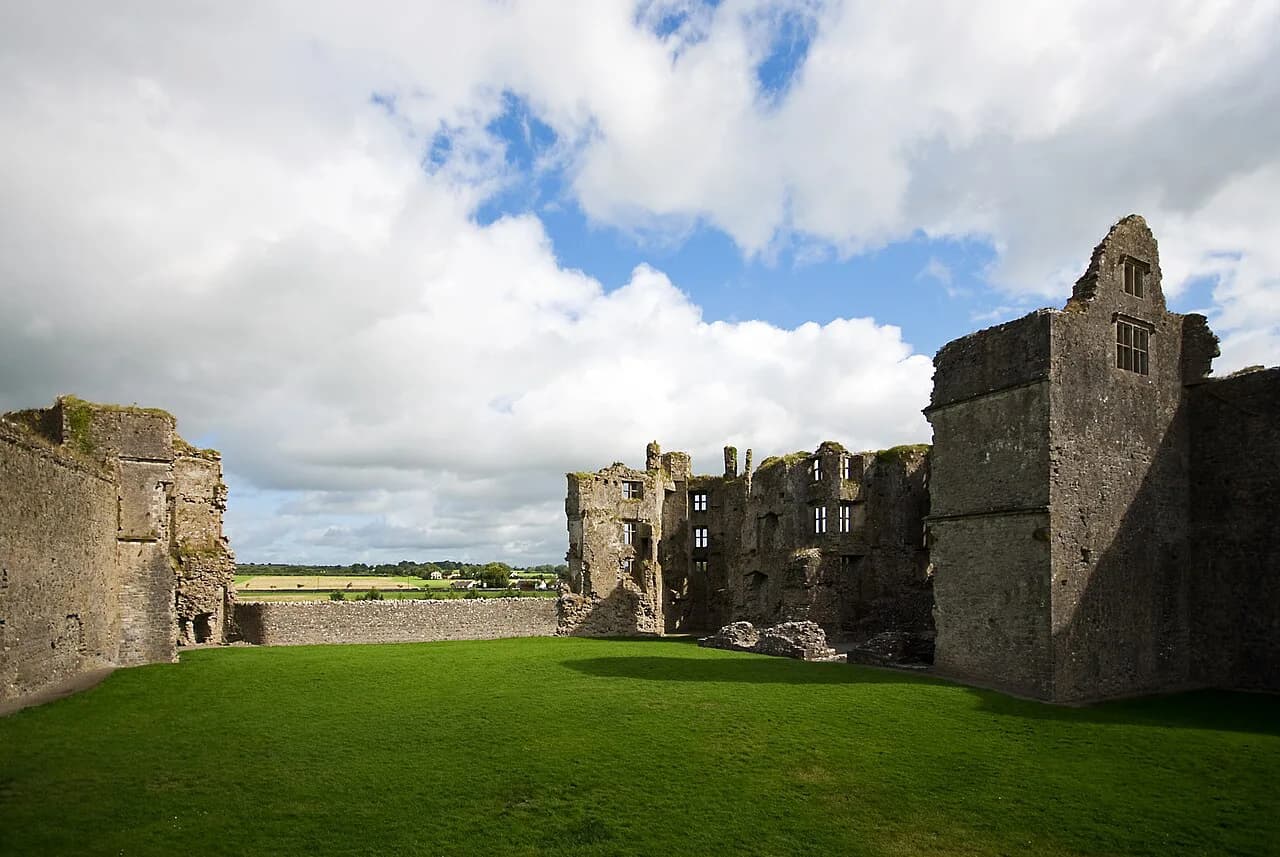
The most useful question about castle ruins in Ireland is not how big they are but how you actually reach them. A staffed keep with walkways, a town castle entered only on a guided tour, a roofless tower on private farmland and a tower house you can only look at from outside are four completely different visits.
The five examples below are selected sites across Ireland's Ancient East, in Counties Meath, Louth, Kilkenny and Wexford. They are not a complete inventory or a ranking; they are a set chosen to show how access, terrain and staffing shape a visit. Use them to calibrate expectations before adding further castles through our wider guide to castles in Ireland, which covers many more options in the same care categories.
Why Access Type Should Shape Your Shortlist
Ruined castles in Ireland fall into recognisable visitor categories: staffed monuments with interpretation, places entered only with a guide, unguided grounds, exterior-only monuments, and ruins reached across working farmland. The category determines how long you need, what you can see and whether a stop is reliable on a tight schedule.
State care through the Office of Public Works brings published notices and restrictions, while Carlingford has a locally operated visitor service. Check the operator information for each site. For another heritage guide, see Huntington Castle, Clonegal.
Trim Castle, County Meath: The Monumental Keep
Heritage Ireland identifies Trim Castle as the largest Anglo-Norman fortification in Ireland. Hugh de Lacy and his successors took roughly 30 years to build it, and the centrepiece is a three-storey, 20-sided cruciform keep protected by a ditch, curtain wall and water-filled moat.
The King John's Castle nickname persists, but the published account notes that John preferred to stay in a tent on the far side of the river when he came to Trim. Richard II visited in 1399 and left Prince Hal, later Henry V, as a prisoner in the castle.
Trim in Practice: What You Can Reach
Modern walkways let you look down into the interior of the keep, which is the best way to grasp the thickness of its walls. Interpretation panels in the grounds support a self-guided visit, but keep stairs are very steep and narrow, the keep is not accessible for visitors with disabilities, and grounds access is restricted.
This is a heavily visited site, and in summer entry cannot be guaranteed, so arriving early is the practical hedge. Assistance dogs only, no climbing and no picnics onsite are the published rules, and seasonal opening times apply through the year.
A works closure runs from 1 November 2026 to 1 April 2027, which rules out a winter visit in that window without any forecast about what follows. Trim's compact medieval street fabric makes the town itself worth an hour on foot around the castle.
Carlingford Castle, County Louth: A Tour-Only Town Castle
Carlingford Castle dominates the town and overlooks the lough harbour beneath Slieve Foy, a mountain that legend links to the sleeping giant Finn MacCumhaill. It was built around 1190, most likely by the Norman baron Hugh de Lacy; King John seized de Lacy property in 1210 and reputedly stayed in the castle, which is still known as King John's Castle.
Later conflict left its mark: Jacobite forces fired on the castle in 1689, and William of Orange is said to have accommodated wounded soldiers there after the Battle of the Boyne. Those episodes sit alongside the medieval fabric rather than replacing it.
Carlingford in Practice: Tours, Tickets and Cards
Access is by guided tour only, run by Carlingford Lough Heritage Trust. Castle tours leave at 2pm seven days a week from April to October, with adult admission at €8.50, child at €4.00 and a family ticket for four at €20; groups are advised to book ahead by phone or email.
Tickets can also be bought near the site at the Visit Carlingford Tourist Office in Station House, and additional tours may be arranged by contacting the trust. OPW Heritage Cards are not accepted here because the visitor service is not OPW managed, a distinction that trips up holders of the card.
Castle Roche, County Louth: A Fortress on the Old Frontier
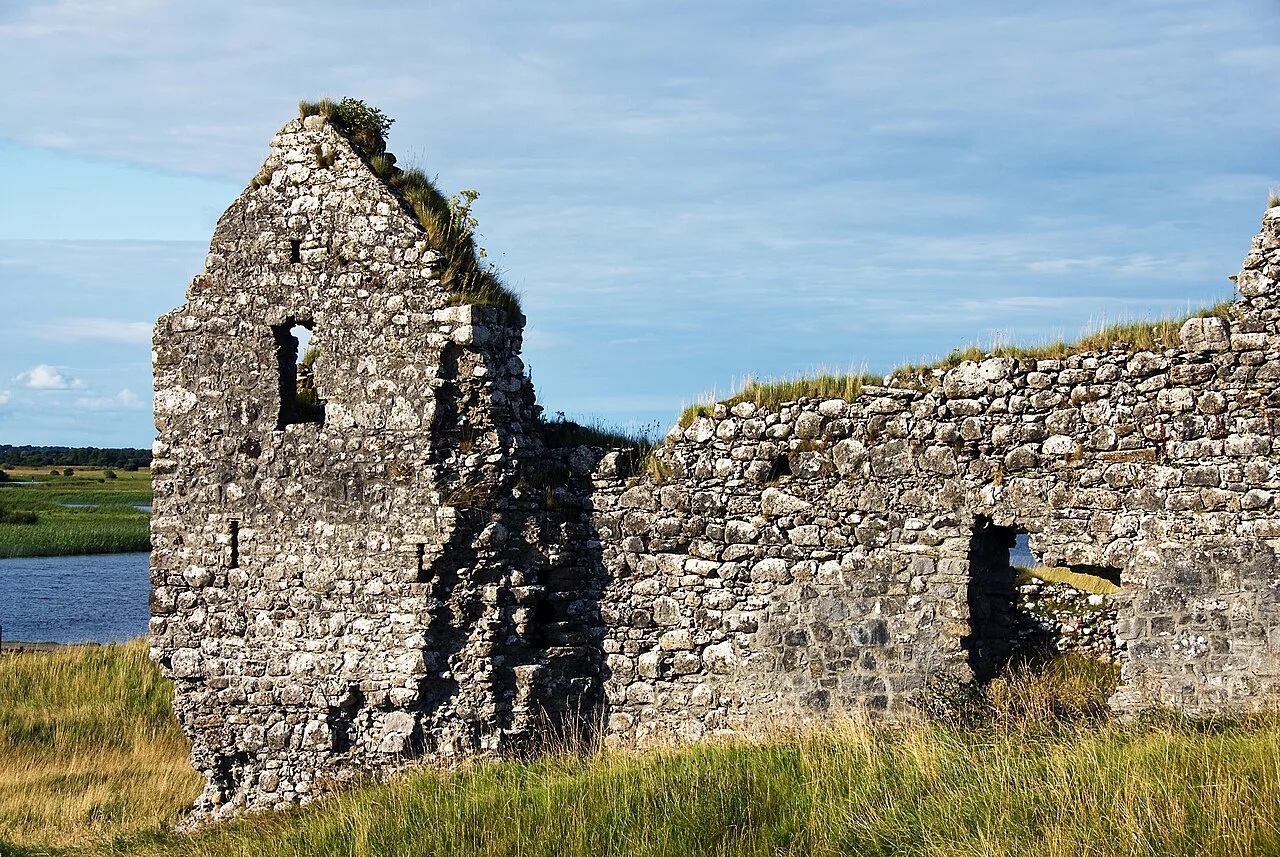
Tourism Ireland dates Castle Roche to 1236 and places it at the boundary between Gaelic Ulster and the Anglo-Norman Pale. Surviving features include stretches of wall, remnants of the great hall and a twin-towered gatehouse.
The castle is attributed to Lady Rohesia de Verdun, who settled here after her husband's death. The story of the murder window, in which a new husband is pushed to his death, and the ghost said to haunt the ruins, are tradition rather than documented history, so treat them as legend attached to a real building.
Castle Roche Terrain: Farmland Access and Steep Ground
The approach to this rugged ruin needs care. There is no car park, so parking is on the roadside, and entry is through farm gates on private farmland that must be kept clear of cars and closed after use.
The ground is rough and rocky with steep drops on several sides, so sturdy footwear and a cautious pace matter more than a long stay. Tourism Ireland dates the ruining of the castle to 1641.
Burnchurch Castle and Turret, County Kilkenny: Reading a Tower House from Outside
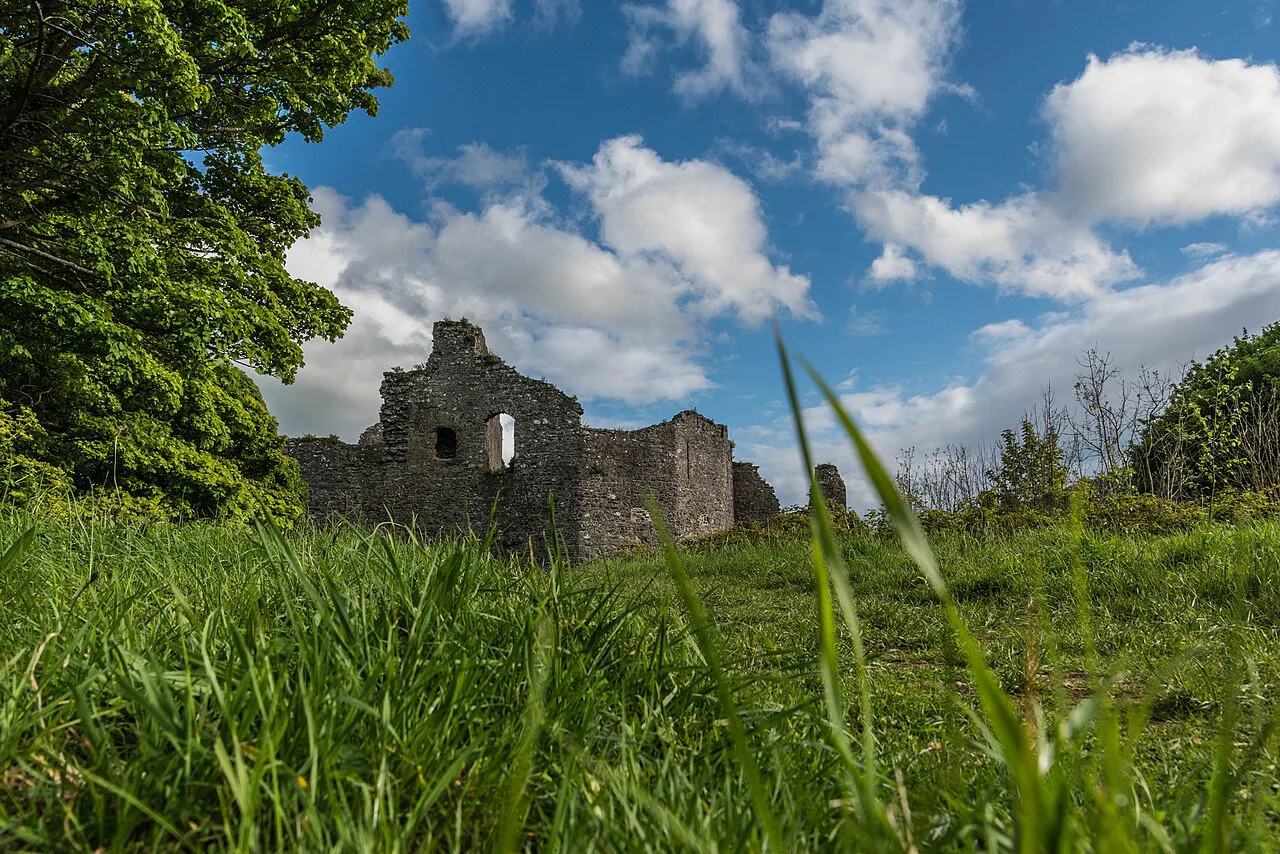
Burnchurch Castle is a state-owned National Monument in the care of the Office of Public Works. It was built in the 15th or 16th century by the Fitzgerald family, also known as Barron or Baron, and was continuously occupied until the early 19th century, standing 6.4 miles south-west of Kilkenny city.
The name comes from a burning rather than a church: Kiltranyn was burned in 1316 during Robert the Bruce's march through Kilkenny, and the place became known as Burnchurch, from the Irish for incinerated church. The settlement was originally called Cill Dalláin after a 6th-century foundation by Saint Dallán.
Burnchurch in Practice: External Viewing Only
Internal access is not permitted; the monument is for external viewing only. It is unguided and the OPW asks visitors to take care throughout, so plan to read the building from the ground rather than to explore its chambers.
From outside you can pick out six storeys, a murder hole above the north-facing doorway and upward-tapering arrow slits set at every floor. The 41-foot circular turret stands directly north of the castle, a fragment of a defensive scheme whose bawn wall no longer survives.
Henry Flood, the 18th-century patriot, statesman and orator of Farmley, is buried in the adjoining graveyard, and St Dallán's Holy Well lies in the townland. Neither is a substitute for entering the tower, so treat the stop as a short architectural reading rather than a full castle visit, and keep it paired with a longer Kilkenny stop.
Ferns Castle, County Wexford: A Closed Site to Plan Around
Ferns Castle is closed until 2027, so it belongs on a future plan rather than a current itinerary. When it does open, access is by guided tour only, and admission is described as free.
Before the Normans, Ferns was the political base of Diarmait Mac Murchada, king of Leinster, and William, Earl Marshal, built the castle around 1200. Only half of the original square now stands, but the most complete tower holds a circular chapel, original fireplaces and a vaulted basement, with a view from the top.
The visitor centre holds the Ferns Tapestry, a 15-metre work in 25 panels stitched by local people using crewel wool embroidery to tell the town's pre-Norman history. Both the tower and the tapestry are reasons to check the site's status closer to your trip instead of assuming a reopening date.
Matching Expectations to Site Type
Set the five sites side by side and the sorting logic becomes obvious. Trim offers a staffed monument with self-guiding interpretation and a physically demanding keep; Carlingford offers a guided tour with a fixed daily departure and a ticket price; Castle Roche demands a farmland approach with no facilities; Burnchurch is a roadside read of a tower house; Ferns is a plan for later. Carlingford's King John's Castle also has a city counterpart worth comparing in our Limerick heritage guide.
If you want to look down over the keep interior from the modern walkways, go to Trim, keeping in mind that the stairs are steep and the keep is not accessible for visitors with disabilities. If you want a town setting with a guide, Carlingford delivers it in season. If you want solitude and genuine risk of rough ground, Castle Roche is the fit, and Burnchurch suits anyone content with an exterior.
For further reading, see our guide to castles in carlow, which sits close to Burnchurch if you are extending a south-eastern drive. Check the individual site information before planning an additional stop.
Legend Versus Record at These Ruins
Two of these sites carry strong stories that are easy to repeat as fact. The Castle Roche murder window belongs to tradition, and the Finn MacCumhaill association with Slieve Foy is explicitly a legend in the published account of Carlingford. Label them as stories when you pass them on.
Documented history at the same sites is vivid enough without embellishment: the 1210 seizure of de Lacy property, the 1316 burning behind the name Burnchurch, the 1641 ruining of Castle Roche and Richard II's 1399 visit to Trim. If ghost stories are what draw you, the traditions collected in our haunted castles ireland guide show how such tales attach to real buildings.
Practical Notes Before You Go
Trim and Carlingford both require checking current arrangements, since seasonal times and tour operation change through the year and Trim has a published works closure. One check a few days before travel covers both; there is no need to monitor them repeatedly.
At Castle Roche, close every farm gate behind you and keep the gateway clear, because the crossing is across working land, not a public facility. At Burnchurch, stay outside the walls and keep to the exterior, as internal access is not allowed.
Combine sites sensibly rather than racing between counties. Trim and Carlingford sit in neighbouring counties and pair naturally in a northern loop, while Burnchurch works as a short detour from Kilkenny city. Ferns stays off the route until the site reopens.
Plan Around Access, Not Reputation
Choose castle ruins in Ireland by the experience you can actually have on the day. A guided keep, a tour-only town castle, a farmland ruin, an exterior-only tower house and a closed site call for different time, footwear and expectations.
Confirm current arrangements with the operator before travelling, especially at Trim and Carlingford, and treat Castle Roche as a careful countryside stop rather than a visitor attraction. Then the ruins themselves, not the logistics, become the memory.
For another heritage guide, read about Castles In Sligo. For another heritage guide, read about Castles In Wexford.
Explore more Ireland guides
Frequently Asked Questions
Can you go inside the castle ruins in Ireland?
It depends on the site. Trim Castle lets you onto walkways over the keep interior and around the grounds, though the keep itself is not accessible for visitors with disabilities. Burnchurch Castle permits external viewing only. Castle Roche is reached through farm gates on private farmland. Each ruin has its own rules, so check the operator's page rather than assuming interior access.
Which castle ruins in Ireland need a guided tour?
Carlingford Castle is tour-only, with tours run by Carlingford Lough Heritage Trust at 2pm daily from April to October, and groups are advised to book ahead. Ferns Castle is also guided-tour only when open, but it is currently closed until 2027. Trim Castle offers guided tours as a facility but allows self-guiding of the grounds.
Is Trim Castle closed in 2026 and 2027?
Trim Castle closes for works from 1 November 2026 to 1 April 2027 according to the Heritage Ireland notice. Outside that window, seasonal opening times apply, and the site warns that access cannot be guaranteed in busy summer months. Check the official page before setting out.
What is the difference between Castle Roche and Burnchurch Castle for visitors?
Castle Roche is a rugged ruin reached through farm gates on private farmland, with no car park and rough ground with steep drops. Burnchurch is a state-owned National Monument in OPW care that you view from outside only, with no internal access. One demands a countryside walk, the other a roadside stop.
Why are OPW Heritage Cards not accepted at Carlingford Castle?
Because the visitor service is not OPW managed; it is run by Carlingford Lough Heritage Trust. Card arrangements at state-run sites do not carry across to locally operated ones, so check the operator's terms and ticket options before relying on a card.
Is Ferns Castle open to visitors?
No. Ferns Castle is closed until 2027 according to Heritage Ireland. When it reopens, access is by guided tour only and admission is described as free, with the circular chapel, fireplaces, vaulted basement and the Ferns Tapestry as the main draws. Confirm the status closer to your travel date.
Do you need to book ahead for these castle ruins?
Groups are advised to book Carlingford Castle in advance by phone or email, and additional tours there may be arranged on request. Trim warns that summer access cannot be guaranteed, so early arrival helps. Castle Roche and Burnchurch need no booking but require care on the ground.
Are the murder window and giant legends historically accurate?
No. The Castle Roche murder-window story and ghost are tradition attached to a real 1236 building, and the Finn MacCumhaill link to Slieve Foy is described as legend. The documented events include King John's 1210 seizure, the 1316 burning at Kiltranyn and the 1641 ruining of Castle Roche.
Sources
You might also like



Continue reading
More guides you'll find useful





