
Castles in Roscommon: Roscommon Castle and Other Castle Sites
Roscommon Castle is the practical anchor for a castle day in the county. See its history, the tower's closed status, park access and how other sites differ.
On this page
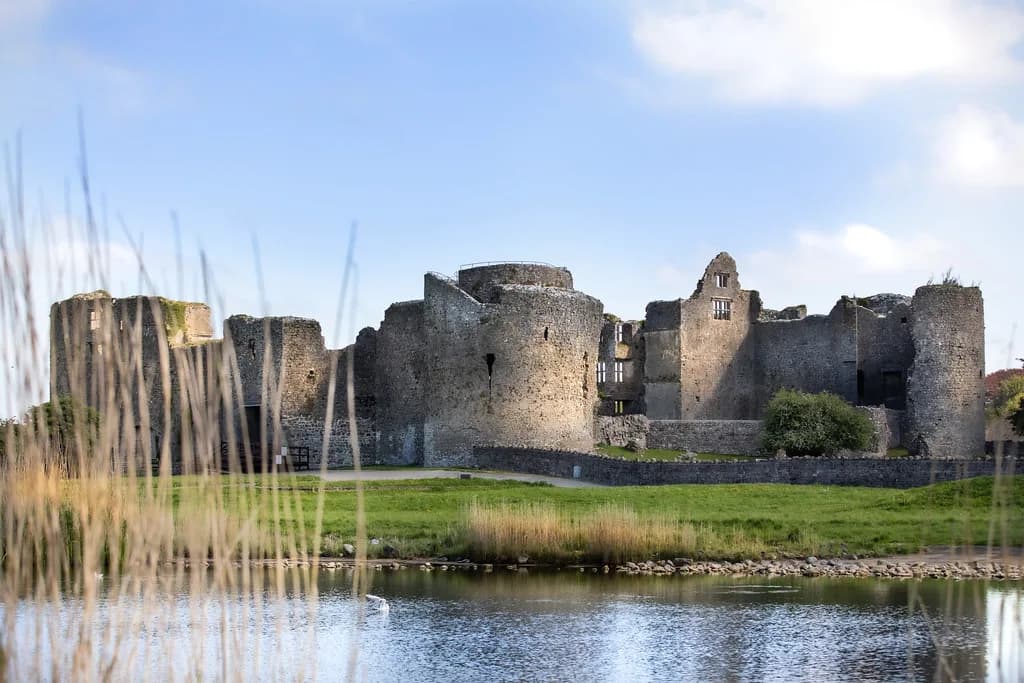
Roscommon Castle is the place to start if you want to see a castle in Roscommon, and most of what you experience is the ruin itself rather than a furnished interior. The castle stands just outside Roscommon town and the surrounding park gives you room to circle the walls. Across Ireland these monuments vary enormously in status, so it helps to understand the wider picture of castles in ireland before committing to a county route. For the urban side of that picture, Dublin History: A Chronological Guide to the City's Key Sites shows how the capital's sites fit the same timeline.
Plan around one deliberate constraint first: the South West Tower is a separate section managed by Heritage Ireland, and its page carries a Site Closed notice as of 23 October 2026. The tower's dated season ran from 30 May to 13 September 2026 on Saturdays and Sundays only, and that period has passed. The castle ruins and surrounding park are not listed as closed by the operator.
What survives and why it matters
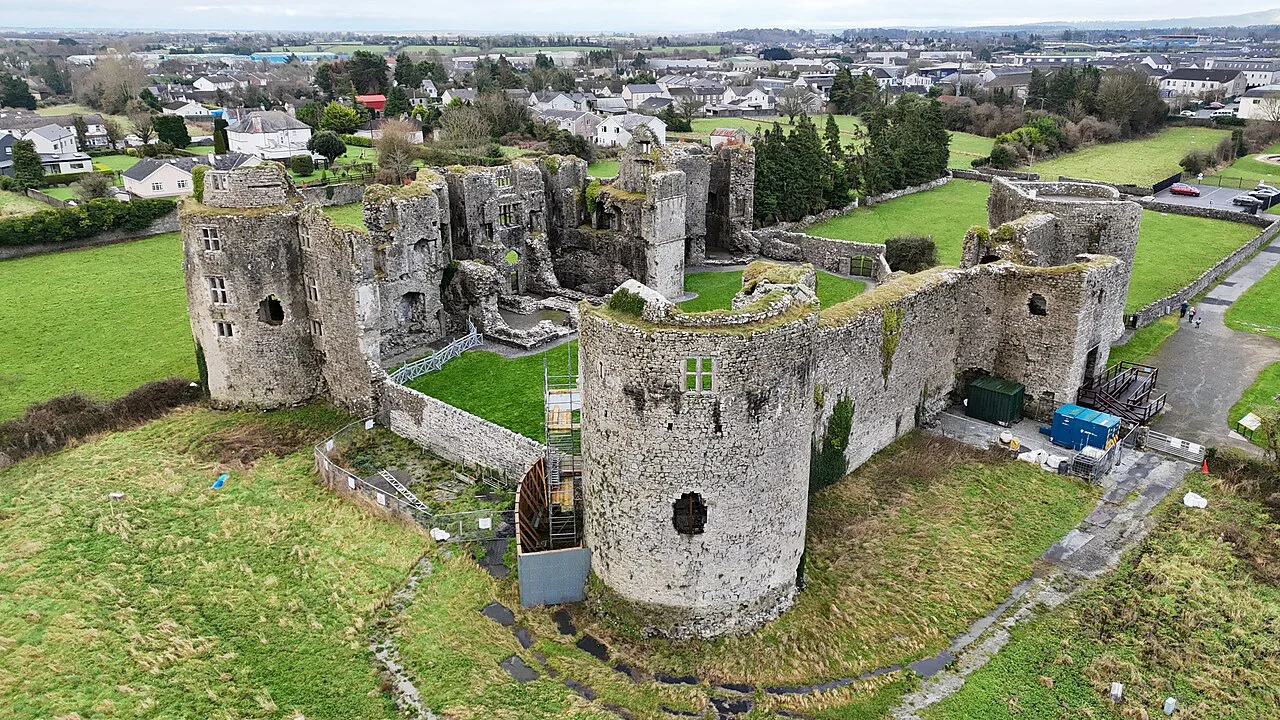
The castle is a substantial ruin with a gatehouse, corner towers and curtain walls, and the reason to look closely is the way different phases sit on top of one another. Roscommon Castle was a royal castle of the Anglo-Norman administration in Connacht, which is why its setting matters as much as its masonry. Heritage Ireland explains the siting as a deliberate statement: the Anglo-Normans put it beside the ancestral heartland of the Ó Conchobair kings, on Loch na nÉan, near a crannóg associated with the O'Conor power base.
The lake name is translated as the lake of the birds, and the area is also associated with myth and legend, including a tradition that Fergus Mac Róich of the Ulster epic was buried on its shore. Treat those stories as traditions carried in the landscape rather than history you can verify from the stones. What you can see on site is the long decay of a fortress that was remodelled, besieged and eventually abandoned.
From 1269 to 1340: construction, attacks and the O'Conor takeover
According to The Irish Aesthete, work on the castle began in 1269 under the Anglo-Norman knight Roger de Ufford, a chief governor of Ireland for Henry III. That dating and attribution come from the blog rather than the operator's page. The same account says attacks led by Aedh O'Conor caused repeated setbacks and that most of the castle went up after 1274.
Heritage Ireland records that the castle was completed and then taken into O'Conor hands in 1340, with the family holding it for nearly two hundred years. The blog places the takeover by the mid-fourteenth century, so the two accounts agree on the sequence even if the date sits differently. Walk the walls with that timeline in mind, because the castle you are looking at was never a single unchanging building.
Malby's Tudor remodelling: what you can still see
In 1569 the castle was surrendered to the English, and Heritage Ireland says it was granted to Sir Nicholas Malby in 1578, who spent heavily to modernise it for a member of the Tudor elite. The Irish Aesthete dates that grant to 1577, so the year depends on which source you follow. What survives of Malby's work is most visible in the larger rectangular windows, which Heritage Ireland locates in the north-east of the castle.
Malby's castle was more than stone: Heritage Ireland records a walled garden, fishponds and a grand tree-lined avenue leading to Roscommon town. The blog is clear that none of those features survive today, which is why the site reads as a ruin rather than a garden. Knowing what is gone helps you avoid looking for a parterre that isn't there, and it explains why the perimeter feels larger than the standing walls.
Sieges, decay and the ruin you see
Heritage Ireland records that the castle was besieged by Hugh O'Donnell during the Nine Years War in 1596 and attacked again in 1599. It was also attacked in the Confederate Wars of the 1640s, seized by Cromwell's forces in 1652 and badly damaged by fire in 1690, after which it was left to decay. Those events explain the broken line of the walls and the sense of a site that was fought over rather than quietly abandoned.
By the nineteenth century the ruin had already become a picturesque subject. The Irish Aesthete notes that Isaac Weld's 1832 survey of County Roscommon described how the towers line up on the eastern side and how evening light through the openings changes the effect. The eastern side is where the silhouette reads most clearly.
The park setting and the visit on foot
The castle sits within Loughnaneane Park, and Heritage Ireland's page for the castle lists a car park, dogs allowed, a playground and walking trails among the facilities. Those listings accompany the tower page rather than a separate park page, so treat them as the operator's general site information. The park itself is an outdoor setting, so a visit means walking the exterior and grounds rather than touring rooms.
If you are comparing ruined sites across the country, the wider collection of castle ruins ireland offers context for how these fragments are presented elsewhere. Here, the honest trade-off is that there is no interior to explore, so the reward comes from reading the walls and the landscape together. Allow time to circle the outside at least twice, once for the shape and once for the detail.
Access, restrictions and what to confirm
Heritage Ireland lists a car park, dogs allowed, a playground and walking trails as facilities. The restrictions are worth reading before you go: challenging and limited access, no climbing, and children must be accompanied by an adult at all times. Partial accessibility is offered for people with limited mobility, which should not be read as full access across the site.
The tower's published 2026 season was Saturdays and Sundays only, from 10:00 to 17:00, between 30 May and 13 September, and the closure notice now stands in its place. That dated window tells you how the tower has been managed, not that it will open on the same pattern again. Check the Heritage Ireland page before travelling if the tower is central to your plan, and do not assume the surrounding ruins and park are closed just because the tower is.
Getting there and time allowance
By road, Heritage Ireland's directions are straightforward: from the square in Roscommon town head north, take the exit for Castle Street, then turn left down Castle Lane, where parking is available and the castle is a short walk away. By rail, the station is just over twenty minutes on foot from the castle and is served by the Dublin Heuston to Westport and Ballina service at least three times daily in each direction. Rail schedules change, so confirm the service for your date.
For the tower, Heritage Ireland suggests planning about an hour and a half, which is a realistic allowance if you read the site interpretation and walk the park as well. If the tower is shut, the outer visit compresses naturally, and you can spend the saved time on the town or on another site. Pair the castle with something else in the county rather than treating it as a full day.
Other castle sites in the county and how they differ
Ballintober is a fourteenth-century O'Conor ruin known as the Castle of the Four Towers, and a community guide describes the remains as standing on private land with views from nearby paths. Treat those details as indicative rather than official: you should not plan to wander inside the walls, and parking may be limited to roadside or village space. Approach it as a deliberate look from the outside rather than a full visit.
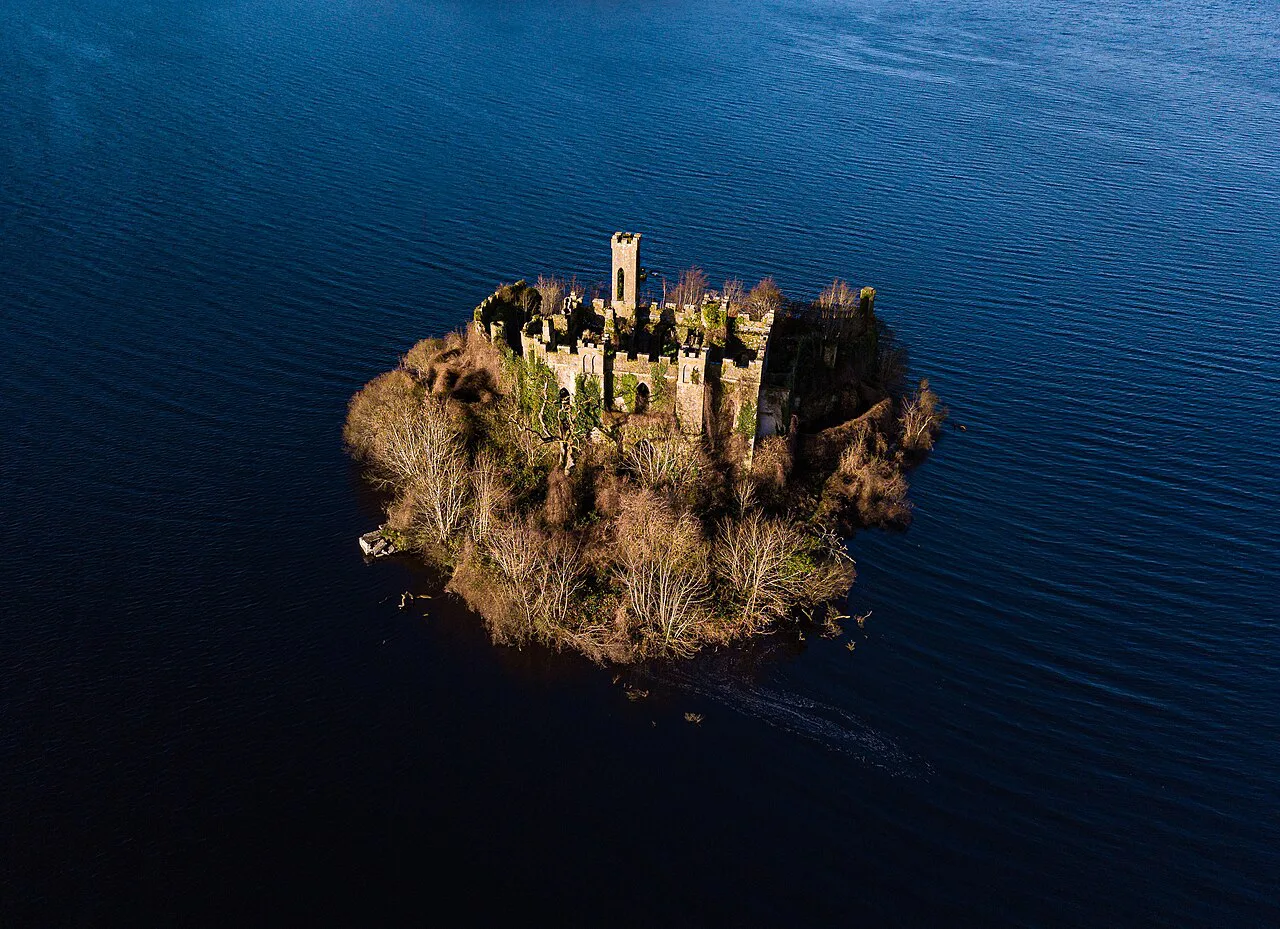
Lough Key holds McDermott's Castle on Castle Island, an evocative ruin you view across the water; the same guide notes there is no formal public access to the island and that it is seen from the shore. Kilronan Castle is a different proposition entirely, identified as an eighteenth-century neo-Gothic hotel and spa rather than a monument you visit on a heritage ticket. Donamon Castle is described as a retreat centre with limited access through retreats or appointments, so do not turn up expecting a tour.
For contrast with ruins, a maintained historic house such as Huntington Castle offers a different kind of visit, though you should confirm its opening arrangements independently because they are not covered here. Farther afield, castles in county galway and castles in sligo widen the choice if you are building a route rather than a single stop. The main decision in Roscommon is whether you want ruins you can walk around freely or a site whose interior must be booked or joined.
Plan Your Visit
Start with Roscommon Castle and its park, then decide whether the tower's status affects your day before you travel. Add one secondary site only if its access suits you: Ballintober as a roadside look, Lough Key as a view from the shore, or Donamon by prior arrangement.
Explore more Ireland guides
Frequently Asked Questions
Is Roscommon Castle open to visitors?
The ruined castle and its park setting are the practical core of a visit; Heritage Ireland does not list the ruins or park as closed. The South West Tower is a separately managed section that currently carries a Site Closed notice. The tower's published season was dated to 30 May–13 September 2026, weekends only, and that window has passed. Confirm the tower's status on the Heritage Ireland page before travelling.
Can you go inside the South West Tower?
Not while the closure notice stands. When it operated, the tower's season was limited to Saturdays and Sundays between 30 May and 13 September 2026, from 10:00 to 17:00. Even when open, Heritage Ireland lists challenging and limited access, partial accessibility for people with limited mobility, and no climbing.
Is there an admission fee at Roscommon Castle?
Heritage Ireland lists the tower's admission as free. That listing covers the tower and should not be extended automatically to other castle sites in the county. Check the operator's page for the most current position before you plan around it.
How long should you allow at Roscommon Castle?
Heritage Ireland recommends about an hour and a half for the tower. If the tower is closed, the exterior and park take less time and can be combined with Roscommon town. Walking the outside more than once rewards you because the eastern side reads most clearly.
Can you get to Roscommon Castle by train?
Roscommon railway station is just over twenty minutes' walk from the castle. The Dublin Heuston to Westport and Ballina service stops there at least three times daily in each direction, according to Heritage Ireland. Rail schedules change, so verify the service for your date rather than relying on that summary.
What happened to Malby's gardens at Roscommon Castle?
Heritage Ireland records that Malby added a walled garden, fishponds and a tree-lined avenue leading to the town. The Irish Aesthete states that none of those features survive today. Look instead for the large rectangular windows visible in the north-east, which are the clearest surviving evidence of his remodelling.
Which other castles in Roscommon can you actually visit?
The others differ sharply in status. Ballintober stands on private land and is viewed from nearby paths, McDermott's Castle on Castle Island in Lough Key has no formal public access and is seen from the shore, Kilronan is a working hotel and spa, and Donamon operates as a retreat centre with limited access by arrangement.
Sources
You might also like



Continue reading
More guides you'll find useful




