
Castles in Sligo: Ballymote and Ballinafad Explored
Ballymote's twin-tower gatehouse and Ballinafad's four-towered Curlew Pass fort are County Sligo's two documented state-owned castles. Here's what survives.
On this page
Two castles in County Sligo are documented here as state-owned National Monuments in the care of the Office of Public Works: Ballymote Castle, with its Anglo-Norman gatehouse and very thick curtain walls, and Ballinafad Castle, a late 16th-century fortification built to hold a mountain pass. This is a close look at those two places rather than a complete inventory of every castle in the county. Expect stone, earth and open ground rather than ticket desks.
Ballymote Castle: A Near-Square Plan West of Town
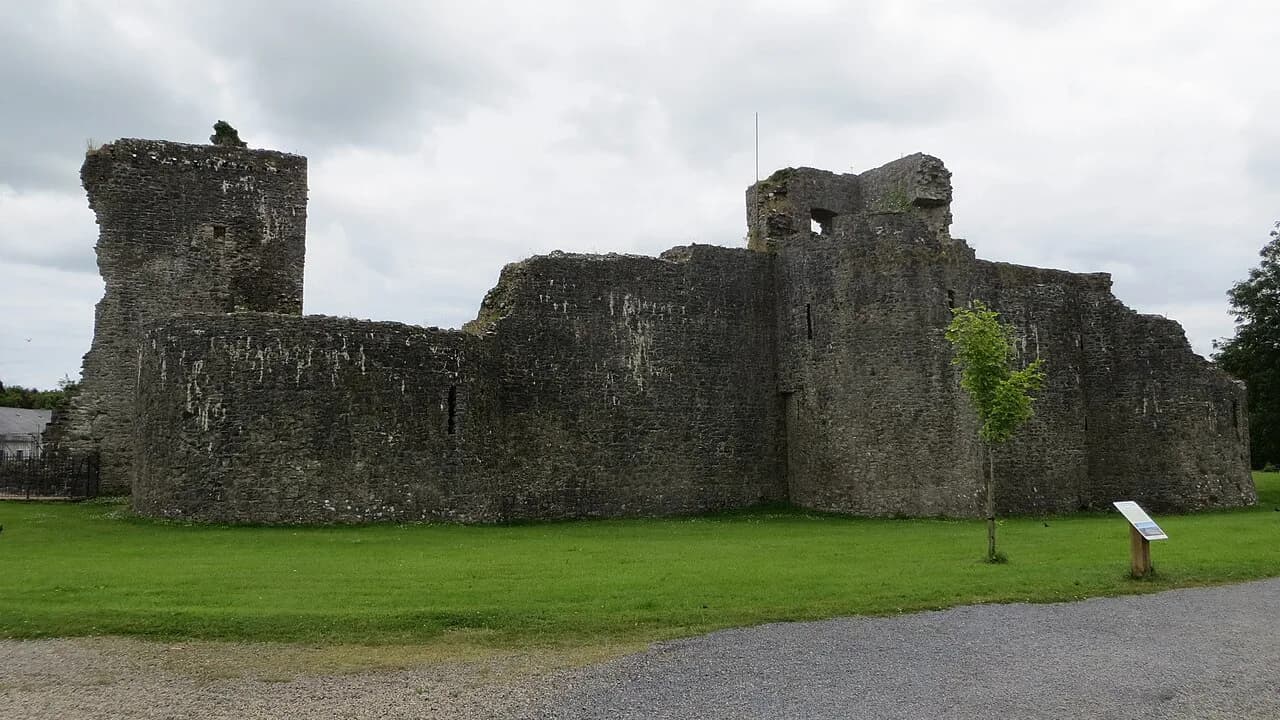
Heritage Ireland places Ballymote Castle just to the west of Ballymote town, so the approach is short from the settlement rather than a remote drive. The plan reads as almost square, with the entrance set in the middle of the north wall and flanked by twin towers of three storeys each. That pairing of gatehouse and near-square enclosure gives the ruin its distinctive profile and is the first thing to look for on arrival.
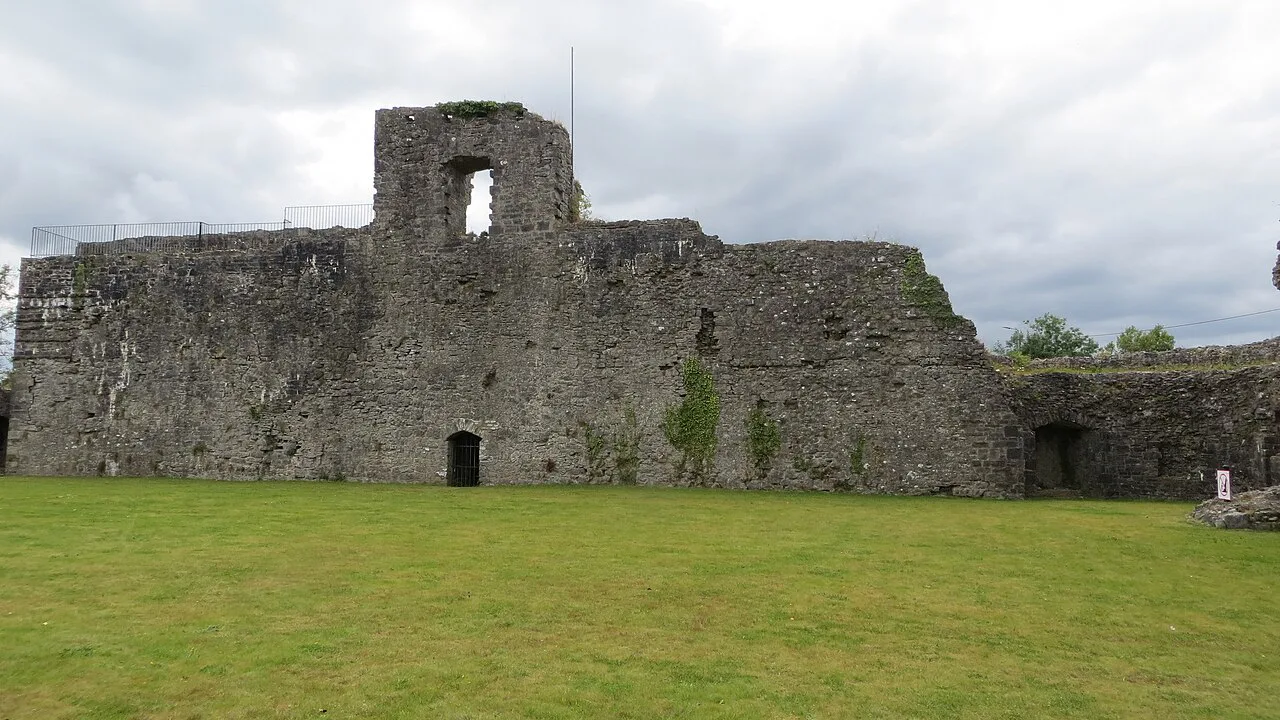
The curtain wall carries a tower at each corner, plus a D-shaped tower midway along the east and west walls. Those mid-wall towers are worth tracing on the ground because they show how the perimeter was strengthened beyond the corners alone. The walls themselves are given as three metres thick, a solidity that explains why so much masonry still stands.
Smaller details reward a careful circuit: the entrance or gatehouse retains the remains of a portcullis slot, and fireplaces survive at ground level in all six towers. Water spouts on the south-facing gatehouse were positioned to carry run-off into the enclosed keep area. Look for these features rather than testing the masonry, since the site is an unguided ruin.
The Documented History of Ballymote
Heritage Ireland reports that the Annals of the Four Masters attribute the building to Richard de Burgo, the Red Earl of Ulster, in 1300. That attribution should be read as the annals' statement rather than a modern excavation result. What follows on the official page is a recorded sequence of capture and possession, beginning with the O'Connors taking the castle in 1317.
The MacDiarmadas became owners in 1347 and the McDonoughs held possession in 1381, after which the castle returned to the O'Connors. Richard Bingham, Governor of Connacht, took it in 1584, and it was sacked in 1588. Heritage Ireland notes a reputed sale to Red Hugh O'Donnell in 1598 before his march to Kinsale.
By 1690 Lord Granard held Ballymote and left it to ruin, which is the point from which the standing fragment should be read. Keeping that arc in mind turns a scatter of walls into a legible sequence: gatehouse, curtain, towers, then long decay.
The Book of Ballymote: Association, Not Display
Heritage Ireland states that the Book of Ballymote was partially written in the castle around 1391, and names Lebor Gabála, Lebor na gCeart, Ogham writing, Dinshenchas and the Destruction of Troy among its contents. The manuscript is now held in the Royal Irish Academy. Nothing in that record suggests any part of it can be seen at the ruin, so treat the castle visit as a visit to the place of writing, not to the book.
Ballinafad Castle and the Curlew Pass
Ballinafad Castle was built in 1590 by Sir Richard Bingham to protect the route through the Curlew Mountains known as the Curlew Pass. That purpose explains the site's other name, the Castle of the Curlews. Approaching it with the pass in mind makes the siting the story: this was a guard on a route, not a residential showpiece.
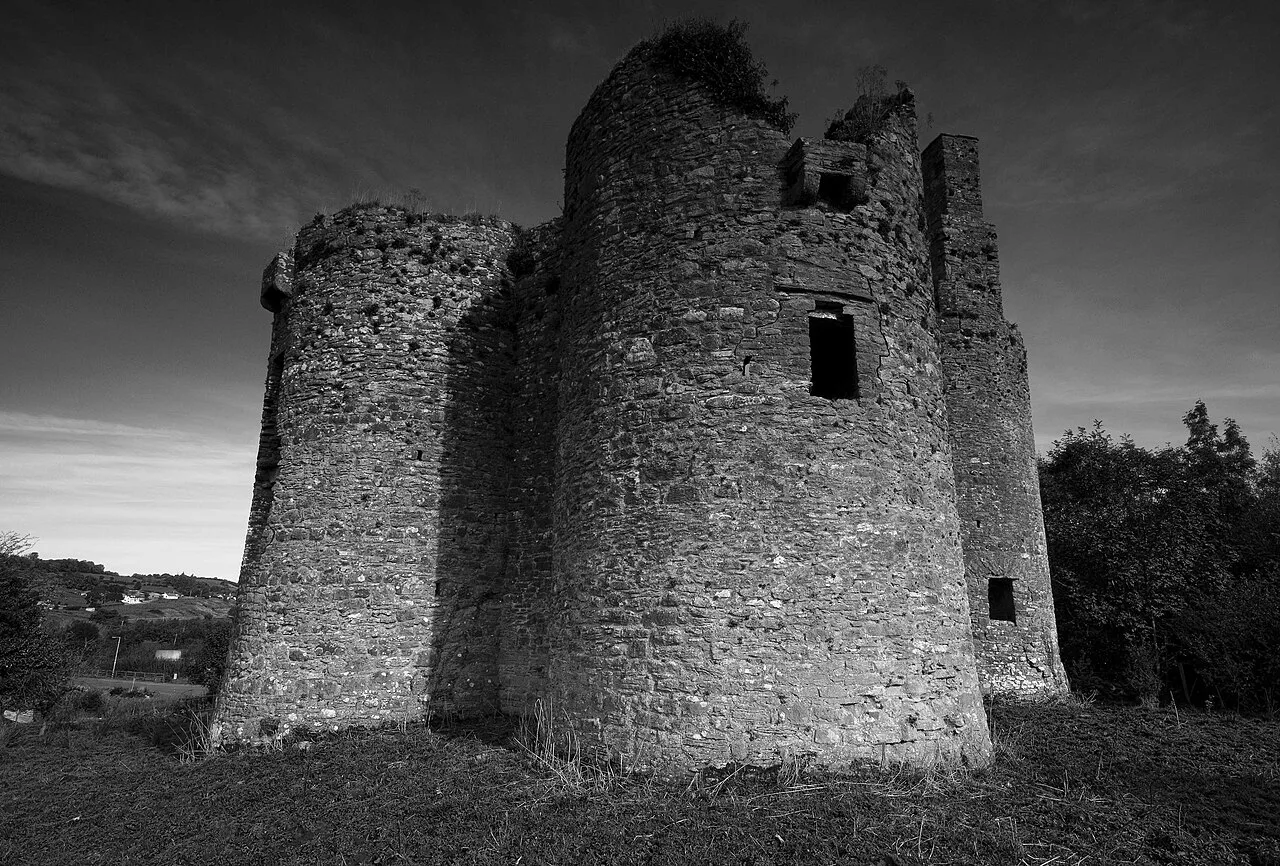
Heritage Ireland describes a four-storey castle with a main rectangular body and four round towers on the corners, presented as modelled on 13th-century style despite its late 16th-century date. The east and north towers still retain their chimney stacks, a detail easy to miss when scanning the outline from a distance.
From 1595 Destruction to 1940s Repair
The castle was partially destroyed in 1595 by Red Hugh O'Donnell and attacked again during the 1641 insurrection, when the owners surrendered because of a lack of water. Heritage Ireland records that the site lay in disuse from 1680 and was extensively repaired by the Office of Public Works in the 1940s. That repair history helps explain how much of the four-tower form can still be read today.
Read together with Ballymote, the two sites sit at opposite ends of a long arc: a medieval foundation documented from 1300, and a pass-guard raised in 1590 for the Curlew Pass route. Neither record is a substitute for on-site interpretation, so carry the key dates with you.
Visiting Both as Unguided Monuments
Both castles are unguided and both carry an OPW warning that a level of care and caution should be maintained during all stages of a visit, with the Office of Public Works disclaiming responsibility for damages, injuries or losses. Plan for rough, open masonry rather than paths, rails and staff. Sturdy footwear and a cautious pace are the practical response.
Neither official page publishes opening hours, admission charges, parking arrangements or guided tours, so check the two Heritage Ireland pages before setting out, especially if travelling a distance. Do not assume facilities at either site. If your interest runs to comparable ruins elsewhere, the wider collection of castle ruins in Ireland offers useful context for reading a fragment like Ballymote's.
How the Two Compare
Ballymote is the more architectural stop: a near-square enclosure, a north-wall entrance between three-storey twin towers, corner towers, D-shaped mid-wall towers and three-metre-thick walls, all legible as a defensive design. Ballinafad is the more strategic stop, its four-storey body and four round towers explained by the Curlew Pass route it was built to protect in 1590.
They work as complementary stops rather than competitors for a single slot in a day. Visitors extending a castle-focused trip beyond Sligo can look at other Irish examples for contrast, such as Huntington Castle, Clonegal, in County Carlow, where a lived-in house rather than a bare ruin frames the visit. If your route turns south instead, the castles in county galway offer another set of sites to compare against these Sligo ruins, and ancient sites ireland covers the tombs and forts that often share the same landscape.
Plan Your Visit
Approach Ballymote and Ballinafad as two documented state-owned ruins with distinct stories: an Anglo-Norman foundation west of Ballymote town, and a four-towered guard raised on the Curlew Pass route in 1590. Bring the dates and features with you, because neither site provides guiding on the ground. Reading the masonry against the record is the point of the trip.
Before travelling, confirm current arrangements on the official Heritage Ireland pages, since those are the pages that would carry any operational notice. Keep expectations modest and unhurried, and give each castle enough time to trace the towers, walls and gatehouse details rather than treating them as quick photo stops.
Explore more Ireland guides
Frequently Asked Questions
What castles can you actually visit in County Sligo?
This guide covers two documented state-owned National Monuments in the care of the Office of Public Works: Ballymote Castle, west of Ballymote town, and Ballinafad Castle, built to guard the Curlew Pass route. Heritage Ireland presents both as unguided sites where care and caution are advised; check the official pages before travelling. Other castles in the county exist but are not assessed here.
Is Ballymote Castle guided or unguided?
Heritage Ireland presents Ballymote Castle as an unguided site and warns that care and caution should be maintained at all stages of a visit. No guided tours are mentioned on the official page, so plan to interpret the remains yourself, using the gatehouse, curtain walls and tower layout as your guide.
Can you see the Book of Ballymote at Ballymote Castle?
No. Heritage Ireland states that the Book of Ballymote was partially written in the castle around 1391 and is now held in the Royal Irish Academy. The castle visit is a visit to the place of writing, not to the manuscript itself.
Why is Ballinafad Castle called the Castle of the Curlews?
Heritage Ireland explains that the castle was built in 1590 by Sir Richard Bingham to protect the route through the Curlew Mountains, known as the Curlew Pass. That purpose gave the site its alternative name, the Castle of the Curlews.
What survives of Ballinafad Castle's towers today?
The castle is described as a four-storey structure with a rectangular body and four round corner towers, presented as modelled on 13th-century style. The east and north towers still retain their chimney stacks, and the site was extensively repaired by the Office of Public Works in the 1940s after long disuse.
How do Ballymote and Ballinafad differ as places to visit?
Ballymote rewards architectural reading: a near-square plan, a twin-tower gatehouse with a surviving portcullis slot, corner and D-shaped mid-wall towers, and three-metre-thick walls. Ballinafad rewards thinking about strategy, since its four-tower form served the Curlew Pass route from 1590. Both are unguided, so the contrast is in what you look for rather than in facilities.
Sources
You might also like



Continue reading
More guides you'll find useful





