
Forts in Ireland: Four Defended Sites and How to Visit Them
Ireland's forts span prehistoric drystone strongholds and artillery-age fortresses. Compare four sites by period, setting and how you actually visit each one.
On this page
Forts in Ireland fall into two very different families: prehistoric drystone forts raised on headlands, and early modern bastioned fortresses built for artillery. The gap matters for planning, because one site may ask for boots and a head for heights at an unfenced cliff edge, while another is a structured tour inside surviving ramparts. The four sites below span that range, and each has its own operator, booking channel and terrain.
Treat this as a comparison of four distinct places rather than a league table of every fort on the island. Dún Aonghasa on Inis Mór, Charles Fort above Kinsale, Elizabeth Fort in Cork and Duncannon Fort on the Hook Peninsula differ in date, setting and access arrangement. Reading them side by side helps you choose by period, landscape and how much walking or pre-booking you want.
What Separates a Prehistoric Stone Fort from a Bastioned Fortress
The oldest type here is a drystone fort: walls piled from stone without mortar, positioned for defence and, at Dún Aonghasa, for drama above the Atlantic. The newer type is the bastioned fort, an artillery-age design with angled projecting walls that let defenders fire along the face of the structure. Charles Fort, Elizabeth Fort and Duncannon Fort all belong to the second, early modern tradition, though they were built and used in different circumstances.
That distinction shapes the visit more than any ranking could. A prehistoric fort is largely read from its walls, its setting and the archaeology beneath it, while a bastioned fort is read from its plan, ramparts and the view its guns commanded. If you enjoy walking rough ground and big coastal scenery, start with the Aran example; if you prefer a structured tour inside standing defences, the fortresses suit better. For the tower houses and keeps that belong to a different defensive tradition, the guide to castles in ireland sets out the contrast, and Huntington Castle, Clonegal can be browsed as a separate historic-house visit with its own gardens and layered history rather than as part of these military sites.
Dún Aonghasa: The Cliff-Top Fort on Inis Mór
Dún Aonghasa sits on a sheer sea cliff on Inis Mór and is described by Heritage Ireland as the largest of the prehistoric stone forts of the Aran Islands. Its defences are three massive drystone walls, and outside them runs a chevaux-de-frise, a dense band of jagged upright stones set from cliff to cliff to impede anyone approaching. The setting is as much a part of the monument as the masonry. Heritage Ireland states that the visitor centre operates year-round, apart from a closure from 24 to 30 December, and publishes seasonal opening times by month.
The fort is more than 3,000 years old, and excavation has produced evidence of prehistoric metalworking along with several houses and burials. The complex was refortified in AD 700–800, so the walls record more than one phase of use. Heritage Ireland describes a major refurbishment, supported by the Office of Public Works, Fáilte Ireland and the Department of Housing, Local Government and Heritage, that introduced a new visitor experience ahead of a 2026 reopening.
Visiting Dún Aonghasa: The Walk, the Cliff and the Ticket
The visit is a short hike rather than a stroll. The upgraded visitor centre stands at the start of a roughly one-kilometre pedestrian route to the cliff-top fort, over rising ground, and the final stretch crosses rough natural rock that needs care on the way down. Heritage Ireland recommends boots or strong walking shoes and gives an average visit of one to one and a half hours.
There is no fence or barrier at the cliff edge, where the drop is 87 metres, so keep well back. The site lies about seven kilometres west of Cill Rónáin, reached by local ferry from Ros a' Mhíl or by ferry from Doolin, County Clare, with an air service from Indreabhán to Cill Éinne on Inis Mór. Heritage Ireland lists private tourist buses, bicycle hire and horse-and-carriage transport for hire at the ferry port in Cill Rónáin.
Heritage Ireland publishes adult, group, child and family admission charges, with free admission for guests staying overnight on Inis Mór in participating accommodation, and notes the closure from 24 to 30 December. Drones are prohibited for the safety and comfort of visitors and staff, and visitors are asked not to interfere with this vulnerable monument. The site is flagged as challenging access with uneven walkways.
Charles Fort: A Star-Shaped Fortress Above Kinsale Harbour
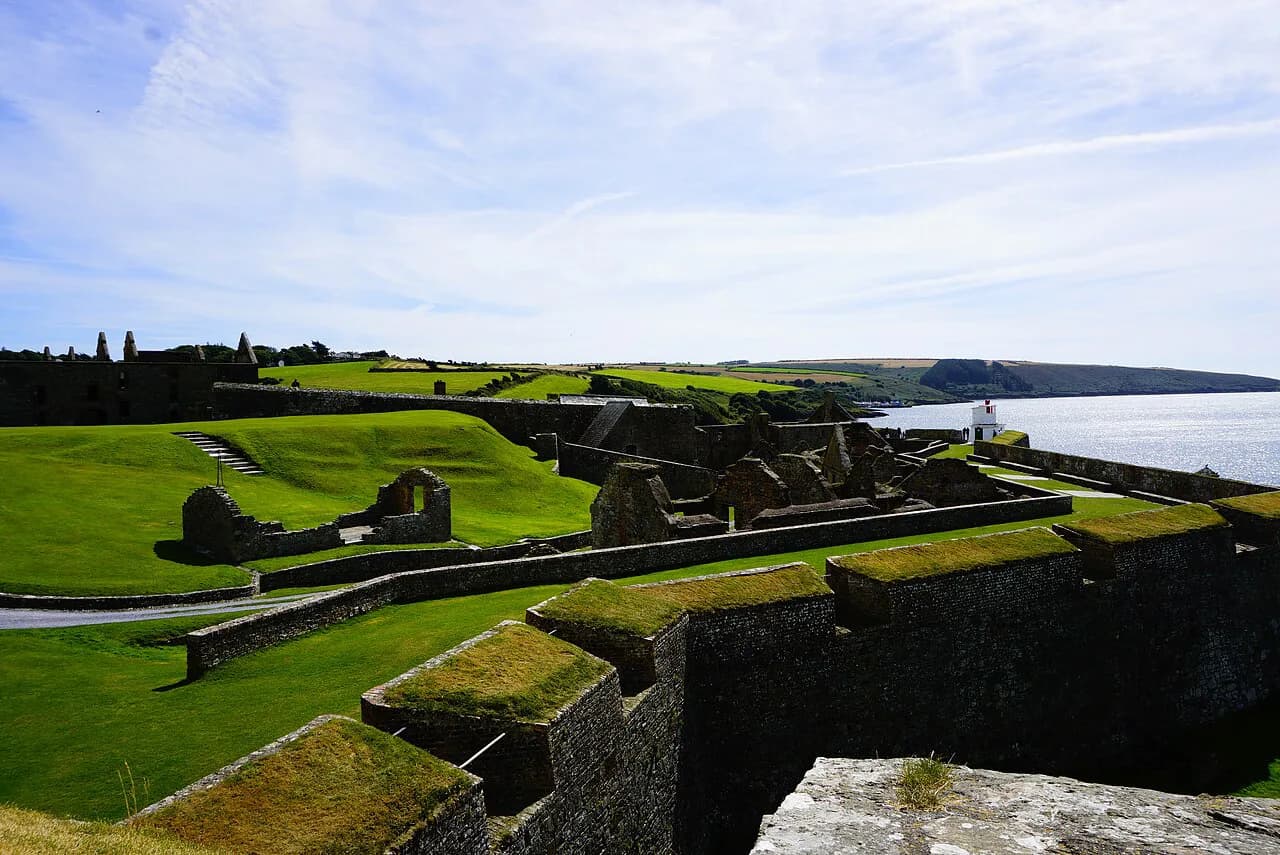
Charles Fort is described by Heritage Ireland as a massive star-shaped structure of the late seventeenth century, well preserved despite its turbulent history. William Robinson, architect of the Royal Hospital in Kilmainham in Dublin, is credited with designing it. Its scale is the point of the visit: some of the outer defences rise 16 metres, and the ramparts open onto a celebrated view over Kinsale Harbour.
Its later history is violent for a visitor attraction. It withstood a 13-day siege during the Williamite Wars before falling, and in the Civil War of the early 1920s anti-Treaty forces burned it out on the retreat. Heritage Ireland presents it as well preserved despite that record, which is why the fort works both as a landscape viewpoint and as a lesson in how Irish military architecture was fought over.
Visiting Charles Fort: Hours, Surfaces and Facilities
Charles Fort opens all year but keeps seasonal hours, with longer summer days and an earlier last admission in winter, so confirm the day's times before setting out. Heritage Ireland lists an exhibition, guided tours, an interpretive exhibit, a café, car and coach parking and card payment on site. The café serves tea, coffee, toasties, pastries and desserts.
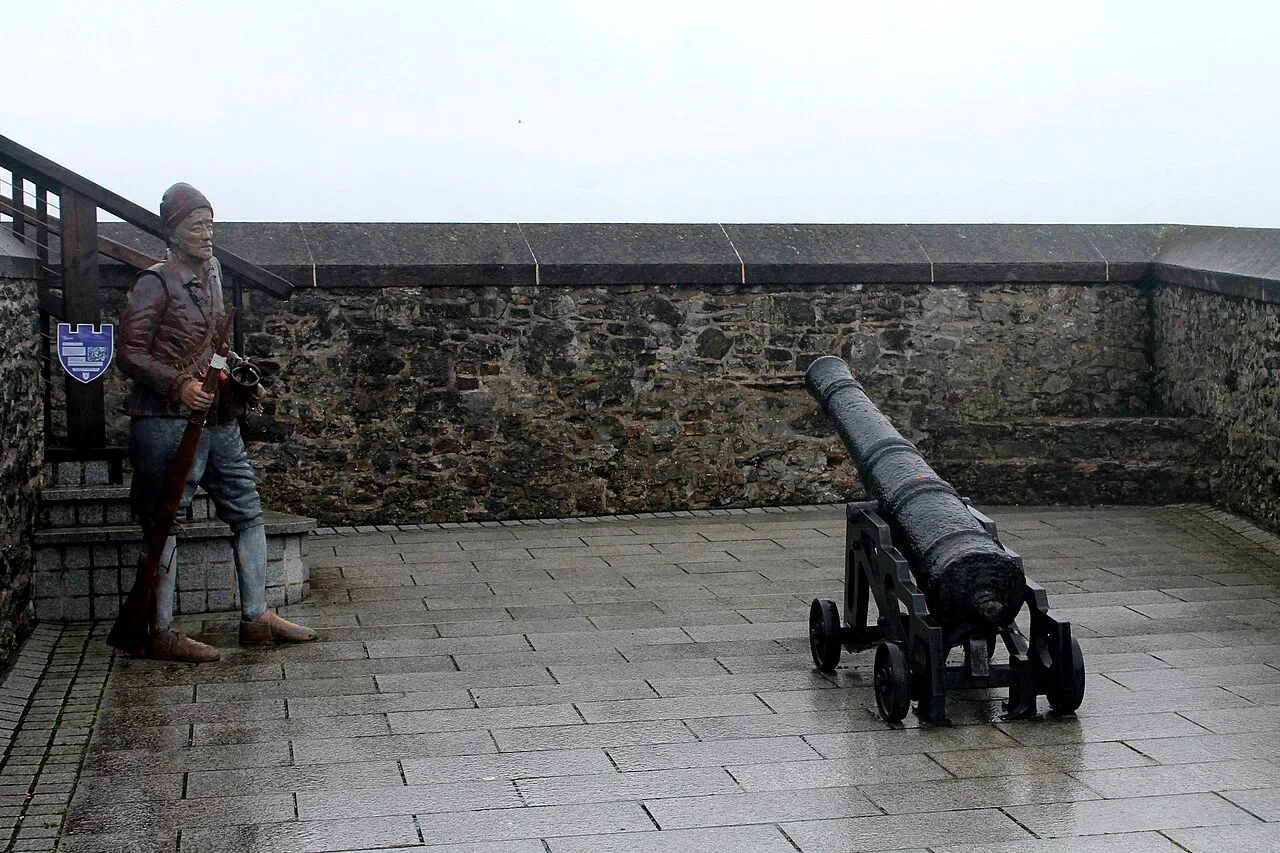
Access is the real constraint. Heritage Ireland flags challenging access, uneven surfaces and walkways, and slippery ground, with assistance dogs only, a request to hold the hand rail and stay back from edges. Children must be accompanied by an adult at all times, and drones are prohibited. Treat the ramparts and exhibition as the core and allow time for the harbour view.
Elizabeth Fort: Cork's City Fort on Barrack Street
Elizabeth Fort was first built in 1601 by Sir George Carew, then president of Munster, on a rocky outcrop overlooking Cork from the south. After Elizabeth died in 1603 the citizens of Cork attacked it, and when the city was retaken they were compelled to rebuild it at their own expense. It was replaced in 1624 by a stronger stone fort, much of which survives, with improvements reputedly made by order of Oliver Cromwell in 1649.
In 1690 the fort was besieged along with the city by Williamite forces while held by Jacobites, an event known as the Siege of Cork; after a week the walls were breached and both city and fort surrendered. Later uses read as a roll call of Irish institutional history: army barracks, a female prison for convicts awaiting transportation, an RIC station and a Garda station until 2013. Cork City Council now holds the site and develops it as a public attraction.
Visiting Elizabeth Fort: Rampart Views and Booked Tours
The reward here is elevation rather than scale. The Cork City Council page describes an exceptional view of the city from the ramparts and from the timber viewing gallery along the north side of the courtyard, which makes the fort a useful orientation point for a walk around the older parts of Cork. The address is Barrack Street, south of the city centre. For the full history, ramparts and visiting details, see this Elizabeth Fort, Cork: History, Ramparts and How to Visit guide.
Guided tours are listed at 11am, 1pm and 3pm, with booking essential through elizabethfort.ie, but those times appear on a Cork Heritage Open Day event page rather than as permanent daily hours; note also that the page gives an "Open 10am to 5pm" line. Confirm the current schedule and booking directly before travelling instead of assuming the fort keeps those slots every day. Elizabeth Fort is run by Cork City Council, not the Office of Public Works, so its booking channel differs from the Heritage Ireland sites. The guide to castles in ireland covers other defended sites in the region, and Huntington Castle offers a historic-house contrast to these garrison fortresses, with its own gardens and layered history.
Duncannon Fort: Layered Defences on the Hook Peninsula
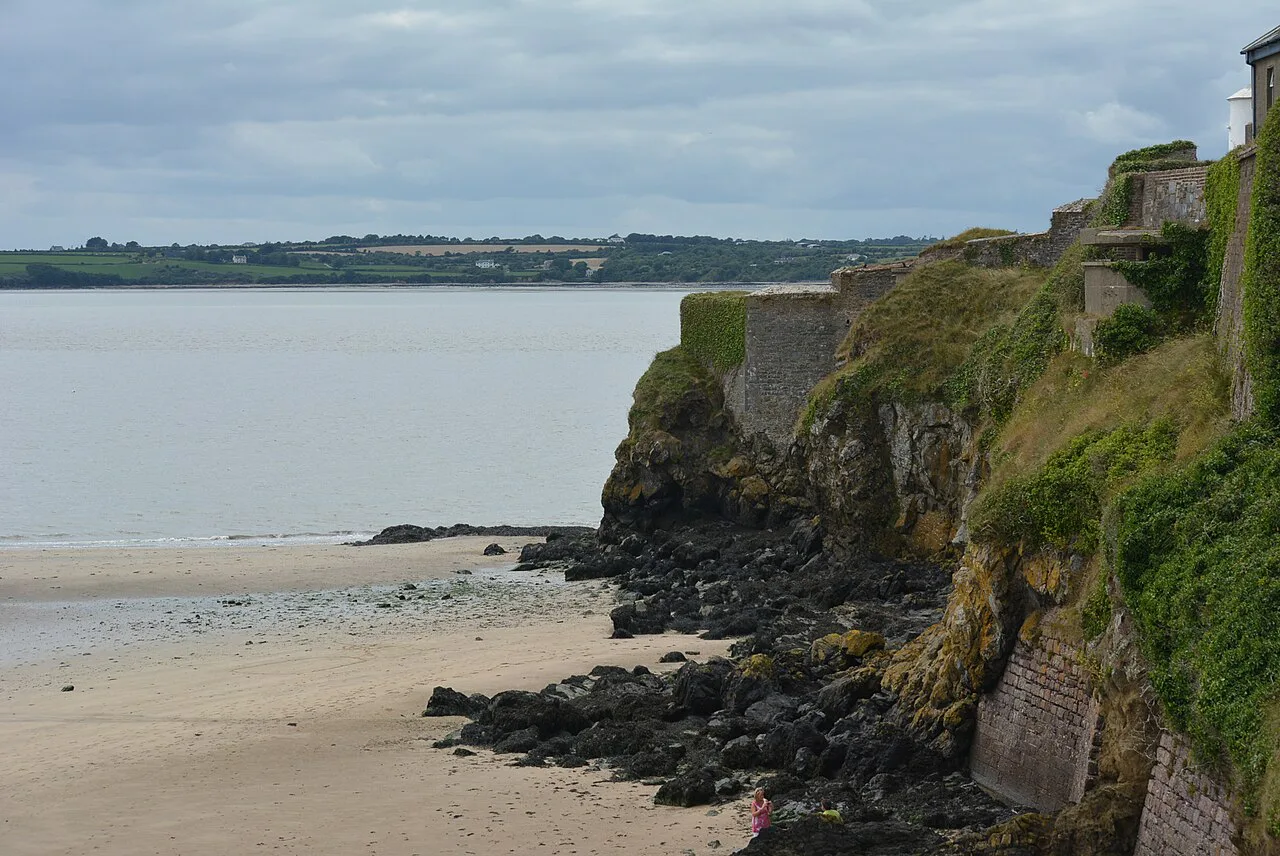
Duncannon Fort is a sixteenth-century coastal bastioned fort on a rocky promontory on the Hook Peninsula in County Wexford, and the site underneath is older than the fortress. Its conservation plan notes earlier remains of a fifteenth-century castle with curtain wall and towers and, probably, an earlier prehistoric promontory fort. That layering is what makes it more than a single-period ruin.
The fort's own site, quoting the Duncannon Fort Conservation Plan 2016, calls it one of only three bastioned forts built in County Wexford and the only one accessible to the public, which gives it a distinct place among Irish fortifications. Ownership is shared between the Office of Public Works and Wexford County Council, while guided tours are offered under licence by Hook Rural Tourism, a community organisation working to promote the Hook Peninsula.
Visiting Duncannon Fort: The Guided Tour and Its Safety Warnings
Access is by guided tour of approximately one hour, booked in advance on the fort website or taken on the day, with visitors asked to arrive ten minutes before their slot and, if booked online, to have the QR code ready for the guide. Tickets are also sold through tourist offices, and if the website shows a tour sold out, a call into the tourist office may reveal remaining places. This is a licensed tour operation, not a site you wander freely, so check availability for your date.
The fort sits in Duncannon village, reached by car on the R733 from New Ross or Wexford, or via the Passage East car ferry from Ballyhack. Expect barrack buildings, raised ramparts, walls, underground passageways and a deep moat, built from the sixteenth century onward and deteriorated with age. The operator warns that the structures were not built to modern safety standards, so take care for yourself and anyone in your charge.
Choosing Between the Four by Terrain and Time
Decide first how much physical effort you want. Dún Aonghasa is the demanding option, with a kilometre of rising ground, rough rock and an unfenced cliff edge at the end; Charles Fort asks for walking over uneven and sometimes slippery surfaces; Elizabeth Fort is a city-site visit built around ramparts and a gallery; Duncannon is a structured hour-long tour over aged structures.
Then decide how much planning you accept. Heritage Ireland publishes seasonal hours and last admission for its two sites, while Elizabeth Fort and Duncannon Fort depend on booked or licensed tours with their own channels. If your trip passes through Cork, pairing Elizabeth Fort with a wider look at the county's fortifications is easy; if you are based in the west, the Aran cliff fort is the obvious anchor.
Plan Your Visit
Choose by period and terrain: a prehistoric cliff fort if you want archaeology, coastal drama and a rough walk; a bastioned fortress if you want ramparts, harbour views and a more structured visit. Confirm before travelling, because the four sites run on different models, with Heritage Ireland for Dún Aonghasa and Charles Fort, Cork City Council's channel for Elizabeth Fort, and licensed Hook Rural Tourism guides for Duncannon.
Two checks cover most of the risk. Verify seasonal hours and last admission at the two Heritage Ireland forts, and confirm current tour times and availability at Elizabeth Fort and Duncannon Fort before you commit a day to either. Then match footwear and expectations to the ground: boots and respect for the unfenced edge at Dún Aonghasa, care on the uneven ramparts at Charles Fort, and attention to the aged structures on Duncannon's guided route.
Explore more Ireland guides
Frequently Asked Questions
What is the difference between a prehistoric stone fort and a bastioned fort in Ireland?
A prehistoric stone fort such as Dún Aonghasa is built from drystone walls and read through its setting and archaeology, including its chevaux-de-frise of upright stones. A bastioned fort such as Charles Fort or Duncannon Fort is an artillery-age design with projecting angled walls, ramparts and structures built for guns and garrisons. Elizabeth Fort is presented by Cork City Council as a fort replaced in 1624 by a stronger stone fort, much of which survives, and its surviving fabric should be read on that basis rather than assumed to be classic bastioned work.
Do you need to book a tour at Duncannon Fort or Elizabeth Fort?
Duncannon Fort is visited on a licensed guided tour of about an hour that can be booked online in advance or taken on the day, subject to availability, with tickets also sold through tourist offices. Elizabeth Fort has scheduled guided tours with booking essential through its own website; confirm the current times directly, as the published 11am, 1pm and 3pm slots come from a Cork Heritage Open Day event listing rather than as permanent daily hours.
How long is the walk to Dún Aonghasa and is it difficult?
The visitor centre marks the start of a roughly one-kilometre route to the cliff-top fort over rising ground, with the final section crossing rough natural rock that needs care, especially on the descent. Heritage Ireland recommends boots or strong walking shoes and gives an average visit of one to one and a half hours. There is no fence at the cliff edge, where the drop is 87 metres.
Can you visit Charles Fort without a guided tour?
Heritage Ireland lists both an interpretive exhibit and guided tours among the site's facilities, and the fortress, ramparts and harbour views can be explored with seasonal opening hours and a last admission time in force. Access is challenging in places, with uneven and slippery surfaces, and children must be accompanied by an adult. Confirm the day's hours and tour arrangements when you arrive.
Why is there no fence at the cliff edge at Dún Aonghasa?
The operator does not explain the absence of a barrier, but it states plainly that there is no fence or barrier at the edge of the cliff, where the drop is 87 metres, and asks visitors to stay back. Combined with the rough final path, that makes supervision and careful footwear essential rather than optional.
Is Duncannon Fort the only publicly accessible bastioned fort in County Wexford?
According to the fort's own site, quoting the Duncannon Fort Conservation Plan 2016, it is one of only three bastioned forts built in County Wexford and the only one accessible to the public. That claim refers to Wexford's bastioned forts specifically, not to every historic fortification in Ireland.
Which of these forts is easiest to reach from a city?
Elizabeth Fort sits on Barrack Street in Cork, making it the most straightforward city arrival of the four. Duncannon Fort lies in a village reached by the R733 or the Passage East car ferry, Charles Fort stands above Kinsale Harbour, and Dún Aonghasa requires a ferry or flight to Inis Mór followed by a road journey west of Cill Rónáin.
Sources
You might also like



Continue reading
More guides you'll find useful





