
Elizabeth Fort, Cork: A Visitor Guide to the Fort Above Barrack Street

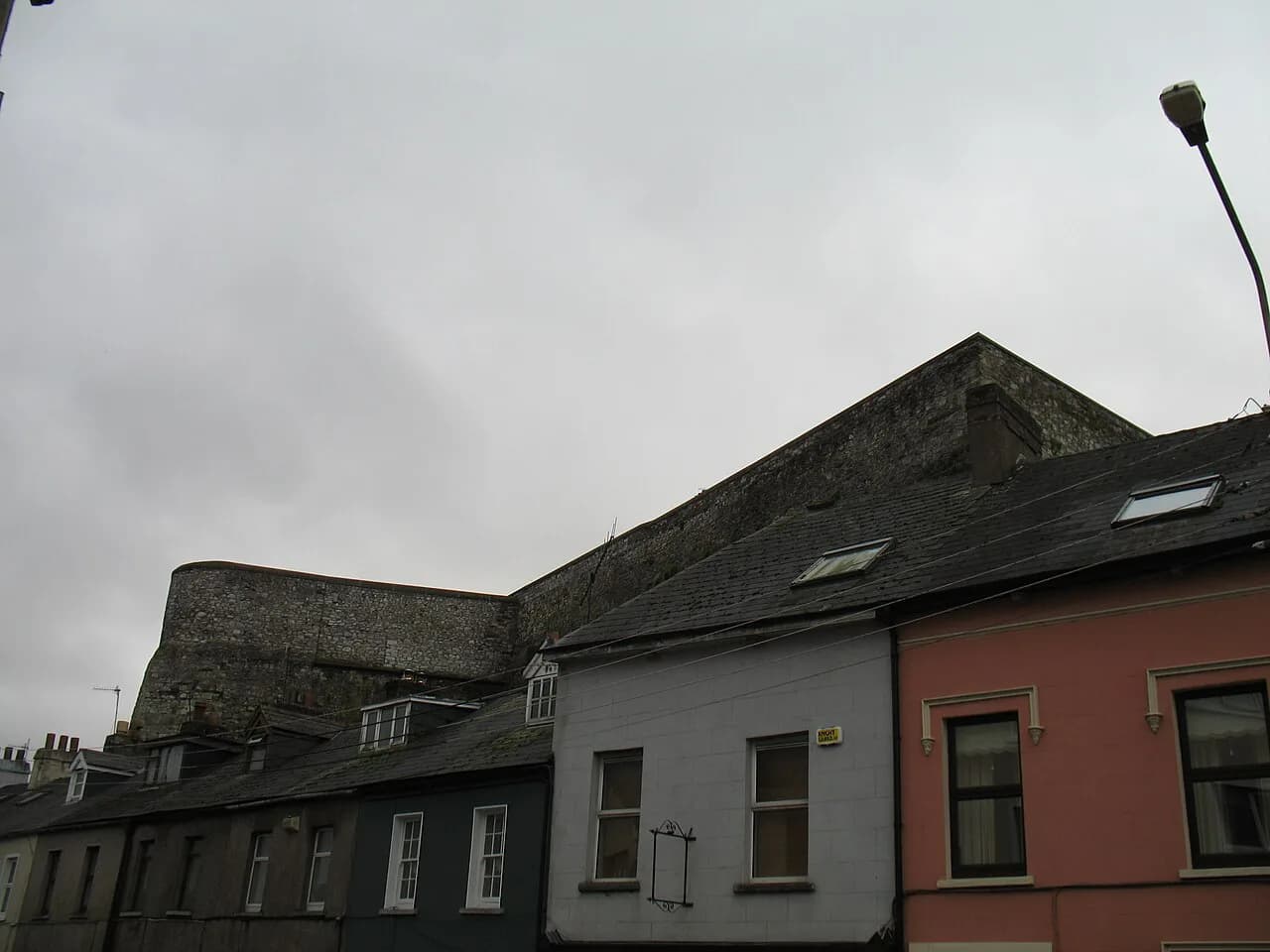
Elizabeth Fort is a star-shaped fortification on a rock height above Barrack Street, on the south side of Cork city, close to Saint Fin Barre's Cathedral. Pure Cork describes it as one of the finest surviving examples of a seventeenth-century star-shaped fort, and the outline visible today largely reflects the stronger fort built in 1624 on the site of a first fort of 1601. The visit is best understood as an encounter with standing walls, ramparts and city views rather than a museum interior, because a working Garda Station operates within the fort.
The fort's value to a visitor lies in what its fabric records: an irregular early earthwork fort, a rebuilt fort of the 1620s, ramparts raised to roughly eight metres, then centuries of barracks, prison, militia and police use. Local historian Kieran McCarthy's account traces these layers in detail, including the 1603 attack on the first fort and the 1922 burning of the interior buildings during the Civil War. Knowing the sequence helps you read the walls accurately and avoid assuming that today's masonry dates from the Elizabethan foundation.
Where Elizabeth Fort Stands
The fort occupies a rock outcrop above Barrack Street, the road that led south from the walled town's historic South Gate. Kieran McCarthy explains that the first fort was placed just outside the South Gate drawbridge on a cliffside overlooking the southern approach to Cork, with a natural cliff protecting it on the town side and a dry moat cut into rock on the other three. That siting decision still shapes the experience: you approach from below and gain height as you climb the street.
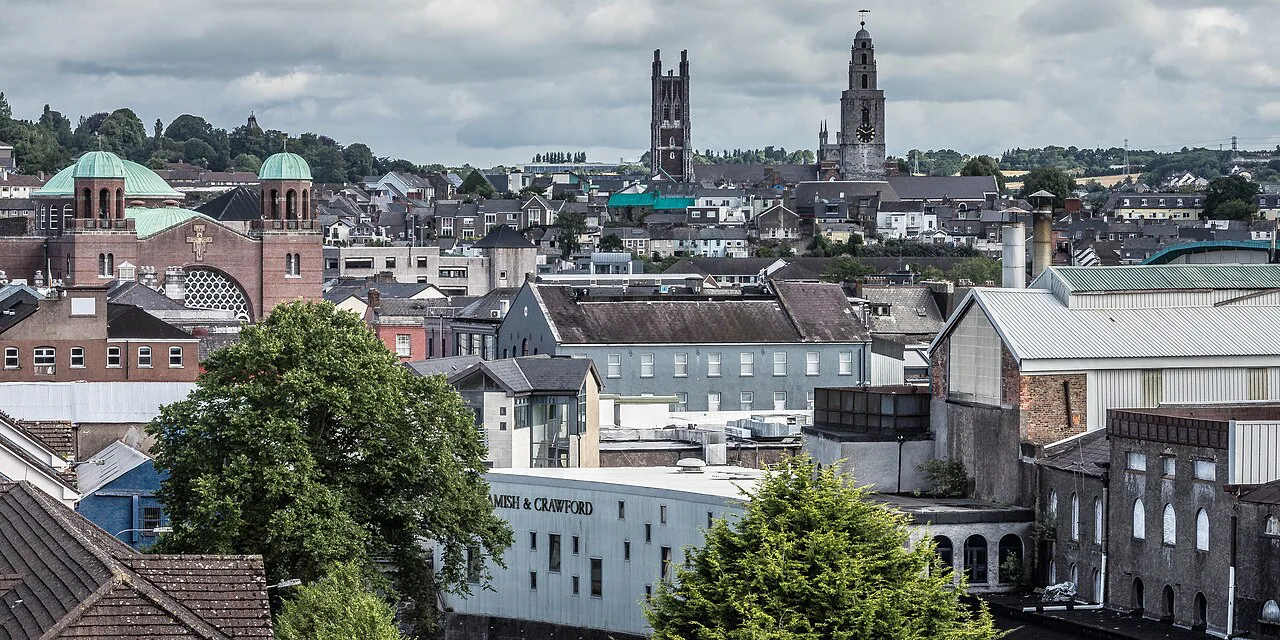
Cork Guide places the fort right beside Saint Fin Barre's Cathedral and notes that the hilltop setting gives views across the city, including toward Shandon Steeple and the cathedral itself. Treat those sightlines as the reward for the walk rather than a formal viewpoint with facilities, since no source describes any viewing platform or interpretation on site.

Why the Fort Is Star-Shaped
The star plan was a response to gunpowder artillery. Kieran McCarthy describes how, as musket fire developed in the mid-1500s, large castles ceased to be the safest defensive form, and star-shaped fortresses with angle bastions at the corners became preferred because they allowed flanking fire. Each bastion could concentrate fire on an attacking force in the ground immediately in front of it, and each could act independently as a last strongpoint if the walls were breached.
Cork's fort belongs to a wider programme. According to the same account, Elizabeth I ordered in January 1590 that star-shaped forts be built outside the walls of major Irish coastal towns, including Cork, Waterford, Limerick and Galway, though Cork's construction was delayed by ongoing rebellion and the Spanish threat at Kinsale in 1601 finally pushed it forward. Looking at the surviving outline, you can see how the plan sacrifices a simple perimeter for overlapping fields of fire.
The First Fort of 1601 and Its Successor
The 1601 fort was an irregular work of stone, timber and earth, not the masonry structure you see now. Kieran McCarthy records that it was garrisoned by October 1602 while still unfinished, was attacked and considerably damaged in 1603, and was then rebuilt under the name New Fort, with construction beginning around 1624. None of that first fort's fabric is visible today.
Pure Cork describes the same sequence more briefly: the fort was originally built in 1601 during the reign of Elizabeth I and replaced in 1624 by a stronger fort with the same basic outline as the one that survives. The 1620s rebuild introduced a causeway in place of the old drawbridge and a more elaborate gateway on the eastern side, according to McCarthy, and signs of the double walls and entrance can still be identified even though the gate tower is gone.

The Ramparts You See Today
The most legible surviving feature is the ring of limestone ramparts, raised to nearly eight metres around 1649, with five bastions visible by 1690. Kieran McCarthy notes that the southern bastions were built considerably stronger and larger than the northern ones, showing that the designer understood where the fort was most vulnerable. The foundation sits on solid rock, which ruled out undermining as a siege tactic.
Allow time to walk the outside of the walls and look at the angles rather than expecting an interior exhibition. The heavy masonry, the changing thickness of the ramparts and the relationship between the fort and the street below are the main things to observe, and they are best read with the historical sequence in mind. If you want more indoor interpretation of the same period, the museums in cork pick up where the ramparts leave off.
Garrison, Siege and Barracks
By 1690 the fort was a serious garrison: about two hundred English soldiers manned twenty-one cannon distributed around the top of the fortification, and during the Siege of Cork that September the position was tested when Irish supporters of James II held it. Kieran McCarthy notes that the English had to dominate two tall adjacent buildings, Red Abbey and Saint Fin Barre's Cathedral, to fire down on the defenders and force a surrender. Pure Cork also mentions the reputed improvements made by Cromwell in 1649, a link best treated as tradition rather than settled fact.
In 1719 the fort became a British military barracks housing roughly seven hundred men. Both Pure Cork and McCarthy record this conversion, and McCarthy adds that the ramparts were thinned to make room for new buildings inside. That change matters for what you see now: the defensive shell was retained while the interior was repeatedly rebuilt for other purposes.
Prison, Militia and Revolution
After a new barracks was built on the north side of the city in 1806, Elizabeth Fort was converted to a female convict prison. McCarthy, drawing on the nineteenth-century writer Samuel Lewis, records that by 1837 there were around 250 inmates brought from across the country, many held until ships could carry them to British colonial outposts such as New South Wales. Pure Cork likewise notes the prison phase following the construction of what is now Collins Barracks.
The fort later served as a station for the Cork City Artillery Militia and was occupied by the Royal Irish Constabulary during the War of Independence in 1920–21, before being handed over to the Provisional Irish government. In 1922 anti-Treaty forces burned the interior buildings, though the walls and bastions were undamaged, and a Garda Station was subsequently established inside the walls. Both Pure Cork and McCarthy confirm that the station remains in operation.
Walking to the Fort from the City Centre
Cork Guide describes a short walk of about five minutes from the English Market area on the Grand Parade. Cross the Nano Nagle Footbridge and continue up Barrack Street, and you arrive at the fort beside Saint Fin Barre's Cathedral. That route keeps the fort within an easy walk of the central streets, so it works well as a leg of a walking day rather than a separate excursion, and our Cork Neighborhoods: 4 Area Guides help you plot the surrounding south-side streets.
The street rises toward the fort, and the sources describe the site as standing on a rock outcrop above the road. Cork City Council, which now holds the fort, has not published detailed guidance on step-free routes, gradients or parking at the site, so anyone with mobility concerns should contact the council directly before relying on the approach. For a wider day of Cork visits, see our Cork Attractions: 5 Visitor Guides overview, which places a single fort stop alongside other city sites.
Entry, Hours and What to Confirm
Cork Guide states that the fort is open to the public free of charge and lists opening times of 09:30 to 17:00. That listing carries no visible date, so treat both the hours and the free entry as the guide's statement rather than confirmed operator policy. Check with the site or Cork City Council before travelling, particularly for weekday or out-of-season visits.
What to Expect Inside and Outside the Walls
Pure Cork notes that the fort is now a Garda Station and remains one of Cork's most historic gems, and McCarthy records that the station within the interior is still in operation. That places a clear limit on how the site should be read: the walls, bastions and exterior spaces are the visitor experience, while the enclosed interior is working police premises. No source describes a museum, exhibition, guided tour, cafe, shop or toilets, so do not plan around them.
Pure Cork also records that the fort has never been excavated, which helps explain why so much of its story depends on documents, maps and later accounts rather than archaeological display. Budget time for the ramparts and the views over the city, and leave the interior assumptions aside.
Nearby on the Same Visit
Saint Fin Barre's Cathedral is the natural companion, sitting directly beside the fort according to Cork Guide, and its towers feature in the fort's own history from the 1690 siege. Pair the two on foot and you get both the defensive story and the ecclesiastical landmark that played a part in it. A short walk back across the river also brings you to the Shandon Bells and St Anne's Church, Cork, whose steeple appears in the fort's city views.
If the fort's military engineering interests you, Blackrock Castle Observatory on the city's eastern water side offers a different, later fortification story with its own riverside setting. For the display side of Cork's past rather than its defences, our guide to museums in cork covers the city and county collections, including the Cork Butter Exchange. To place the south-side streets around Barrack Street within the wider city, browse our Cork neighbourhood guides.
Planning Your Visit to Elizabeth Fort
Elizabeth Fort rewards a visitor who arrives knowing what the site is: a layered defensive work whose present outline owes most to the 1620s rebuild and the raised 1649 ramparts, encircled by a working Garda Station. Walk up from the Grand Parade via the Nano Nagle Footbridge and Barrack Street, give the walls and views your attention, and treat the interior as off-limits. Confirm the opening arrangements before you go, since the published times come from an undated visitor listing. If you want another city-centre heritage stop, the Cork Opera House guide covers a different side of Cork's story.
Frequently Asked Questions
Where is Elizabeth Fort in Cork?
Elizabeth Fort stands on a rock height above Barrack Street on Cork's south side, directly beside Saint Fin Barre's Cathedral. It is roughly a short walk from the Grand Parade and the English Market area, reached by crossing the Nano Nagle Footbridge and continuing up Barrack Street.
Is Elizabeth Fort free to visit and when is it open?
A Cork Guide visitor listing states that the fort is free of charge and gives opening times of 09:30 to 17:00, but that page carries no visible date. Treat those details as the guide's statement rather than confirmed current policy and reconfirm with the site or Cork City Council before travelling.
Can you go inside Elizabeth Fort?
The interior is occupied by a working Garda Station, which both Pure Cork and local historian Kieran McCarthy record. The visit is therefore about the limestone ramparts, bastions and city views rather than a museum or exhibition inside, and no source describes a public tour programme.
Why is Elizabeth Fort star-shaped?
The star plan with angled bastions allowed defenders to deliver flanking fire along the walls, a design that replaced large castles once gunpowder artillery became effective. Kieran McCarthy explains that Elizabeth I ordered star-shaped forts outside major Irish coastal towns in 1590, and Cork's was finally built in 1601.
How old is Elizabeth Fort and are the walls original?
The first fort was built in 1601, replaced from around 1624 by a stronger fort, and had its ramparts raised to nearly eight metres around 1649. The fabric visible today reflects those later phases rather than the 1601 earthwork, and Kieran McCarthy notes that none of the original or second fort can be seen.
What else is near Elizabeth Fort?
Saint Fin Barre's Cathedral is immediately beside the fort, making it the natural pairing for the same walk. Shandon Steeple appears in the city views from the height and can be reached by walking back toward the north side of the centre.