
Castles in Carlow: Three OPW Medieval Sites Compared
Castles in Carlow means unguided OPW ruins. Compare Carlow Castle, Ballyloughan and Leighlinbridge on history, what survives and access limits.
On this page
Castles in Carlow, as documented by the Office of Public Works, come down to three medieval castle sites in the county: Carlow Castle in Carlow town, Ballyloughan Castle south-east of Bagenalstown, and Leighlinbridge Castle overlooking the River Barrow. Each is a state-protected National Monument and each is unguided, so a visit means reading masonry and earthworks rather than following a tour. This guide compares the three on what they actually are and what you can reasonably expect to see, and it does not claim to cover every castle site in the county. For a wider set of comparable places, see these guides to Castles in Ireland.
Carlow Castle: A Norman Foundation at the Barrow and Burren
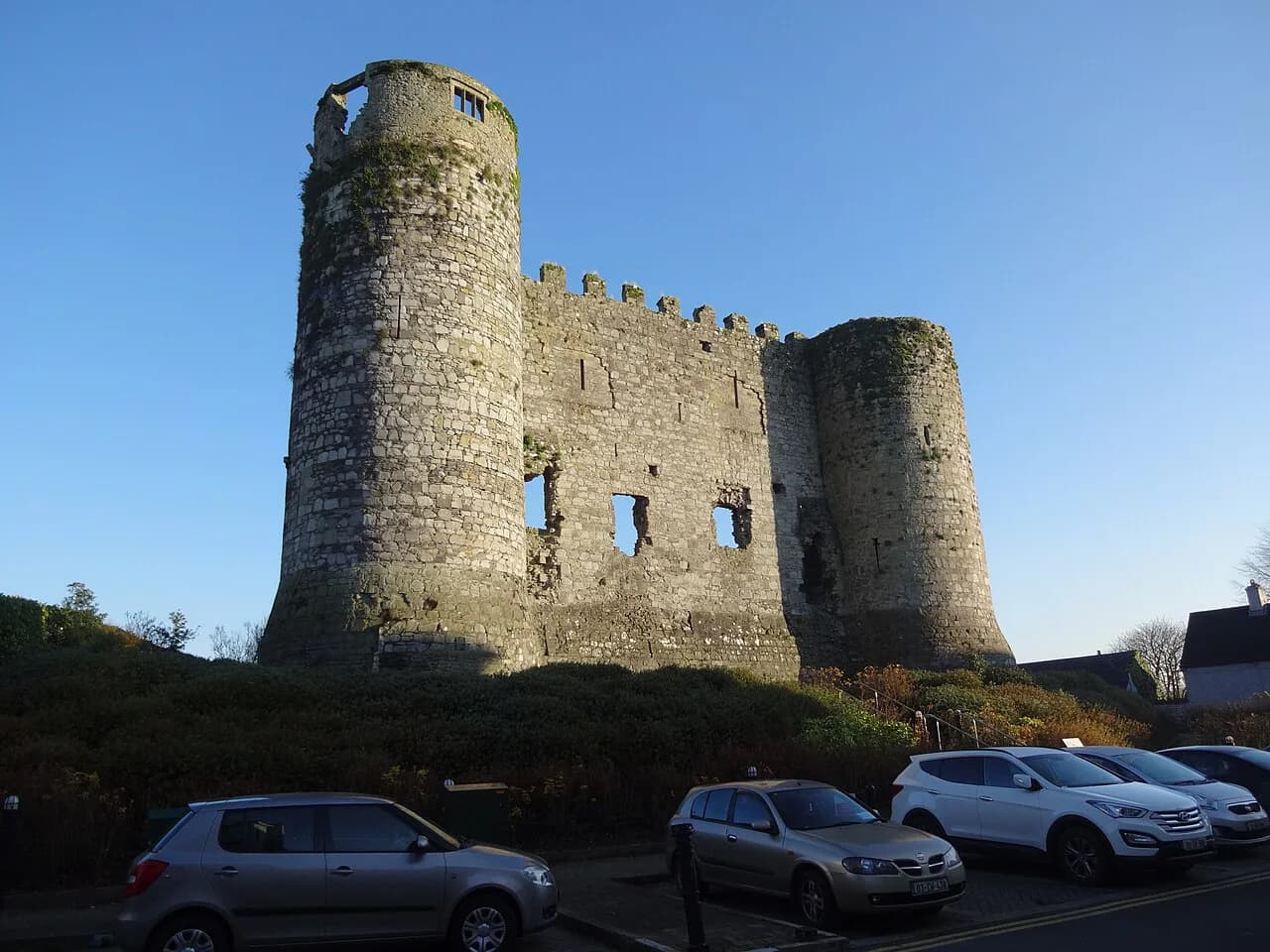
Carlow Castle stands where the Rivers Barrow and Burren meet in Carlow town, an early 13th-century foundation dated to between 1208 and 1213 and attributed to William Marshal, Lord of Leinster. The OPW describes it as an administrative centre, military fortification and residence in one, and as a significant example of Norman architecture in Ireland. Marshal held the Lordship of Leinster through his wife, Isabel de Clare, and the castle replaced an earlier Norman earthwork on the site. It is a state-owned National Monument in OPW care.
That riverside position matters when you visit: the castle's role was tied to a confluence and an administrative centre, not to a remote defensive perch. Expect a town-centre ruin rather than a landscaped estate, and read the standing masonry against the OPW's account of what the building once contained.
Carlow Castle and the Four-Towered Keep Family
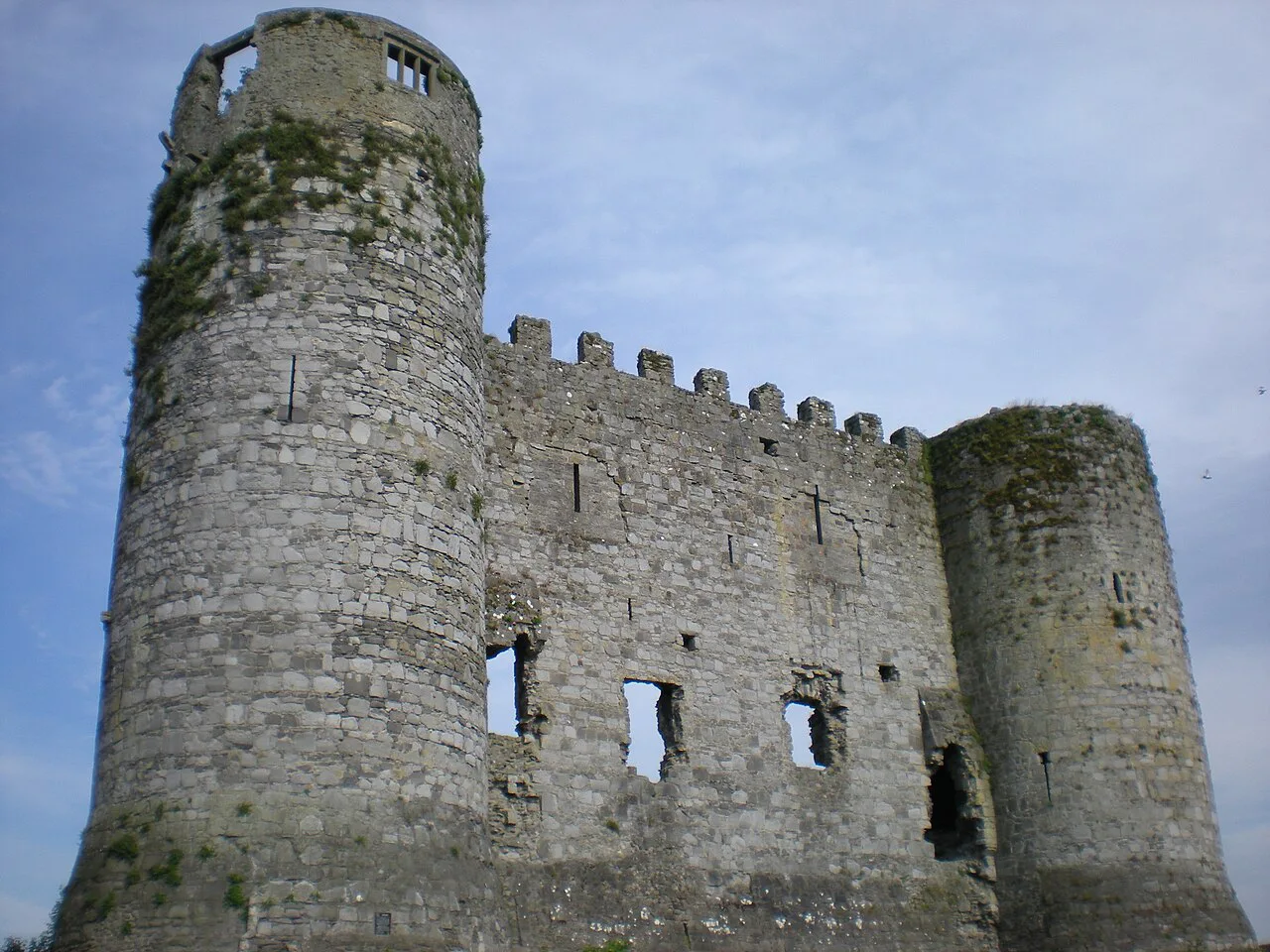
Carlow Castle belongs to a small group of early stone castles called four-towered keeps: a rectangular block with a cylindrical drum tower at each corner and cross-shaped arrow loops. The OPW lists Ferns Castle in County Wexford, Lea Castle in County Laois and the original Kilkenny Castle in County Kilkenny as members of the group, all credited to William Marshal. The same features were common in western France at the time, which the OPW links to Marshal's early years there. Knowing the family helps you notice how much of the plan survives at Carlow today, and Kilkenny Castle: Visiting the Butler Seat in Kilkenny City shows how one member of the group was later remodelled beyond recognition.
What Excavation Revealed, the Exchequer Storey and the 1814 Blasting
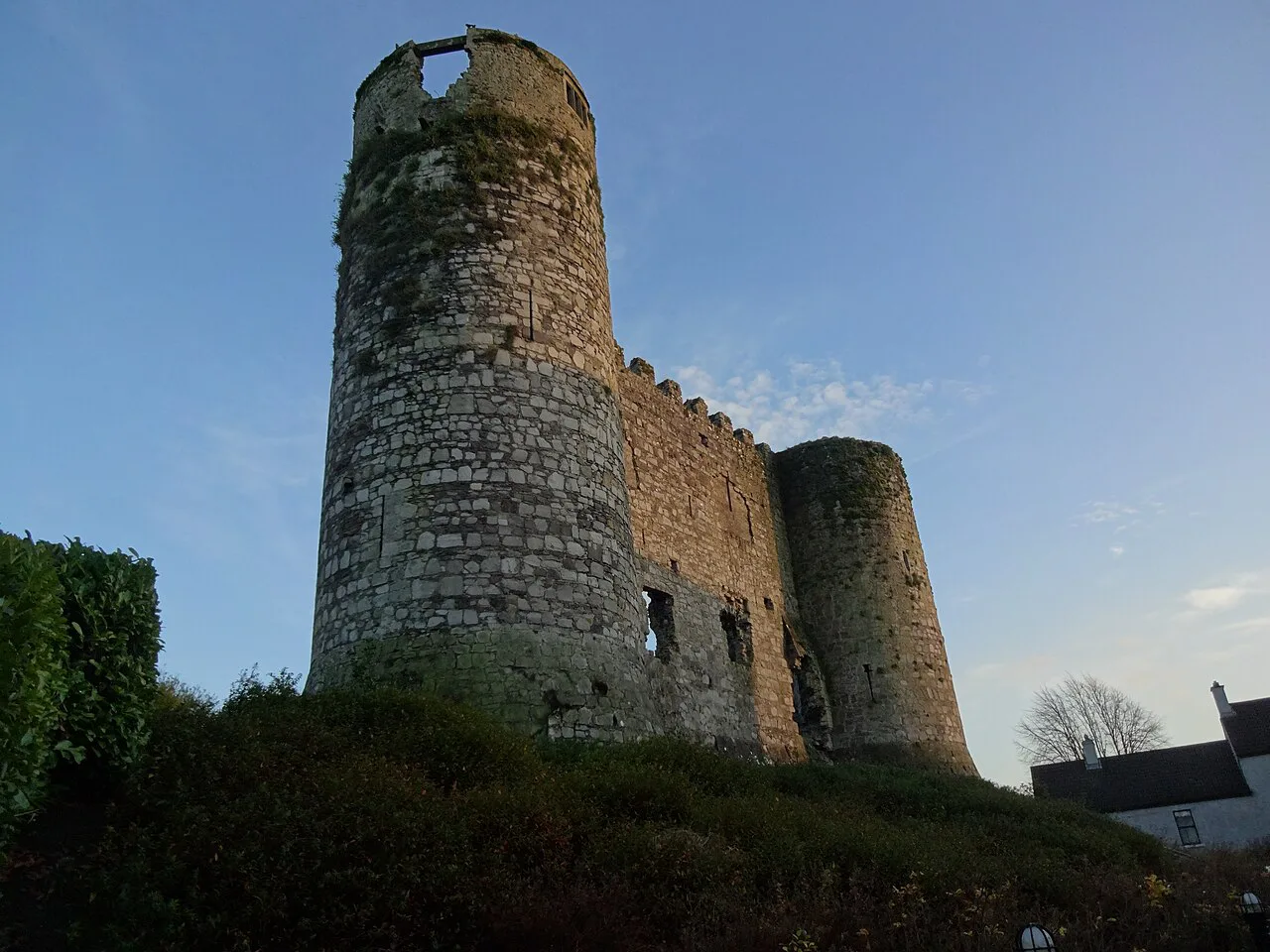
Excavations in the 1990s showed the original castle was two storeys high, with walls about 2.7 metres thick, timber floors and roof, and stairs built into the walls. The entrance sat at first-floor level in the north wall. In the late 14th century a third storey was added to house the Irish Exchequer with its officials and clerks, and the surrounding defences were upgraded at the same time. These details explain the scale of what stood here before the 19th century.
The truncated look of the ruin dates from 1814, when Dr Philip Parry Middleton, granted the castle, used blasting powder at its base while trying to create space for a lunatic asylum; the eastern half collapsed and much of the rest was demolished for safety. Two towers and the wall between them are what remain. Knowing this, the fragmentary outline makes sense as a documented loss rather than a mystery. The account also records earlier changes of ownership, including seizure by Cromwell in 1650.
Ballyloughan Castle: A 13th-Century Court in a Farming Field
Ballyloughan Castle, south-east of Bagenalstown, is a 13th-century ruin with a rectangular inner court enclosed by a curtain wall and a double-towered gatehouse in the middle of the south wall. Notes from 1835 recorded fourteen stone steps from ground to first floor, and H.G. Leask observed in 1941 that some gatehouse stones, bearing 12th-century Hiberno-Romanesque moulding, probably came from a church. The OPW states plainly that the monument stands in a farming field, so the setting is working land, not a visitor enclosure. Treat field boundaries and caution as part of the visit.
Ballyloughan's Documented Grants and Its 1955 Excavation
The OPW is explicit that Ballyloughan's early history is long forgotten; what can be said is a sequence of documented grants. The territory passed from Diarmuid McMurrough to his son-in-law Richard de Clare, and by 1307 the Kavanaghs held the area from the Earl and Countess of Norfolk; the area was granted to George Bagnell in 1611, with the Kavanaghs remaining at Ballyloughan until 1641. John Beauchamp was later granted the land under the Act of Settlement, and in the 19th century the lands were sold to Col. Henry Bruen. Excavation in 1955 found 13th- and 14th-century potsherds, including a rim sherd of fine white-paste ware made in western France in the 13th century, and evidence that the north-east tower had been converted to a cottage or shed in the 18th century before abandonment.
Leighlinbridge Castle: A 1547 Tower Guarding the Barrow Crossing
Leighlinbridge Castle was built to defend the bridge of Leighlin over the River Barrow, on the site of an earlier Black Castle. The present structure is not a medieval original: it is a rectangular three-storey tower of the 16th century, built in 1547 for Sir Edward Bellingham, Lord Deputy of Ireland, granted in 1604 to George Tuchet, 1st Earl of Castlehaven, and destroyed by Col. John Hewson in 1650 during the Irish Confederate Wars. That sequence explains why the tower reads as a compact defended house beside a crossing rather than a great Norman keep like Carlow's.
Reading Leighlinbridge from Outside
Leighlinbridge is external view only: the OPW notice states that internal access is not permitted, so plan to study the tower from the public side rather than around a doorway. From outside you can look for the machicolation over the entrance in the east wall, the collapsed south-west corner, and the narrow window opes with seats in the north, south and west walls. The ground floor was barrel-vaulted, with a mural staircase to the attic and a spiral stair to the vault above, but those interiors stay out of reach. This is the clearest case among the three of a site where careful looking replaces going in.
Access Reality: Unguided Monuments and Their Limits
All three are unguided state-owned National Monuments in OPW care, and the OPW asks visitors to exercise care and caution at unguided sites. The practical differences matter more than the shared label: Carlow Castle is a town-centre ruin whose standing fabric is the surviving towers and wall; Ballyloughan sits in a farming field with no marked route implied; Leighlinbridge cannot be entered at all. None of the three listings gives opening hours, admission prices or on-site facilities, so check the official Heritage Ireland pages before travelling rather than assuming a staffed reception. For context on how ruined Irish castles are presented to visitors elsewhere, these notes on castle ruins ireland are a useful comparison.
Building a Short Themed Trail Across Carlow
These three sites work best as a themed trail about how castle architecture and fortune differ, not as a checklist of highlights. Carlow Castle gives you the four-towered Norman keep and a documented 19th-century loss; Ballyloughan gives a 13th-century court and gatehouse read across a field; Leighlinbridge gives a 16th-century bridge-guarding tower seen only from outside. Grouping them this way keeps expectations honest: you will see standing walls, earthworks and carved stone, and you will not see furnished interiors or exhibition displays at any of them.
If you want to extend the theme, Huntington Castle, Clonegal, also in County Carlow, sits at the opposite end of the spectrum as a family home that has been lived in continuously rather than an OPW ruin, so it rewards checking its own visiting arrangements separately. That contrast between a conserved shell and an occupied house is the useful comparison, not a ranking of which is better.
Plan Your Visit
Choose your sites by what you want to read in stone: the Norman keep fragment in Carlow town, the gatehouse and curtain wall at Ballyloughan, or the later tower at Leighlinbridge watched from outside. Assume no guides, no interiors at Leighlinbridge, and a working field at Ballyloughan, and check the current Heritage Ireland pages for each before setting out. Travelers comparing these ruins with other Irish castle sites can use the wider Castles in Ireland collection to set expectations for access and survival.
Explore more Ireland guides
Frequently Asked Questions
Are the castles in Carlow open to visitors?
The three sites documented by the Office of Public Works are unguided National Monuments rather than staffed attractions. Carlow Castle and Ballyloughan Castle can be viewed as ruins, and Ballyloughan stands in a farming field where the OPW advises care and caution. Leighlinbridge Castle is external view only. Check the official Heritage Ireland listing for each site before travelling, since the pages do not publish opening hours or facilities.
Can you go inside Leighlinbridge Castle?
No. The OPW notice for Leighlinbridge Castle states that it is external view only and that internal access is not permitted. You can still read the machicolation over the east-wall entrance, the collapsed south-west corner and the window opes from outside.
Why is Carlow Castle only partly standing?
In 1814 Dr Philip Parry Middleton, who had been granted the castle, used blasting powder at its base while trying to create space for a lunatic asylum. The eastern half collapsed and much of the rest was demolished for safety, leaving the two towers and the intervening wall visible today.
What is a four-towered keep?
It is an early stone castle type with a rectangular block and a cylindrical drum tower at each corner, often with cross-shaped arrow loops. Carlow Castle belongs to this group along with Ferns Castle, Lea Castle and the original Kilkenny Castle, all credited to William Marshal by the OPW.
Is Ballyloughan Castle accessible from a marked path?
The OPW does not describe a marked visitor route. Its page warns that the monument is located in a farming field and that care and caution should be maintained during a visit, so treat the setting as working agricultural land rather than a managed trail.
Sources
You might also like



Continue reading
More guides you'll find useful





