
Aughnanure Castle: O'Flaherty Tower House Guide
Aughnanure Castle is closed for car-park works, so check before travelling. Here is the O'Flaherty history, double bawn and river setting to plan around.
On this page
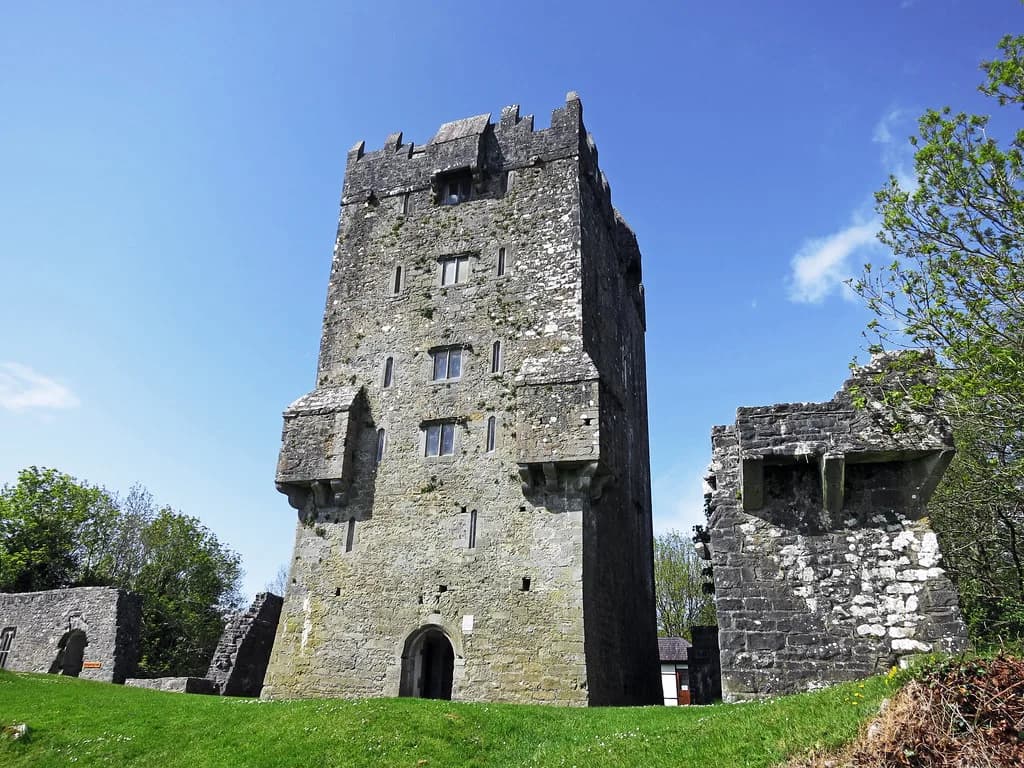
Aughnanure Castle is a late-medieval tower house built on a rocky outcrop overhanging the Drimneen River, close to the western shore of Lough Corrib in County Galway. It is currently closed to visitors: the Office of Public Works, which cares for the site through Heritage Ireland, has posted a temporary closure for car-park works, with no reopening date confirmed. Check the operator's page before making any journey, because planning around a confirmed status is the only reliable approach here.
The closure matters because the castle is not a roadside ruin you can simply walk up to; the car park and approach are part of the visitor experience. An independent Galway guide recorded the same restriction, noting it began on 22 June 2026 with no confirmed reopening date. Treat any older blog post that describes normal seasonal hours as out of date until the operator clears the site again.
What Aughnanure Castle Is and Where It Stands
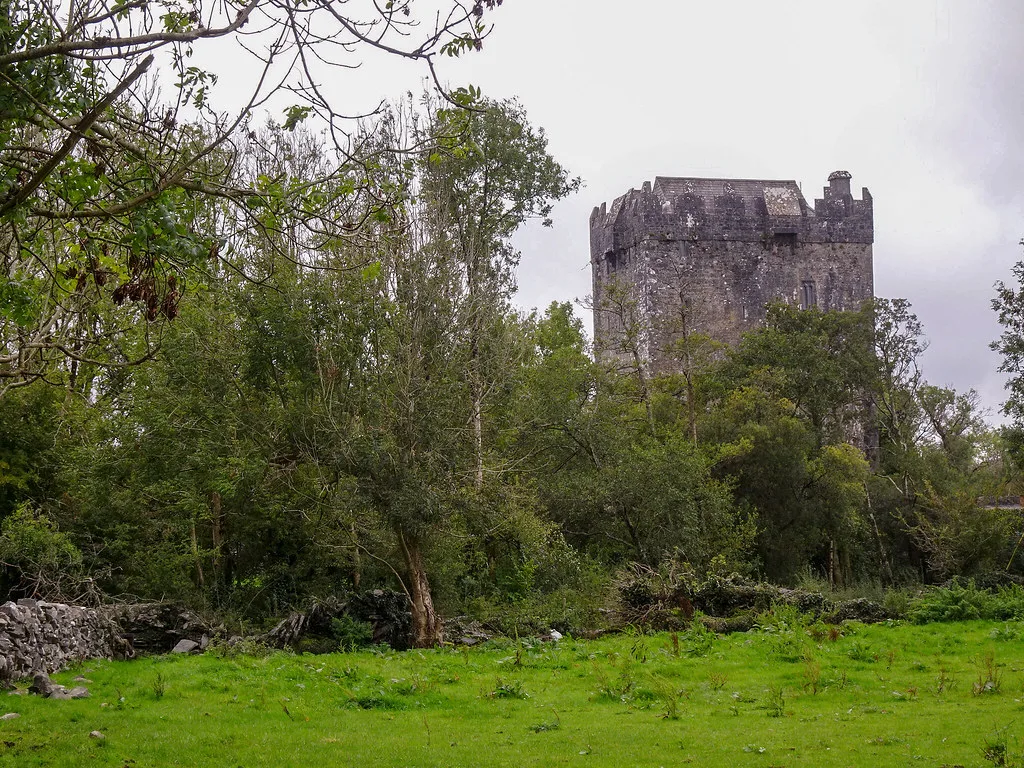
The castle occupies a rocky outcrop where the Drimneen River narrows, a position that let the O'Flahertys watch movement between Lough Corrib and the surrounding country. Heritage Ireland describes it as Connemara's best preserved late-medieval tower house, and its watery setting fits an O'Flaherty habit of building strongholds with access to lakes, rivers and coastline. When you arrive, look first at the ground under your feet: the drop to the water explains much of why the site was chosen.
Oughterard, the angling village nearest the castle, is the practical base for food and fuel, and the castle is signposted off the N59 near the village. The Irish name Achadh na nIubhar is glossed as "field of the yews" by secondary sources, not by the operator, so treat that translation as a reading of the place-name rather than a verified origin story. For a wider survey of tower houses and later castles across the county, see the guide to Castles in County Galway and use it to place Aughnanure in context. If you want to mix built heritage with indoor collections, our Museums in Galway City: Two Places Worth Your Time covers the city alternative on a wet day.
This is one of more than two hundred tower houses recorded in County Galway, most raised by Gaelic and Anglo-Norman landowning families, a figure taken from a secondary encyclopaedic account rather than the operator. That number is useful for expectation-setting: Aughnanure is not a lone curiosity but part of a dense medieval landscape of defended houses. County Galway as a whole rewards that comparison, and Portumna Castle and Gardens shows a very different later building tradition in the same county.
For scale and contrast, Dunguaire castle in south Galway offers a compact shoreline tower house with its own visitor arrangements and status. Visiting both across separate trips is the honest way to compare them, since each has its own operator notices and conditions of access.
The O'Flahertys of Iarchonnacht
Aughnanure was the stronghold of the O'Flaherty Gaelic lords of Iarchonnacht, or West Connacht, for more than two centuries. Heritage Ireland frames the tower house as a visible statement of the family's prestige on an important routeway to the Corrib, which helps explain why so much building effort went into a site beside water rather than a hilltop. When you walk the grounds, read the walls as a claim about status, not merely as shelter.
The family line is remembered in different registers at different sites, and Aughnanure's story is one of Gaelic lordship under pressure from both rival families and the merchant town of Galway. A third-party guide also connects Grace O'Malley, the sea captain of Clew Bay, to a marriage at the castle in 1546, but that association is reported by secondary sources rather than the operator, so hold it as tradition attached to the place.
What Survives on the Ground
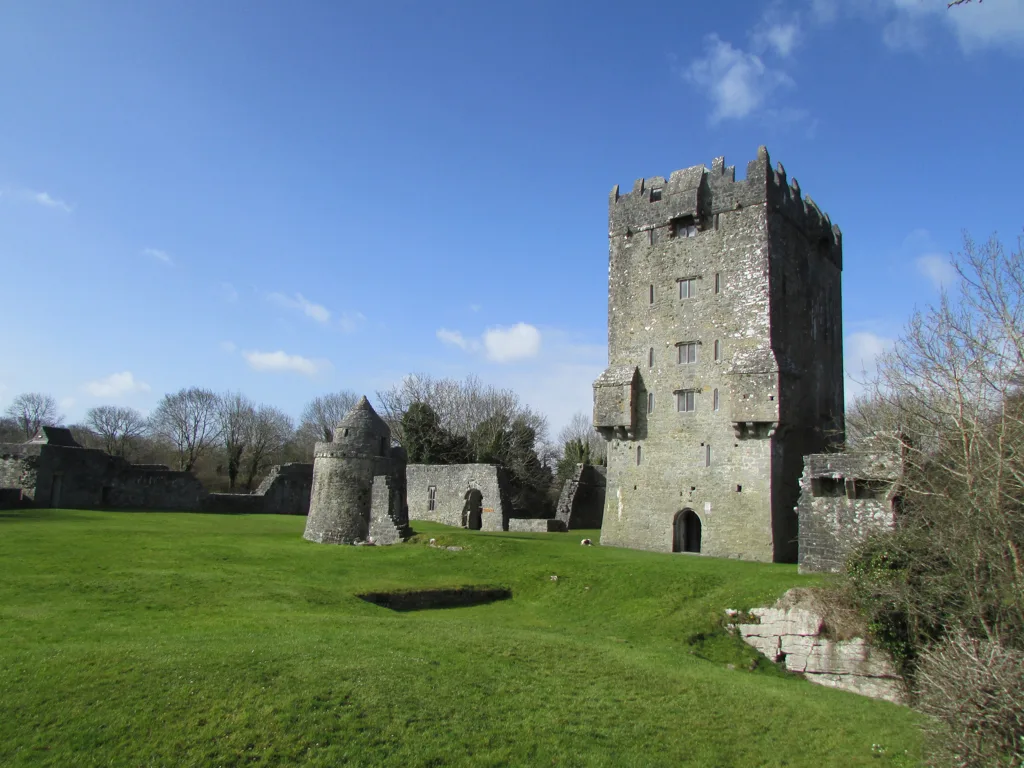
The monument was constructed in at least two phases. The earlier work is the fifteenth-century tower house with its inner walled enclosure, or bawn; the outer bawn, banqueting hall and other buildings belong to a later sixteenth-century phase. That two-stage sequence is the operator's reading, and it is the one to rely on when you are trying to date the masonry on a visit.
What sets the site apart structurally is the double bawn: an inner enclosure ringed by a larger outer wall, so an attacker had to break through two lines before reaching the tower itself. Heritage Ireland's highlights point visitors toward the carved windows of the ruined banqueting hall, which hint at the feasting and ceremony once staged there. Stand back from the hall when it reopens and look at the window detail rather than hurrying inside.
Reading the Defences
The tower is best understood as a working defensive machine across four floors. The operator's highlights single out the murder hole, a stone overhang above a doorway with a hole in the floor through which defenders could drop objects, and the secret chamber where enemies of the O'Flahertys were said to be imprisoned. Look for these features deliberately; they are easy to pass without noticing on a spiral stair.
Flanking towers and stout stone walls enclosed the family in times of raiding and war, and the outer ring of the bawn extended that protection around the inner core. A third-party account adds further defensive details such as machicolations, bartizans and gun-loops, useful vocabulary for identifying what you see, though it is not the operator's description. Keep the double-bawn sequence in mind as you walk: it is the clearest surviving expression of how the site was meant to be defended.
History in Supported Strokes
The castle's hold on power fractured in 1572, when Sir Edward Fitton, described by a secondary account as president of Connacht, seized the stronghold and granted it to a junior O'Flaherty who accepted the authority of the Crown. That transfer is reported consistently, and it marks the point at which clan unity was weakened under English pressure. Later, during the Cromwellian reconquest, the castle was used to blockade Galway, a role Heritage Ireland also describes in the seventeenth century.
The O'Flahertys' role in the 1641 rebellion led to the confiscation of their lands and the end of their rule in Iarchonnacht, after which the castle passed in and out of family hands for centuries. Peadar O'Flaherty gifted Aughnanure to the State in 1952, and a restoration and conservation programme followed in the 1960s. The site opened to the public in 1974, which is why much of what you see is conserved fabric rather than untouched ruin.
Approaching the Site When It Reopens
One of the highlights the operator emphasises is the approach itself: a leafy walk along the banks of the Drimneen River beneath ash, hazel and hawthorn, leading toward the gatehouse. Budget a little time for that riverside stretch rather than driving straight to the walls, since it sets the castle in its natural setting. Paths around the site are described as suitable for visitors with reduced mobility.
Inside the Tower When It Reopens
Informative panels on each floor, in both English and Irish, guide visitors through the building at their own pace. Guided tours cover the Gaelic medieval story and the O'Flahertys' transformation from kings to warrior lords, which is useful if you want the narrative rather than only the fabric. Choose the guided tour if you can commit to a time, and the self-guided panels if you prefer to linger, checking tour availability when the site reopens.
Access Trade-Offs
The ground-level routes and paths suit visitors with reduced mobility, but the upper floors do not: the tower stairs are narrow, steep and uneven, and a third-party account describes them in much the same terms. Decide in advance whether your group splits, with some climbing to the battlements while others stay below, because turning back mid-stair is awkward. The defensive features and bawn are still legible from ground level even if the tower top is out of reach.
Hours and Admission When the Castle Operates
Normal seasonal hours posted by the operator run daily with a shorter schedule late in the season and last-admission cut-offs before closing, though these should be read as indicative while the closure stands. The published season generally stretches from late February to mid-November, with a reduced late-season timetable. Confirm the current notice before relying on any of these arrangements.
Third-party listings give an indicative adult admission and reduced rates for groups, seniors, children and families, and note free entry on the first Wednesday of each month and for OPW Heritage Card holders. Treat any figures as subject to change, and check them again once a reopening is announced. If the first-Wednesday arrangement appeals, plan around it but verify it is still offered.
Nearby Sites That Are Separate Visits
Other Heritage Ireland properties in Galway and Connemara are distinct places with their own pages and conditions, not features of Aughnanure and not covered by its ticket. Athenry Castle Ireland, a Norman lordship site east of Galway city, is one such option for a different day and a different story.
Pearse's Cottage and Visitor Centre at Ros Muc, deep in the Connemara Gaeltacht, is another separate site: Patrick Pearse built a summer cottage there and the centre explores the landscape and Gaelic culture that drew him west. Its visitor centre and café have their own opening arrangements, and distance from Aughnanure should not be underestimated. Check its own page for hours and access before planning a day around it.
For broader context, ancient sites ireland covers monuments of other periods that help explain how this landscape was used long before the tower house rose. Pairing that reading with a castle visit gives a fuller sense of what the O'Flahertys inherited and altered.
Legends and Folklore
Stories attached to the castle include a gamekeeper's ghost, a rolling head and the wail of a banshee, alongside a popular tale of a trapdoor in the banqueting hall that supposedly dropped unwelcome guests into the river. These are folklore, not documented history, and should be enjoyed as such. On-site interpretation is said to explore the legends alongside the historical record, so you can compare story with evidence when the castle reopens.
Plan Around the Closure
The practical point is simple: Aughnanure Castle is temporarily closed for car-park works, no reopening date has been confirmed, and the operator's notice is the only place to check before travelling. Meanwhile, the castle's history, double bawn and riverside setting are well worth reading up on so that a future visit is more than a quick look at old stone. Build the trip around a confirmed status rather than an assumption.
Explore more Ireland guides
Frequently Asked Questions
Is Aughnanure Castle open to visitors now?
No. The Office of Public Works has posted a temporary closure for car-park works, with no reopening date confirmed. Check the Heritage Ireland page for Aughnanure Castle shortly before any planned journey, since it carries the authoritative status and any new notice.
Why is Aughnanure Castle closed?
The closure is for upgrading the car park, reported from 22 June 2026. Because the date of reopening has not been published, anyone planning a visit should verify the position directly rather than relying on older travel articles that describe normal seasonal opening.
What is a double bawn at Aughnanure?
A bawn is a walled enclosure around a tower house. At Aughnanure there are two: an inner bawn close to the tower and a larger outer wall beyond it, so an attacker had to breach successive lines of defence. This layered layout is the most distinctive structural feature to look for on a visit.
Who built Aughnanure Castle and when?
It was built by the O'Flaherty family, the Gaelic lords of Iarchonnacht, with the tower house and inner bawn dating to the late fifteenth century. The outer bawn, banqueting hall and other buildings were added in a later sixteenth-century phase, so the monument reflects more than one period of construction.
How do I get to Aughnanure Castle from Oughterard?
The castle is signposted off the N59 just north of Oughterard in County Galway, with a short turn to the car park. Oughterard is the nearest village for food and fuel. Check that the site has reopened before setting out, since the car park itself is the subject of the closure.
Can visitors with limited mobility enjoy Aughnanure Castle?
Ground-level paths around the site are described as suitable for reduced mobility, so the bawn, walls and riverside approach can be appreciated without climbing. The tower stairs are narrow, steep and uneven, which means the upper floors are not wheelchair accessible. Plan for a split group if some want to climb.
Are the ghost stories about Aughnanure Castle true?
They are folklore rather than documented history. Tales of a gamekeeper's ghost, a banshee and a trapdoor that dropped guests into the river are told about the castle, and on-site interpretation discusses such legends alongside the historical record. Enjoy them as stories, not as verified events.
Sources
You might also like



Continue reading
More guides you'll find useful


