
Stone Circles in Ireland: Sites, Shapes and Visitor Access
Compare stone circles in Ireland, from Drombeg to Grange, with practical access distinctions and a separate look at Carrowmore’s tomb complex.
On this page
A stone-circle visit starts with a simple choice: what do you want to understand when you stand among the stones? Shape, setting and nearby structures can each lead you to a different stop. This guide focuses on a manageable selection of named places, with a separate comparison to a tomb complex, rather than attempting an island-wide ranking.
Recognise the Monument Before Planning the Route
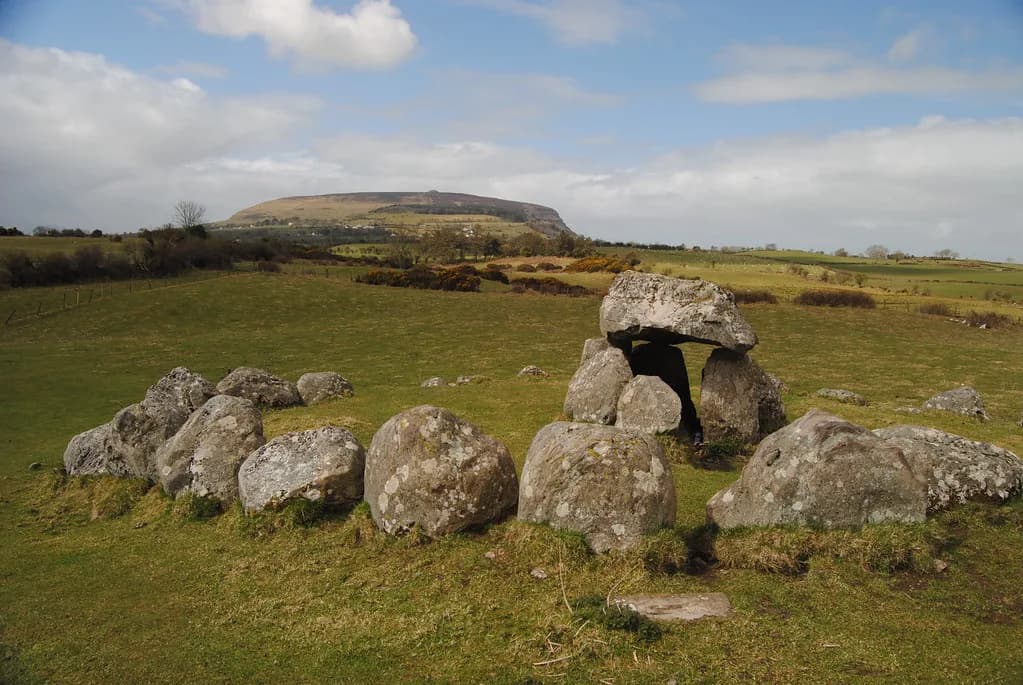
Monumental Ireland describes stone circles primarily as Bronze Age ritual monuments, with a main building period around 1800–700 BC. Its survey distinguishes Cork–Kerry axial circles, whose stones descend from taller entrance stones toward an axial stone, from the smaller-stone circles often grouped with rows and cairns in Mid Ulster. These forms offer starting points for observation.
The same survey notes that early Carrowmore passage tombs have stone rings around burial chambers. A circular arrangement alone therefore does not identify a Bronze Age circle. For visitors, the first question is whether the stones enclose an open ritual space or form part of a tomb.
For background reading before choosing individual stops, consult our guide to Neolithic Ireland. Use the monument descriptions below to compare the structures you will actually see.
Drombeg, County Cork: Look Beyond the Ring
The OPW record places Drombeg less than three kilometres east of Glandore and identifies it as a National Monument in state guardianship. Its original seventeen uprights included an axial stone bearing shallow cup-marks. Excavation revealed cremated human remains within the circle. The adjoining hut remains show successive building phases, and a causeway connects them with a fulacht fiadh cooking site.
These features make a useful sequence for your visit: examine the ring, then look at the hut outlines and cooking place. Do not treat everything visible as one building episode; the OPW describes intermittent use and a changing hut layout.
Discover Ireland explains the cooking method: hot stones were dropped into a water-filled trough. It also describes a winter-solstice sunset alignment through a notch in distant hills, while explicitly qualifying its precision. That distinction matters if you are planning a solstice visit: a reported alignment does not guarantee a particular photographic effect or clear weather.
Our Drombeg Stone Circle guide provides a separate page for planning this stop. For another monument type to investigate, see our guide to Dun Aonghasa.
Grange Stone Circle, County Limerick: Stones and Bank
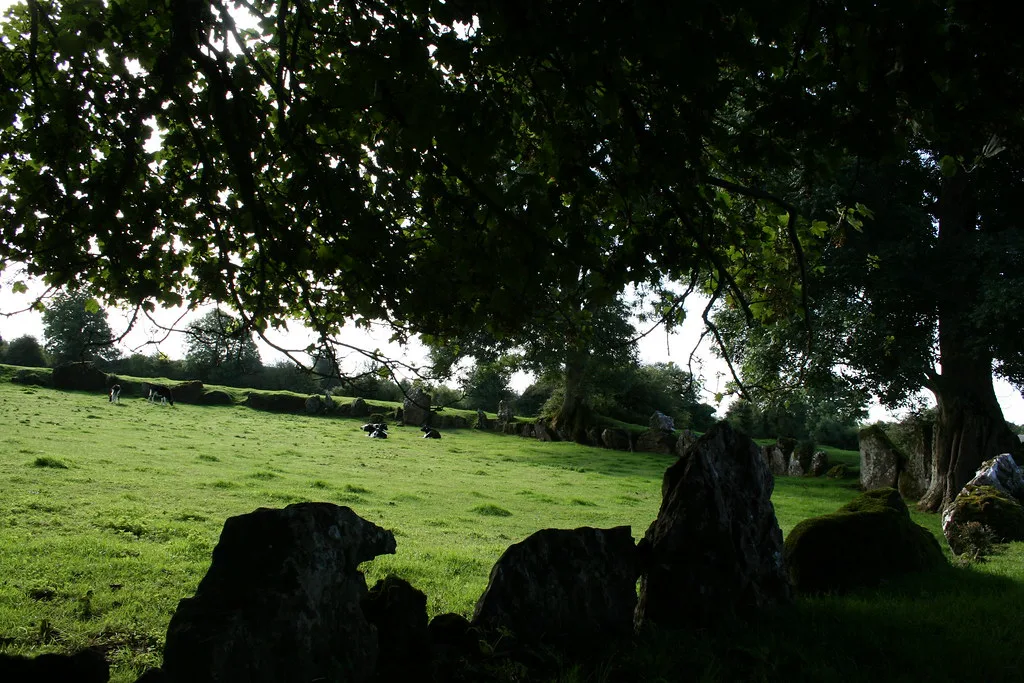
Grange is a state-owned National Monument cared for by the OPW. Its official description identifies an enclosure of adjoining stones. A central posthole suggests that the builders laid out the ring using a stake and rope. Excavated pottery fragments and animal bones inform interpretations of ritual use, rather than revealing a complete account of the ceremonies.
Limerick’s municipal visitor record explains how the surrounding bank distinguishes Grange from a ring of separate uprights. Compare the stones with the earthwork. The same record confirms public access, an information panel and tours available through Lough Gur Tours. This is separate from the OPW listing of the monument as an unguided site; a tour should be arranged through the local provider.
Add Interpretation at Lough Gur
Limerick’s official visitor information describes the Lough Gur visitor centre’s interactive interpretation of more than 6,000 years of local archaeology and history, with trained guides available to answer questions. If you wish to include the centre, confirm its current availability first. Treat the centre and outdoor monument as separate stops when planning.
Use our Lough Gur guide when arranging this part of your visit. Choose whether you want independent exploration or a booked tour before setting the day’s schedule; a visitor centre and an outdoor monument need separate planning. For indoor collections nearby, compare options in our Museums in Limerick: A Guide to the City's Core Collections.
Kenmare and Beltany: Two Different Settings
Tourism Ireland describes Kenmare’s circle in County Kerry as an oval arrangement of fifteen boulders with a large central stone. Its local name is The Shrubberies. It offers a contrasting layout to the ring and bank at Grange: look at the overall shape and central feature, without assuming that every interpretation of its purpose is settled.
The same tourism source places Beltany on a hill outside Raphoe in County Donegal. It links the name with the festival of Bealtaine. A traditional association can add context to a visit, but it does not establish exactly which ceremonies took place there. Neither this description nor Kenmare’s proves current parking, charges or step-free access.
Carrowmore: A Tomb Complex for Comparison
Carrowmore is a Neolithic cemetery in County Sligo. The current OPW page records more than thirty surviving monuments and a refurbished visitor centre opened on 1 April 2026. It lists an interpretive exhibit, guided tours, toilets and an all-weather shelter. The published season runs from 12 March to 2 December 2026, with opening from 10:00 to 18:00 and last admission at 17:00.
The operator warns of uneven walkways and limited wheelchair access, and permits assistance dogs only. Use these restrictions to assess suitability.
For the distinction between monument forms, continue with our guide to passage tombs in Ireland. Our Knocknarea Cairn guide is another separate page to consult when researching the Sligo area.
Plan Around Access, Not a Checklist
Choose the monument that answers your main interest: a ring and neighbouring structures, a banked enclosure, or a comparison with tomb architecture. Avoid treating a photograph of open ground as permission to enter it. Follow on-site signs, leave gates as instructed and keep off the stones. Outdoor monuments deserve the same care as objects inside a museum.
Our Ancient Sites in Ireland collection provides further reading. The Ancient Ireland Map and Standing Stones Ireland guides offer additional starting points; use individual site information to decide what belongs on your route.
Choose One Main Visit
Give yourself time to observe one monument carefully before adding more stops. Compare the entrance, arrangement of stones and surrounding features, then use interpretation to test your first impressions. For further heritage reading, our Hill of Tara guide is available separately.
Explore more Ireland guides
Frequently Asked Questions
Is Carrowmore the same kind of monument as a stone circle?
No. Carrowmore is a Neolithic cemetery; circular stone settings there belong to a tomb landscape. Treat it as a comparison, rather than another interchangeable circle.
Does a stone-circle visit require a guided tour?
Choose according to the specific site. At Grange, the OPW lists an unguided monument while local visitor information advertises tours through Lough Gur Tours. Arrange a tour with the provider if you want one.
What should I look for around Grange’s stones?
Look at the surrounding earth bank as well as the adjoining uprights. Limerick’s visitor record explains that this arrangement gives Grange a different form from a circle of separate standing stones.
Sources
- Stone Circles - Monumental Ireland
- Ancient Ireland's standing stones | Ireland.com
- Drombeg Stone Circle | Heritage Ireland
- Visit Drombeg Stone Circle with Discover Ireland
- Lough Gur | Limerick.ie
- Grange Stone Circle | Heritage Ireland
- Grange Stone Circle | Limerick.ie
- Carrowmore Megalithic Cemetery | Heritage Ireland
You might also like



Continue reading
More guides you'll find useful


