
Dolmens in Ireland: Reading the Brownshill Portal Tomb
Dolmens in Ireland are usually portal tombs. See what Brownshill in County Carlow is, how it was built, and how museum collections put it in context.
On this page
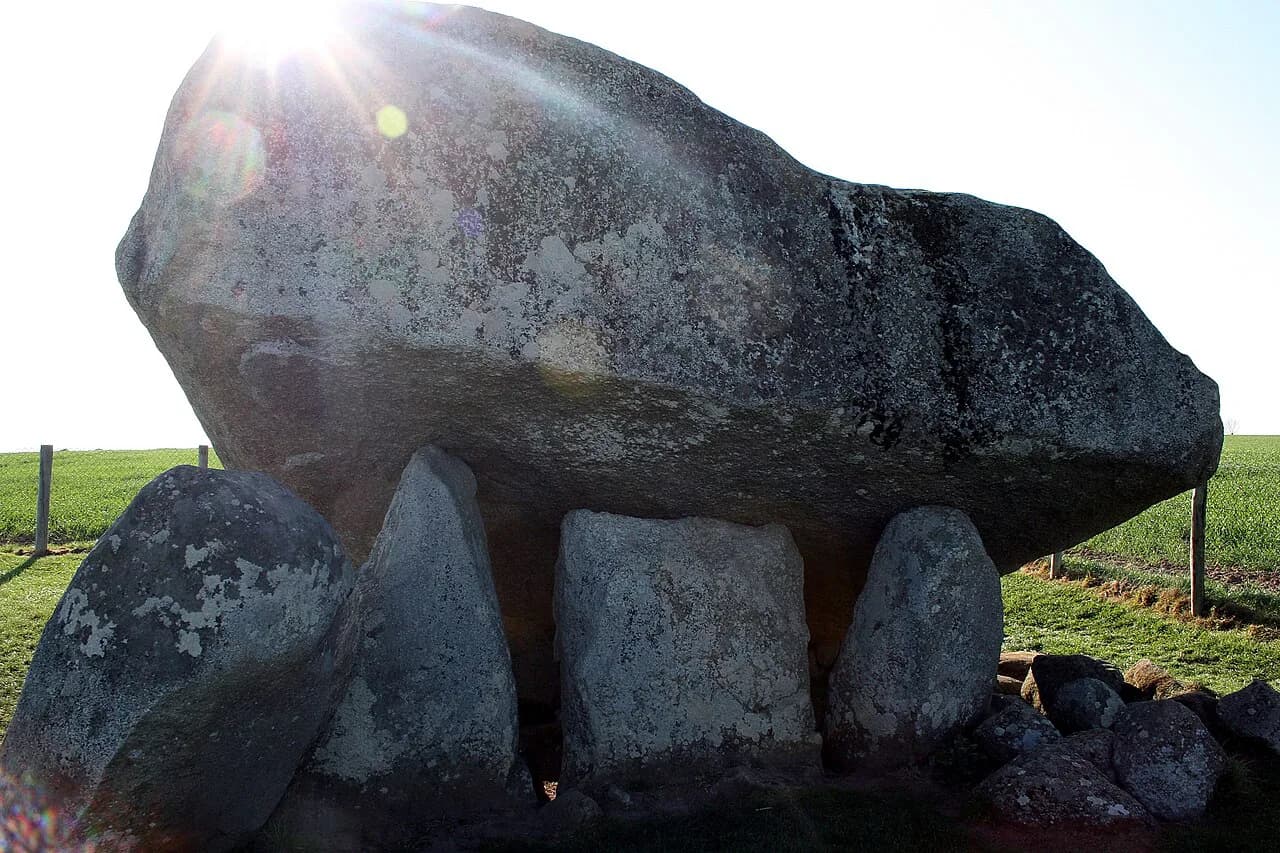
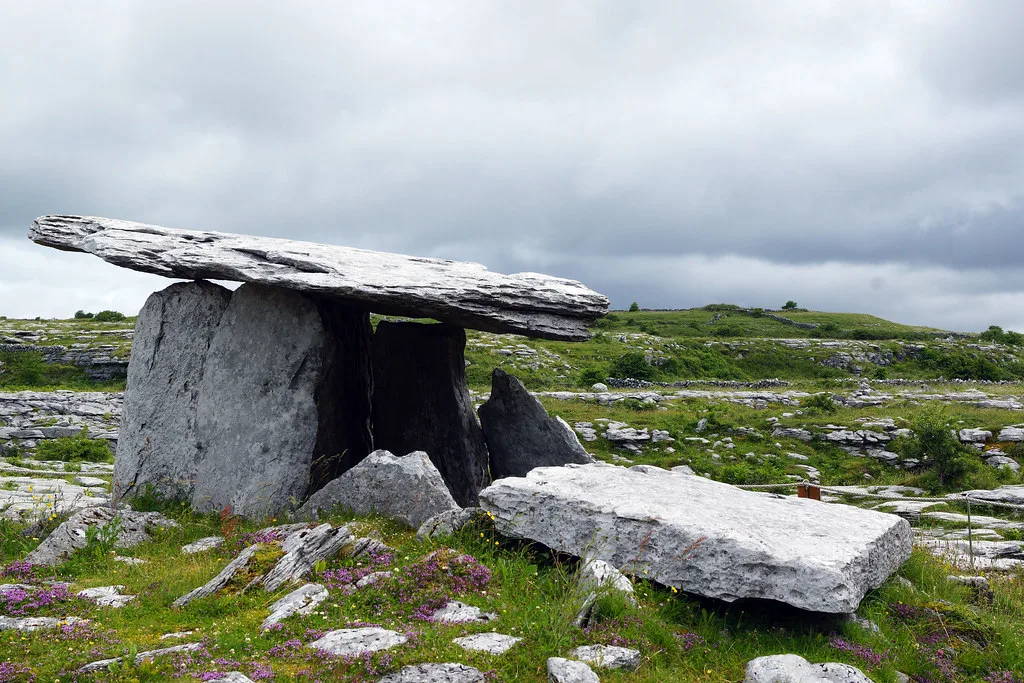
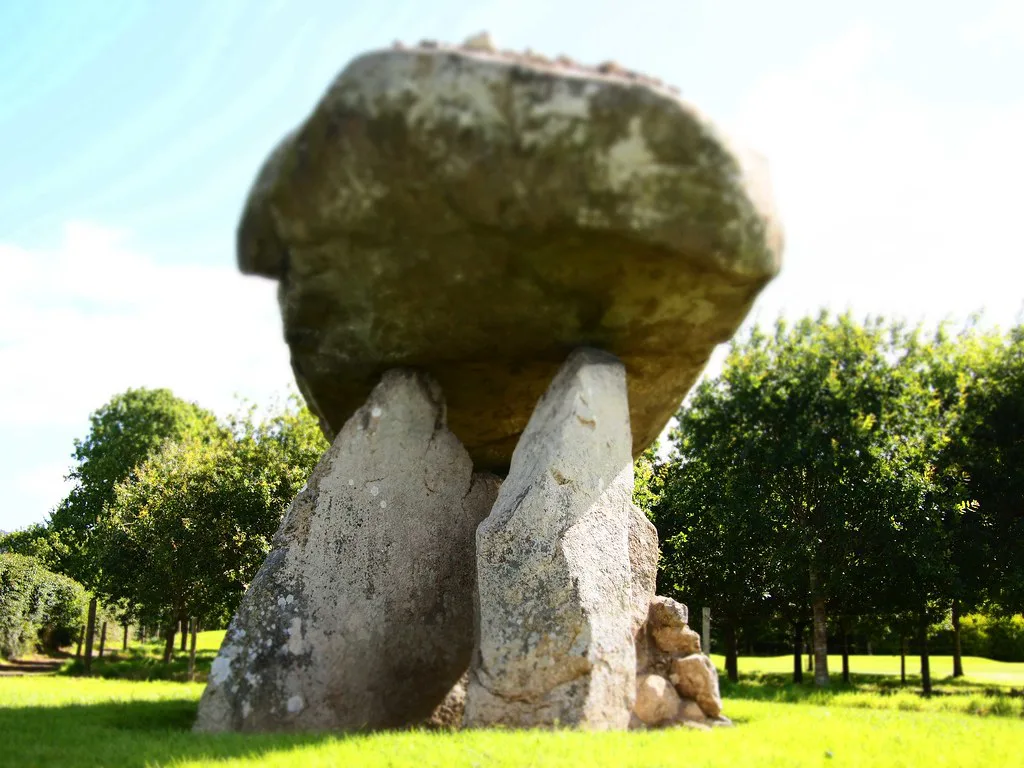
In Ireland, the structures popularly called dolmens are classified by archaeologists as portal tombs. The form is a chamber of large upright stones, usually two tall portals flanking a lower door stone, capped by a massive roof slab. Brownshill in County Carlow, about 3km east of Carlow town, is a well-documented example that rewards a careful look alongside the wider map of ancient sites ireland.
What Brownshill Is
Heritage Ireland, the Office of Public Works site describing the monument, gives the capstone dimensions as roughly 4.7m by 6.1m by 2m. That granite slab rests on two portal stones, a door stone and a flat slab. The OPW describes the capstone as reputedly more than 100 tonnes and as reputedly the largest of its kind in Europe; Discover Ireland puts the figure at about 103 tonnes, so both weights are best read as estimates.
Where It Sits and How It Is Cared For
The monument stands in meadow country on the Hacketstown Road, east of Carlow town, according to Discover Ireland. It is a state-owned National Monument in the care of the Office of Public Works and is protected under the National Monuments Acts 1930 to 2014, as Heritage Ireland states. Those two facts explain the tone of a visit: this is a conserved ancient structure rather than a staffed attraction.
How Old It Is and What It Was For
Estimates put the monument's construction at between 4,900 and 5,500 years ago, and both the OPW and Discover Ireland give that range. Its exact purpose remains uncertain. It is widely thought to have served as a ceremonial site for religious rites, possibly including human cremation or burial, and Discover Ireland notes that it may also have functioned as a form of boundary marker.
What the Stones Imply About Neolithic Builders
The sheer size of the capstone raises questions about the ingenuity and capabilities of the people who built it, and about the social and spiritual structures of their society, as Heritage Ireland puts it. The National Museum of Ireland's Prehistoric Ireland exhibition gives that culture a material face: stone tools of the first hunter-gatherers, the pottery and personal objects of Neolithic farmers, and a reconstructed passage tomb setting. Among the finds displayed is a decorated flint mace head from Knowth, one of the Brú na Bóinne passage tombs with Newgrange and Dowth in County Meath.
Where Brownshill Fits in the Wider Sequence
Portal tomb building belongs to the early part of a long monumental tradition, not to an isolated episode. The National Museum's Prehistoric Ireland exhibition covers human settlement in Ireland from about 7000 BC to the Late Bronze Age around 500 BC, which includes the introduction of metalworking around 2500 BC. The Bronze Age collections carry the chronological story forward, while other ancient monuments, such as the Hill of Tara, show how long the Irish impulse to shape places with stone and earth persisted; exploring our guide to the Hill of Tara is a useful next step.
What Excavated Tombs Elsewhere Suggest About Burial
Brownshill itself has never been excavated, as Heritage Ireland notes, so any burial evidence must come from comparable tombs elsewhere. Excavations at similar tombs across Ireland have revealed pottery, flint tools, and personal items such as bone pins and beads, alongside human remains. The museum's Bronze Age collections show the same custom of grave goods in a later period: Early Bronze Age burials were usually accompanied by pottery vessels, and over 1,300 such graves have been found.
How to Look at the Monument on Site
Heritage Ireland describes Brownshill as an unguided site and asks visitors to maintain care and caution while there. Read the monument as a landscape structure: identify the two portal stones that carry the capstone and the lower door stone between them. Discover Ireland adds that the slab slopes downward to the west, where it rests on a low boulder, and that the monument sits in quiet meadows, which makes the approach part of the experience.
The Heritage Ireland page describes the site and its care warning but publishes no opening hours, admission charges or tour arrangements, so check it before travelling rather than assuming services. The visit works best as a short stop rather than a half day. For a broader picture of where this monument sits among Ireland's other ancient places, an ancient Ireland map is a useful planning tool.
Where to See Related Prehistoric Material Indoors
The National Museum of Ireland's Prehistoric Ireland exhibition at Kildare Street, Dublin 2, is a free city destination that complements the monument. It displays tools, pottery and personal objects of Neolithic farmers, and prominently a 4,500-year-old logboat from Lurgan, County Galway. The museum is a separate institution and does not hold material recovered from Brownshill itself.
The museum's Bronze Age collections extend the frame: gold and copper working from around 2500 BC, more than 50 crescent-shaped lunulae, and a Late Bronze Age hoard from Dowris in County Offaly that may have contained 218 objects. These finds belong to a society whose burial and deposition customs ran long after the portal tombs were built. That continuity is the real value of pairing a stone monument with a museum collection.
Distinguishing a Dolmen From Other Monuments
Portal tomb is the correct term for the form Brownshill represents, while dolmen is the popular label. Ireland has several other monumental classes, and conflating them weakens what you can learn on site. A court tomb, for example, is a different structure, and Creevykeel court tomb in County Sligo is a clear comparison point. Viewing both forms side by side makes the portal tomb's distinct plan easier to recognize.
Plan Your Visit
Approach Brownshill as evidence rather than scenery. Confirm the site's current situation on the Heritage Ireland page before you go, since no opening hours or tours are published, and plan a short stop that leaves time to see the surrounding meadow landscape. If your trip runs through Dublin, add the National Museum's Kildare Street exhibition to your itinerary to see the tools, pottery and the Lurgan logboat of the people who lived in these islands, and our Dublin heritage guide will help you place that collection in the wider story of the city.
For another heritage guide, read about Standing Stones Ireland.
Explore more Ireland guides
Frequently Asked Questions
What is the difference between a dolmen and a portal tomb?
Dolmen is the popular word; portal tomb is the archaeological classification. Both refer to a chamber of large upright stones capped by a massive roof slab. Heritage Ireland classifies Brownshill in County Carlow as a portal tomb, and it is the best-evidenced example to use as a reference point.
Where is Brownshill Dolmen and what is its setting?
It lies about 3km east of Carlow town, on the Hacketstown Road, according to Discover Ireland. The monument stands in quiet meadow surroundings, and Heritage Ireland describes it as an unguided site in the care of the Office of Public Works.
How heavy is the capstone and how old is the monument?
The capstone is estimated at more than 100 tonnes by Heritage Ireland and about 103 tonnes by Discover Ireland, so treat both as estimates. The monument's construction is estimated at between 4,900 and 5,500 years ago. No precise construction date is published.
Was Brownshill Dolmen excavated?
No. Heritage Ireland states that the dolmen itself has never been excavated. The evidence for burial practice comes from comparable tombs elsewhere, where pottery, flint tools, bone pins, beads and human remains have been found.
Can you go inside Brownshill Dolmen?
There is no description of interior access by the Office of Public Works, and the site is an unguided National Monument. Heritage Ireland asks visitors to take care at all stages of the visit. It is best treated as a monument to walk around and examine, not a chamber to enter.
Where can you see prehistoric objects related to these monuments?
The National Museum of Ireland's Prehistoric Ireland exhibition at Kildare Street, Dublin 2, is free and displays tools, pottery, personal objects and a reconstructed passage tomb setting. It is separate from the Brownshill site and does not hold material from the monument itself.
Sources
You might also like



Continue reading
More guides you'll find useful



