
Irish Writers: Books and Places to Explore in Ireland
A selective guide to Irish writers, pairing Joyce, Wilde, Yeats, Heaney, Kavanagh, Beckett and contemporary voices with books and visitable places.
On this page
James Joyce, Oscar Wilde, W. B. Yeats, Seamus Heaney and playwright and novelist Samuel Beckett offer very different ways into Irish writing. Patrick Kavanagh, Claire Keegan, Sally Rooney and Colin Barrett broaden that selection across poetry, drama, novels and short stories. This guide pairs a selective introduction to these writers with literary places you can include in a visit to Ireland.
You can start with a book or with a place. A manuscript exhibition suits readers curious about how a text was made; a literary walk helps connect a story to its streets. The contemporary writers below are reading recommendations, while the museum and heritage entries explain what a visit adds.
James Joyce: Dublin as a Character
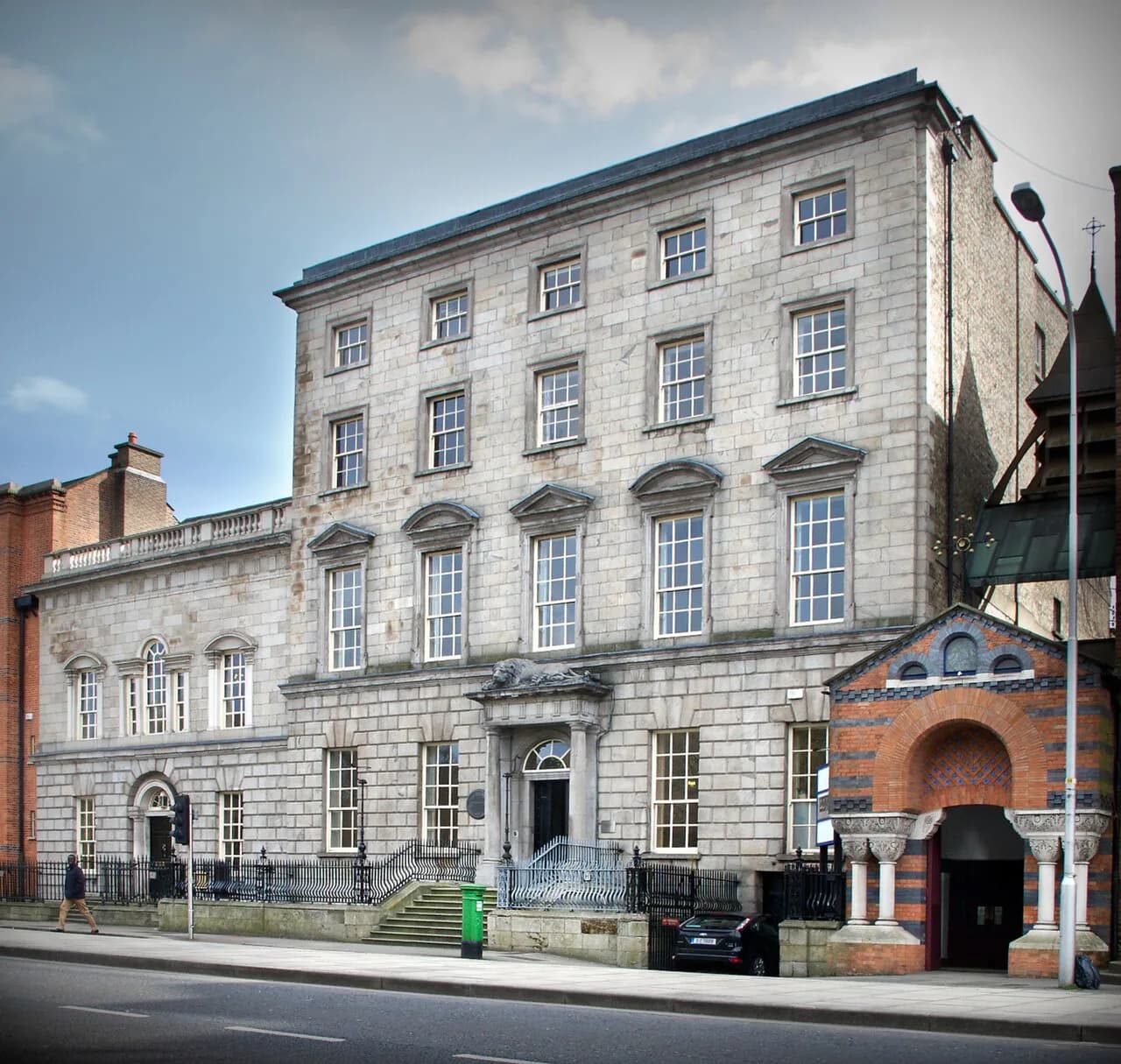
Joyce lived much of his life outside Ireland, while Dublin remained central to his writing. The James Joyce Centre connects his stories with named streets and buildings, including the Gresham Hotel in The Dead. Reading before a visit can give those ordinary addresses another layer of interest.
The Museum of Literature Ireland holds Copy No. 1 of Ulysses in its permanent collection, inscribed by Joyce to Harriet Shaw Weaver and dated 2 February 1922, the book's publication day and his birthday. The museum also uses sound installations and manuscripts to present Irish writing as something experienced rather than merely displayed, so allow time beyond the single case.
The James Joyce Centre offers walking tours through Dublin's north inner city. Its Georgian townhouse near O'Connell Street contains the door from No. 7 Eccles Street, the fictional home of Leopold Bloom in Ulysses. A walk connects the books to their settings, including the Gresham Hotel in The Dead; an indoor visit focuses on Joyce and objects associated with his work.
A practical trade-off: the museum and the walking tour do different jobs. The museum gives you the object and the atmosphere; the walk gives you the geography that makes the prose legible. If you have only one afternoon, read a few Dubliners stories in advance and take the walk, saving the museum for a longer stay.
Oscar Wilde: Merrion Square and a Childhood Home
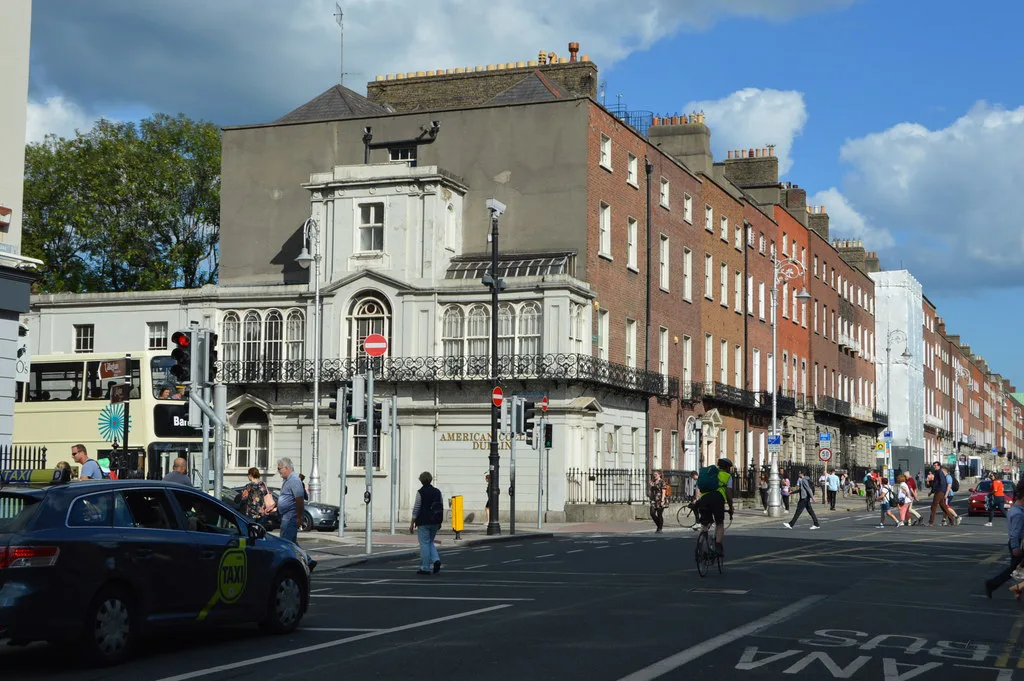
Wilde's family moved to Number One Merrion Square North in 1855, a few months after his birth. His mother, Jane Wilde, wrote as Speranza and hosted literary salons there. The house connects Oscar's childhood to a wider family culture of writing and conversation. For the square itself, see this guide to Merrion Square, Dublin: Georgian Square and Park Guide.
Oscar Wilde House now shares its building with American College Dublin. The operator lists weekend walk-in visits through April 2027, with guided tours on selected dates; use its current calendar when choosing a day. This is Wilde's childhood home rather than his birthplace.
Choose a piece of Wilde’s writing to read before visiting, then consider what the family setting adds to your understanding. A visit supplies domestic and architectural context; it need not become a search for a real location behind every fictional scene.
W. B. Yeats and the Literary Revival
Yeats was born in Dublin in 1865 and grew up in an artistic household, spending summers in Connacht where his engagement with folklore and nature took shape. Those interests fed the movement often called the Irish Literary Renaissance, and in his earlier period his dramatic production outweighed his poetry. With Lady Gregory he founded a theatre company that later became the Abbey Theatre, and his plays drew on Irish legend and mysticism.
Yeats received the Nobel Prize in Literature in 1923. His work includes poetry and drama, so there is no need to make a single difficult poem the test of whether you will enjoy him. Try the form that already interests you, then read further into the literary revival.
For a first reading, choose a small selection rather than a collected volume. Comparing different Irish poets can also show how varied the tradition is: a revival-era poem and a much later rural poem need not offer the same view of Ireland. Follow the guide to Irish poets for more choices.
Seamus Heaney: From Derry Farmland to a Dublin Exhibition
Heaney grew up in County Derry in Northern Ireland, and rural life remained central to much of his poetry. His Nobel biography describes the continuing importance of his childhood at Mossbawn even after he moved away. Irish literary identity crosses the island's present political border; the Dublin exhibition below is in the Republic of Ireland.
Heaney received the Nobel Prize in Literature in 1995 and died in 2013. You might begin with Digging and then compare it with later poems about education and departure. That gives a visit to his archive a specific question: how did he return to the same memories in different forms?
In Dublin, the free exhibition Seamus Heaney: Listen Now Again is at the Bank of Ireland Cultural and Heritage Centre on Westmoreland Street, not at the National Library's Kildare Street building. It is built around Heaney's own writing desk, with original manuscripts, letters, diary entries, photographs and recordings drawn from the archive his family donated to the National Library in 2011.
The National Library lists the exhibition as running until 2027, opening 10am to 4pm Monday to Saturday with last admission at 3.30pm and closure on bank holidays, with a guided tour at 2pm. These are the operator's current listed arrangements, so confirm before a special trip. For a visit, pick one manuscript to look at closely and compare the visible working process with a poem you have read. A focused question can make an archive display more rewarding than trying to absorb every case.
Samuel Beckett: Biography Before a Route
Beckett was born at Cooldrinagh in Foxrock, County Dublin, in 1906, the second son of a middle-class Protestant family. He studied at Trinity College Dublin, choosing French and Italian, and later settled in Paris, where he became a friend of Joyce and one of his assistants on the manuscript that became Finnegans Wake. He wrote in two languages across his career, which is the key to his style.
For a first encounter, decide whether you want performance or prose. The plays give you the spare stagecraft and the comic timing; the novels and short prose give you the interior voice. Readers who enjoy linguistic precision often start with the shorter fiction, while theatre-goers should simply see whichever play is staged locally.
Foxrock and Trinity belong to Beckett's biography, while much of his writing career unfolded in Paris. Start with that distinction when reading about his Dublin connections: a place where an author lived or studied is different from a museum or a public exhibition; no dedicated Beckett visitor site is covered here. Reading a play before seeing it performed offers another way to explore his work.
Patrick Kavanagh in Inniskeen
The Patrick Kavanagh Centre in Inniskeen, County Monaghan, presents his life and writing in the former St Mary's church. Kavanagh was baptised there and served as an altar boy. The building appears in Tarry Flynn and The Green Fool, giving the exhibition a direct connection with his books.
Kavanagh is buried in the adjoining churchyard. This combination lets you approach the visit through both a literary exhibition and a place from his own life, with the churchyard adding a biographical connection to the literary displays.
Inniskeen is a separate destination from Dublin, so choose it because Kavanagh interests you, rather than adding it automatically to a city visit. Read a little before going and take one passage or question to the exhibition. That preparation gives a focused reason for the journey.
Contemporary Voices: Keegan, Rooney and Barrett
Claire Keegan writes short fiction and novels, was brought up on an Irish farm and has been translated into thirty languages. Her first collection, Antarctica, won the Rooney Prize for Irish Literature, and Walk the Blue Fields won the Edge Hill Prize. Foster offers another short work to consider; Small Things Like These was shortlisted for the Booker Prize in 2022.
Sally Rooney's novels include Conversations with Friends and Normal People. The latter grew from characters in an earlier short story and reached another audience through its television adaptation, for which she was a screenwriter. Choose a book that interests you as reading for the journey; a literary trip can include contemporary fiction alongside visits associated with earlier writers.
Colin Barrett grew up in County Mayo and writes short stories and novels. His first collection, Young Skins, won the Guardian First Book Award, the Frank O'Connor International Short Story Award and the Rooney Prize, and one of its stories became the film Calm with Horses. His second collection, Homesickness, and the debut novel Wild Houses, longlisted for the Booker Prize 2024, followed. Readers who like small-town pressure and precise dialogue should start with Young Skins.
These three are reading choices, not attractions, and none of them displaces the older writers. A trip that pairs one contemporary book with one nineteenth- or twentieth-century site gives you both the living tradition and its history without pretending the two compete.
Choosing a Literary Visit
Match the place to what you have actually read. If you know Ulysses, Dublin's museum and north inner city walk work well together; if you know the poems, a Yeats reading list matters more than any single building. If you have read nothing yet, pick the shortest text on this list and read it on the journey.
A museum and a walk ask for different kinds of attention. Choose a manuscript display if you want to linger over objects, or a walking tour if you want a guided introduction to streets and settings. Leave room to read afterwards rather than filling every gap with another address.
Finally, keep the day small. One museum stop plus a short walk beats a full circuit of literary addresses. The aim is a place that changes how you read a page, not a checklist of names.
Plan Around One Writer
Irish writing offers many starting points: a Joyce story, a Heaney poem, a Beckett play or a contemporary novel. Let your reading choose the next step, whether that is an exhibition in Dublin or Kavanagh's centre in Inniskeen. One well-chosen visit can lead naturally to another book. For a place-led comparison of literary visits, explore our guide to literary Ireland.
For another heritage guide, read about Bram Stoker Dublin.
Explore more Ireland guides
Frequently Asked Questions
Which Irish writers have places you can actually visit in Ireland?
Examples include the Museum of Literature Ireland, James Joyce Centre and Oscar Wilde House in Dublin, the Heaney exhibition on Westmoreland Street, and the Patrick Kavanagh Centre in Inniskeen. Choose by your reading interests and check the venue's current visiting arrangements.
Where can I see James Joyce's first copy of Ulysses?
Copy No. 1 of Ulysses is in the permanent collection at the Museum of Literature Ireland. It is inscribed to Joyce's patron Harriet Shaw Weaver and dated 2 February 1922.
Is the Oscar Wilde House in Dublin open every day?
The operator lists weekend walk-in visits through April 2027, with guided tours on selected dates. Consult its calendar for exceptions before visiting. The building is Wilde's childhood home.
Where is the Seamus Heaney exhibition in Dublin?
Seamus Heaney: Listen Now Again is at the Bank of Ireland Cultural and Heritage Centre on Westmoreland Street, Dublin. This is a separate location from the National Library's Kildare Street buildings.
When can I visit the Seamus Heaney exhibition?
The National Library lists it as free with no booking required and running until 2027, open 10am to 4pm Monday to Saturday with last admission at 3.30pm, closed on bank holidays, with a guided tour at 2pm. These are the operator's current listed arrangements, so confirm before a special trip.
What should I read first by Claire Keegan or Sally Rooney?
Keegan's Foster is an option if you want a short work; Walk the Blue Fields is her short-story collection. Rooney's Conversations with Friends and Normal People are novels. Choose by the form you want to read rather than treating either author as compulsory preparation for a trip.
Where is the Patrick Kavanagh Centre?
The centre is in Inniskeen, County Monaghan, in the former St Mary's church. It presents Kavanagh's life and writing, and his grave is in the adjoining churchyard.
Sources
- MoLI exhibitions
- James Joyce Centre walking tours
- W B Yeats: Nobel facts
- Samuel Beckett Society biography
- Patrick Kavanagh Centre: plan your visit
- Seamus Heaney Nobel biography
- Colin Barrett: Booker biography
- Oscar Wilde House: about
- Claire Keegan: Booker biography
- Sally Rooney: Booker biography
- Seamus Heaney: Listen Now Again
You might also like



Continue reading
More guides you'll find useful





