
Literary Ireland: Museums and Writers’ Places to Visit
Explore literary Ireland through Dublin museums, Lady Gregory’s Coole Park and writers’ centres in Sligo, Kerry and Monaghan, with current access details.
On this page
Literary Ireland can be encountered in a writer’s working papers, a museum recording or a landscape connected with a book. Dublin offers several collection-based introductions. Coole Park preserves the setting of Lady Gregory’s literary circle, while centres in Sligo, Kerry and Monaghan connect writing with particular communities.
These are alternatives for different interests and journeys. A general reader might begin with MoLI; someone following Yeats could choose manuscripts in Dublin or the landscape at Coole. Start with what you want to understand, then build the visit around the place that helps answer it.
Yeats Manuscripts at the National Library, Dublin
The National Library’s Yeats exhibition draws on books, manuscripts and personal items. Highlights include manuscripts of The Lake Isle of Innisfree and Easter, 1916, his Nobel medal and family photographs. At 7–8 Kildare Street, it offers a focused way to connect the writing with the person who made it. Admission is free and does not require booking.
The library’s current service update closes the Kildare Street buildings on Saturdays until further notice and on Monday 26 October 2026. The Yeats exhibition remains open on Sundays. Use those restrictions when choosing a date.
MoLI: A Broad Introduction to Irish Writing
MoLI, the Museum of Literature Ireland, occupies 86 St Stephen’s Green. Its exhibitions combine voice, sound, stories and literary objects across three floors. The admission offer includes Joyce’s Ulysses Copy No. 1, notebooks and letters, alongside access to the Readers Garden. If you want to combine the museum with the surrounding area, see this St Stephen's Green, Dublin: A Victorian Park Visitor Guide for the park on the museum's doorstep.
Choose this museum if you want an introduction spanning different writers and forms. The sound-based installations offer a change from reading labels and manuscripts, making it a useful option when companions have different levels of familiarity with Irish literature.
The James Joyce Centre in Dublin
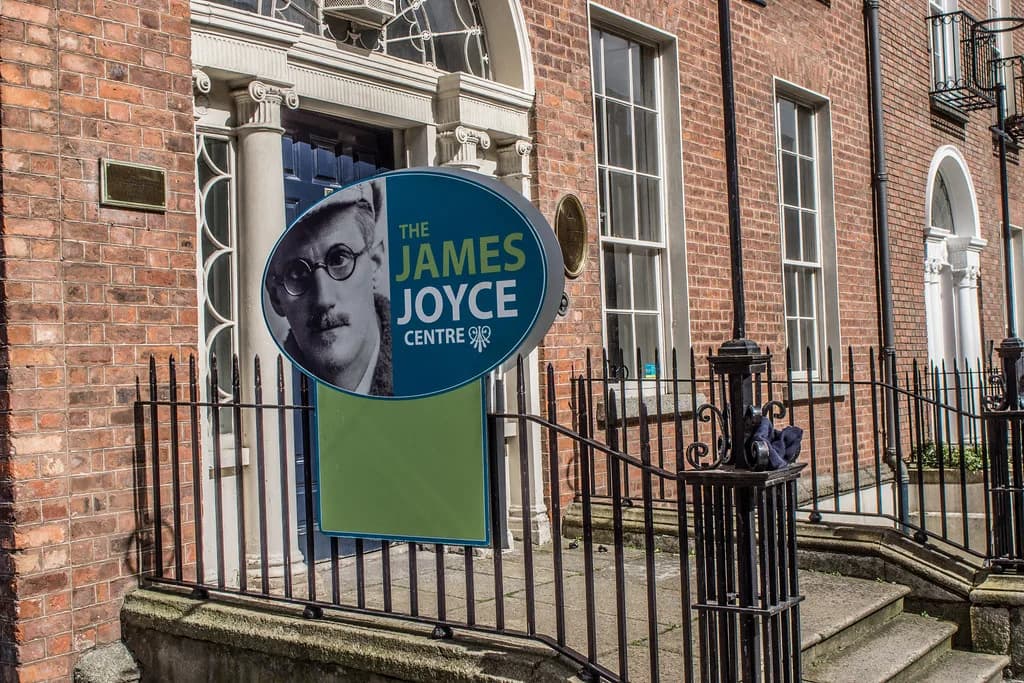
The James Joyce Centre presents the author’s life and work in a Georgian townhouse at 35 North Great George’s Street. One specific object to look for is the door of No. 7 Eccles Street, associated with Ulysses. Its programme also includes exhibitions, literary events and James Joyce walking tours.
Joyce never lived in this building: it is an author-focused museum, not his preserved home. Its current visiting days are Tuesday to Saturday, with Sunday and Monday closed, so a Monday visit is not possible. For a visit, decide whether you are most interested in the biographical displays or the objects linked to the writing.
How to Choose a Dublin Literary Visit
The three venues offer different starting points. Choose the National Library for a close look at Yeats’s papers, MoLI for a wider introduction, or the Joyce Centre for one author’s life and fictional world. You do not need to visit all three to have a worthwhile literary day.
Read a short work before you go and take one question with you. A manuscript may reveal revisions; an exhibition may make you notice a voice, place or relationship you had overlooked. Leaving time to read afterwards can be as rewarding as adding another museum.
Lady Gregory’s Coole Park, County Galway
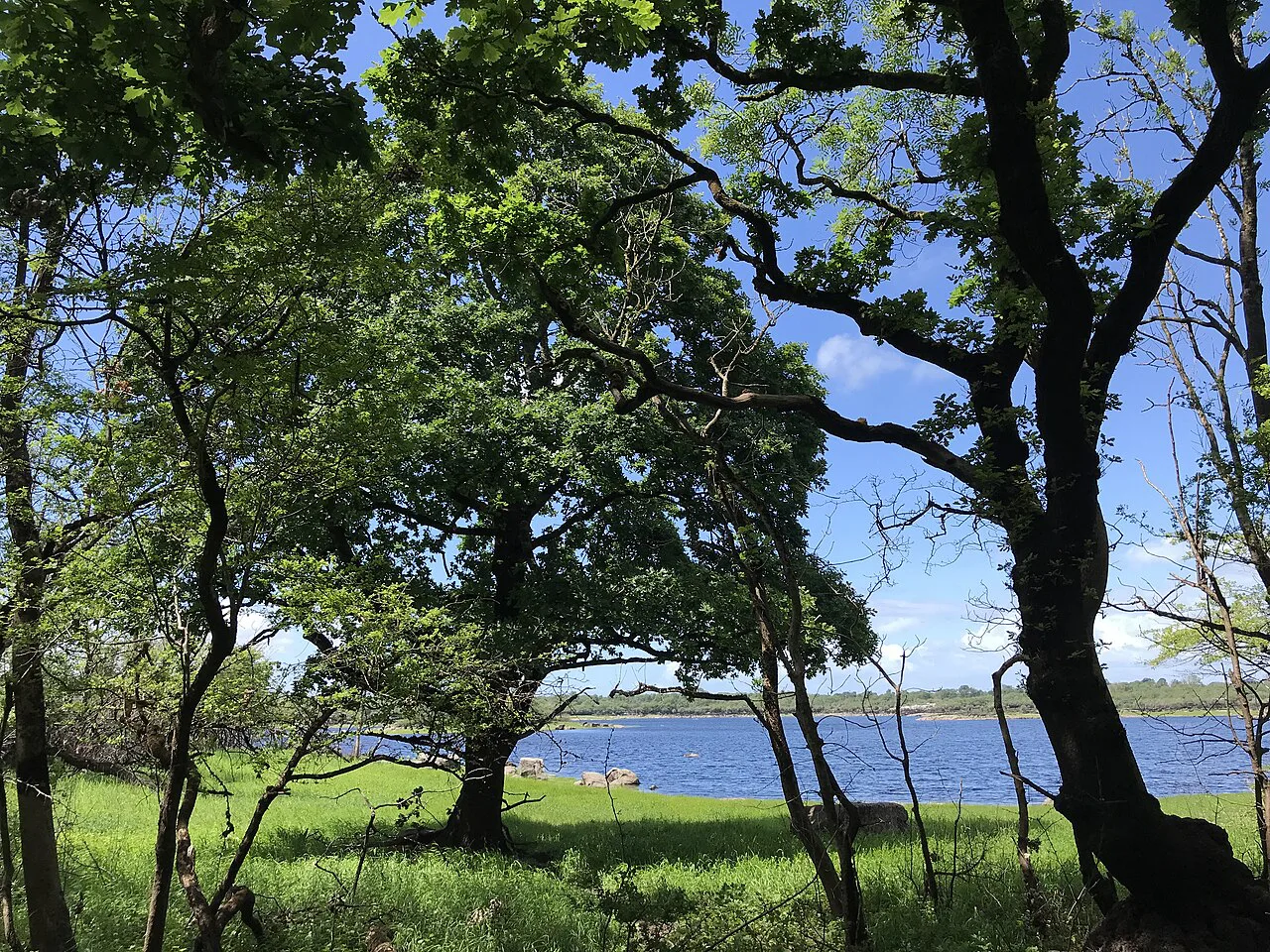
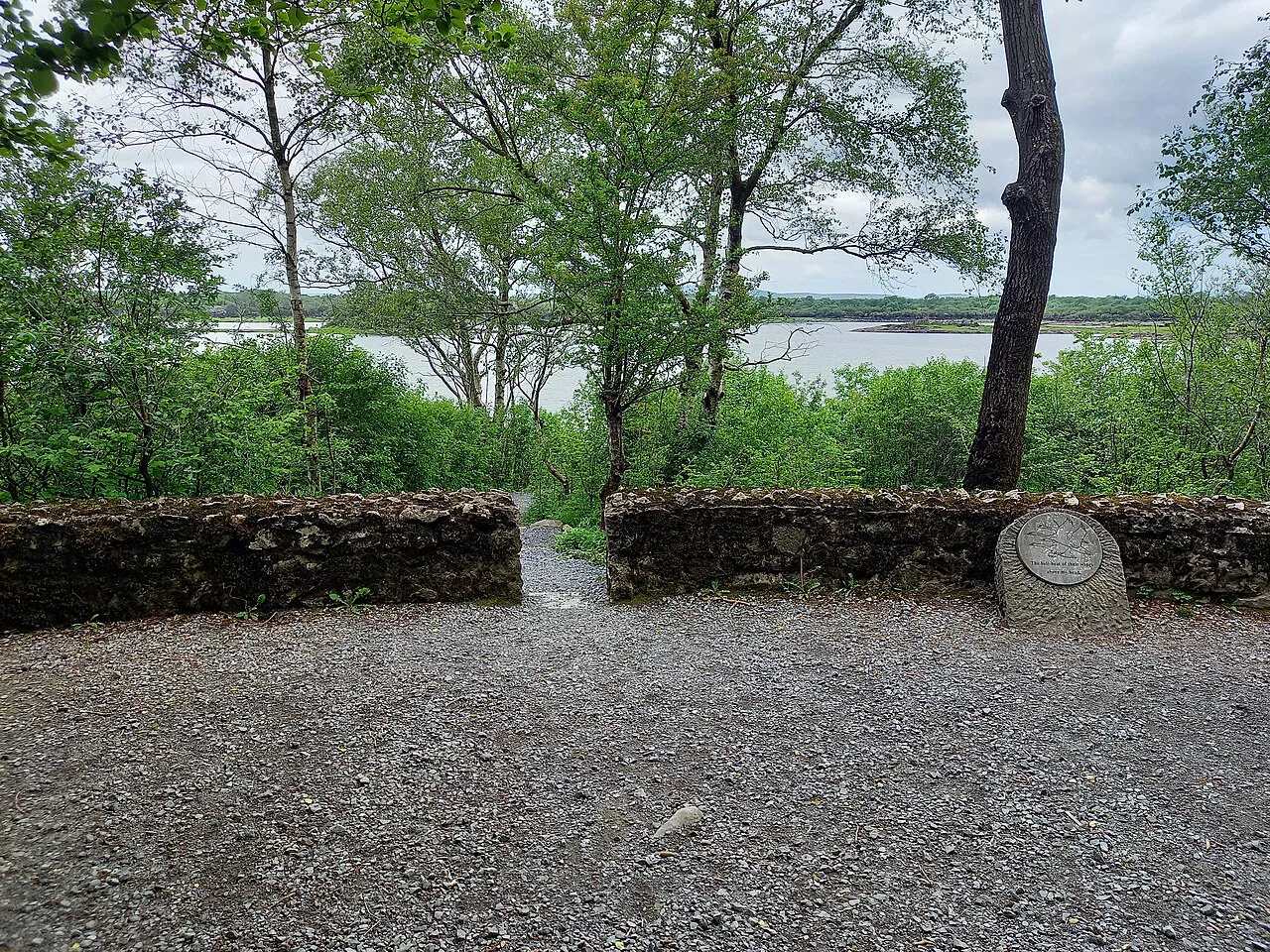
Coole Park lies west of Gort and is now an NPWS nature reserve. Lady Gregory’s home drew visitors including Yeats, Shaw, Synge and O’Casey during the Literary Revival. The house no longer stands, but its walled garden and woodland paths preserve the setting of that gathering place.
In 1898, Gregory invited Yeats to carve his initials into a copper beech. Other writers and artists added theirs, creating the Autograph Tree. A plaque helps identify signatures that have become faint as the bark heals.
NPWS issued a notice on 29 May 2026 that the visitor centre, Cobblestone Café and toilets were closed following a water-supply interruption. Treat this as an outdoor landscape visit and confirm those facilities before relying on them.
The Yeats Building in Sligo
At Hyde Bridge in Sligo town, the Yeats Building presents The Poetic Mind of WB Yeats exhibition alongside the separate Hyde Bridge Gallery. It offers an institutional focus for a literary visit to the town, rather than leaving you to piece together the connection from place names alone. See the separate guide to the Yeats Society Sligo for more on the building.
The society’s own visit page gives conflicting exhibition information, pairing a Thursday–Saturday schedule with a dated May–September 2026 block. Treat a Yeats Building visit as a planned stop and confirm exhibition access directly before travelling. The gallery has its own programme and opening arrangements, so a gallery visit does not establish that the Yeats exhibition is available on the same day.
The Blasket Centre at Dunquin, County Kerry
The Blasket Centre is on the mainland at Dunquin on the Dingle Peninsula. Its exhibitions explain the work, language and literary legacy of an Irish-speaking island community. Great Blasket was finally evacuated in 1953, but the island writers’ books preserve accounts of the lives lived there.
The centre includes a clifftop viewing platform, and no ferry is needed to reach it. The published 2026 season ends on 8 November. Choose it for the exhibitions and their connection with the islands visible offshore; an island landing is a separate outing.
Patrick Kavanagh’s Inniskeen, County Monaghan
The Patrick Kavanagh Experience uses artefacts, multimedia, text and film to connect his poetry and life with Monaghan. The self-guided exhibition occupies the old church in Inniskeen where he attended Mass. It provides a specific starting point for readers interested in how a familiar rural place enters a writer’s work.
A separately arranged guided visit adds the grave, village and Poetry Jukebox by the River Fane; it requires at least five paying participants. A bus tour has a separate minimum of ten and depends on vehicle availability. Individual visitors can choose the self-guided exhibition without organising a group.
Kerry Writers’ Museum in Listowel
Kerry Writers’ Museum presents the literary heritage of County Kerry and the social and cultural history of Listowel and North Kerry. This regional approach offers a useful contrast with the single-author centres: the interest lies in a community of writing and the place around it.
The museum is at 24 The Square, adjacent to Listowel Castle. Its accessibility guide describes a step-free main entrance and customer lifts, with some limitations within the historic townhouse. Advance booking is recommended, and staff can advise on a suitable route for particular access needs.
A Note on Chester Beatty
Chester Beatty’s global manuscripts and book arts can complement a literary interest, but it is closed to the public from 15 June through the end of December 2026. It therefore belongs in future planning, not a current Dublin museum day. The notice does not give a confirmed reopening day.
Beyond Dublin: Literary Walking Tours and Regional Heritage
Travellers often ask how to connect literary sites outside Dublin without repeating the same author-focused indoor experiences. The James Joyce Centre’s walking tours offer one model: they depart from the centre, last 90 minutes, and visit stops such as Belvedere College, North Hardwicke Street (the setting of ‘The Boarding House’), The Gresham Hotel (the setting of the final scene of ‘The Dead’), the James Joyce Statue on North Earl Street, and the site of No. 7 Eccles Street. The usual rate is €12 for adults and €10 for students and seniors; bookings are non-refundable. The centre notes that only the ground floor of the Centre is wheelchair-accessible.
For a different landscape, Coole Park in County Galway is an NPWS nature reserve west of Gort where Lady Gregory lived and where writers of the Literary Revival, including Yeats, Shaw, Synge and O’Casey, visited. The house no longer stands, but the Autograph Tree survives in the walled garden; Lady Gregory invited Yeats to carve his initials on the copper beech in 1898, and other visiting writers and artists added theirs. A plaque helps visitors identify marks because some are fading as the bark heals. However, a reviewed official facilities notice dated 29 May 2026 reports that the visitor centre, Cobblestone Café and toilets are closed due to interrupted water supply, and no later reopening confirmation was found; the park itself is not closed, but those services should be confirmed before relying on them.
In Sligo, the Yeats Building at Hyde Bridge presents ‘The Poetic Mind of WB Yeats’ exhibition and the separate Hyde Bridge Gallery. The official page has conflicting opening information: one paragraph gives Thursday–Saturday exhibition hours, while a dated block limits the exhibition to May–September 2026 and the gallery has a March–December block. Current autumn exhibition access is therefore unresolved, so the building is best treated as a planned stop subject to direct confirmation. Further south, the Blasket Centre at Dunquin on the Dingle Peninsula uses renewed exhibitions to explain an Irish-speaking island community, its work, language and literary legacy; the Great Blasket was evacuated in 1953. The centre has a clifftop viewing platform and OPW’s 2026 season runs 6 March–8 November; it can be visited without an island ferry, though any crossing is a separate, weather-dependent outing.
In Monaghan, the Patrick Kavanagh Experience is a self-guided exhibition in the old church in Inniskeen where Kavanagh attended Mass; artefacts, multimedia, text and film connect his life and poetry to Monaghan. A separately arranged guided experience adds the grave, village and Poetry Jukebox by the River Fane, but requires at least five paying participants, while the bus tour has a minimum of ten and depends on bus availability. For an individual visitor, the self-guided exhibition is the straightforward option. In Listowel, Kerry Writers’ Museum is a not-for-profit community organisation devoted to County Kerry’s literary heritage and the cultural and social history of Listowel and North Kerry; it opened in April 2001 at 24 The Square, adjacent to Listowel Castle. Its June 2026 accessibility guide describes a historic townhouse with step-free main entrance and customer lifts, but also some structural limitations, and recommends advance booking because tours can fill.
Let Your Reading Choose the Place
Choose a Dublin museum for an introduction, Coole for an outdoor literary landscape, or a regional centre because its writer or community interests you. A single well-chosen stop can add a new dimension to a book without turning the trip into a circuit of every literary address. For related reading, explore Blasket Centre (Ionad an Bhlascaoid) and Irish Storytelling.
Explore more Ireland guides
Frequently Asked Questions
Which Dublin venue gives a broad introduction to Irish writing?
MoLI offers exhibitions spanning different writers through sound, stories and objects. The National Library’s Yeats exhibition and the Joyce Centre provide more focused author choices.
Does Coole Park still have Lady Gregory’s house?
The house no longer stands. The walled garden, Autograph Tree and woodland setting remain the reasons for a literary visit.
Did James Joyce live in the James Joyce Centre?
No. The centre is a museum in a Georgian townhouse on North Great George’s Street, rather than Joyce’s former home.
Do I need a ferry for the Blasket Centre?
No. The centre is at Dunquin on the mainland. Visiting Great Blasket Island itself requires a separate arrangement.
Does every Kavanagh ticket include a guided village tour?
No. The self-guided exhibition is distinct from the separately arranged group experiences that add village or countryside visits.
Sources
- Exhibition | Yeats: The Life and Works of William Butler Yeats | National Library of Ireland
- Admission to MoLI | MoLI – Museum of Literature Ireland
- Home - James Joyce Centre, Dublin, Ireland
- Visit - James Joyce Centre, Dublin, Ireland
- Coole Park Nature Reserve -
- Walled Garden & Autograph Tree - Coole Park Nature Reserve
- Interruption to water supply at Coole Park | National Parks & Wildlife Service
- Visit | Yeats Society Sligo
- Ionad an Bhlascaoid – The Blasket Centre | Heritage Ireland
- Patrick Kavanagh Experience
- About us - Kerry Writers Museum
- Access Welcome Guide - Kerry Writers Museum
- Contact - Chester Beatty
- Opening Hours and Service Updates | National Library of Ireland
- James Joyce Centre walking tours
You might also like



Continue reading
More guides you'll find useful




