
Medieval Castles in Ireland: Five Fortresses to Visit
Medieval castles in Ireland are largely an Anglo-Norman story. Compare Athlone, Bunratty, Carlingford, Blarney and Trim, with current access notes.
On this page
Medieval castles in Ireland are, with few exceptions, an Anglo-Norman story. A tour-operator comparison notes that almost all of Ireland's stone castles were raised after the Anglo-Norman invasion of 1169–1171, when castle-building arrived with the newcomers, so the ruins and towers you see are usually statements of conquest and control rather than older Gaelic architecture. That framing matters when you choose where to go, because a fortress built to hold a river crossing tells a different story from a later tower house.
Five properties cover the range well: Athlone and Bunratty in the Shannon region, Carlingford on its lough, Blarney outside Cork and Trim in County Meath. Their present-day arrangements differ sharply. Athlone is currently closed for redevelopment, Carlingford tours are seasonal, Blarney publishes its own monthly hours, and Bunratty sits in state guardianship while its visitor service is run separately.
How to Read a Norman Castle
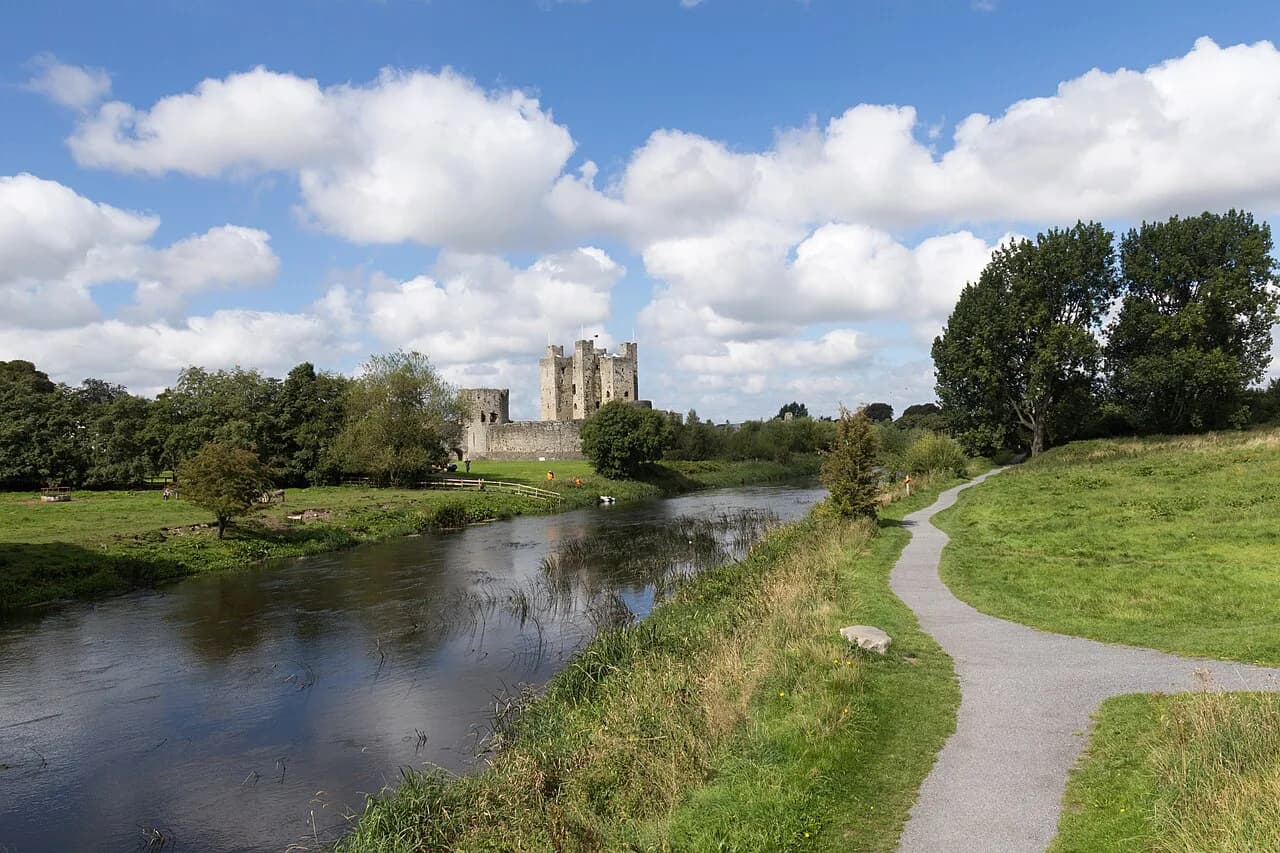
A Norman castle was a system, not a single building. The classic arrangement was a great keep, a curtain wall with towers and gates, and a crossing or approach the garrison controlled, which is why the best surviving examples still read as military engineering rather than as homes. Trim Castle in County Meath is the reference point: fortified from 1172–73 with its stone keep begun in 1176, it is described as the largest Anglo-Norman castle in Ireland, and a comparative survey reports that the Office of Public Works runs guided tours of the keep. For the wider story of Norman castle-building on the island, see the guide to Norman castles in Ireland.
Size and date labels depend on what you measure. A comparative survey names Trim as the oldest and largest Anglo-Norman castle, but Killyleagh in County Down, first fortified around 1180 and lived in since the early 17th century, is generally treated as the oldest inhabited castle. Carrickfergus, begun in 1177, is often cited as one of the best-preserved Norman castles, so treat any single answer to the oldest castle question as shorthand for a particular definition.
Not every castle-like stop is open in the same way. Leixlip Castle in County Kildare, begun in 1172, is a private home and closed to visitors, and Killyleagh is a family residence where you can see the exterior and village rather than tour the interior. Building a day around such places means accepting a look from the gate, whereas Trim, Carlingford and Blarney are set up for paying or booked visits.
Athlone Castle: A Royal Castle on the Shannon
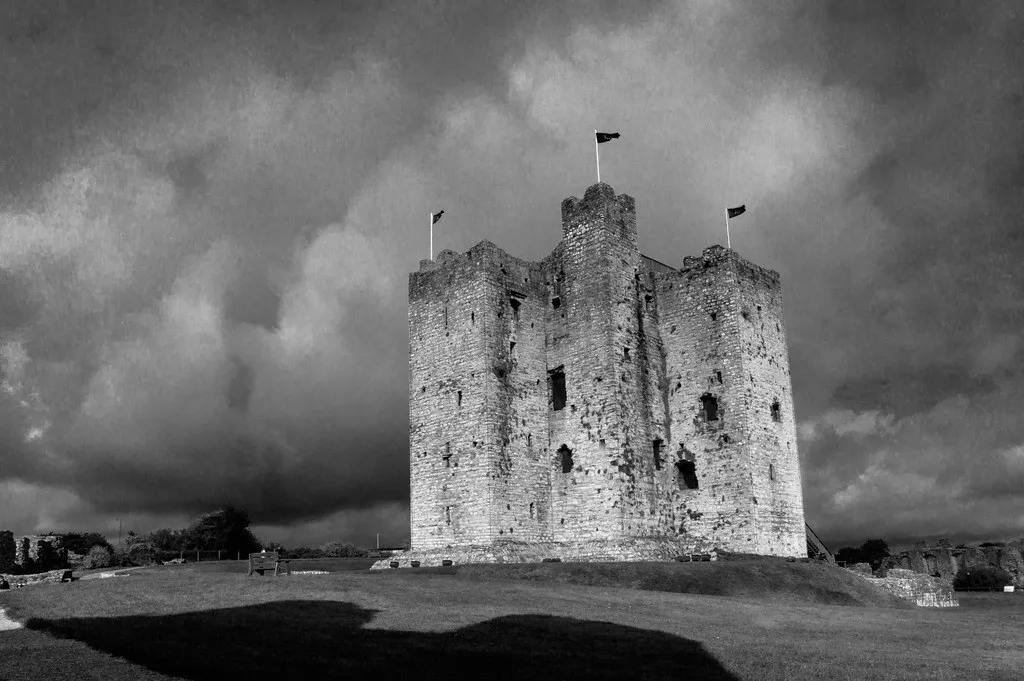
Athlone was a royal foundation rather than a lord's private enterprise. It was built in 1210 on the order of King John, with construction begun by John de Grey, Bishop of Norwich and Justiciar of Ireland, to control an important fording point over the River Shannon. The medieval fabric that survives, particularly the river wall with its three-quarter-round towers at each angle, is likely to date from the later 13th century, after sporadic works and fortification payments recorded through the 1270s and 1280s.
Its later history is one of repeated damage and remodelling. The castle was burned in 1315 but not captured, recovered by the Crown in 1537, and served as the residence of the Presidents of Connaught after 1569; it came under heavy fire during the sieges of Athlone in 1690–91. Between 1799 and 1815 it was considerably remodelled and modernised, which is why the complex reads as layers rather than a single medieval shell.
Athlone Castle is temporarily closed for redevelopment, and the anticipated reopening in Autumn 2026 is subject to confirmation. The site is a state-owned National Monument in the care of the Office of Public Works, but its visitor service is not OPW-managed, and OPW Heritage Cards are not accepted there. Check the castle's own website before making it the centre of a day in County Westmeath.
Bunratty Castle: Several Castles Beneath One Roof
Bunratty Castle is the most layered of these sites. Four castles were recorded at Bunratty in the 13th century, including an earth-and-timber structure built for Robert de Muscegros in 1251 and a castle built for Thomas de Clare in 1290 and refortified in 1353 for Thomas de Rokeby. Parts of that de Clare castle now form the fabric of the castle you see, which is why the building cannot be dated from a single phase.
The present castle was built for Maccon MacNamara in the 15th century, then passed peacefully to the O'Brien earls of Thomond in the early 16th century. Donough O'Brien, the Great Earl, made it his headquarters from 1583 and modified it heavily, vaulting the corner towers and adding elaborate plasterwork to walls and ceilings. After later plantation ownership, the Studdert family held the castle and remodelled it, adding a multi-storey house and a police station, the latter later burned during the War of Independence. Thomas Studdert gave the castle to the Board of Works in 1915.
What you walk through today is largely a 20th-century restoration. Standish Vereker, 7th Viscount Gort, bought the castle in 1953/4 and restored it, removing most later additions and inserting fireplaces, wood panelling, furniture and 100 panels of stained and heraldic glass, and the castle opened to the public in the 1960s. Bunratty is a National Monument in state guardianship, but the visitor service is not OPW-managed and OPW Heritage Cards are not accepted, so check ticket arrangements with the operator rather than assuming a national-monument card applies. A full visit works well as a half-day.
Carlingford Castle: Coastal Defence on the Lough
Carlingford Castle was built around 1190, most likely by the Norman baron Hugh de Lacy, and it dominates the town and overlooks the lough harbour. Its position made it a vital defensive point for the area for centuries. De Lacy's family grew powerful enough to make King John uneasy; he forced them into rebellion and seized their property in 1210, and is reputedly to have stayed in the castle himself.
Later conflict left its mark without levelling the site. The Jacobites fired on the castle in 1689, and William of Orange is said to have accommodated wounded soldiers there after the Battle of the Boyne. The surviving structure is fragmentary compared with Trim or Blarney, so come for the setting above the lough and for the story of a fortress on a contested coast rather than for intact medieval interiors.
Access here is seasonal and booked through a provider rather than an always-open state site. The Carlingford Lough Heritage Trust provides guided tours from March to October, and bookings are taken by phone on (042) 9373650 or by email to info@carlingfordheritagecentre.com. Tickets can also be purchased near the site at the Visit Carlingford Tourist Office in Station House, and additional tours may be available on request. OPW Heritage Cards are not accepted because the visitor service is not OPW-managed, so check tour availability before travelling.
Blarney Castle: A MacCarthy Stronghold and Its Grounds
Blarney was built nearly six hundred years ago by Cormac MacCarthy, one of Ireland's great chieftains, and the tower is the reason most people come. At the top sits the Blarney Stone, the legendary Stone of Eloquence; the tradition that kissing it grants the gift of the gab is folklore, not documented history, so treat the ritual as a living custom rather than an artefact with a traceable origin. The castle is 8 km northwest of Cork city, close enough to pair with a morning in the city or a longer stay in Blarney Village. If you are already in the city, our heritage guide to museums in Cork helps you plan the other half of the day.
The grounds are a larger part of the visit than the tower alone suggests. Besides the castle, the estate lists gardens, a rock close, dungeons, caves and a lake walk, so allowing time beyond the Stone repays the journey. The site also publishes a visual guide as part of an autism-friendly village initiative, which is worth downloading in advance if anyone in your group needs to prepare for crowds or enclosed spaces.
Blarney's hours change by month, with separate last-admission cut-offs, and the castle is closed on 24 and 25 December. Tickets are bought online in advance or at the ticket office on arrival, and there are no timed slots. A published child rate of 12 euros applies to ages 6 to 16, with under-fives free but accompanied by an adult.
Trim Castle and the Oldest Castle Question
Trim is the best place to understand what a Norman castle actually was. A comparative survey states that Hugh de Lacy fortified the site on the River Boyne in 1172–73, and after that first timber castle burned, the great stone keep was begun in 1176. The keep has an unusual cross-shaped plan with 20 corners, and the Office of Public Works runs guided tours of the keep, according to that survey.
Trim also illustrates how presentation shapes a visit. It is a ruin you walk through rather than a roofed house, and it featured in the filming of Braveheart in 1995, where it stood in for York. The wider comparison list is useful only as orientation: the same survey says Dublin Castle's medieval core survives mainly in the Record Tower completed around 1228, and that Cahir in County Tipperary, with a fortress recorded from 1142 but largely the work of the Butler family, is run by the Office of Public Works. Those are separate outings, not add-ons to a Trim morning.
Choosing Between These Castles
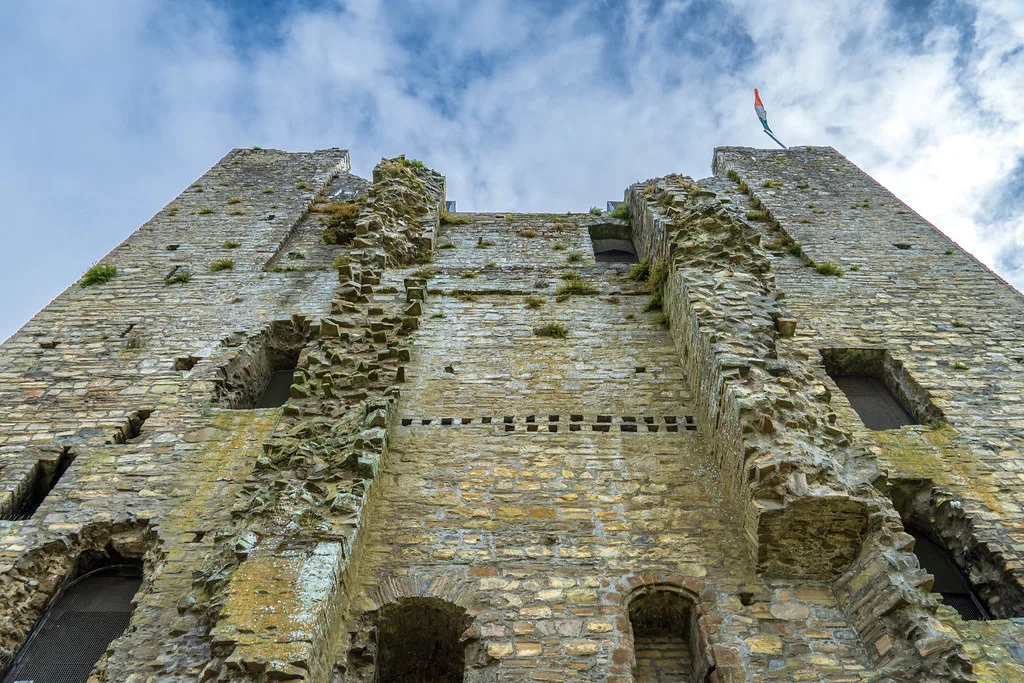
Group the sites by what you actually want to see. For military architecture and a guided climb, Trim is the reference point; for restored interiors with furniture and plasterwork, Bunratty; for a tower, grounds and a folk ritual, Blarney; for a fragmentary coastal ruin with a booked tour, Carlingford. Athlone currently offers none of these, because the castle is closed for redevelopment.
Ownership and management affect what your ticket or pass will do. Athlone, Bunratty and Carlingford are all state-associated monuments in different ways, yet none accepts OPW Heritage Cards, because their visitor services are not OPW-managed. Blarney is run by the estate itself and sells its own tickets. Read each operator's own page before buying any pass, and do not assume that a card valid at one OPW site covers a castle that merely appears on a heritage list.
If you are touring County Clare or the west, Bunratty fits naturally alongside other stops in the region. Keep at least one flexible day in any castle-focused itinerary: Athlone's reopening is unconfirmed, Carlingford tours run only from March to October, and Blarney's hours shrink in winter, so a rigid schedule of three castles in three days is easily broken by a single booking issue.
What Medieval Actually Means in These Walls
The medieval fabric at these sites is real but partial, and knowing which parts to look for changes the visit. At Athlone, the surviving medieval work is concentrated in the river wall and its three-quarter-round towers; at Bunratty, the 13th-century de Clare castle is embedded in a 15th-century building whose towers were vaulted and whose walls gained plasterwork in the Tudor period. At Carlingford, coastal exposure and repeated attack left fragments rather than a complete circuit.
Much of what looks oldest is often presentation. Bunratty's interiors reflect the 1950s restoration by Viscount Gort, and Athlone was substantially remodelled between 1799 and 1815. That does not make the sites less worth visiting; it means you should read the panels and ask which century you are standing in, rather than assuming every stone predates the Tudor conquest.
Folklore deserves its own category. Castle Roche in County Louth is associated in legend with Rohesia de Verdon, who is said to have thrown its builder from the battlements, and the Rock of Dunamase is said to hide treasure guarded by a hellhound. These are legends attached to real places, not historical records, and the tourism board presents them as such. Enjoy them as storytelling while keeping the documented building history separate.
Plan Your Castle Visits
Start with one anchor visit you have confirmed, then build around it. Trim and Blarney reward a half-day each, Bunratty needs time for its restored interiors, and Carlingford tours run only between March and October. Leave Athlone out of the plan for now and watch for confirmation of its reopening rather than treating Autumn 2026 as a fixed date.
Before you travel, check the operator's own page for the site you intend to enter, since opening hours, tour seasons and ticket rules are set individually rather than uniformly across Ireland's castles. The distinction between a monument in state care and the business or trust that runs its visitor service is the single most useful thing to understand, because it determines what your pass covers and what you must book directly.
For more Irish heritage, read the guides to Ross Castle and Knappogue Castle.
Explore more Ireland guides
Frequently Asked Questions
Are medieval castles in Ireland mostly Norman?
A comparative survey notes that almost all of Ireland's stone castles date from after the Anglo-Norman invasion of 1169–1171, when castle-building arrived with the newcomers. Older Irish fortifications exist, such as ringforts and stone forts, but they are different structures. The castles in this guide therefore represent conquest and settlement rather than an earlier native castle tradition.
Can you visit Athlone Castle now?
No. Athlone Castle is temporarily closed for redevelopment, with an anticipated reopening in Autumn 2026 that is subject to confirmation. Because the visitor service is not managed by the Office of Public Works, check the castle's own website for the current position rather than relying on national heritage listings, and keep an alternative castle in your plan.
Do you need to book Carlingford Castle tours?
Tours are provided by the Carlingford Lough Heritage Trust from March to October, and booking is by phone or email through the heritage centre. Tickets can also be bought at the Visit Carlingford Tourist Office near the site. Additional tours may be available on request, but no fixed daily schedule is published, so confirm a slot before you travel.
Is the Blarney Stone a historical artefact or a legend?
The tradition that kissing the stone grants the gift of the gab is folklore, not documented history, and it should be enjoyed as a living custom. The castle's own site says it was built by Cormac MacCarthy, and the grounds include gardens, a rock close, caves and a lake walk that are worth time in their own right beyond the stone itself.
Are OPW Heritage Cards accepted at these castles?
Not at Athlone, Bunratty or Carlingford. Those pages state that the cards are not accepted because the visitor services are not managed by the Office of Public Works. Blarney sells its own tickets through the estate. Check each operator's page before buying a pass so you know which sites it actually covers.
What is the oldest castle in Ireland?
It depends on the measure and whose survey you follow. According to a comparative survey, Trim Castle is usually named as the oldest and largest Anglo-Norman castle, fortified from 1172–73 with a stone keep from 1176. Killyleagh is generally regarded as the oldest inhabited castle, while Carrickfergus is often cited as the best-preserved. Leixlip is a private home and not open to visitors.
How long should I allow for Bunratty or Blarney?
Allow a half-day at either. Bunratty's restored interiors, furniture and stained glass take time to read properly, and Blarney's grounds, including the rock close, caves and lake walk, extend well beyond the tower. Neither is a quick photo stop if you want to understand what you are looking at.
Should I plan around a closed Athlone Castle?
Yes. Do not build an itinerary that depends on entering Athlone, since it is closed for redevelopment with no confirmed reopening date. Substitute Trim, Bunratty or Carlingford, each of which has a current visitor arrangement you can verify and book, and leave Athlone for a later trip once its reopening is confirmed.
Sources
You might also like



Continue reading
More guides you'll find useful



