
Donegal Castle: A Visitor Guide to the O'Donnell Stronghold
Plan a visit to Donegal Castle on Castle Street in Donegal town, from the O'Donnell tower house to the Brooke manor house and 1990s restoration.
On this page
Donegal Castle is a town-centre stronghold on Castle Street, rising above the River Eske in the heart of Donegal town, a short walk from The Diamond. It pairs a fifteenth-century O'Donnell tower house with a manor house added in the seventeenth century, so a single stop shows two very different building phases. Because it sits in the town rather than in open countryside, it fits easily into a walk through Donegal town rather than requiring a dedicated detour.
Setting the Scene: A Town-Centre Castle
The official Heritage Ireland page places the castle on Castle Street, towering over the River Eske in the middle of Donegal town. Independent visitor accounts describe the same approach, noting that the entrance sits just off The Diamond, the central square, which makes the castle an easy marker for orienting yourself in town.
Treat the castle as a compact town stop rather than a rural ruin requiring a special journey. The trade-off is scale: the interior is smaller than a sprawling country estate, so the visit rewards attention to individual features rather than a long circuit. Pairing it with a walk along the river and through the town centre gives the outing more shape.
The O'Donnell Tower House
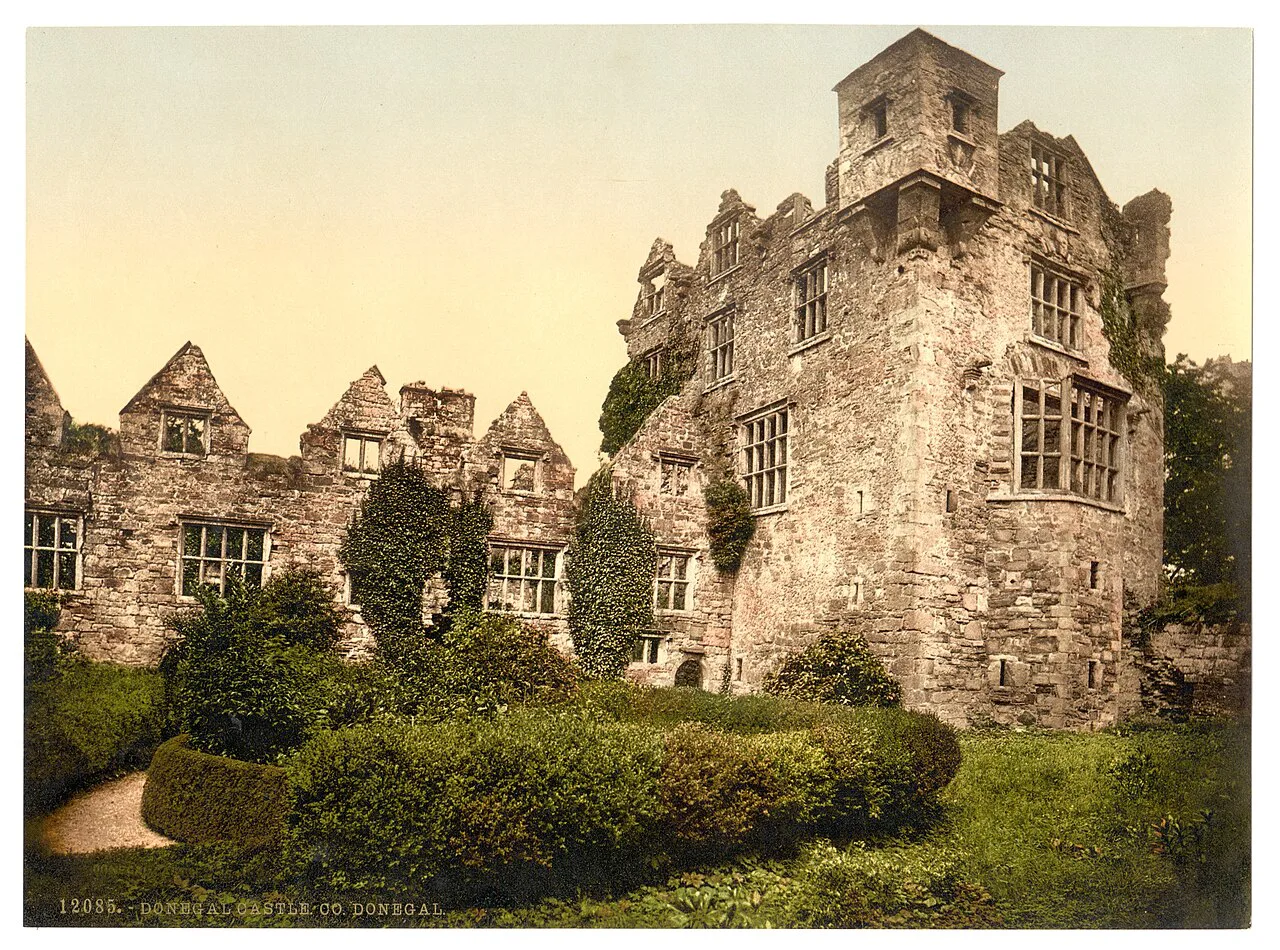
The O'Donnell association is the castle's defining story. Heritage Ireland describes the tower house as built in the fifteenth century by Red Hugh O'Donnell as a personal fortress, while secondary accounts put the foundation at around 1474; treat that precise year as an approximate tradition rather than a confirmed date. For how this tower house sits within the wider story of Irish fortification, see the guide to Medieval Castles in Ireland.
A frequently repeated tradition holds that Red Hugh set the castle alight before leaving for Spain after the Battle of Kinsale, determined that it would not fall intact into English hands. The sources frame the moment differently: Heritage Ireland describes the burning as happening as Hugh left to seek help in Spain in the wake of Kinsale, while a secondary travel account describes the 1602 Kinsale defeat and Red Hugh's departure for Spain as a sequence. Read the burning story as tradition rather than documented fact; what is not in dispute is the O'Donnells' central role in the castle's early history.
The Brooke Era and the Manor House
Heritage Ireland records that English captain Sir Basil Brooke became the castle's lord in 1616 and built a manor house beside the tower as part of a major programme of improvements. A secondary historical account instead reports a crown grant to Brooke in 1611, so the two dates describe different moments and should not be merged into one.
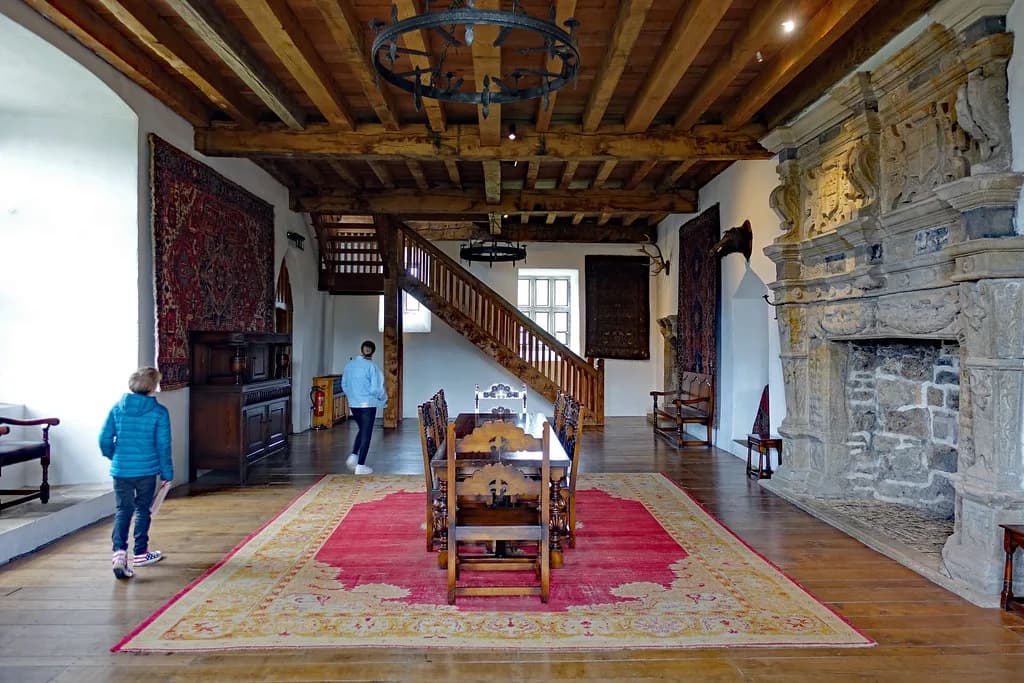
The most celebrated survival from this phase is the carved chimney-piece, which Heritage Ireland describes as finely decorated with fruit motifs and Brooke's own coat of arms. That combination of ornament and heraldry makes the fireplace a useful focus for understanding how the new lord signalled his status inside an older Gaelic fortress.
Ruin, Guardianship and Restoration
After the Brooke period the building declined, and a historical account records it falling into decay by the eighteenth century before being placed in the guardianship of the Office of Public Works in 1898. Heritage Ireland summarises the broader arc as ruin brought back to its former glory in the 1990s. The two accounts describe different stages of the same story, with the decay, the guardianship and the modern restoration each belonging to separate chapters.
That twentieth-century restoration shapes what you see today: a conserved complex rather than an untouched medieval shell. Keeping this in mind helps you read the fabric honestly, distinguishing surviving historic elements such as the chimney-piece from later conservation work.
Inside the Visit
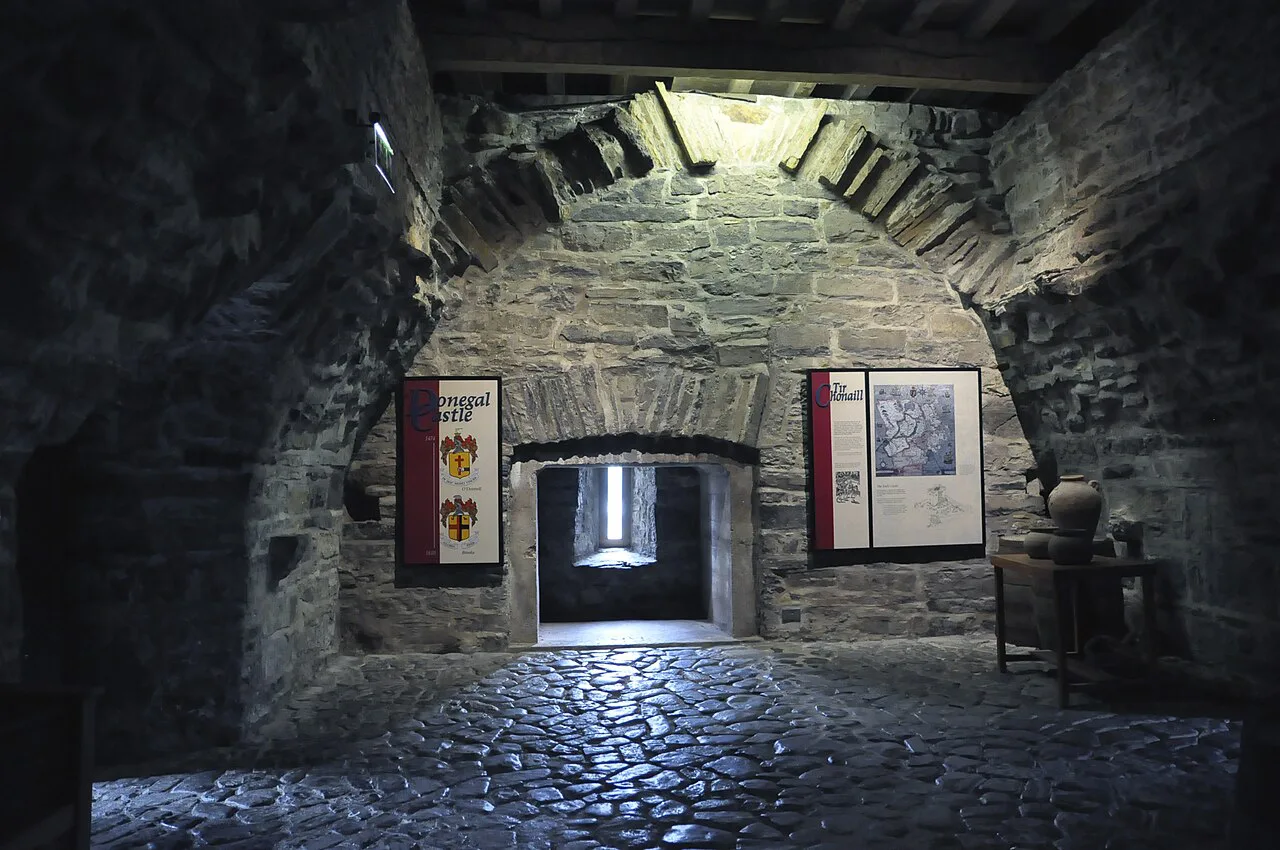
Heritage Ireland states that a suite of information panels sets out the castle's chequered history and its disparate owners, so the interior is primarily an interpreted rather than furnished display. Do not expect period rooms laid out with original furnishings; the value lies in the building itself and the story the panels tell.
Independent visitor accounts highlight the courtyard, a history room on the upper floor with displays and scale models, the stonework, and a banqueting hall with a large fireplace bearing the Brooke arms. Such accounts also describe a surviving ship's mast, a reminder of Donegal town's former trading links. Read these as one visitor's observations rather than an official inventory.
The same accounts repeat a popular claim that the spiral stair was deliberately built with uneven steps to trip invaders. That story is widely told but not established, so enjoy it as local tradition. The stairs themselves still repay a slow, careful climb.
What to Weigh Up
If you are choosing among Irish castle visits, Donegal Castle suits travellers already in Donegal town who want a compact, well-interpreted interior with a strong story. Those seeking extensive furnished rooms or formal gardens should look elsewhere; for a like-for-like contrast of a big grounds-and-landmark visit, the Blarney Castle guide covers a very different day out in County Cork, and our Museums in Cork: City and County Collections guide rounds out a Cork heritage itinerary. For a wider comparison of sites and their settings, see Medieval Castles in Ireland.
Allow roughly an hour for the interior and courtyard, more if you read the panels closely; that figure is a sensible planning estimate rather than an official duration. Because the site is small, a rushed circuit can leave you feeling you have seen little, while a slower one rewards close looking at stonework and carved detail.
Practical Access
Heritage Ireland lists an opening window of 9:00 to 17:00 with last admission at 16:15 on its castle page, but the page's own excerpt does not clearly date that notice, so treat it as a listing to confirm rather than a guaranteed current schedule. Opening times change seasonally, so check the same page for current admission details and the latest notice before you travel.
Heritage Ireland also publishes a downloadable social guide for the castle, aimed at first-time visitors, families, and people with developmental and learning disabilities who want to prepare before arriving. The page additionally carries facilities and restrictions sections, so read those directly if you have specific access needs.
Nearby Heritage Ireland Sites
Heritage Ireland lists other sites that can extend a day around Donegal, including Newmills Corn and Flax Mills, Seán Mac Diarmada Cottage, and Glebe Gallery and Garden. Check each site's own page for access and opening arrangements rather than assuming they match the castle's.
If your trip ranges further south, Blarney Castle in County Cork offers a contrasting visit built around a famous stone and extensive grounds. That is a different day out entirely, not a stopping point near Donegal town, so plan it as its own excursion.
Plan Your Visit
Donegal Castle rewards a modest, focused visit: the O'Donnell tower, the Brooke manor house, the carved chimney-piece, and panels that tie the owners and conflicts together. Because it sits on Castle Street in the middle of town, it works best as one part of a walk through Donegal town rather than the whole day.
Before travelling, confirm the current opening window and last admission on the Heritage Ireland page, since hours vary through the year and any notice there may be time-limited. With that checked, the castle makes a well-pitched stop for travellers interested in Gaelic and Jacobean Ireland in one building.
For more heritage reading, see our guides to Ross Castle, Cloughoughter Castle, and Maynooth Castle.
Explore more Ireland guides
Frequently Asked Questions
Where is Donegal Castle located?
Donegal Castle stands on Castle Street beside the River Eske in the centre of Donegal town, just off The Diamond square. That central position makes it easy to reach on foot as part of a town walk.
Who built Donegal Castle and when?
Tradition credits Red Hugh O'Donnell with building the tower house in the fifteenth century, and secondary accounts give an approximate date of around 1474, which should be treated as approximate. English captain Sir Basil Brooke became lord in 1616 and added the manor house beside the tower.
What can you see inside Donegal Castle?
The interior centres on information panels explaining the castle's history and its successive owners. Visitors also see the tower house structure, the Brooke manor house, and the carved chimney-piece with fruit motifs and Brooke's coat of arms. Some independent accounts describe a history room, a banqueting hall fireplace and a ship's mast.
What are the opening hours and last admission?
The Heritage Ireland castle page lists a 9:00 to 17:00 window with last admission at 16:15, but that notice is not clearly dated and times change seasonally. Confirm the current schedule and any last-admission cut-off on that page before travelling.
Is Donegal Castle worth visiting on a Donegal town stop?
It suits travellers who want a compact, well-interpreted site in the town centre and are interested in the shift from Gaelic tower house to Jacobean manor. Those expecting fully furnished period rooms or extensive grounds may find it limited, so weigh your interests before committing a long stop.
Do I need to book tickets in advance?
The official page sets out admission details, but advance booking requirements are not clearly stated there. Check the Heritage Ireland page directly, or contact the site, before relying on walk-up entry.
Sources
You might also like



Continue reading
More guides you'll find useful





