
Ross Castle: A Visitor Guide to the Tower House on Lough Leane
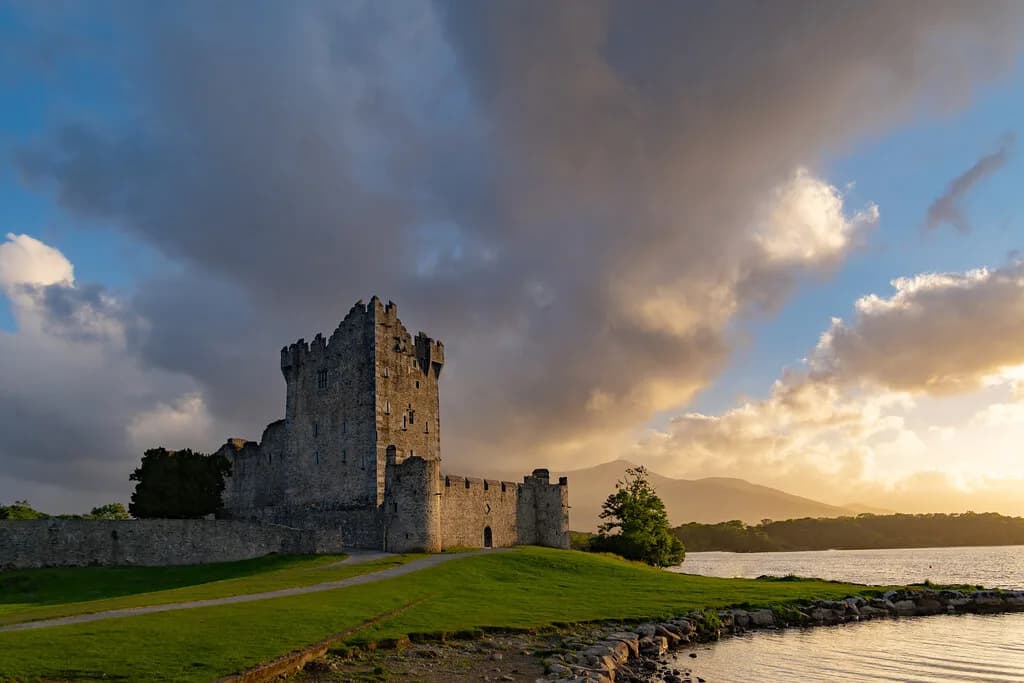
Ross Castle is a fifteenth-century tower house on Lough Leane in Killarney National Park. Plan around guided-tour-only entry, a steep approach and first-come tours.
On this page
Ross Castle answers a simple question first: yes, it is a real, staffed heritage site with a guided interior, not just a lakeside ruin you circle from outside. It stands on an inlet of Lough Leane within Killarney National Park, and the Office of Public Works, through Heritage Ireland, publishes the season, tour times and access warnings that should shape your day.
The practical constraints matter more here than the romance. Interior access works on a first-come, first-served tour system, the approach climbs a very steep incline, and summer demand can produce waits. Read the published details before you set out, because the arrangement is less flexible than at sites where you simply buy a ticket and wander.
What Ross Castle Is and Where It Stands
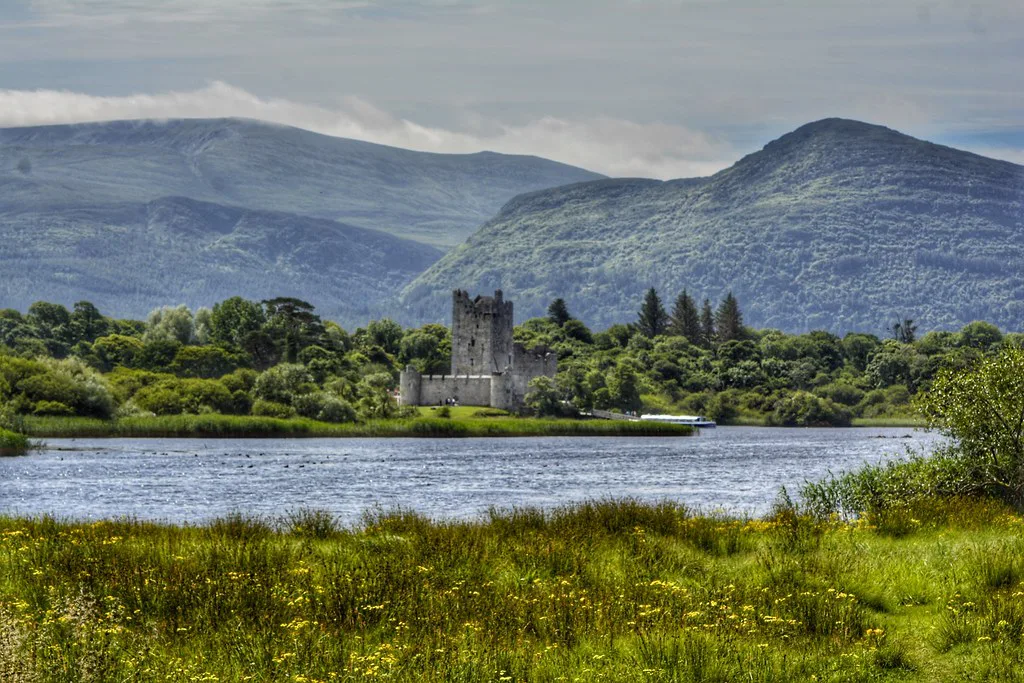
Heritage Ireland describes Ross Castle as sitting in an inlet of Lough Leane, and links the building's origin to the Irish chieftain O'Donoghue Mór, likely in the fifteenth century. That is a tower house rooted in a lake shore rather than a hilltop fortress, which shapes everything about how the site feels and how you approach it.
A third-party castle listing adds the useful architectural label: a fifteenth-century tower house and keep on the edge of Lough Leane, associated first with the O'Donoghue clan and later with the Brownes of Killarney. Treat that as background colour rather than authority, since the page is thin and navigation-heavy, but it confirms the type of building you are looking at.
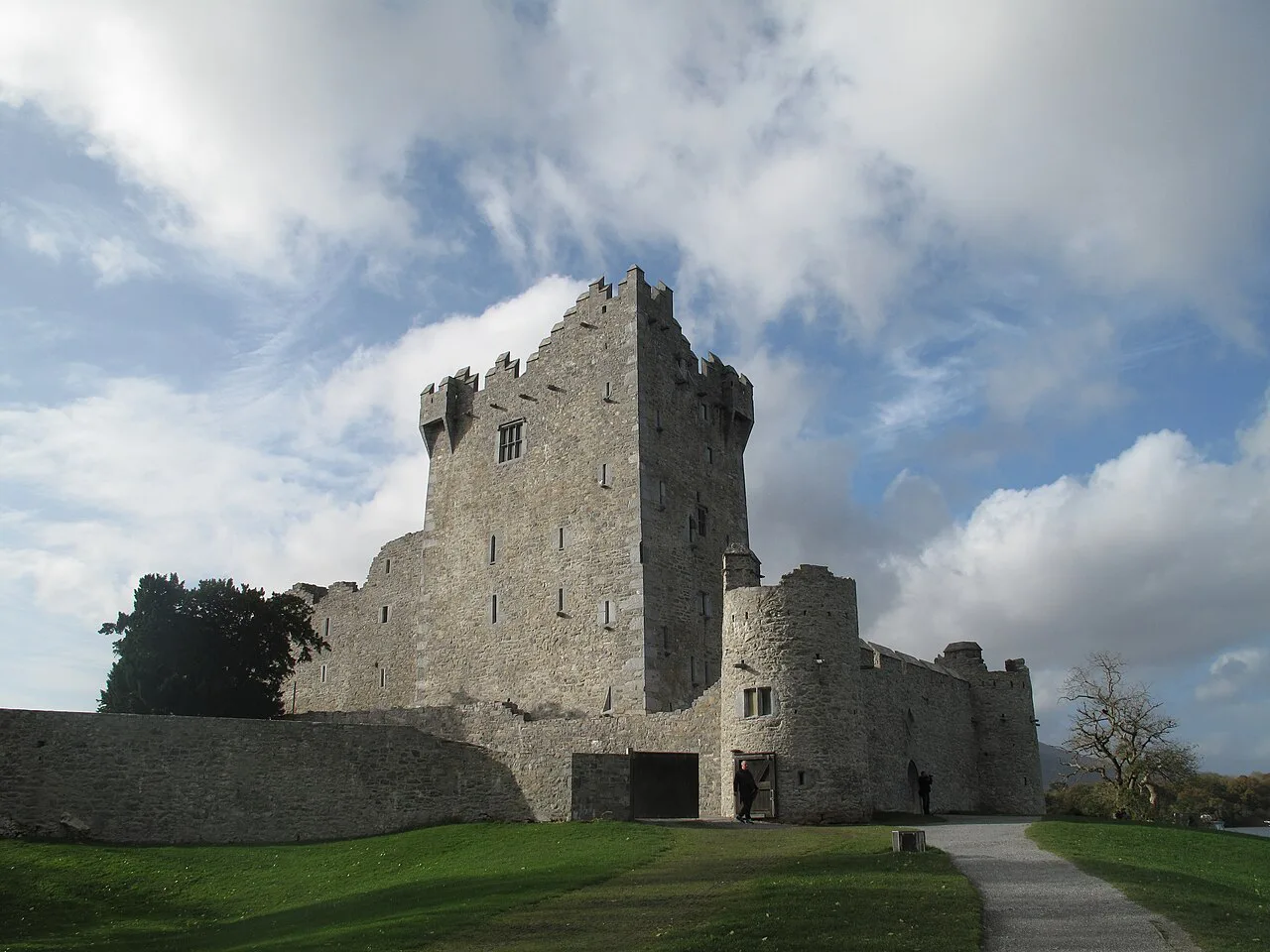
Independent heritage writer Curious Ireland gives the fuller defensive picture: the castle was surrounded by a fortified bawn, curtain walls and circular flanking towers. Knowing that helps visitors read the grounds around the main block, because the enclosure is part of the site's logic and not just a place to stand while waiting for a tour.
If you are comparing tower houses across the country, weighing Ross Castle against other sites is easier when you understand what each one lets you see inside. Our guide to medieval castles ireland sets out the wider field of Irish castle types and visitor arrangements.
The Published 2026 Season and Tour Times
The 2026 season runs from 5 March to 3 November, with daily opening from 09:30 to 17:00, according to the operator. The first tour of the day departs at 10:00 and the last at 16:55, so the published window is narrower than the gate hours suggest for anyone hoping to be inside.
Those dates and times belong to a single published season and should not be assumed for other years. If you are planning around a later trip, check the Heritage Ireland page again rather than relying on this account, since seasons and tour timings are set by the operator annually. To broaden a Kerry castle itinerary, you can also compare the county's other tower houses.
How Interior Access Actually Works
The interior is shown by guided tour only and operates on a first come, first served basis, with a maximum of 15 people per tour, the operator states. There is no published booking promise or timed-slot guarantee, so the safe assumption is that arrival time determines whether you get in and when.
Heritage Ireland also warns that the site is very busy and that visitors may face delays in summer. A group cap this small means a few coaches or a busy morning can push you to a later departure, so budget slack rather than treating the last tour as a guaranteed fallback. Pairs and small groups may slot in more easily than large parties.
The Steep Approach and On-Site Facilities
The official notice describes a very steep incline that makes access challenging for visitors with mobility issues, and lists uneven walkways and a hold-handrail restriction. Heritage Ireland lists the site as having wheelchair access, but the combination of gradient and surfaces means the interior should not be assumed to be step-free or fully accessible on wheels.
Toilets at Ross Castle are under National Park care and include one disabled toilet, per the same page. There is no published visitor centre, café or shop to build a stop around, so plan food and shelter elsewhere and use the site for the castle, the grounds and the exhibition.
The operator does list a car park, brochure, exhibition and museum, guided tours, walking trails and a bike trail, and card acceptance. It also notes dogs on lead, so a lakeside walk with a dog is feasible without taking it on a tour. Downloading the Social Guide is a sensible step for families or visitors who like to prepare in advance.
Origins and the O'Donoghue Legend
Heritage Ireland attributes the building to O'Donoghue Mór as a likely fifteenth-century foundation, while Curious Ireland places construction in the late fifteenth century and prints a headline date of around 1460. The two accounts sit close together rather than clashing sharply, and no precise year is established, so describe the castle as fifteenth-century rather than naming a single date.
The famous lake legend is tradition, not record: folklore holds that O'Donoghue sleeps beneath the waters and rises on a white horse on the first morning of May, and that catching sight of him brings good fortune. A third-party listing gives a variant in which he vanishes into the lake with his horse, table and library.
Tell the story as folklore because that is how it has come down, and it adds meaning to the lakeside setting without being evidence about the site's history. The castle's documented record is the more reliable place to anchor a visit.
1652 and the Ship Prophecy
Heritage Ireland records that Ross Castle was the last place in Munster to hold out against Cromwell, defended under Lord Muskerry. Curious Ireland dates the episode to 1652, and that specific year is best attributed to that source rather than presented as a fixed point in every account.
The surrender story is threaded with prophecy: defenders reportedly took confidence from a belief that the castle could only be taken by a ship, so the Cromwellian commander General Ludlow put a large boat on the lake, and the sight of it hastened the surrender. Whether you treat the prophecy as belief or embellishment, it explains why the episode is retold so often.
From Residence to Restoration
Curious Ireland traces the building's later life through the Kenmare family, then use as an army barracks, vacancy in 1825 and a period as a romantic ruin, before state ownership in 1970 and restoration by the Office of Public Works. These milestones come from a single independent source and are worth reading as that writer's account rather than settled consensus.
What the restored castle shows today is largely the result of that twentieth-century state care, so a visit is as much about conservation practice as medieval warfare. Other Irish monuments are also managed by the Office of Public Works, and comparing how they present their history can be revealing.
Separate Add-Ons: Ardfert, Listowel and Garinish
Ardfert Cathedral, north of Tralee, is a distinct heritage site tied to St Brendan and holding a twelfth-century cathedral with a thirteenth-century window and nine lancets, plus a Romanesque church and the Temple na Griffin carving. Heritage Ireland lists it as closed for the 2026 season with reopening expected in 2027, and gives adult admission of €5.00.
Listowel Castle is another separate visit, an Anglo-Norman survivor with two of four square towers and a 1600 siege history, reached by guided tour only over steep staircases with very limited wheelchair access. It too is listed as closed for the 2026 season, with free admission when open, so neither site can be folded into a Ross Castle day right now.
Garinish Island at Glengarriff in Bantry Bay is a different proposition altogether: an early twentieth-century island garden created through the partnership of the Bryces and designer Harold Peto. Boats and waterbuses cross regularly but impose a separate charge, access for visitors with disabilities is limited, and Bryce House opens for guided tours only very sparingly.
Planning Around Ross Castle
Treat Ross Castle as a half-day anchor rather than a quick stop: arrive with time to spare for the first-come tour, accept that the last departure may not be available on a crowded summer afternoon, and plan the steep walk up accordingly. Check the published season and tour times directly with Heritage Ireland before travelling, since they are set annually.
History-minded visitors can pair the castle with the wider story of Irish tower houses and stately homes, such as blarney castle in County Cork, but keep expectations site-specific. Each place has its own operator, access rules and hours, and none should be assumed to work the way Ross Castle does. If you want to widen the comparison beyond castles, our Cork heritage guide covers the city and county collections worth adding to the same trip.
Explore more Ireland guides
Frequently Asked Questions
Do you need to book Ross Castle in advance?
No advance booking is described. Interior access is by guided tour only and operates on a first-come, first-served basis, with a maximum of 15 people per tour, so arriving earlier gives you a better chance of joining a departure. Heritage Ireland advises that the site is very busy and that delays are possible in summer, and publishes no timed-slot or reservation system.
What are Ross Castle's opening hours in 2026?
For the 2026 season the castle is published as open daily from 5 March to 3 November, 09:30 to 17:00, with the first tour at 10:00 and the last at 16:55. These dates and times apply to that season only and should not be assumed for later years; confirm them with Heritage Ireland before travelling.
Is Ross Castle accessible for visitors with mobility issues?
Access is challenging. The operator flags a very steep incline, uneven walkways and a hold-handrail restriction, and although the site is listed with wheelchair access, the interior should not be assumed to be step-free or fully wheelchair accessible. There are National Park toilets on site, including one disabled toilet, and a Social Guide is available to help visitors prepare.
What is the legend of O'Donoghue at Ross Castle?
Folklore holds that O'Donoghue sleeps beneath Lough Leane and rises on a white horse on the first morning of May, bringing good fortune to anyone who glimpses him; one variant has him disappearing into the lake with his horse, table and library. This is tradition, not documented history, and should be told as legend rather than fact.
What happened at Ross Castle in 1652?
Heritage Ireland records Ross Castle as the last stronghold in Munster to hold out against Cromwell, defended under Lord Muskerry, and Curious Ireland dates the episode to 1652. The surrender is bound up with a prophecy that the castle could only be taken by a ship, which the Cromwellian commander General Ludlow reportedly exploited by putting a boat on the lake.
Is Ross Castle worth visiting alongside Ardfert Cathedral or Listowel Castle?
Both Ardfert Cathedral and Listowel Castle are separate Kerry heritage sites with their own access rules, and both are listed as closed for the 2026 season with reopening anticipated in 2027, so check Heritage Ireland for their current status before planning any combined visit.
Sources
You might also like



Continue reading
More guides you'll find useful



