
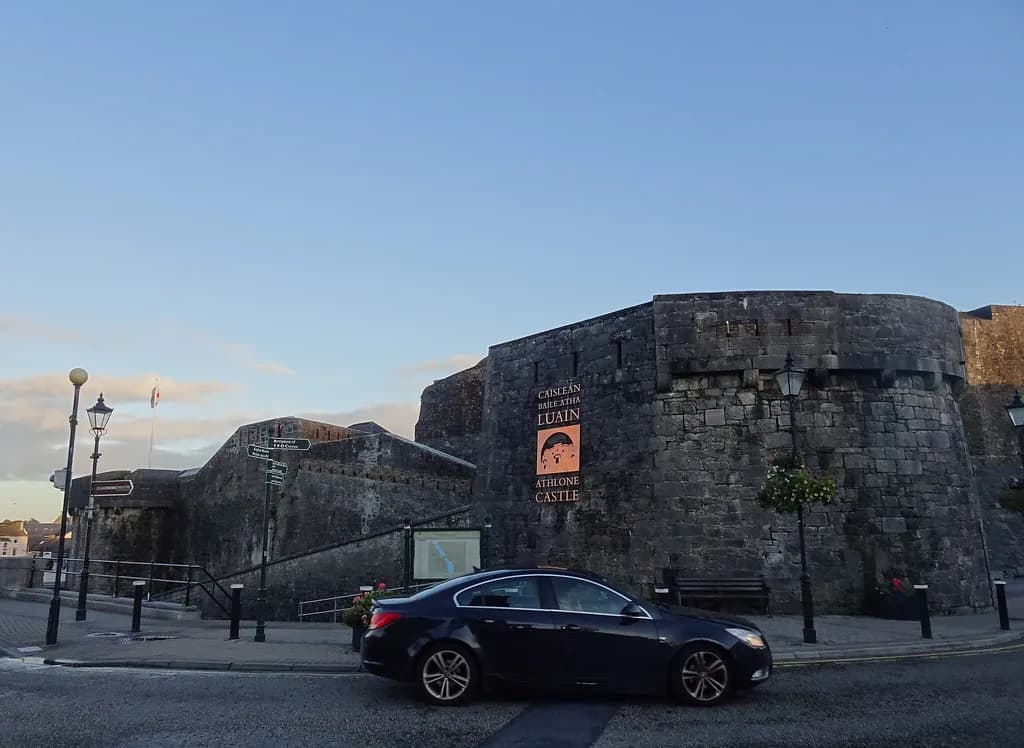
Athlone Castle: A Royal Castle Closed for Renewal
Athlone Castle's visitor centre is closed for redevelopment, with reopening likely to slip into 2027. Here is the castle's history and what to check before you go.
On this page
Athlone Castle cannot be visited at present. Its visitor centre is closed for redevelopment, and the operator states that reopening is likely to extend into 2027, with the aim of welcoming visitors back for the 2027 tourist season; no firm date has been confirmed. That matters because the castle is one of the most historically layered stops on the River Shannon, and a closure of this length reshapes any itinerary built around it.
What remains useful is understanding what the site is and what it contained. Athlone Castle is a state-owned National Monument in the care of the Office of Public Works, but its visitor service is not managed by the OPW, a split that explains why two official pages describe the reopening differently. The sections below set out the castle's history, the documented features of the visitor centre, and the practical checks to make before travelling.
Current Status: Closed for Redevelopment
As of 23 October 2026, the castle is not open to the public. The OPW notice on the state heritage page records a temporary closure for redevelopment and an anticipated reopening of Autumn 2026, subject to confirmation. The operator's own site goes further, stating that reopening is likely to extend into 2027 for the 2027 season.
Treat the later, more cautious operator wording as the guide when the two conflict, and expect further change rather than a fixed date. The redevelopment is not cosmetic: the operator describes a reconfiguration of visitor centre layout and interpretation plus enhancements to the courtyard, reception and retail areas, co-funded by the Government of Ireland and the European Union through the EU Just Transition Fund.
For anyone planning a 2026 or early 2027 trip, the responsible approach is to check the operator's site and the OPW page shortly before travelling rather than relying on any published date. The operator has pointed readers toward Athlone town resources while the centre is shut, which is the most reliable interim steer available.
What Athlone Castle Is
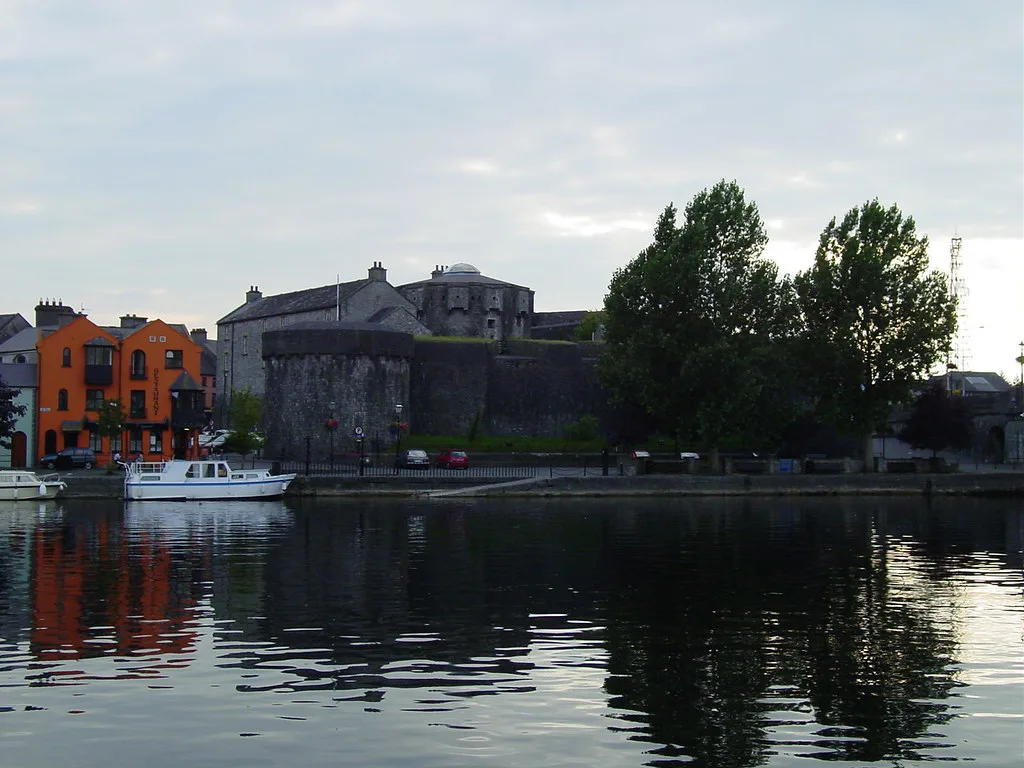
Athlone Castle is a state-owned National Monument protected under the National Monuments Acts 1930 to 2014 and cared for by the OPW. It sits at a strategic crossing point on the River Shannon, overlooking the town at the heart of Ireland, on the border between counties Westmeath and Roscommon. The castle itself and the visitor service are managed separately, and the OPW page recorded that Heritage Cards were not accepted there under the previous arrangement, since the visitor experience was not OPW-managed.
That legal and management identity is worth holding onto when reading older tourism copy. The castle is a genuine national monument with medieval fabric, not simply a museum inside a shell, and the distinction shapes what any future visit will offer. Admission arrangements after reopening have not been published, so do not assume that card or ticket policies will carry over unchanged.
Why the Shannon Crossing Mattered
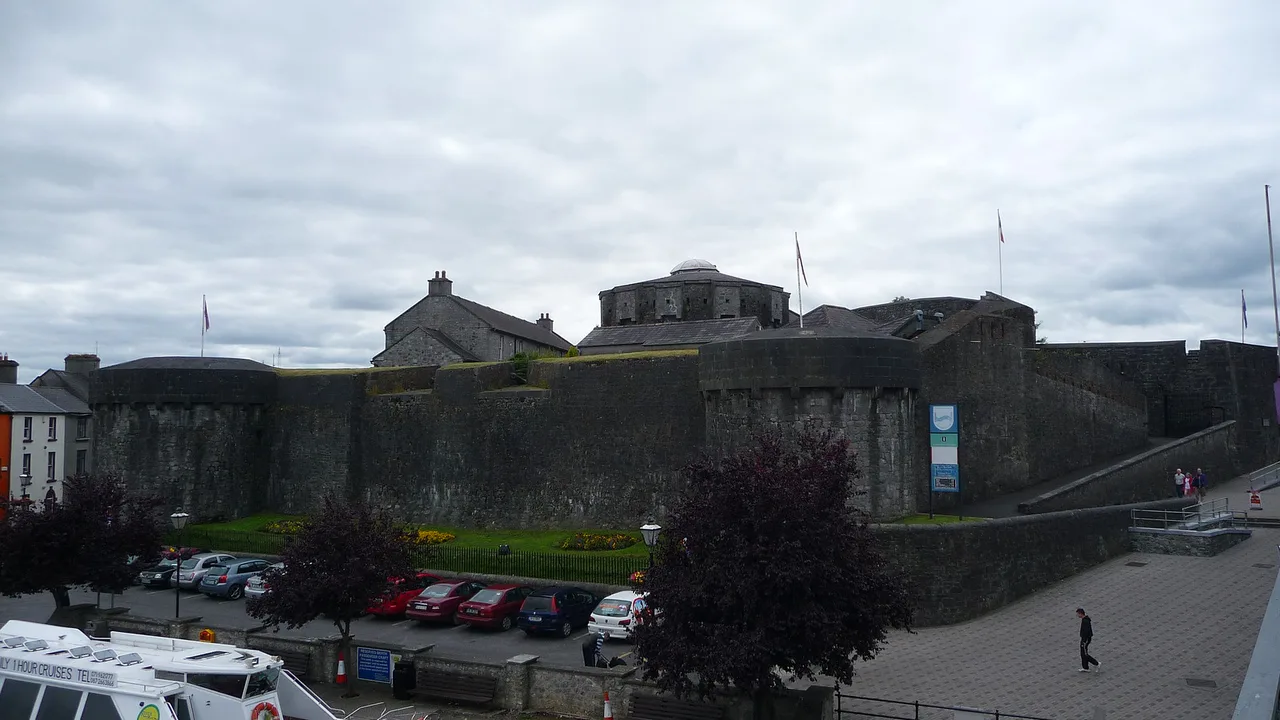
The castle was built to control an important fording point over the Shannon, the river that divides the midlands and links Athlone to Lough Ree downstream. The OPW page frames the 1537 recovery of the castle as a matter of a passage between Connaught and the eastern parts of Ireland, which is the clearest statement of why this spot was contested. The stone castle was raised on monastic lands belonging to the priory of Saints Peter and Paul to the south.
Reading a castle as a river-crossing control point rather than a romantic ruin makes sense of its later history too, from Tudor garrisoning to seventeenth-century sieges. Visitors who follow the broader story of Irish castle-building will find Athlone fits a wider pattern of crossing-point fortresses, as does Roscommon Castle, another monument in the region.
Foundation in 1210
Athlone Castle was built as a royal castle in 1210 to control the Shannon crossing. The OPW page attributes the present structure's foundation to John de Grey, Bishop of Norwich and Justiciar of Ireland, who began construction that year after King John of England ordered him to erect three castles in Connaught. The Anglo-Norman stone castle stood on lands originally granted in 1200 to Geoffrey de Constentin, and in 1215 King John issued a mandate confirming him in its keeping.
Note that the documented story begins with a royal order in 1210, not with an earlier fort on the same spot. The operator's site notes that this was not the first castle to be built at Athlone, yet gives no earlier construction date for that predecessor, so a 1210 foundation is the firm fact to work from. This is a useful reminder to check dates against institutional sources when planning a heritage visit, and a Dublin heritage guide shows how the same date-checking approach works for the capital's older sites.
Medieval Building, Attack and Repair
The thirteenth century saw repeated spending on the castle. The OPW page records sporadic works, including payments to a carpenter of the castle in 1270–72 and expenditure on repairs of the castle and houses of Athlone in 1273–74, followed by a payment for fortification between 1286 and 1290. Much of the surviving medieval fabric, particularly the river wall with its three-quarter-round towers at each angle, likely dates to this period, which makes that wall the most historically significant built element a future visitor could hope to see.
Parts of the castle had fallen into neglect by 1305 and were repaired the following year. In 1315 the Annals of St Mary's, Dublin, record that Ruaidri O Conchobhar burned the castle and town, though the castle was not captured. The later fourteenth and fifteenth centuries are thinly documented, but the castle frequently passed into Irish hands before the Crown recovered it in 1537.
Tudor Castle to Siege Damage
After 1537 the castle stayed in English hands, and after 1569 it served as the residence of the Presidents of Connaught. The OPW record notes repairs in 1547 under the King's Treasurer in Ireland. During the sieges of Athlone in 1690 and 1691 the external walls and towers came under heavy fire, and the OPW page records the castle subsequently being struck by lightning in 1697.
Between 1799 and 1815 the castle was considerably remodelled, modernised and adapted, so it is a fortress with more than one building phase. Athlone's own modern chapter begins with its 2012 reopening to the public.
The Visitor Centre as It Was Documented
The castle reopened to the public in 2012 after extensive renovation, and was transformed into a multi-sensory experience. Discover Ireland described eight newly designed exhibition spaces with multimedia displays, interactive games, 3D maps and artefacts, alongside dress-up activities for children and adults. A 360-degree cinematic presentation brought visitors to the centre of the 1691 siege.
A later addition honoured the tenor John McCormack, who was born in Athlone, with artefacts covering his life and musical career. The visitor centre also provided courtyard picnic facilities and views over the town, according to Discover Ireland. These are documented features of the pre-closure visitor centre, not things you can see now.
Battlements and the River View
One of the documented highlights of a visit was stepping out onto the battlements for views over the Shannon, reaching as far as the distant mists of Lough Ree. That panorama explains the castle's siting in a way no exhibition panel can: you see the crossing, the river and the surrounding midland plain from above. Treat this as a description of the pre-closure experience, since the same tourism copy also claimed year-round opening that the closure has overtaken.
Existing tourism copy says the castle is open all year and that pre-booking is recommended, with a steep ramp noted for reduced mobility. Those lines predate the closure and should not be relied on now. Anyone with access requirements, including wheelchair users, will need to check the operator's site after reopening is announced, rather than assuming the previous arrangements hold.
If you are mapping out a wider castle itinerary while Athlone is unavailable, pair a future Athlone visit with other documented sites on the Shannon and beyond. Ross Castle on Killarney's lakeshore and Donegal Castle in the town centre are both established visitor places with their own histories; each has a separate access situation worth checking independently.
What the Redevelopment Covers
The operator describes substantial works and investment continuing at the castle, with a view to welcoming visitors back for the 2027 tourist season. The work covers the visitor centre layout and interpretation, plus improvements to the courtyard, reception and retail areas. Funding comes in part through the EU Just Transition Fund, which signals the scale expected.
For a future visitor, this means the exhibition may be reconfigured rather than merely refreshed, so descriptions of the eight spaces and the 360-degree siege film record the pre-closure experience. Whatever emerges should be checked against the operator's published material nearer the time, rather than assumed from accounts of the old layout.
Planning Around the Closure
If Athlone Castle is central to your trip, the sensible decision is to defer the visit until reopening is announced. Check both the operator's site and the OPW heritage page as your travel date approaches, since the OPW notice was written before the later operator update. There is currently no published firm reopening date, and no ticket or booking information has been issued.
While the castle is closed, the operator directs readers to Athlone town resources for what else is on offer, which is a practical pointer for filling the stop rather than a substitute for the castle itself. If your interest is medieval fortification, other regional monuments such as Roscommon Castle can serve as an alternative, though you should confirm their own access separately.
What to Check Before You Travel
Athlone Castle is a substantial royal foundation of 1210, a contested crossing-point fortress and a compact modern visitor centre, but for now it is a closed one. Its river wall, siege-era history and McCormack display remain documented; they are simply not currently on view. Plan around the closure and let the operator's 2027 guidance, rather than the earlier OPW line, set your expectations.
Before committing to a stop in Athlone, confirm current status and any future access arrangements on the official pages. If you want a broader context for the castle's place among Irish fortifications, the Blarney Castle page and the wider medieval castles Ireland guide give useful comparisons, though each site has its own separate visitor situation.
If you want to place Athlone among the country's fortified sites, browse the Medieval Castles in Ireland guide. For a fully open, separately managed comparison, the Blarney Castle page sets out that site's own visitor situation.
Explore more Ireland guides
Frequently Asked Questions
Is Athlone Castle open to visitors?
No. The visitor centre is temporarily closed for redevelopment, and the castle is not currently open to the public. The operator's site indicates reopening is likely to extend into 2027, and no firm date has been confirmed. Check the operator's site and the OPW heritage page before making plans.
When might Athlone Castle reopen?
The operator states that reopening is likely to extend into 2027, aiming for the 2027 tourist season, while the OPW page carried an earlier anticipated date of Autumn 2026. Neither is confirmed, so treat any date as provisional and verify on the official pages close to your travel date.
What could visitors see at Athlone Castle before the closure?
The visitor centre had eight exhibition spaces with multimedia displays, interactive games, 3D maps and artefacts, a 360-degree presentation on the 1691 siege, and a display on the tenor John McCormack. Visitors could also step onto the battlements for views over the Shannon toward Lough Ree.
Why was Athlone Castle built on the Shannon?
It was built as a royal castle in 1210 to control an important fording point over the River Shannon, and it sat on the passage between Connaught and the eastern parts of Ireland. The OPW page records this strategic purpose clearly, and it explains the castle's later military history.
Is Athlone Castle a National Monument?
Yes. It is a state-owned National Monument protected under the National Monuments Acts 1930 to 2014 and cared for by the OPW, though the visitor service is managed separately. Heritage Cards were recorded as not accepted under the previous arrangement, and future acceptance has not been announced.
What was the John McCormack display?
It was a display in the visitor centre honouring the tenor John McCormack, who was born in Athlone. Discover Ireland describes it as featuring artefacts from his life and musical career, and it was part of the visitor offering before the current closure.
Where should I check for reopening news?
Check the operator's own site and the OPW heritage page, and watch updates from the castle. Because the two pages have given different target dates, the safest move is to verify shortly before travelling rather than relying on any earlier announcement.
Sources
You might also like



Continue reading
More guides you'll find useful


