
Knappogue Castle, Co. Clare: Banquet and Garden Visitor Guide
Knappogue Castle near Quin, County Clare, is visited through its medieval banquet. Here is how the evening works and which guests can see the formal gardens.
On this page
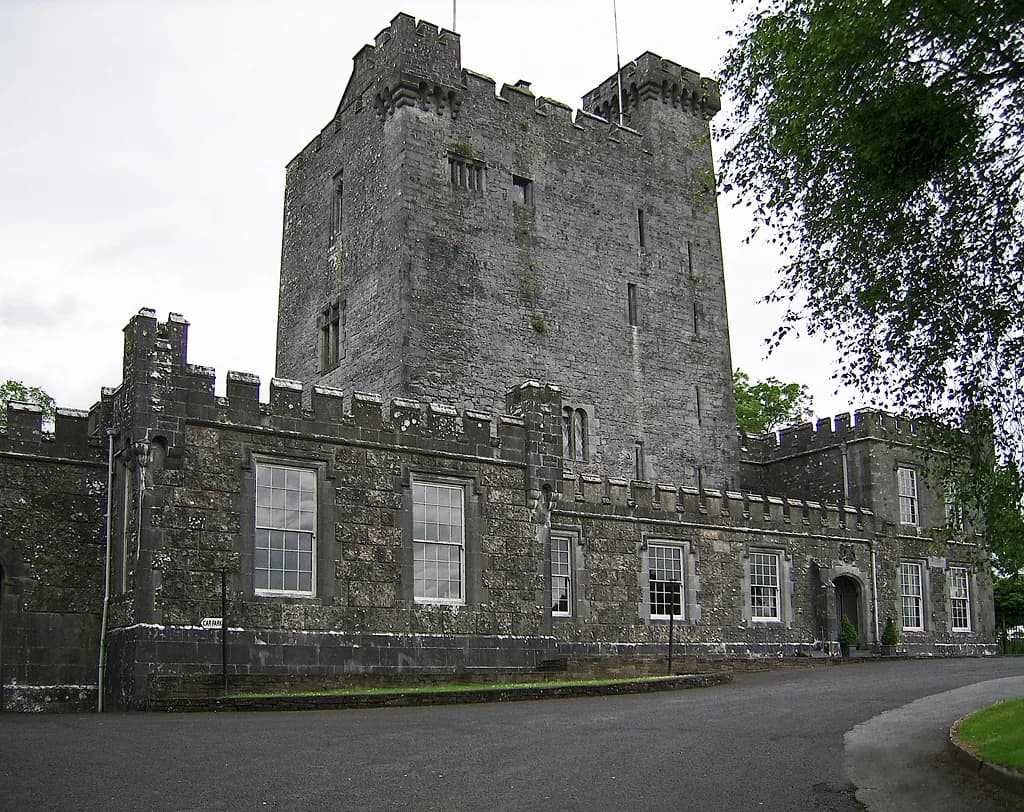
Knappogue Castle is a restored medieval tower house near the village of Quin in County Clare, and the practical way most travellers see it is through its medieval banquet. Fáilte Ireland describes that evening as a programme of music, song and dance with food and wine, and the operator pairs it with a formal garden that is open only to banquet guests. There is no supported evidence of daytime castle tours, so build your Clare itinerary around one evening booking rather than a drop-in stop.
The history runs long: the castle was built in 1467 by Sean MacNamara and remained the seat of the MacNamara clan until it was seized under Cromwell in 1659, according to a third-party tourism portal. It passed through decline and revival before being restored in the 20th century, and that story is best treated as background to the evening rather than as a reason to expect museum-style rooms.
What the Castle Is and Where It Sits
At its core Knappogue is a tower house, the tall defensible dwelling type that dot the Clare countryside, built in 1467 for Sean MacNamara. The same tourism account records that it stood as the MacNamara clan seat until 1659, when Cromwell's parliament seized it, and that it was later restored to the family after the monarchy returned. Read those dates as the castle's documented outline rather than as a claim about everything visible on site today.
The setting near Quin places it in a quieter part of Clare, well away from the coach-tour density of the coast. For a traveller, that means the castle is not a five-minute photo stop you fold into a beach day; it works better as the fixed point of an evening. Treat the surrounding countryside as daytime context and the banquet as the commitment.
The practical framing is simple: Knappogue is a heritage venue with an evening event, not a museum of furnished rooms you can wander. Book around the banquet, and put any question about accommodation or overnight stays directly to the operator rather than reading it into booking language on the castle website.
From Battlefield to Restoration: The Castle's Story
The third-party account describes a long, turbulent history that included the castle serving as a battleground and later as a stately residence, with the MacNamara family regaining it after the Cromwellian period. It also records a walled garden dating to 1817 that has been restored to its former scale. That garden origin is distinct from the formal garden visitors ask about today, which was laid out in the 1980s.
The clan seat gives the building its political importance: the tourism account records that Knappogue was the seat of the MacNamara clan until 1659. Seeing it as a family stronghold first, and an event venue second, helps explain the defensive tower form. Other regional strongholds follow similar patterns, as a wider look at castles in county galway shows.
The 20th century reshaped the building more than the medieval period did. According to the operator, Clare County Council held meetings at Knappogue during the War of Independence while guarded by the East Clare Flying Column, and Michael Brennan, from nearby Meelick, kept his headquarters there. After 1927 ownership passed through the Irish Land Commission and the Quinn family before the Andrews family rescued the castle in 1966.
The restoration that produced the present look came in 1969, carried out by Mark Edwin Andrews together with Shannon Free Airport Development Company, later known as Shannon Development. The operator's account makes clear this was a joint effort, so credit belongs to both parties. That 1960s project, not a medieval rebuilding, explains why the castle reads as restored rather than ruined.
Inside the Medieval Banquet Evening
The banquet is the reason most visitors come. Fáilte Ireland describes guests being welcomed with honey-rich mead, then entertained by a programme of music, song and dance that moves from medieval times toward the present, with food and wine served over the evening. The Earl's butler is presented as keeping proceedings in a time-honoured tradition, which is the frame the event is built around.
A fuller tourism description adds harp and fiddle players, choral singing in period dress, and a four-course meal during which the installed Earl receives his sword of office and presides. It also notes a performance after dinner running about 35 minutes. This is entertainment built on medieval motifs, not a reconstruction of documented MacNamara household practice, so judge it as theatre with a meal attached.
That distinction matters if you are choosing between castles. A visit to Blarney Castle is largely a self-guided exploration of ruins and grounds, while Knappogue's offer is a seated, hosted evening; they suit different moods and different travellers. The same split between wandering and hosted formats shows up in cities too, as our guide to museums in Galway City makes plain. If you want to wander and read panels, the banquet format will feel confining, and if you want a performance, ruins alone will feel thin.
The Formal Gardens
The garden visitors picture is a modern creation. The operator states it was designed in the early 1980s by Lavone Dickensheets Andrews, a US architect and fellow of the Royal Institute of Architects of Ireland, working collaboratively with Shannon Development, and that the castle and grounds were officially opened in 1985. It was laid out alongside the refurbishment of the castle and grounds rather than inherited from the medieval period.
Much of the original planting survives, which gives the garden its coherence. The operator lists remnants on the upper terrace including Pieris, Desfontainia spinosa, several rhododendrons, camellia, Magnolia stellata and Fothergilla major, with six lime trees and formal box hedging below, all held within the original tower, perimeter stone walls and beech hedging. Look for those specific plants rather than treating the garden as generic bedding.
Season changes the experience. Magnolia and rhododendron carry spring, while the beech hedging turns amber in autumn, so a visit in those windows shows the garden closer to its design intent than a midwinter evening will. The operator describes the garden as largely unchanged across four decades, which is unusual for a designed landscape of this date.
Access, Booking and the Trade-Off
Here is the decision that shapes a visit: the operator states the garden is accessible exclusively to banquet guests. That turns garden and evening into a single booking rather than two separate attractions, and it means there is no supported basis for planning a daytime garden-only stop. The garden is best understood as part of the evening rather than a separate daytime destination.
On timing, a third-party tourism portal states the banquet runs nightly from April to October with reservations necessary, and that the whole evening lasts about two and a half hours. Because that schedule comes from a secondary source rather than the operator, treat it as a starting point and confirm the current season, start time and booking arrangements with the venue before you build a trip around it.
No admission prices or ticket types are published in the material available here, so ask Knappogue for costs directly rather than budgeting from guesswork. The same caution applies to seeing restored interior rooms: a tourism mention of restored 19th-century drawing rooms is not evidence they can be visited.
Who the Evening Suits
Travellers who enjoy hosted dinners, live music and a bit of pageantry will find the format delivers a full evening in one place. Those who prefer to explore a castle at their own pace, read about its fabric and leave when they like, will find the structure works against them. Be honest about which traveller you are before booking.
Families and mixed groups often do well with a seated show, since the entertainment carries the evening and nobody has to navigate ruins in the dark. Couples and solo travellers who want atmosphere over information tend to be the natural audience. Conversely, serious students of medieval building techniques should look to sites where the surviving fabric, not the performance, is the point.
If your Clare plans lean toward earthworks and stone circles rather than banquet halls, the county's older monuments are a separate day's work; see our guide to ancient sites in Ireland for that kind of outing. Keep Knappogue as an evening anchor and build the daylight hours elsewhere.
Where Knappogue Fits in a Castle Trail
Clare and its neighbours hold a dense spread of tower houses, keeps and restored strongholds, and Knappogue is one entry in that wider set rather than a standalone curiosity. If you are comparing several, our guide to Medieval Castles in Ireland sets out the different formats you will meet, from bare ruins to hosted venues, so you can judge which ones reward a detour.
The contrast is sharpest with an evening-format venue close by. Bunratty Castle, also in Clare, runs its own staged banquets, so travellers planning more than one hosted night should decide early whether they want two similar evenings or one banquet plus a daytime site. Knappogue's garden restriction makes its evening more self-contained.
Plan Your Visit
Knappogue Castle rewards a clear-eyed plan: one evening booking that includes the meal, the music and, for guests, the formal garden. Go for the experience the operator and Fáilte Ireland describe rather than for a self-guided castle tour, and check the current season, start time and cost with the venue before you travel.
Give the garden its due by arriving with the seasonal planting in mind and enough daylight, where the schedule allows, to see the terraces properly. Then let the history sit where it belongs, as the story of a MacNamara stronghold rescued and restored, not as a promise of rooms you can walk through.
Explore more Ireland guides
Frequently Asked Questions
Is Knappogue Castle worth visiting?
It depends on what you want from a castle. Knappogue's supported visitor offering is a hosted medieval banquet with music, song, dance, food and wine, described by Fáilte Ireland, rather than a self-guided tour of rooms. Travellers who enjoy a staged evening will get more from it than those hoping to wander ruins independently.
Can you visit the Knappogue Castle gardens without attending the banquet?
The operator states that the formal garden is accessible exclusively to banquet guests, so there is no supported basis for planning a garden-only visit. If the garden is your reason for going, book the banquet and treat the grounds as part of that evening.
What happens during the Knappogue Castle medieval banquet?
Guests are welcomed with mead and entertained by musicians, singers and dancers in period dress, with a meal and wine served during the evening. The Earl and his butler frame the proceedings as ceremony. This is staged presentation built on medieval motifs, not a reconstruction of documented household custom.
How long does the Knappogue Castle banquet last?
A third-party tourism portal describes the whole evening as lasting about two and a half hours, including a post-dinner performance of roughly 35 minutes. Because that figure comes from a secondary source, confirm the current running time with the venue when you book.
Is Knappogue Castle a hotel?
Nothing in the available material supports describing Knappogue as a hotel or promising overnight stays, despite booking-style wording on the castle website. Plan it as a heritage venue hosting an evening event, and put any accommodation question directly to the operator.
When was Knappogue Castle built and by whom?
A tourism account records that the castle was built in 1467 by Sean MacNamara and served as the seat of the MacNamara clan until it was seized under Cromwell in 1659. The present restored appearance largely reflects a 1969 project by Mark Edwin Andrews with Shannon Development.
What should I confirm before booking the banquet?
Check the current season and start time, since the April-to-October evening schedule comes from a secondary source, and ask the venue directly about cost and any access questions. Prices and ticket types are not published in the material reviewed here, so do not budget from assumption.
Sources
- Visit Knappogue Medieval Castle Banquet with Discover Ireland
- Knappogue Medieval Banquet | Shows & Entertainment | Attractions Ireland
- Castle Accomodation Ireland | Castle Accomodation Clare | Book Now | Knappogue Castle
- Knappogue Castle | Medieval Castle in Ireland | Things to Do In Clare | Book Now | Knappogue Castle
You might also like



Continue reading
More guides you'll find useful





