
Clough Oughter Castle: Ireland's Boat-Only Crannog Tower
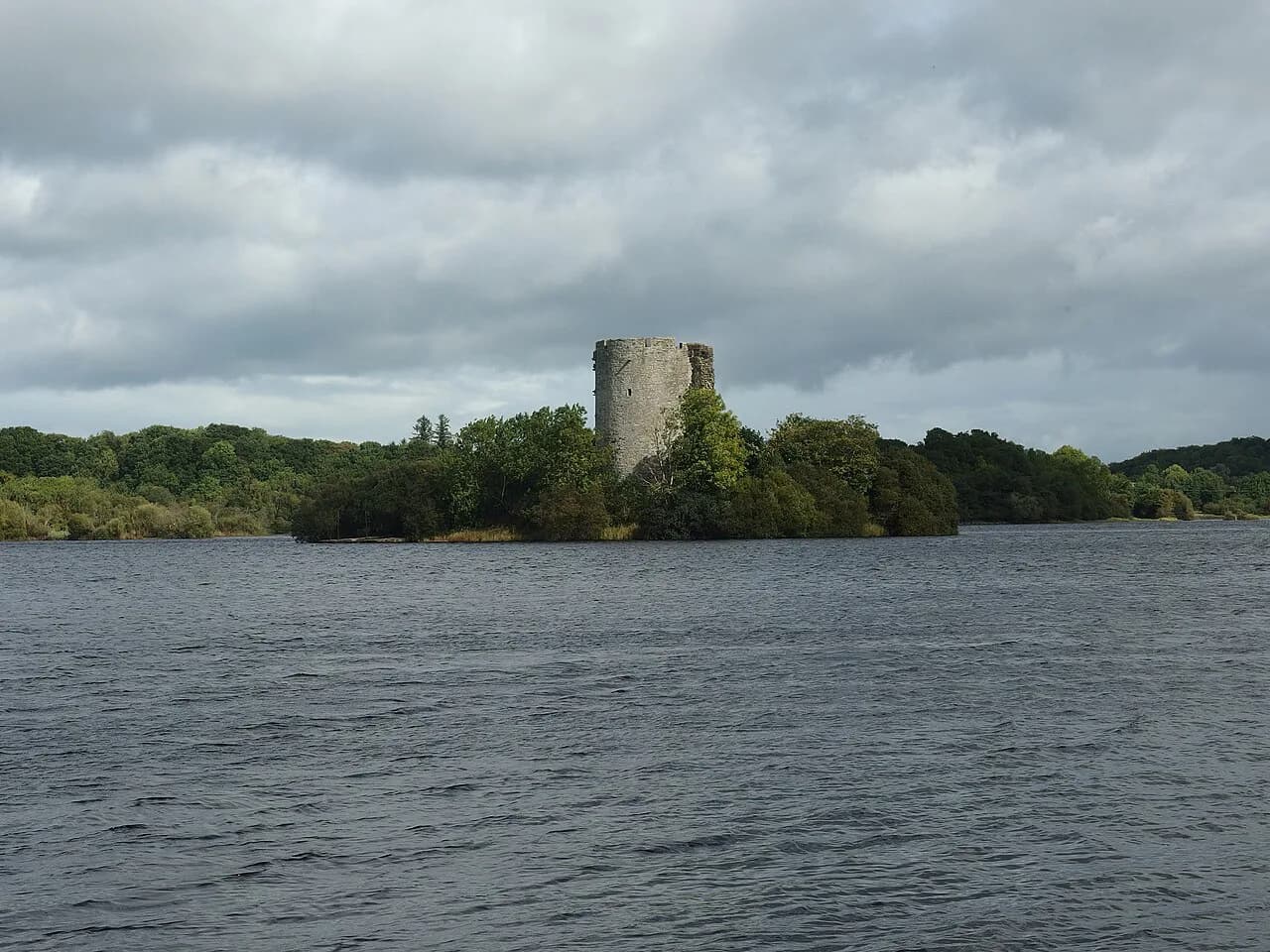
Clough Oughter Castle stands on a crannog in Lough Oughter and can be reached only by boat. Learn what survives, its contested origins and the Rann Point view.
On this page
Clough Oughter Castle is a circular stone tower standing on a crannog, a man-made island, in Lough Oughter roughly halfway between Cavan town and Killeshandra in County Cavan. It is a National Monument in state guardianship, it has no guiding on site, and it can be reached only by boat. That single fact should shape the whole visit: this is not a castle you walk up to from a car park.
Two decisions face anyone planning to see it. The first is whether to cross the water, arranging travel with Cavan Adventure Centre, which the geopark describes as offering guided boat trips and kayak and canoe hire, or to settle instead for the mainland prospect at Rann Point. The second is how much of the site's story you want to carry with you, because its origins are disputed and some of its best-known episodes are tradition rather than record.
The Lakeland Setting
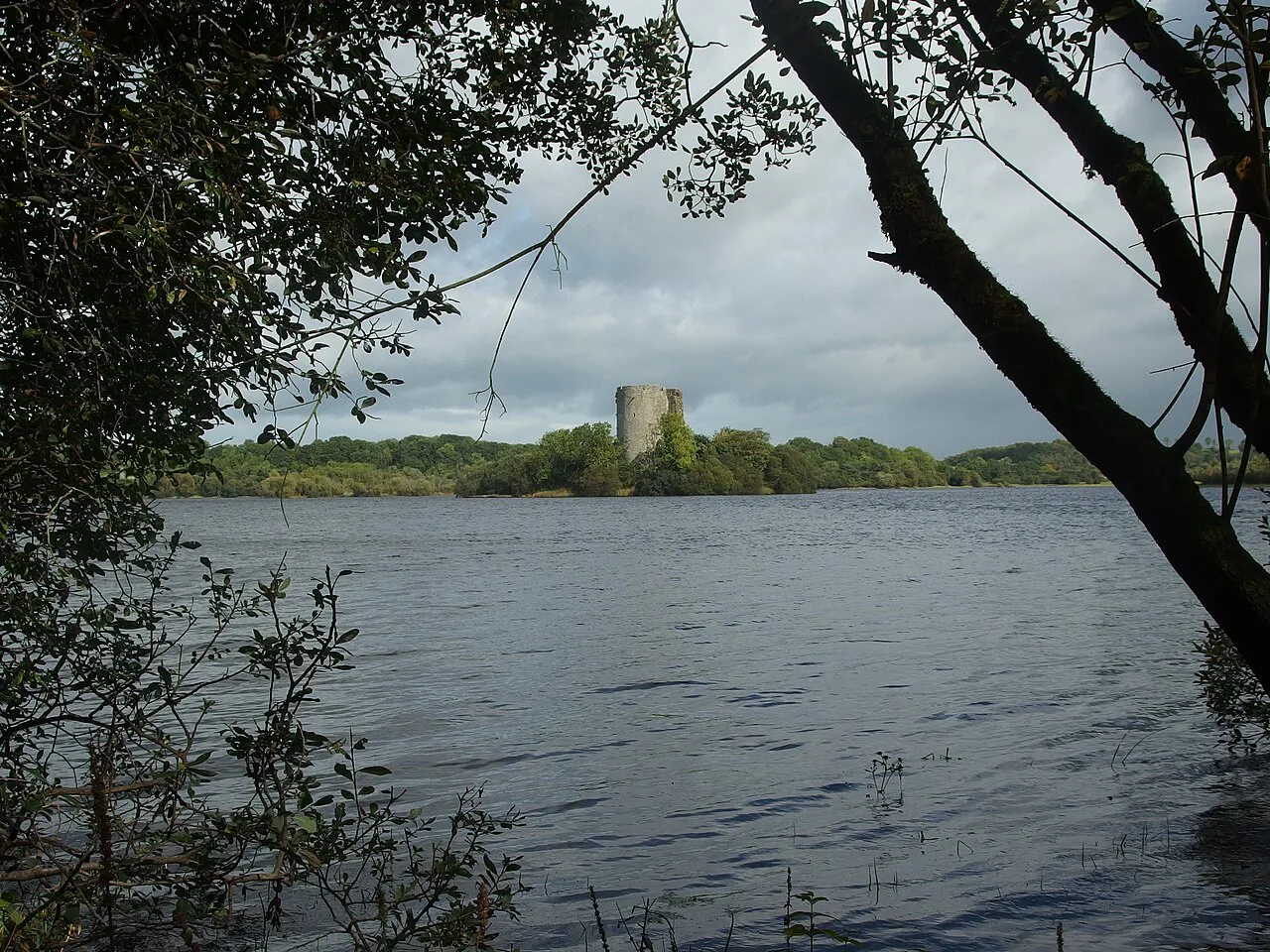
Lough Oughter is not a single open sheet of water but a maze of waterways, islands and around ninety small lakes strung along the course of the River Erne. That broken geography is why the castle's island feels remote even though it sits between two towns. It also means the approach by water changes shape constantly, with promontories and peninsulas screening the view until the tower comes clear.
The lake is also a birdwatching prospect in its own right. Mallard and tufted duck are present, and in winter the water holds wigeon and pochard. Binoculars reward the boat journey and the shoreline equally, so consider the crossing as a wildlife outing as well as a monument visit rather than treating the castle as the only thing worth watching.
Within the same water system lie other islands, including Eonish, Inch and Trinity, the last holding the ruins of Trinity Abbey. They are part of the setting rather than stops on a castle visit, but knowing they are there explains why the lake reads as a drowned landscape of small purposeful places rather than empty water. For comparison, Ireland's land-based tower houses and keeps, from the castles of County Galway to the medieval castles of the south, sit in very different settings.
Reaching the Island by Water
Access to the crannog is by boat and only by boat. The practical arrangement described by the regional geopark is to travel with Cavan Adventure Centre, which provides guided boat trips to the castle as well as kayak and canoe hire. Nothing in the official record supports walking out to the island; the supposed causeway is a matter of belief, occasionally glimpsed when the lake is unusually low, not a route to plan around.
Treat the crossing as an outing that needs provisioning. The geopark advises bringing water and food with you, and no source describes a café, shop or visitor centre at the site, so do not assume facilities at either end of the boat trip. Confirm operating arrangements, departure points and what a trip includes directly with the provider before you travel, since schedules and conditions are not fixed in any published source.
Kayak and canoe hire opens a different kind of visit for those with paddling experience, but it puts the responsibility for conditions on you. Open water, changing wind and the low, exposed island edge all argue for an honest assessment of your ability and the day's weather before committing. If you want a castle visit where the arrival is entirely on foot and the interiors are presented, a staffed site such as Blarney Castle offers the opposite experience.
The Road Approach and the Rann Point View
The drive from Cavan town follows the R198 towards Crossdoney and then the R199 to Killeshandra, after which the boat still has to be arranged. That sequence matters: the road brings you to the lake district, not to the castle. Build the day around the water booking rather than assuming you can drive to a gate and look around.
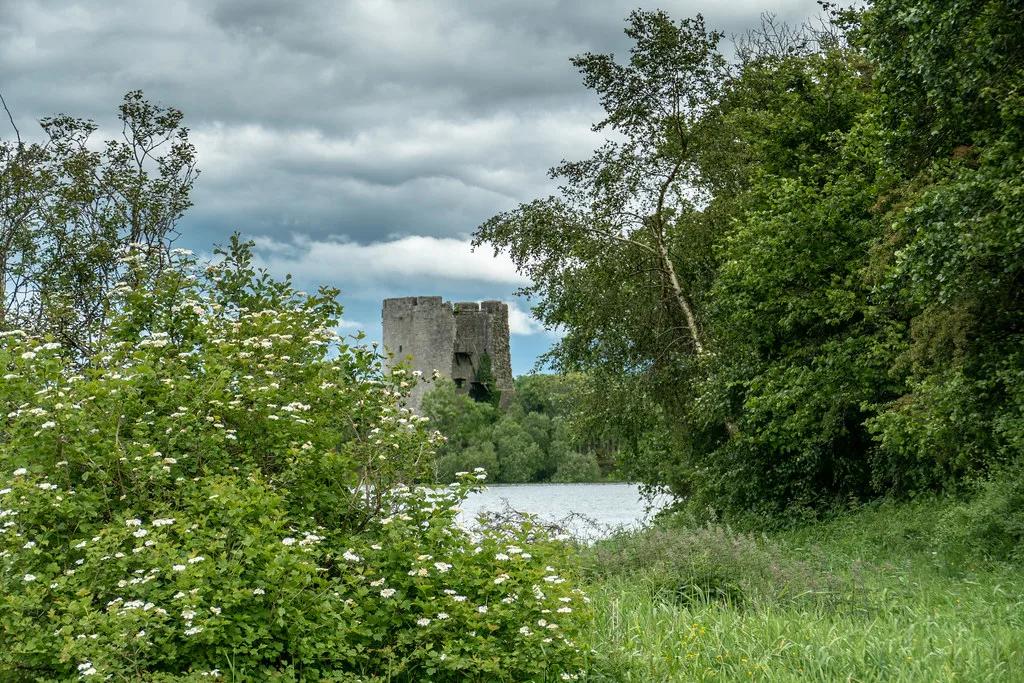
For travellers who cannot or would rather not take to the water, the castle is seen clearly from Rann Point on the mainland, standing alone in the middle of the lough. This is the sensible fallback for short visits, poor weather or anyone travelling with people who should not be in a small boat. It delivers the silhouette and the sense of isolation but none of the close inspection of the masonry, so weigh the trade-off honestly. If your wider trip also takes in the capital, our Dublin heritage guide sets out the city's key historic sites in chronological order.
Contested Origins
Who built the castle, and when, is not settled. Heritage Ireland attributes a thirteenth- or early fourteenth-century build to the O'Reilly family on the crannog in Lough Oughter, while the geopark attributes it to the Anglo-Norman de Lacy family in the early thirteenth century. Both are serious published accounts, and a visitor should hold them together rather than choosing the tidier story.
Older speculation recorded by Heritage Ireland pushes the story further back, with claims of a sixth-century construction predating the round tower at Drumlane, a long-forgotten Danish prince as builder, or the Sheridan family as responsible. These are traditions and guesses, not evidence, and they are worth reading as examples of how a striking ruin attracts origin stories. Label them as legend and enjoy them accordingly.
Documented History from 1327
The earliest documented event at the castle is a 1327 entry in the annals later compiled as the Annals of the Four Masters, recording that the Castle of Lough Oughter was taken by O'Rourke and handed back for twenty cows. From there the record shows the stronghold passing repeatedly between Irish and English political and family interests across three centuries. That pattern of local rivalry, rather than a single dramatic founding, is the castle's real historical texture.
During the Irish Rebellion that ran from October 1641 to May 1642, William Bedell, Anglican Lord Bishop of Kilmore and a noted scholar and translator of the Old Testament into Irish, was imprisoned in the castle with his two sons and stepson for several weeks. He died in February 1642, and the O'Reilly chief of the rebel forces is recorded as giving him an honourable farewell at his grave. The episode is a reminder that this small island held people of national standing, not only garrisons.
Owen Roe O'Neill, leader of the national armies, died on the island on 6 November 1649, St Leonard's Day. Tradition holds that he was poisoned through a pair of boots given to him by a woman sympathetic to the Parliamentarian cause after he had danced in them. The story is vivid and persistent precisely because a sudden death at the height of a campaign invites explanation; it should be repeated as tradition, not as established cause of death.
Siege, Breach and Abandonment
Three years after O'Neill's death, Cromwell's soldiers besieged the castle and broke through the south-facing section of the curved wall. The garrison surrendered on 27 April 1653, and from that point the fortification was effectively unusable. The site's later history is therefore not one of rebuilding and reuse but of a structure left standing in a lake as a fragment.
That collapse is also the reason the ruin is legible today. Approximately a third of the south wall has fallen or been battered down, exposing the thickness and material of the wall core and allowing a clearer understanding of how the castle was built. Where a roofed and restored tower shows you a finished surface, Clough Oughter shows you its cross-section.
Reading the Surviving Fabric
The tower is circular in plan and stands on a raised earthen platform a little over three metres above the usual summer level of the lake. It rises to about seventeen metres in total, with an internal diameter of roughly ten and a half metres and walls some two metres thick. Traces of five floors, once carried on beams, survive, topped by an embattled parapet, although the internal walls are now missing apart from a thick dividing wall in the basement.
The original main entrance sat about four and a half metres above ground, and only a finely dressed curving arch remains of it. Decorative window jambs and other dressings have been removed, and the whole structure is rubble masonry. Understanding the raised door helps explain the design: entry from the water was never a simple step through a doorway at lake level, which is one reason a casual landing should not be assumed.
Note that the described floors, parapet and basement dividing wall are features of the standing ruin, not a sequence of rooms you can enter. There is no supported interior access, so plan to study the structure from the water and the island edge rather than expecting to climb through it. For a contrast in how a castle can be presented for walking through, Donegal Castle in its town setting makes an instructive comparison.
Conservation and the 1847 Trumpets
Conservation at the site began in 1987, recognising its importance, and the structure is protected under the National Monuments Act. A more recent extensive clean-up in 2023 removed a series of twentieth-century staircases and platforms at various heights along with heavy ivy growth, which has made details of the castle's fabric easier to see. The result is a ruin read more clearly as medieval masonry and less as an accumulation of later additions.
In 1847 three trumpets were found near the castle and were presented by Lord Farnham of the nearby Farnham Estate to the museum of the Royal Irish Academy in Dublin. They are not on display at the castle and should not be expected there; the island offers no exhibition. The find is best treated as a separate thread of the site's story, one that points outward to a Dublin collection rather than back to the lough.
The scale of the place rewards a slower look than its size suggests: a small circular tower, a broken south arc and a great deal of water. Visitors who collect ancient and medieval monuments across Ireland will find this one sits closer to the archaeological tradition of island and crannog sites than to the furnished castle circuit, and the ancient sites of Ireland offer useful context for that distinction.
What the Visit Asks of You
Clough Oughter is an unguided monument, and the Office of Public Works warns that care and caution should be maintained at all stages of a visit, with no responsibility accepted for damage, injury or loss. There are no guides stationed at the castle, so any interpretation you get comes from the boat operator or from your own reading beforehand. Arrive informed rather than expecting to be briefed on the island.
Practical planning should assume very little beyond the monument itself. No source describes toilets, a café, a visitor centre or parking arrangements, and the geopark's advice to carry water and food implies exactly that absence. Check boat arrangements before setting out for the lake, and check the OPW notice for the site, since those are the two variables that can change a visit. If you want a castle where facilities and guided presentation are part of the package, a site like Bunratty Castle answers a different need.
Ross Castle on the shores of Lough Leane in Killarney National Park offers a lakeside castle mood while allowing a land-based visit, which makes it a reasonable alternative for anyone unwilling to commit to a boat. It is a different visit rather than a stand-in for the lough island, but knowing the difference helps you choose the day you actually want.
Plan Your Visit
Clough Oughter Castle is at its best for travellers who accept its terms: a boat crossing arranged in advance, a monument with no guiding and no facilities, and a story whose origins are genuinely disputed. Decide first between the water and the Rann Point view, then read the history so the broken south wall and the raised entrance mean something when you see them.
Confirm boat arrangements with the operator before travelling, and check the official site notice for the unguided monument before you go. Those two checks cover the practical variables that published sources do not fix, leaving you free to enjoy the lakeland setting and the modest, instructive ruin at its centre.
Explore more Ireland guides
Frequently Asked Questions
Can you walk to Clough Oughter Castle?
No. The castle stands on a crannog in Lough Oughter and is accessible only by boat. Stories of a causeway refer to believed remains occasionally visible when the lake is unusually low; that is not a walkable route and should not be planned as one. Anyone wanting a land-based view should head for Rann Point on the mainland instead.
How do you get to Clough Oughter Castle?
From Cavan town, drive the R198 towards Crossdoney and then the R199 to Killeshandra, then arrange a boat. The regional geopark describes guided boat trips to the castle and kayak and canoe hire through Cavan Adventure Centre. Confirm departures, what a trip includes and any conditions directly with the provider, as schedules are not published in the sources.
Where can you see Clough Oughter Castle from land?
The castle can be seen clearly from Rann Point on the mainland, standing alone in the middle of Lough Oughter. This is the practical option for short visits or anyone who prefers not to take a boat. You get the setting and silhouette but not a close look at the masonry.
Who built Clough Oughter Castle?
Published accounts differ. Heritage Ireland attributes a thirteenth- or early fourteenth-century build to the O'Reilly family, while the geopark attributes it to the Anglo-Norman de Lacy family in the early thirteenth century. Claims of a sixth-century origin, a Danish prince or the Sheridan family are recorded speculation rather than established history.
Is Clough Oughter Castle guided?
The monument itself is unguided and in state guardianship, and the Office of Public Works advises care and caution at all stages of a visit. There are no guides stationed on the island. Any commentary comes from the boat operator or from reading beforehand.
What happened at Clough Oughter Castle in the seventeenth century?
Bishop William Bedell was imprisoned there with his family during the rebellion of 1641 to 1642 and died in February 1642. Owen Roe O'Neill died on the island on 6 November 1649, a death surrounded by a poisoning tradition rather than established fact. Cromwell's forces later breached the south wall, and the garrison surrendered on 27 April 1653.
What can you see of the castle's structure?
A circular rubble-walled tower on a raised platform, with traces of five floors, a surviving basement dividing wall and an embattled parapet. About a third of the south wall has fallen, exposing the wall core. The raised original entrance survives only as a curving dressed arch. The interior is not accessible.
Are there facilities at Clough Oughter Castle?
None are described. The geopark advises bringing water and food, so plan as though nothing is available on the island. There is no evidence of toilets, a café or a visitor centre, and parking arrangements are not covered in the published sources.
Sources
You might also like



Continue reading
More guides you'll find useful




