
Blarney Castle: Visiting the Tower, Stone and Gardens
Plan a visit to Blarney Castle in County Cork: the tower house, the Blarney Stone, the gardens and Rock Close, seasonal hours, tickets and time needed.
On this page
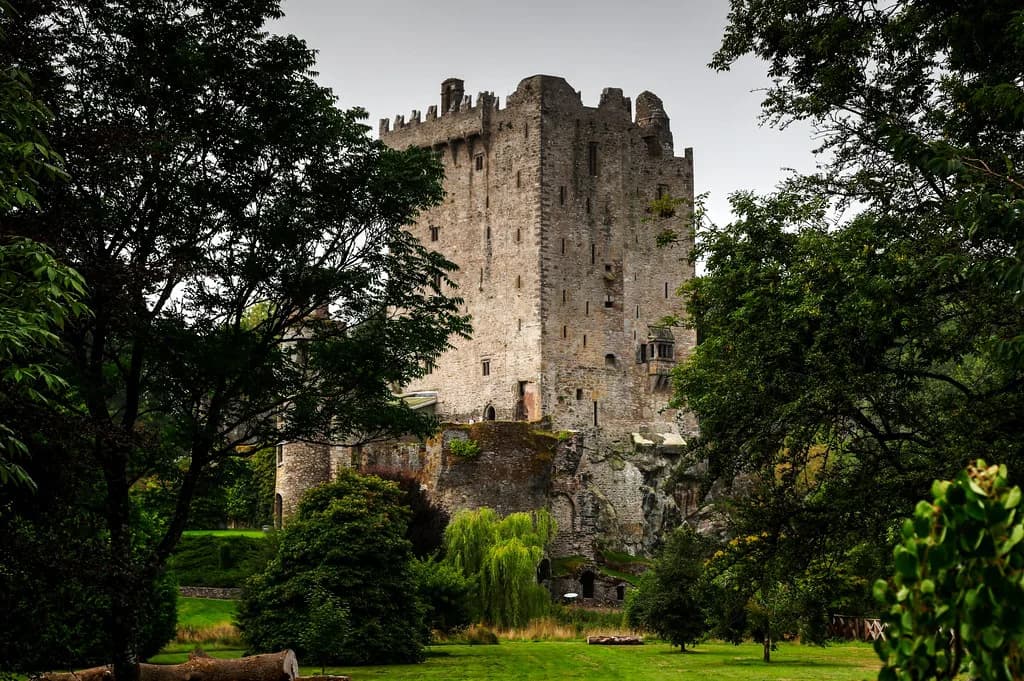
Blarney Castle is a medieval tower house in Blarney Village, about 8 km northwest of Cork city, and a visit has three distinct parts: the castle interior and its climb, the Blarney Stone at the top, and the gardens and Rock Close below. Treating these as one attraction, rather than a single photo stop, is the difference between a rushed hour and a satisfying half day.
The whole visit is self-guided, and maps in several languages are available from the ticket office, so you decide the order rather than following a fixed route. That freedom rewards a little planning: decide before arrival whether the stone is essential for you, because the climb and the manoeuvre at the top shape everything else.
The Tower House and Bawn
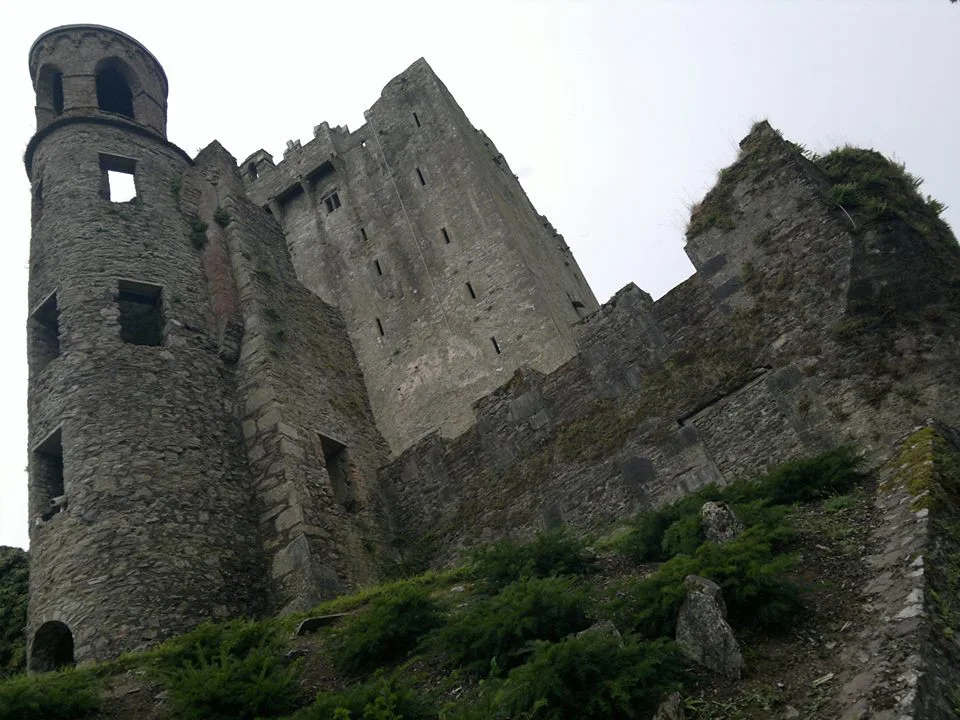
The castle is a substantial tower house rather than a courtyard fortress, and the operator presents it as built nearly six hundred years ago for Cormac MacCarthy, one of the powerful Munster chieftains. Ireland.com describes walls roughly 15 feet thick at the base, which explains why the interior rooms feel enclosed and the stairways narrow.
Around the base you pass through the walls and bawn, the enclosed ground that once formed the castle's defensive setting; the operator lists this area among the named features of the site. It is easy to walk through quickly on the way to the tower, but it gives the best sense of how the castle sat in its landscape before the gardens were laid out.
If you are comparing tower houses across the country, it helps to see several in person; this guide sits within a wider set of medieval castles ireland travellers can use to plan a route. Blarney's advantage is that castle, grounds and a village are all in one place.
Inside the Castle: Rooms and Spaces
The named spaces inside are the Banqueting Hall, the Great Hall, the Kitchen, the Chapel, the Family Room and the Dungeon, and each is a distinct stop rather than a single circuit. Ireland.com notes that the Banqueting Hall was where the castle's social life took place, with feasts and entertainment, which is worth knowing before you step into an empty stone room and wonder what happened there.
Ireland.com also points out a room known as the Young Ladies Bedroom, associated with the three daughters of the 14th Lord of Muskerry, which is the kind of small domestic detail that makes the tower feel lived in rather than merely defensive. Look for these smaller rooms as you climb, because most visitors move upward steadily and miss what sits off the main route.
The climb is the filter for everything above: narrow stairs, low openings and a one-way flow toward the battlements. If anyone in your group dislikes enclosed spaces, the lower rooms can be seen while others continue up, and the gardens give everyone a meeting point afterwards.
The Blarney Stone and the Gift of the Gab
The stone is built into the uppermost battlements of the main tower, and kissing it is a physical manoeuvre rather than a quick peck. You lie on your back, hold the iron railings and lean your head and shoulders backwards over an open parapet, with staff on hand to support and steady you; Ireland.com describes it plainly as an adventure in itself.
That description is the honest test for whether to take part. Anyone uncomfortable with heights, leaning backwards or tight spaces should skip the stone without regret, since the climb, the rooms and the gardens remain the substance of the visit. An independent guide makes the same caution explicit for visitors with height or mobility concerns.
The Legend: What Is Tradition, Not History
Stories about how the stone reached Blarney vary widely. Ireland.com relates a tradition that it was brought back from the Holy Land after the Crusades and notes that the stone's arrival remains unclear, while the independent guide recounts a tale linking it to the Queen of the Fairies in south Munster. These are legends attached to the object, not documented provenance.
The better-known tale explains the word blarney itself: an account holds that Elizabeth I pressed the castle's lord to submit, and his endlessly charming, delaying replies led her circle to use blarney for flattering soft talk. It is a good story about language rather than a verified episode, so enjoy it as tradition and treat the stone's promise of eloquence the same way.
For the castle's documented story, dates carry more weight than legends: the independent guide dates the present tower to the 1440s and says it is the third structure on the site, but those claims are that writer's account rather than official interpretation. Read them as context while you climb, not as settled fact.
The Gardens and Rock Close
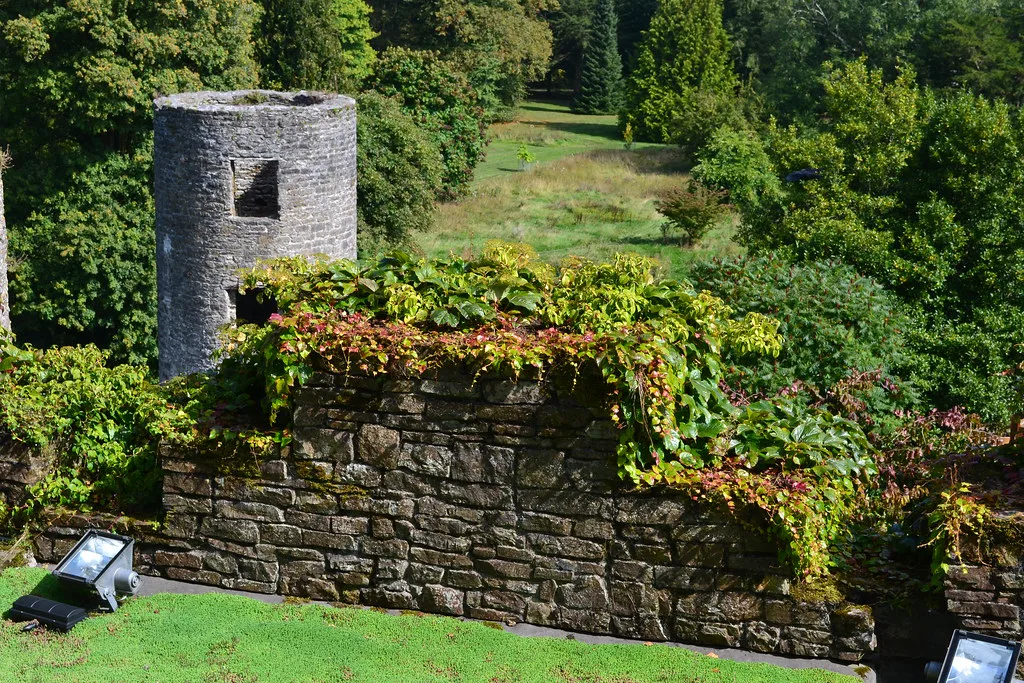
The grounds hold more than ten distinct garden sections, and the operator names several to look for: the Poison Garden, the Seven Sisters standing stones, the Great Trees, the Herbaceous Border, the lake walk and the caves. Ireland.com singles out the Great Trees area as holding some of the largest specimens of their kind in Ireland, and the Seven Sisters as a collection of ancient standing stones.
The lower Rock Close is where many visitors spend least time, and the Wishing Steps sit there, cut into a steep rock face. The tradition asks you to walk down and back up with your eyes closed while holding a wish; it is a legend attached to the steps, and the independent guide describes them as mossy stone worn smooth with age.
Two further areas reward the walk: the shaded Fern Garden, which the independent guide treats as the standout section, and the River Bank Walk following the Blarney River through the lower grounds. Neither promises particular plants at a particular season, so treat them as places to walk rather than displays to catch.
If standing stones interest you beyond the Seven Sisters, the same tradition of marked stones in the landscape appears at ancient sites ireland preserves, which makes a useful comparison when you read the labels here.
Blarney House and the Estate Setting
Blarney House, a large baronial-style mansion, stands on the estate and is visible from the grounds; treat it as part of the landscape rather than a stop with an interior visit. No opening, tour or admission details for the house appear in the operator's published visitor information, so plan around what you can see from outside.
The contrast between the older tower and the later house is the most legible piece of the estate's history, and the independent guide claims the house dates from the 1870s, attributing that to the writer rather than to the castle's own interpretation. Read it as one account, and let the buildings speak for themselves as you pass.
Seasonal Hours and Tickets
Opening hours change month by month, so the operator's table is the only reliable reference rather than a single daily time. January to March runs 9.00am to 5.00pm with last admission at 4.00pm; April 9.00am to 5.30pm with last admission at 4.30pm; Monday to Friday in May 9.00am to 6.00pm with last admission at 5.00pm, while Saturday in May runs 9.00am to 6.30pm with last entry at 5.00pm; June to September 9.00am to 6.00pm with last admission at 5.00pm; October 9.00am to 5.30pm with last admission at 4.30pm; and November to December 9.00am to 5.00pm with last admission at 4.00pm.
The site closes on 24 and 25 December, the dates the operator publishes in its seasonal table. On 26 December and 1 January it opens 10.00am to 5.00pm with last admission at 4.00pm, so a winter visit is possible if you check the day rather than assume a holiday shutdown.
Tickets can be bought in advance online or at the ticket office on arrival, and the operator states there are no timed slots, so entry is not tied to a booked hour. The operator's current table shows a child rate of 12 euro for ages 6 to 16, with children aged 5 and under free when accompanied by an adult; confirm the figures on the official site before booking, since published rates change.
How Much Time to Allow
Ireland.com recommends allowing at least three hours to see the castle, the stone and the gardens, which is a sensible planning figure rather than a rule. In practice, the climb and the rooms take a substantial share of that, and the gardens alone can absorb whatever remains.
If your time is short, cut the wider gardens before you cut the castle, but try to keep a loop through the Rock Close, where the Wishing Steps and the mossy lower paths give a compact taste of the grounds. The independent guide puts a full exploration of the grounds at up to about four hours, useful when deciding whether Blarney is a half day or a full one.
Access, Inclusion and Getting There
The operator supports Autism Friendly Blarney and offers a visual guide to help visitors prepare for the site, which is worth downloading before you travel if anyone in your group benefits from knowing what comes next. Beyond the stone manoeuvre itself, the main access issues are the stairs and narrow spaces in the tower.
By car, follow signs for Blarney from Cork; by public transport, the operator points travellers to Bus Éireann timetables and to Irish Rail for trains to Cork, without publishing service frequencies. Check those operators directly for current services rather than relying on any single quoted journey time.
Cork city is a short drive away and makes a natural extension, with the English Market and Shandon Tower among the stops Ireland.com suggests; the colourful harbour town of Cobh, with its Titanic associations, lies further out. For the city quarter around that tower, see this Shandon, Cork: A Guide to the Historic Quarter and Its Landmarks before you plan the day. Both reward a separate day rather than an hour squeezed onto the Blarney trip.
Visitors touring Ireland's tower houses often pair a Cork stop with one in County Clare, where bunratty castle anchors a very different kind of visit built around a folk park. The comparison is instructive: Blarney offers a genuine medieval tower and a landscape, while Bunratty Folk Park adds reconstructed rural life, so choose according to whether you want stone or social history.
Before You Go: Confirm Hours and Prices
Confirm the seasonal hours for your exact travel dates on the official site, because the monthly table is what governs last admission and a late arrival can cost you the tower. Second, check the current child ticket price rather than relying on any figure quoted in advance.
With those two details settled, Blarney works best as a planned half day: climb early, decide honestly about the stone, then give the gardens and Rock Close the time the tower does not take.
Explore more Ireland guides
Frequently Asked Questions
How long does a visit to Blarney Castle take?
Allow at least three hours if you want the castle rooms, the stone and a proper walk through the gardens; that figure is a recommendation rather than a rule. If you also want to explore the lower grounds thoroughly, plan closer to a full half day, and cut the gardens first rather than the tower if your time shrinks.
Do you need to book Blarney Castle tickets in advance?
You can buy online beforehand or at the ticket office when you arrive, and the operator states there are no timed slots, so entry is not fixed to a booked hour. Booking ahead saves a step at the gate but does not reserve a particular time, so build your day around the seasonal closing time instead.
Is kissing the Blarney Stone difficult or risky?
It requires lying on your back and leaning your head and shoulders backwards over an open parapet while gripping iron railings, with a staff member supporting you. Visitors uneasy with heights, backward leaning or tight spaces can skip it without losing the visit, since the tower rooms and gardens stand on their own.
What is there to see at Blarney Castle besides the stone?
Inside the tower you can visit named rooms including the Banqueting Hall, the Kitchen, the Chapel and the Dungeon. Outside, the grounds hold the Poison Garden, the Seven Sisters standing stones, the Great Trees, the Wishing Steps in Rock Close, the Fern Garden and the River Bank Walk, and the later Blarney House is visible from the estate.
How do you get to Blarney Castle from Cork city?
Blarney Village sits about 8 km northwest of Cork city, and the operator gives directions by car along with references to Bus Éireann timetables and Irish Rail services into Cork. Check those operators for current schedules, since the castle's own page does not publish frequencies or journey times.
Is Blarney Castle open in December?
Yes. The operator's table lists November and December opening from 9.00am to 5.00pm with last admission at 4.00pm, and the site closes only on 24 and 25 December. On 26 December and 1 January it runs shorter hours, 10.00am to 5.00pm with last admission at 4.00pm.
Where did the Blarney Stone come from?
No origin is established. Traditions include a link to the Holy Land after the Crusades and a connection with the Queen of the Fairies in south Munster, and the tourism board notes the stone's arrival remains unclear. Treat these as legends attached to the object rather than documented history.
Sources
You might also like



Continue reading
More guides you'll find useful


