
Maynooth Castle: A FitzGerald Stronghold in Kildare
Maynooth Castle is a ruined FitzGerald stronghold in the centre of Maynooth, County Kildare. See what survives and what to check before you travel.
On this page
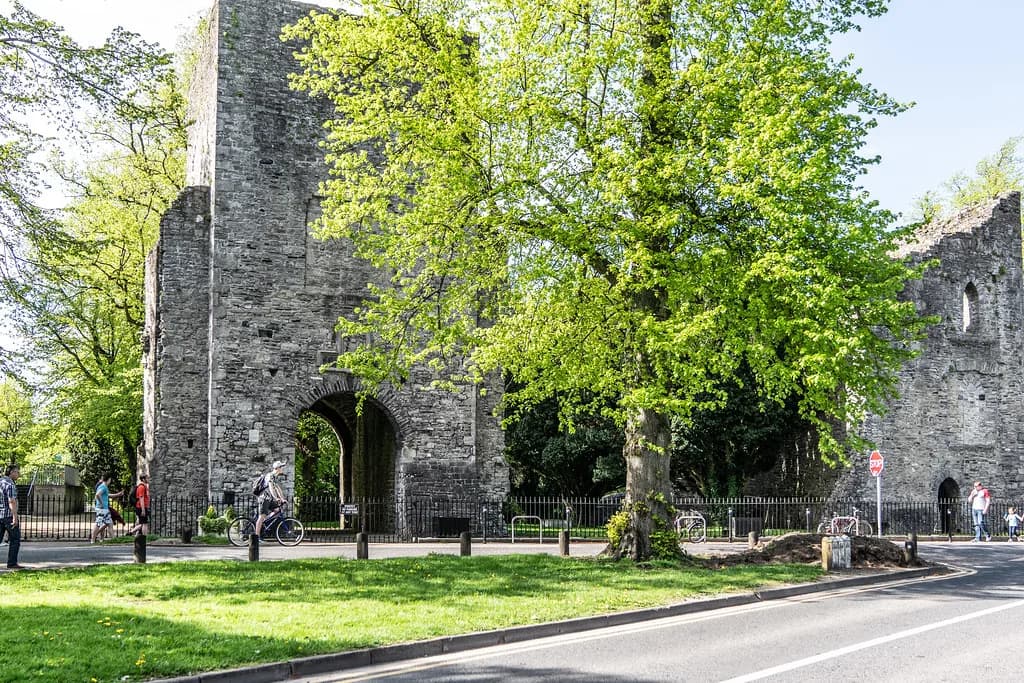
Maynooth Castle is a ruined stone stronghold standing in the centre of Maynooth, County Kildare, about 30 kilometres from Dublin. Heritage Ireland states that it was founded in the early thirteenth century and became the seat of power of the FitzGeralds, the earls of Kildare. Today the main reasons to stop are the surviving keep, the remains of the great hall and an exhibition inside the keep on the castle and the family.
Treat it as a short, compact stop rather than a full-day attraction. A 2022 photo-essay places the site at the entrance to the South Campus of Maynooth University, close to the junction of the R148 and R408, so it is easy to fold into a wider day of heritage sites in north Kildare and west Dublin, but it rewards a focused stop more than a rushed five minutes. If your wider day heads into the capital instead, Dublin History: A Chronological Guide to the City's Key Sites is the companion to read next.
A Castle Hidden in the Middle of Town
Heritage Ireland describes the castle as occupying a deceptively secluded spot in the centre of Maynooth, with well-kept grounds and plenty of greenery. That description is the key to planning: you are not driving to a remote field, but to a monument pressed against a busy university town.
Because the castle sits at the edge of the university's South Campus, the surrounding streets and campus buildings are a separate place from the monument itself. If you are researching the visit, do not confuse Maynooth University or college buildings with the castle; they are neighbours, not the same site.
Origins: A Keep Begun Around 1200
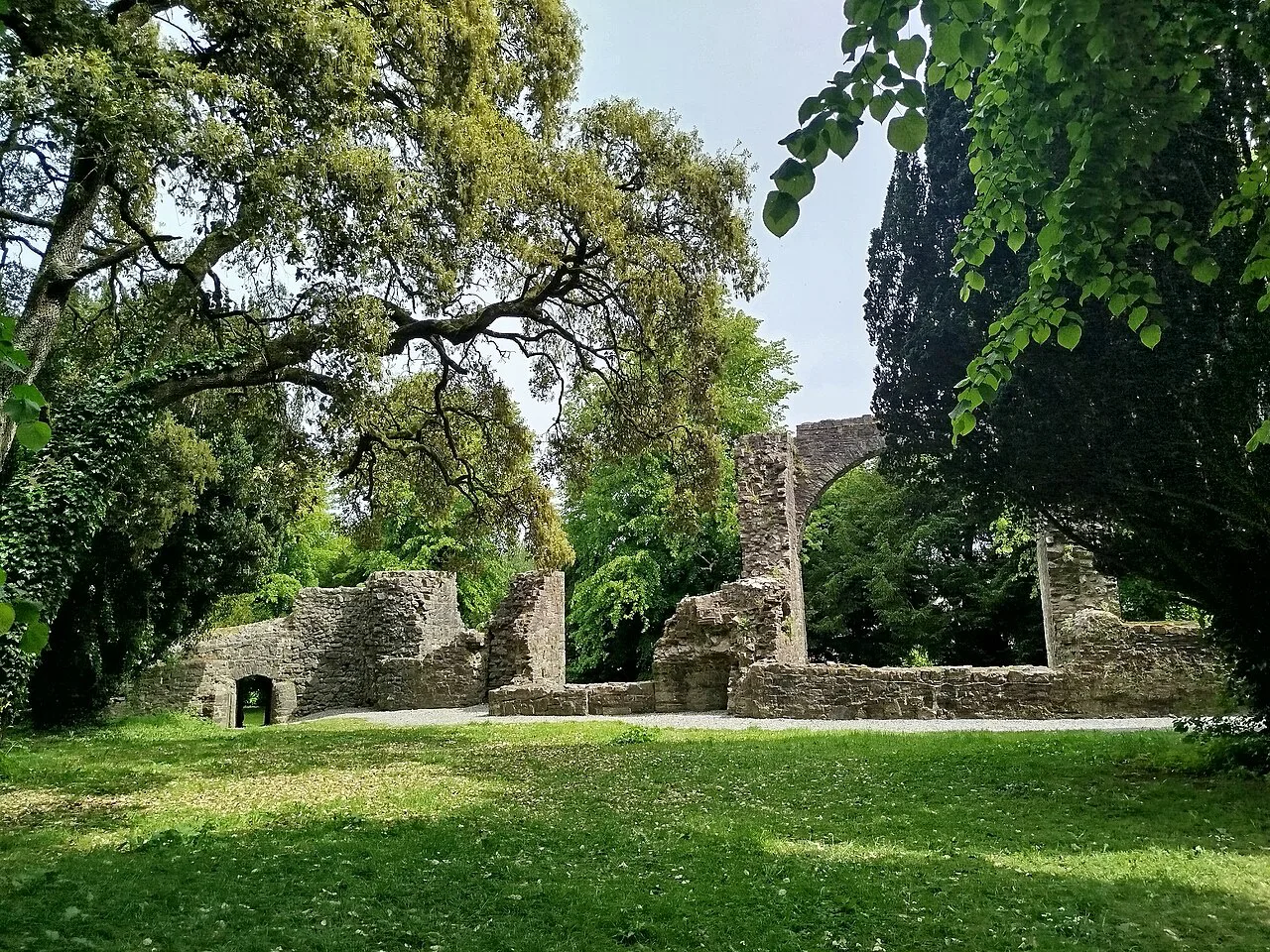
Heritage Ireland states that the castle was founded in the early thirteenth century and that the original keep was begun around 1200, making it one of the largest keeps of its kind in Ireland. Those dates are the operator's framing; other accounts shift them, so it is sensible to read early dates as approximate.
Kildare Heritage gives a different piece of the story, noting that a castle at Maynooth was erected in 1426 under a John Fitzgerald, one of the Kildare earls. Those construction claims do not sit neatly together, and no source here reconciles them. Rather than pick a version, it is better to read the ruin as a layered site built, rebuilt and defended across centuries.
Seat of Power for the FitzGeralds
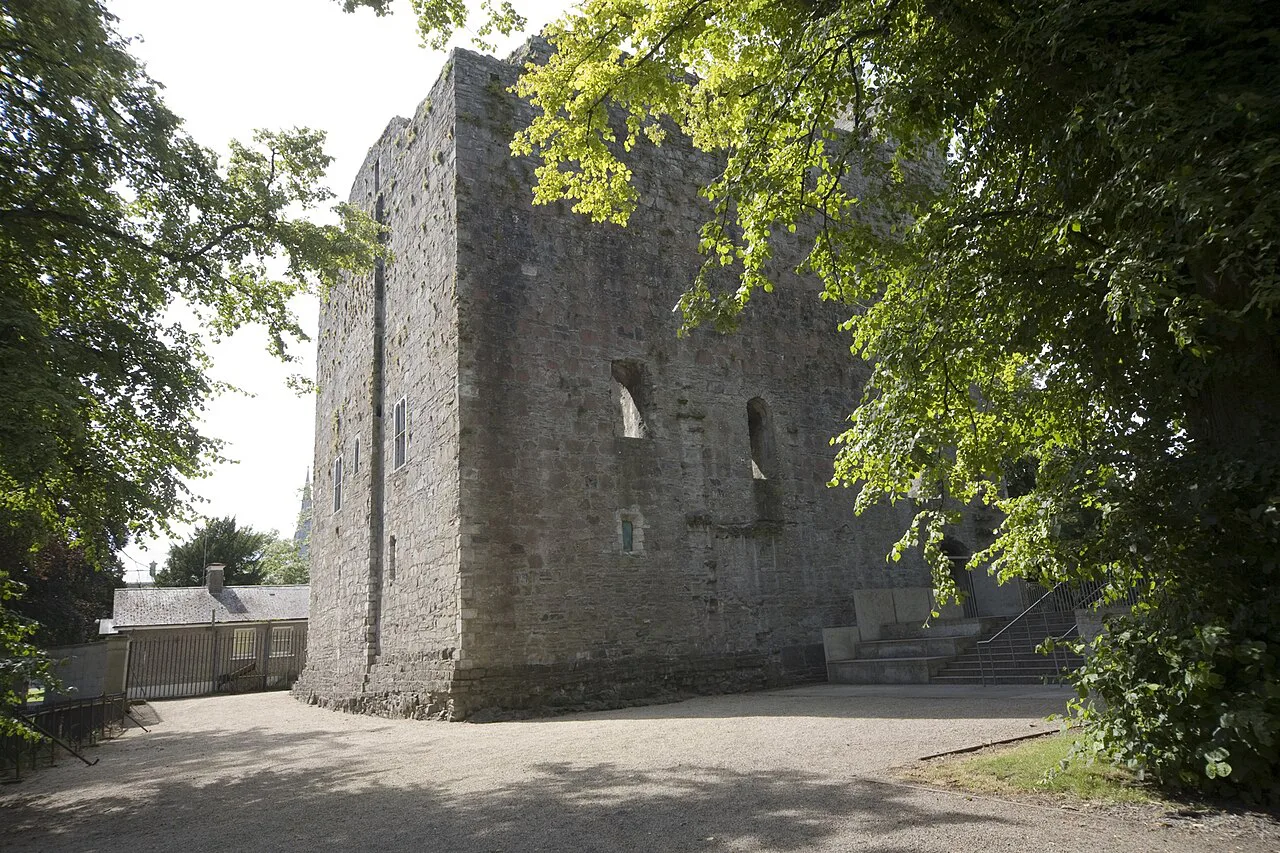
The castle became the seat of power for the FitzGeralds, the earls of Kildare, as they emerged as one of the most powerful families in Ireland. Heritage Ireland calls Maynooth one of the largest and richest Geraldine dwellings and describes the great hall inside as a nerve centre of political power and culture. That framing is useful when you are looking at the remains: you are not looking at a small local tower house but at the heart of a regional lordship.
Garret Mór, known as the Great Earl of Kildare, governed Ireland in the name of the king from 1487 to 1513. That span, given by Heritage Ireland, is the specific limit to keep in mind; avoid stretching it to cover the whole FitzGerald story or other office-holding. The castle's high point in political importance sits within that period, when the great hall hosted the business of rule.
Kildare Heritage frames the castle as one of the principal seats of the Kildare FitzGeralds and notes that after the family's fall it passed into royal hands, becoming a residence for the Lord Deputies of Ireland. That shift from family stronghold to crown property is a useful way to think about the later phases of the site.
From Stronghold to Ruin
The narrative of decline most often told is that of Silken Thomas, a son of the Earl of Kildare, who rebelled after his father was arrested. Kildare Heritage records that he was defeated and executed in London with five uncles, and that the castle then became a royal castle. That is the commonly recounted local version of events rather than an operator-confirmed account of every detail.
A photo-essay account of the castle's history places the rebellion in 1535 and describes a siege in which the medieval structure was bombarded with heavy artillery, leaving much of it in ruins. It also reports further damage during the 1640s Confederate Wars, after which the family largely abandoned the site and shifted focus to Carton House. Treat those details as widely repeated narrative rather than official interpretation.
The numbering of earls in these accounts is inconsistent, and the sources do not agree on Silken Thomas's place in the sequence. It is better to leave contested numerals out of your own reading and focus on the sequence: a powerful family, a failed rebellion, a ruined castle and a later residence elsewhere.
What Survives to See
What remains is ruins rather than a roofed castle. The keep is the oldest and dominant element, and Heritage Ireland states that there is an exhibition inside it on the history of the castle and of the family. A photo-essay account lists a great hall, chapel and gatehouse among the castle's buildings, but what visitors can actually see today is best checked against the standing remains and the operator's information on site.
One visitor in 2022 recorded that a camera was not allowed but an iPhone was, which is a useful reminder that photography rules change and should be checked on arrival rather than assumed. Do not treat that dated account as current policy.
If you enjoy reading castle ground plans and comparing building phases, this is a compact site to study; if you want furnished rooms and costumed tours, look elsewhere. For broader context on what different Irish castles preserve, the guide to medieval castles ireland is a useful companion before you go.
Access and Published Opening Times
Heritage Ireland's published notice for the castle lists it as open daily from 10:00 to 17:45, with last admission at 17:15, retrieved in October 2026. This is the operator's published notice, not a guarantee for holidays or extraordinary closures, and it does not promise free entry, so confirm it in the week of travel if the castle is the reason for your trip.
The same notice flags limited access for visitors with disabilities, without describing step-free routes or which parts of the ruins can be reached. If you use a wheelchair or have mobility limits, contact the site directly before travelling rather than assuming the keep, exhibition or paths are accessible.
Kildare Heritage separately describes the castle as having seasonal opening times, which does not fit neatly with the operator's daily notice. Before travelling, check the official Heritage Ireland page for the current status and, if necessary, phone the site to confirm whether the keep and exhibition are open on the day you plan to visit.
Around the Castle: Town and Nearby Sites
The castle's town-centre position means you can pair a short visit with a walk through Maynooth itself. Heritage Ireland lists nearby Heritage Ireland properties including Castletown House and Parklands, Farmleigh House and Gardens, and the Phoenix Park Visitor Centre at Ashtown Castle. Those give you options for a fuller heritage day rather than a single stop; for another compact castle ruin that rewards close reading, our guide to Ferns Castle is a useful companion.
If you are travelling across several counties and comparing castle visits, our guides to Bunratty Castle in County Clare or Ross Castle in Killarney show how different sites present their interiors and grounds. Maynooth is the opposite of a fully staged experience: it is a ruin you read for its shape, its setting and the story of the family behind it.
Contrasts with Other Irish Castles
Maynooth is a ruin to read rather than a staged interior, so it makes a useful contrast with castles where buildings, gardens and presentation dominate the visit. For a very different atmosphere, the guide to blarney castle covers a site known for its grounds and its Blarney Stone rather than for the remains of a Geraldine power centre, while the Medieval Castles in Ireland overview puts both in wider context.
If you want a second castle with a much more complete standing structure, donegal castle in the town of the same name or athlone castle in County Westmeath make useful comparisons. Both are covered separately, and neither duplicates what you will see at Maynooth.
Plan Your Visit
For a short heritage stop with real historical weight, Maynooth Castle is a sensible addition to a day in north Kildare, provided you check the operator's current notice before arriving. Plan around the keep and the exhibition rather than expecting a full castle tour, and leave time to look at the great hall remains and the site's town setting.
For another heritage guide, read about Ferns Castle.
Explore more Ireland guides
Frequently Asked Questions
Is Maynooth Castle open to visitors?
Heritage Ireland publishes an opening notice (retrieved October 2026) listing the site as open daily from 10:00 to 17:45 with last admission at 17:15. Because the source also flags limited access for visitors with disabilities and Kildare Heritage refers to seasonal opening times, check the official page close to your travel date rather than relying on any single account.
Where is Maynooth Castle?
It stands in the centre of Maynooth in County Kildare, about 30 kilometres from Dublin. A photo-essay places it at the entrance to the South Campus of Maynooth University near the junction of the R148 and R408. It is a town-centre site, not a remote rural ruin.
What can I see at Maynooth Castle?
The surviving keep is the dominant feature, and Heritage Ireland states there is an exhibition inside the keep on the history of the castle and the FitzGerald family, so budget time for that rather than only the outdoor ruins. A photo-essay account also describes a great hall and other structures once forming the castle, but check the standing remains and operator information on arrival for what is actually visible.
How long does a visit take?
The castle is a compact town-centre monument rather than a large estate, so allow under an hour for the ruins and exhibition. If you want to read the exhibition carefully or walk the surrounding university-town streets, allow a little longer.
Can I visit with limited mobility?
Heritage Ireland notes limited access for visitors with disabilities, but does not describe step-free routes or which areas can be reached. Contact the site in advance to confirm what is possible before you travel.
What else is nearby?
Heritage Ireland lists Castletown House and Parklands, Farmleigh House and Gardens, and the Phoenix Park Visitor Centre at Ashtown Castle as nearby places to visit. They work well as a combined day if you are travelling across north Kildare and west Dublin.
Is Maynooth Castle the same as Maynooth University?
No. The castle is a separate heritage site at the entrance to the university's South Campus. The college buildings and the castle are near each other but should not be confused when planning your visit.
Sources
You might also like



Continue reading
More guides you'll find useful




