
Norman Ireland: Three Surviving Places That Tell the Story
Norman Ireland is best read through surviving buildings. See how Christ Church Cathedral, Ferns Castle and Cahir Castle each record the Anglo-Norman intervention.
On this page
Norman Ireland is easiest to understand through the buildings the Anglo-Normans left standing, not through a single date. The intervention that began in the late 1160s reshaped Irish secular affairs, as Trinity's history department frames it, and its effects are still visible in Dublin, Wexford and Tipperary. Three named sites let you trace that process in stone, each with a very different practical situation on the ground.
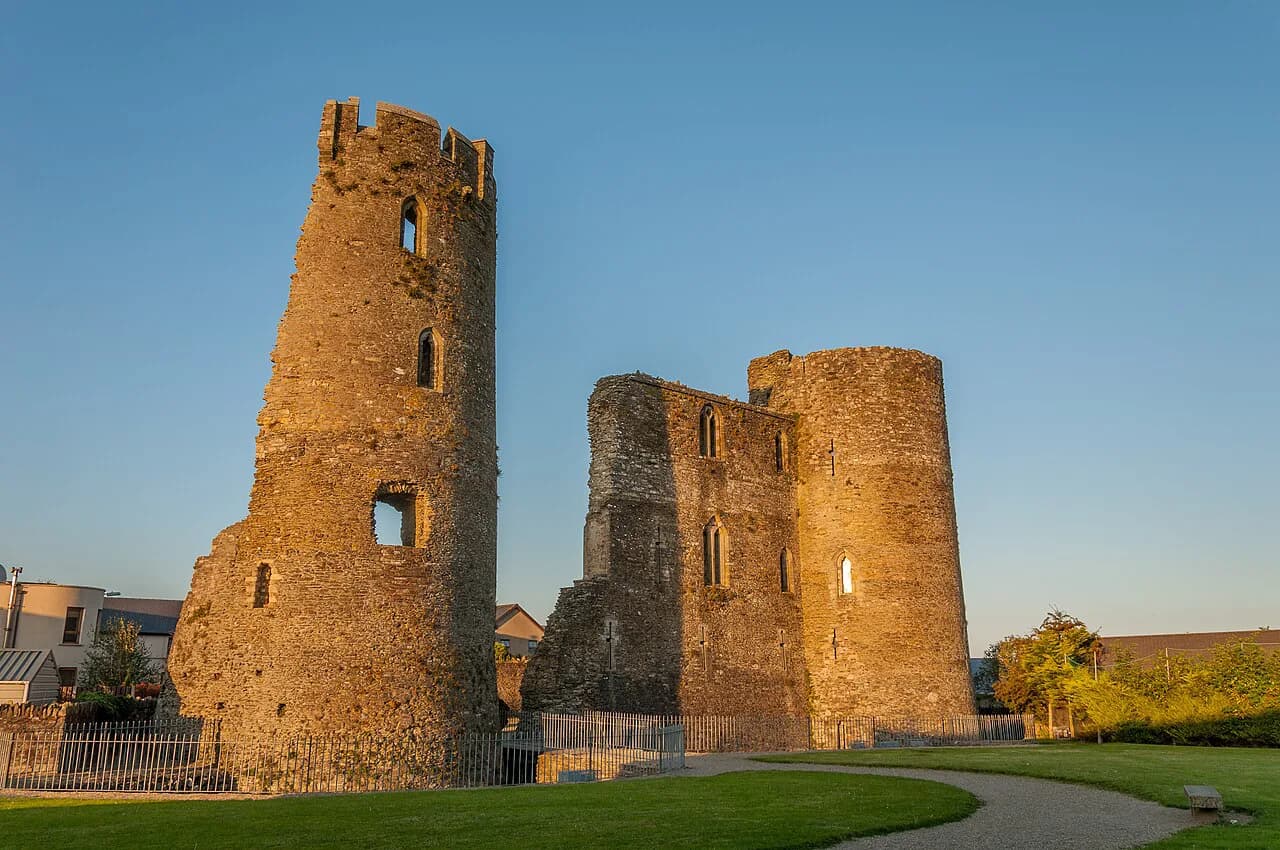
Christ Church Cathedral in Dublin keeps the clearest record of the Anglo-Norman rebuilding programme, from Archbishop John Cumin's late Romanesque work to the Gothic nave. Ferns Castle, built around 1200 by William Marshal on ground that had belonged to Diarmait Mac Murchada, cannot be entered before 2027. Cahir Castle, a thirteenth-century Butler stronghold on the River Suir, is the one site where later siege history layers directly over medieval defensive design.
It helps to place Norman Ireland within the longer story of medieval Ireland, since the invasion of the late 1160s followed a period of inter-provincial warfare and church reform. Treat each site as evidence rather than scenery: what was built, what was replaced, and what later centuries did to it.
What Norman Ireland Means as a Period and a Process
The Anglo-Norman arrival is usually dated from the late 1160s, but Trinity's module on kingship and warfare describes the English invasion as the single most formative development in Irish secular affairs, which is a framing rather than a fixed anniversary. The module runs to Edward Bruce's Scottish invasion of 1315-18, which shows how long the consequences were felt. For a visitor, that means one castle cannot represent the whole story.
Buildings are the most reliable entry point because they can be dated and read. A Romanesque arch, a Gothic arcade and a siege-damaged wall each record a different phase of the same wider process. The trade-off is that later restorations have sometimes replaced more than they preserved, so part of the visit is learning which fabric is medieval and which is Victorian.
Before the Normans: Ferns and Hiberno-Norse Dublin
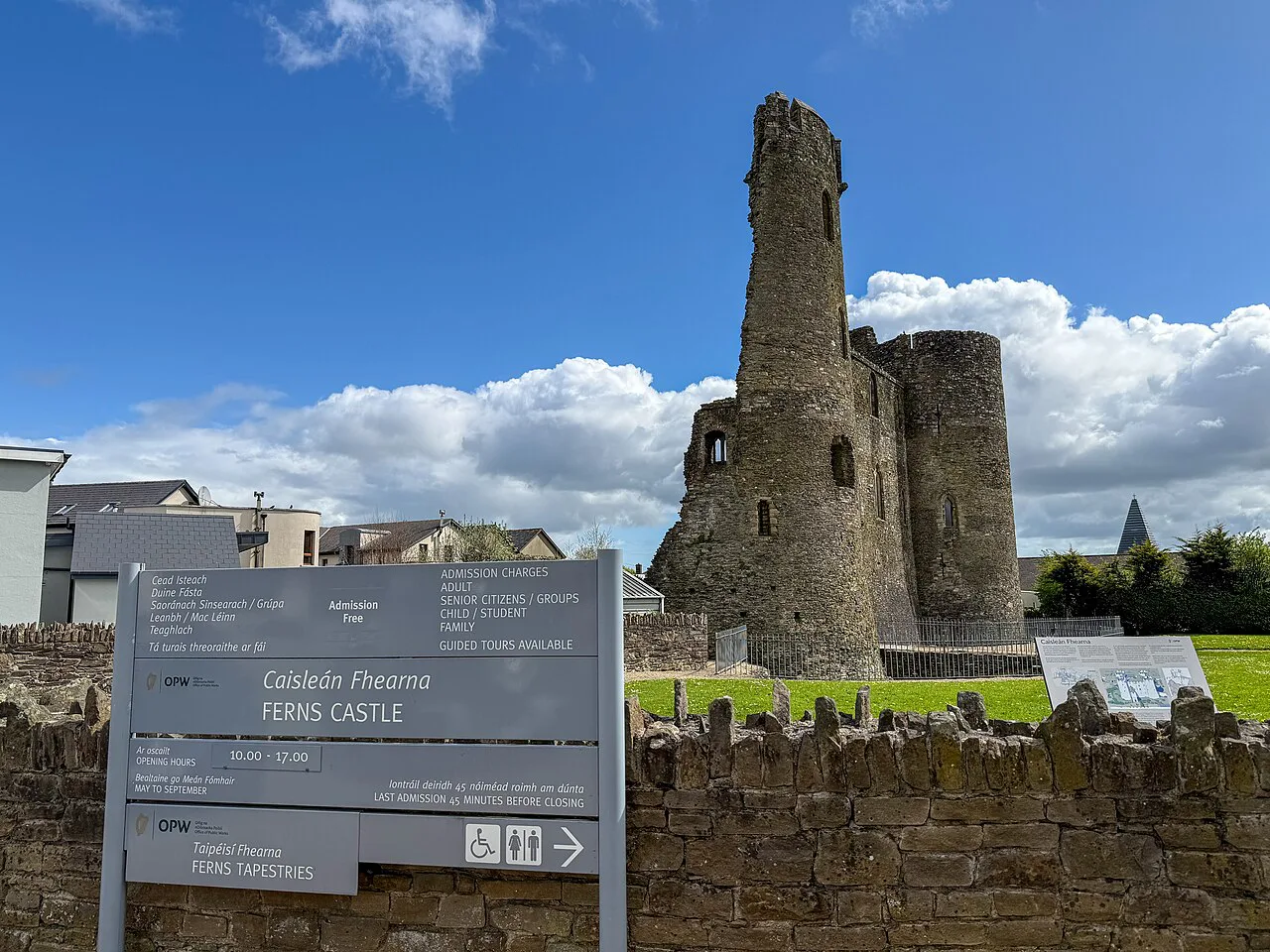
Ferns was Diarmait Mac Murchada's political base before the Normans came, and that earlier role is the reason the site matters as much as the castle on it. Heritage Ireland's page for Ferns Castle states this directly, which makes Ferns a pre-Norman place with a Norman building placed on top of it. That sequence is the clearest single illustration of how the intervention worked locally.
Dublin's position was different. The cathedral site was founded around 1028 by Dúnán, the first bishop of Dublin, and Sitriuc, the Norse king, as a Viking church before the Anglo-Norman rebuilding. Understanding that earlier Hiberno-Norse town makes the later cathedral easier to read. The Vikings in Ireland left a settlement layer beneath the streets you walk today, and the cathedral precinct sits within it.
1170: Dublin Taken and the Cathedral Rebuilt
The capture of Dublin in 1170 is a separate event from the late-1160s arrival, and it is the date that directly affected Christ Church. Laurence O'Toole, the future patron saint of Dublin, acted in diplomatic efforts between the Dubliners and the Anglo-Normans, including Strongbow (Richard de Clare), after the city was taken. That detail says a lot about how a cathedral community survived a conquest.
Strongbow died in 1176 and was buried at the cathedral, but the monument visitors see today is a later replacement, not his original tomb. The original was destroyed in the 1562 collapse of the nave, and what is shown now is understood to be a much later monument, which some accounts link to Drogheda. This is the first lesson in reading monuments critically: burial is documented, but the object on display is not the original. For a broader chronological view of the city's key sites, see this Dublin heritage guide to help place the cathedral within the wider story.
Building the Norman Cathedral at Dublin
John Cumin, the first Anglo-Norman archbishop of Dublin, began replacing the Hiberno-Norse cathedral with the Romanesque and later Gothic building whose parts survive today. The conservation plan attributes the Romanesque choir and transepts to his programme around 1184, with masons whose carving points to England's West Country and Bristol. That plan describes the transepts and choir as containing the most impressive Romanesque sculpture in the country.
The Gothic nave came later, from 1234, when permission was granted to lengthen and enlarge the church. The conservation plan calls the nave the finest piece of mid-thirteenth-century Gothic architecture in Ireland, an assessment by the cathedral's own conservation team rather than a visitor ranking. Competition with the newly built St Patrick's Cathedral is part of the explanation for the ambition of the design.
What to Look for Inside Christ Church
Start with the transepts, where the Romanesque carving is concentrated, then read the nave arcade as the later Gothic move. Most of what you see in the nave is George Edmund Street's restoration of 1871-78, funded by the distiller Henry Roe, so the trick is separating medieval north wall fabric from Victorian renewal. Street rebuilt the south arcade in imitation of the medieval one, which is why the two sides look more alike than they should.
The crypt treasury displays manuscripts, artefacts, church silver and the plate associated with William III, along with the conserved tabernacle and candlesticks used under James II. The medieval chapter house ruin stands in the precinct outside, immediately south of the south transept: a sunken, roofless ruin that can be viewed but is not enterable because of the condition of its stonework. The cathedral's family activity page lists Strongbow's tomb, the heart associated with Laurence O'Toole and the mummified cat and rat among the features interpreted for visitors.
Treat the O'Toole heart carefully. The relic associated with Laurence O'Toole was stolen in 2012 from the wall-mounted, metal cage in which it was displayed, and the cathedral's own page presents the theft as a story told on the audio guide rather than describing a relic currently on view. Do not plan a visit around seeing it; ask at the welcome desk what is displayed on the day.
Visiting Christ Church Sensibly
Christ Church is a working cathedral, and the precinct grounds are described in the conservation plan as open to the public daily. The crypt treasury and the belfry tour are separate offerings, and the belfry is reached by a narrow spiral staircase of 86 steps. The cathedral states that belfry tours are not suitable for people with reduced mobility, vision impairments, claustrophobia, a fear of heights or children under 12, and that sensible footwear is required with no large bags allowed.
Check current opening times, entry arrangements and tour availability on the cathedral's own website before travelling, since the sources here support access facts rather than schedules. The chapter house ruin can be viewed from the grounds but not entered, so if your interest is specifically monastic architecture, plan for the crypt, the transepts and the precinct exterior instead. For wider medieval context around the city, the medieval Ireland guide links the cathedral quarter to other surviving sites.
Ferns Castle: William Marshal's Castle, Closed Until 2027
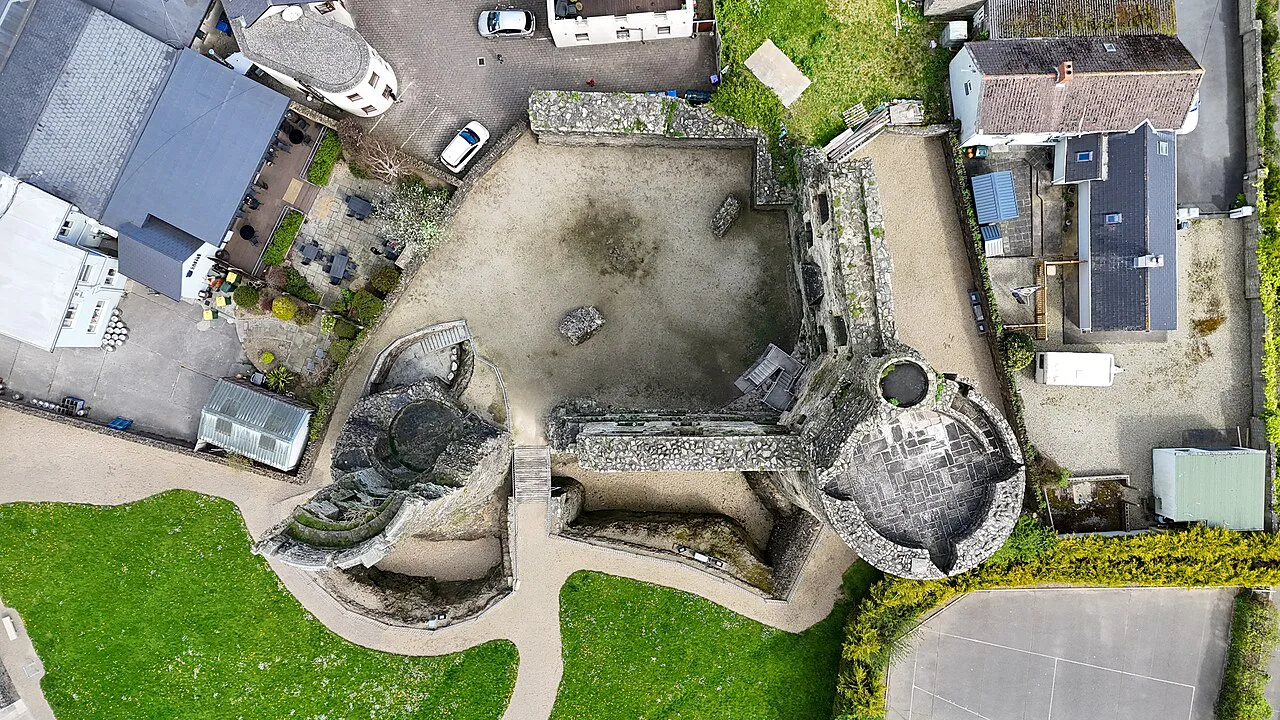
William, Earl Marshal, built the castle at Ferns around 1200, on ground that had been Diarmait Mac Murchada's political base. What survives today is half of a square castle with large corner towers; the most complete tower contains a circular chapel, several original fireplaces and a vaulted basement, with a view from the top. The visitor centre holds the Ferns Tapestry, a 15-metre work in crewel wool embroidery made by local people, depicting the town's pre-Norman history.
The governing visitor fact is that Ferns Castle is closed until 2027, as stated on the Heritage Ireland page. The page still lists daily hours and free admission, but those details do not apply while the closure notice stands, so do not build a trip around them. Treat Ferns as a place to read about and to visit only after confirming reopening on the operator's site.
Cahir Castle: A Butler Stronghold and Its Sieges
Cahir Castle is dated by the Office of Public Works to the thirteenth century and described as a Butler stronghold on a rocky island in the River Suir. It fell to Essex in 1599 when heavy artillery was used against it, and was besieged again during the Confederate Wars. That sequence makes Cahir a strong example of how later warfare changed what a medieval castle could do.
Much original fabric remains, and an audiovisual presentation explains the site's history, so the visit rewards attention to the defensive layout rather than to furniture. The operator notes uneven walkways and limited access, which matters for anyone with mobility difficulties. Do not expect a furnished Norman keep; the value here is the building and its documented conflicts.
Reading Monuments Critically
Three habits will improve any Norman Ireland visit. First, check whether a tomb or effigy is original, as with Strongbow's replacement monument. Second, treat relics as objects with their own histories, like the stolen O'Toole heart. Third, look for the restorer's hand, since Street's Victorian work at Christ Church reshaped much of what a visitor sees. Trinity's period framing reminds you that the invasion's aftermath was long and contested, and the buildings show that layering.
For the earlier medieval world the Normans entered, the Gaelic Ireland guide and the Brian Boru in Ireland article give the political context that the castles assume. Brian Boru's career and the battle of Clontarf in 1014 belong to the century before the invasion, which is exactly why they make the Norman arrival legible.
How to Choose Between the Three
Choose Christ Church if you want the fullest surviving record of Anglo-Norman church building and can accept that much of the interior is Victorian. Choose Cahir if you want a castle with documented sieges and original fabric, and can manage uneven surfaces. Choose Ferns only after it reopens, which the operator currently gives as 2027, and then for the combination of Diarmait's earlier base, Marshal's castle and the community tapestry.
None of the three should be treated as a complete account of Norman Ireland. Together they show a pre-Norman political base, an Anglo-Norman cathedral programme and a stronghold that absorbed later artillery warfare. That combination is more honest than any single site.
Plan Your Visit
Build an itinerary around confirmed access rather than speculation. Christ Church is the safe anchor because the precinct is described as open daily, and Cahir is the second strong option for a castle visit, with documented sieges and original fabric. Ferns should be planned only once the operator confirms reopening after 2027.
Before travelling, check each operator's own page for current hours, prices and tour arrangements, since those details change and are not fixed by the history. Confirm belfry age and access limits at Christ Church in advance if anyone in your group is under 12 or has mobility or sight difficulties. For the wider context, use the medieval Ireland guide as your reference point.
Explore more Ireland guides
Frequently Asked Questions
What does Norman Ireland mean as a period?
It refers to the era shaped by the Anglo-Norman intervention that began in the late 1160s and its long aftermath. Historians treat the invasion as a formative turning point in Irish secular affairs, and the buildings of Dublin, Wexford and Tipperary are the clearest surviving evidence of it.
Where can I see Anglo-Norman building work in Ireland?
Christ Church Cathedral in Dublin preserves Romanesque transepts and a Gothic nave from the Anglo-Norman rebuilding programme. Cahir Castle in County Tipperary retains much original fabric of a thirteenth-century Butler stronghold. Ferns Castle in County Wexford is closed until 2027, so it cannot currently be visited.
Is Ferns Castle open to visitors?
No. Heritage Ireland states that Ferns Castle is closed until 2027. Its listed daily hours and free admission do not apply while the closure notice stands, so check the operator's page before planning any trip.
What survives of Norman Dublin at Christ Church Cathedral?
The Romanesque choir and transepts associated with Archbishop John Cumin's programme around 1184, and the Gothic nave begun from 1234. Much of the nave interior was renewed by George Edmund Street between 1871 and 1878, so the medieval fabric is best read in the transepts and the crypt.
Was Cahir Castle a Norman castle?
The Office of Public Works dates it to the thirteenth century and describes it as a Butler stronghold on a rocky island in the River Suir. It fell to Essex in 1599 under heavy artillery and was besieged again during the Confederate Wars, so its story extends well beyond the medieval phase.
Is Strongbow buried at Christ Church Cathedral?
Richard de Clare, known as Strongbow, died in 1176 and was buried at the cathedral. The monument displayed today is a later replacement, not his original tomb, which was destroyed in the 1562 collapse of the nave.
Can I see Laurence O'Toole's heart?
Do not plan a visit around it. The relic associated with Laurence O'Toole was stolen from its display in 2012, and the cathedral presents the theft as an interpretive story. Ask at the welcome desk what is on display on the day you visit.
Can I enter the chapter house ruin at Christ Church Cathedral?
No. The medieval chapter house ruin in the cathedral precinct is not currently accessible to the public because of concern about the condition of its stonework. It can be viewed from the grounds, and reopening should only be assumed when the cathedral announces it.
Sources
You might also like



Continue reading
More guides you'll find useful





