
Strongbow in Ireland: History and the Monument Called His Tomb
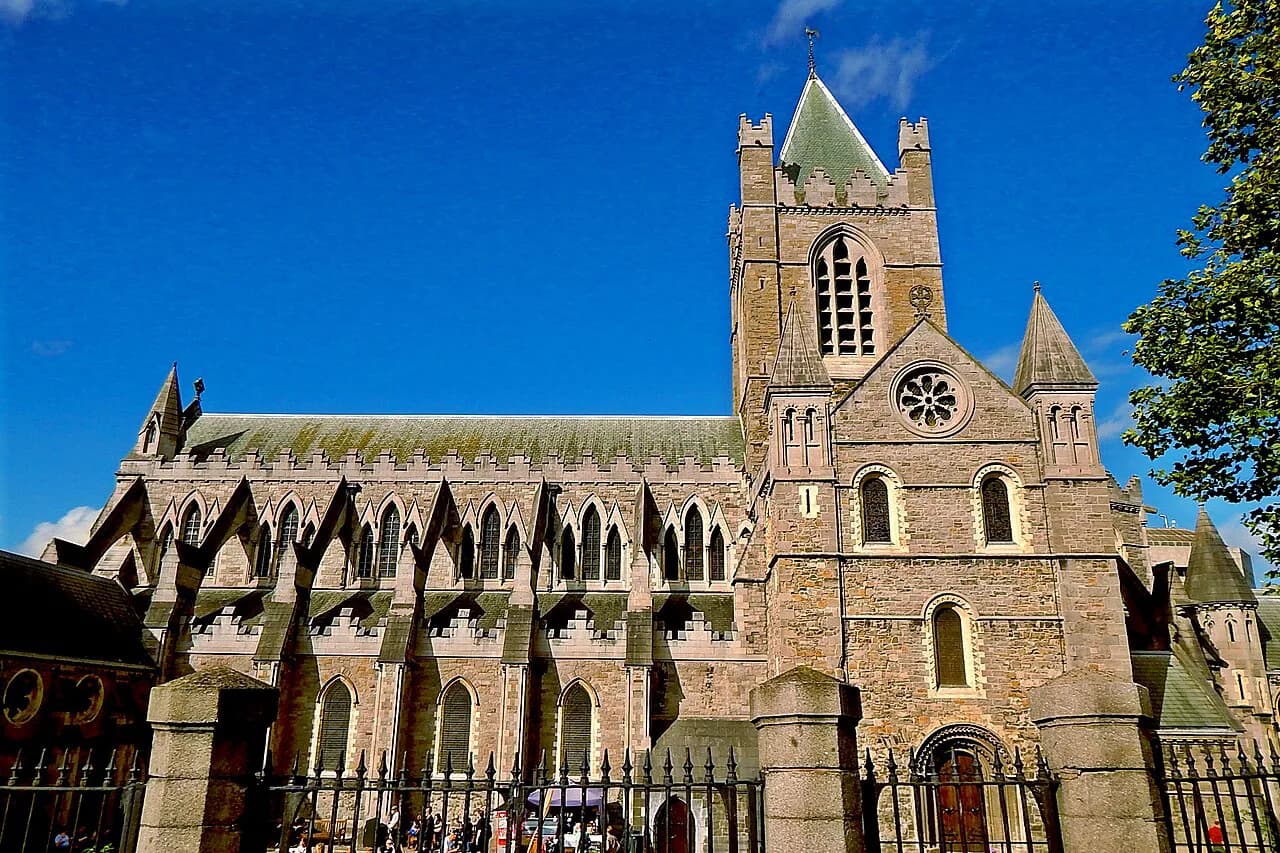
Strongbow's Irish story centres on Dublin's Christ Church Cathedral, where he was buried in 1176 and where a much later monument stands in his name.
On this page
Strongbow, properly Richard de Clare, belongs to Ireland's story chiefly through two things: the Anglo-Norman taking of Dublin in 1170 and his burial in Christ Church Cathedral in 1176. That cathedral is the one place in the country where his story is physically anchored, and it is where most searches for Strongbow end.
The awkward part, and the part worth knowing before you go, is that the famous "Strongbow's tomb" is not his monument. The original was destroyed when the nave roof vaulting collapsed in 1562, and what stands today is a replacement associated with Drogheda. This guide sets out the history, explains the confusion honestly, and shows how to combine the tomb with the crypt, the gardens and one closed context site in County Wexford.
Who Strongbow Was in the Irish Story
The Anglo-Norman intervention began in the late 1160s, a development the Trinity history department frames as perhaps the single most formative change in Irish secular affairs; that framing is course-level context, not a source for Strongbow's personal movements. Strongbow's own decisive moment in the cathedral's record is later: its history states that Anglo-Normans under him captured Dublin in 1170. Keeping those two moments apart matters, because the arrival and the seizure of the city were not the same event. For the wider sequence of events across the city, this Dublin heritage guide sets the 1170 seizure within the capital's longer story.
Strongbow's rise belongs to the same turbulent century as the careers of Irish high kings, which is why the invasion is often taught alongside earlier provincial warfare. Reading it as one strand of a wider medieval story helps: Christ Church itself preserves nearly a thousand years of that story, from its Viking foundation to the present. If you want the broader frame before visiting, the site's guide to medieval ireland covers the period around it.
Strongbow's arrival is sometimes explained through the enemies and rivals of that era, including Brian Boru, whose career ended at Clontarf in 1014. The connection is chronological rather than personal, so treat any suggestion that the two men met with caution. For the earlier, Gaelic-side account of the same century, a separate article on Brian Boru in Ireland gives the necessary background.
Laurence O'Toole and the Diplomacy of 1170
After Dublin fell, the cathedral's own account places Archbishop Laurence O'Toole at the centre of diplomatic contact between the Dubliners and the Anglo-Normans, Strongbow among them. He was later recognised as a patron saint of Dublin, which is why his memory sits so prominently in this building. What the history page supports is negotiation and diplomacy, not a treaty, alliance or personal friendship.
O'Toole's role explains why a visit here covers more than a monument. The cathedral was already a Hiberno-Norse foundation and was later rebuilt in Romanesque and Gothic phases, so the building carries the political shifts of the decades after 1170 in its own fabric. Plan to read the transepts and choir as evidence of that Anglo-Norman rebuilding rather than as a single-period monument. If Norman Ireland is your wider interest, that guide gives the architectural context this cathedral sits within.
Burial in 1176 and the Lost Monument
The cathedral's conservation management plan records that Strongbow was buried in the cathedral in 1176, within sight of the cross. That wording is the source's, and it is the safest way to state the burial: the location is given in relation to the cross rather than fixed by a surviving marker. Treat later stories about the precise grave as legend unless the cathedral publishes evidence.
The original monument did not survive. In 1562 the nave roof vaulting collapsed, and the cathedral's history states that Strongbow's tomb was smashed in the fall. Emergency rebuilding followed, and the leaning north nave wall visible today is a consequence of that disaster. The collapse therefore matters to visitors twice over: it explains both the shape of the nave and the absence of the original tomb.
What replaced it is the current tomb, which the cathedral's history associates with Drogheda. That does not make the effigy a portrait of Strongbow. The conservation plan goes further and describes the visible monument as an early 14th-century piece that does not represent Strongbow at all. The two accounts differ in emphasis, but they agree on the essential point: the object is later than the man.
Reading the Visible Tomb Honestly
Standing in front of the monument, the useful question is not "is this Strongbow?" but "what am I looking at?". You are looking at a medieval monument reused and reinterpreted as a memorial to a figure whose original grave marker was lost in the 16th century. The cathedral's family visitor page still labels it as Strongbow's tomb, so expect the popular label and the conservation record to pull in slightly different directions.
That gap between label and evidence is common in Irish heritage sites and is not a reason to skip the monument. It is a reason to treat the tomb as a document of how later generations chose to remember the invasion, rather than as a physical relic of 1170. If you are travelling with someone new to the period, the Viking and Norman layers in this part of Dublin can be followed further in a guide to the Vikings in Ireland.
The Cathedral as a Place of Worship
Christ Church is an active cathedral, not a museum, and visits happen around services and events. Approach the nave and choir quietly, and check the cathedral's own website for current opening arrangements, admission and tour details rather than relying on older listings. Group guided tours, including belfry visits, must be booked in advance, and the cathedral publishes the contact details for that.
The building's significance is cumulative. Its conservation plan describes it as the oldest building in Dublin still used for the purpose it was built for, and identifies the Gothic nave as one of the finest pieces of its kind in Ireland. That makes a Strongbow-focused visit short and focused, but it rewards a second lap around the nave arcade and the transepts.
The Crypt and Its Displays
Below the cathedral, the crypt is described by the cathedral as Dublin's oldest structure, and it holds the Treasures exhibition together with the mummified cat and rat that its visitor material highlights. Allow time for it: the conservation plan calls it the largest vaulted medieval space in the country, so it feels like a separate building rather than a basement. Check the cathedral's site for what is currently on display before you build a visit around one object.
Access to the crypt is by a relatively steep flight of steps, though there is a level doorway from John's Lane, so decide your route before arriving if stairs are a problem. The conservation plan also notes there is no lift between nave and crypt. That single detail is worth knowing if you are visiting with a wheelchair user or someone who tires easily.
Family Activities and the Belfry Trade-off
Families get a specific hook here: the crypt's dress-up area includes a Strongbow and Aoife theme, alongside Tudor and medieval costumes and an illustrated activity leaflet for younger visitors. It is a family activity rather than a display of Strongbow's possessions, so treat it as an introduction to the story for children. It also gives a reason to slow down in the crypt rather than pass straight through.
The belfry is a separate decision with hard limits. It is reached by a narrow spiral staircase of 86 steps and is not suitable for children under 12, people with reduced mobility or vision impairment, or anyone with claustrophobia or a fear of heights. Sensible footwear is required and large bags are not allowed. If those conditions rule it out, the nave, tomb and crypt already fill a focused visit comfortably.
The Precinct on Foot
Outside, the cathedral sits in grounds laid out after 19th-century street clearances, and the conservation plan describes the precinct as open to the public daily and maintained by Dublin City Council. Treat that as indicative and confirm current arrangements on arrival, since grounds can be affected by works or events. The gardens also open up the best available view of the building's south flank.
One structure in the grounds cannot be entered. The Chapter House ruin, the surviving medieval remnant south of the south transept, is not currently accessible to the public because of ongoing decay of its medieval stonework, and a beehive has been installed as a biodiversity initiative that also helps deter entry. Look from the path, not through the doorway, and do not plan an interior visit.
Walking the precinct also puts the cathedral in its city setting: the civic offices stand immediately north, Dublin Castle to the south-east and St Patrick's Cathedral almost due south. That spacing makes a natural half-day route between the two cathedrals. If castles are your main interest, the pair is the relevant stop for Strongbow, and a survey of castles in County Galway is best kept for a western trip.
Ferns: Background, Not a Strongbow Site
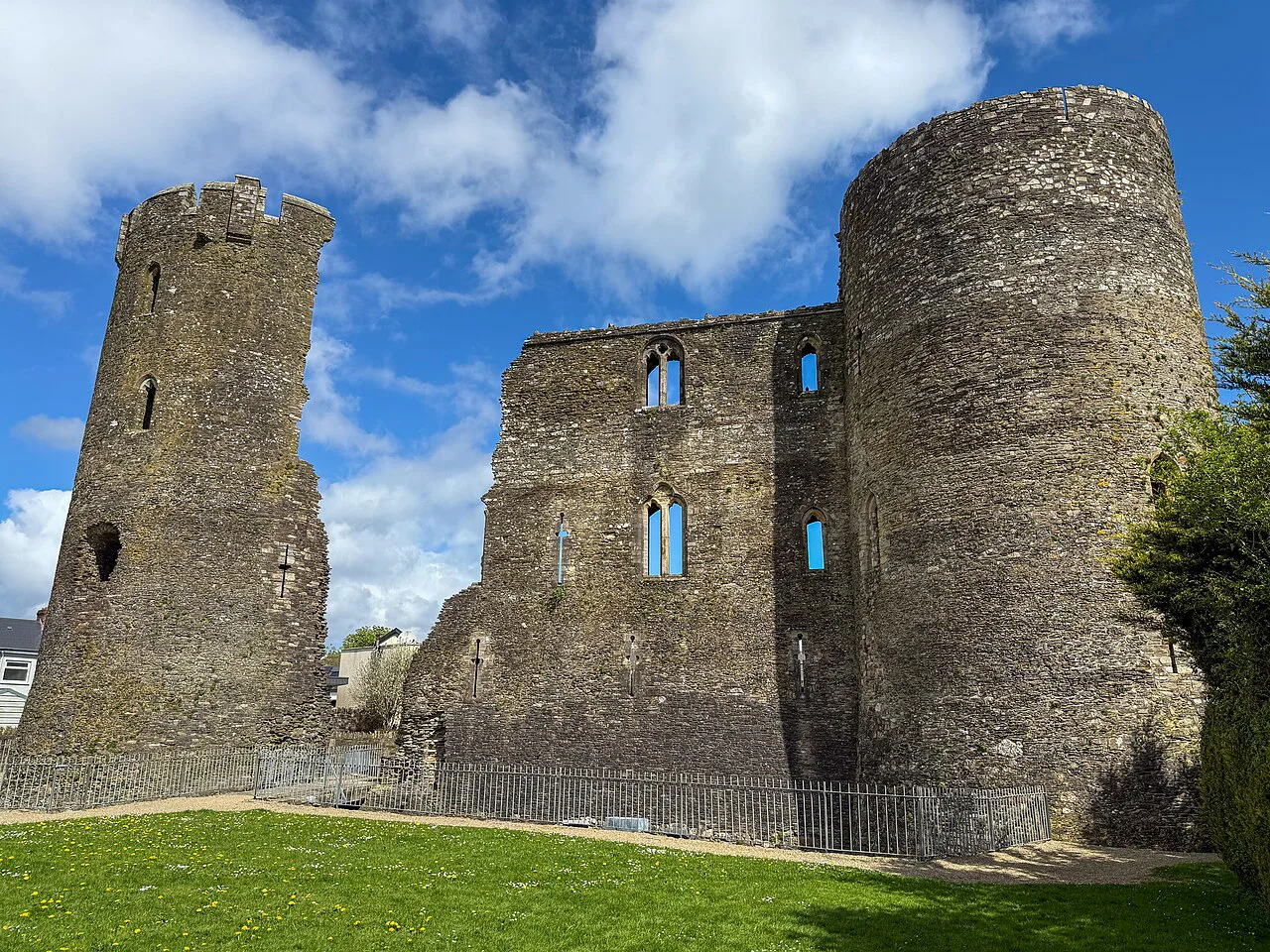
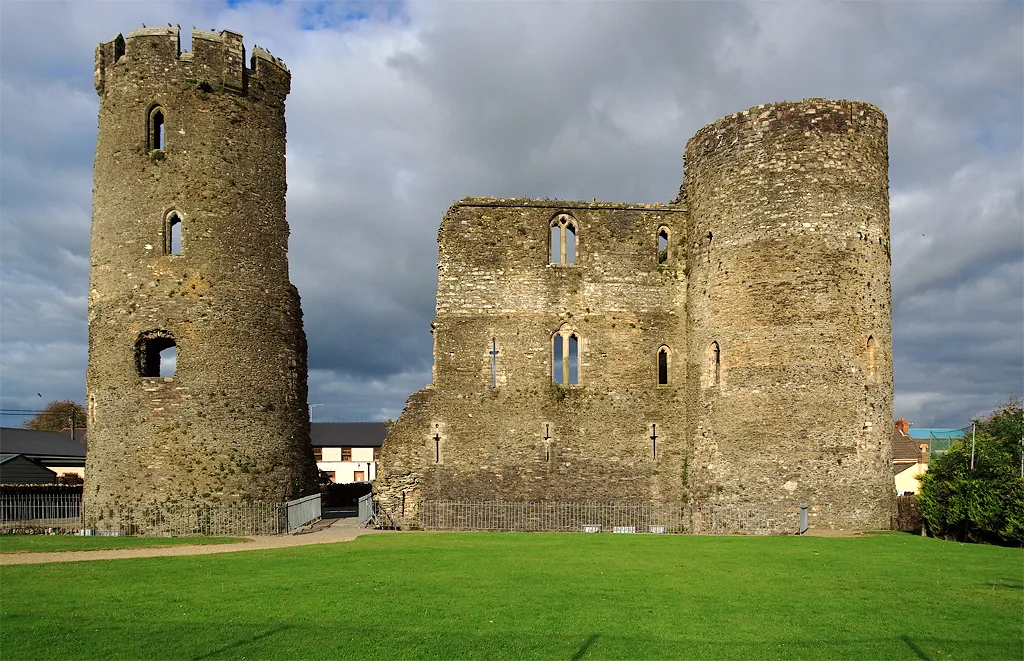
Ferns in County Wexford is worth understanding as the Leinster backdrop to the invasion, not as a Strongbow site. Heritage Ireland notes that before the Normans came, Ferns was the political base of Diarmait Mac Murchada, king of Leinster, and that William Marshal built the castle around 1200. Nothing in that record connects the castle's construction to Strongbow.
You cannot visit it as things stand: Ferns Castle is closed until 2027 according to Heritage Ireland, so its usual arrangements do not apply now. Plan it as a future reference rather than a stop on this trip. Once it reopens, the surviving half of the castle and its circular chapel would make a sensible pairing with a Wexford journey.
Planning a Strongbow-Focused Visit
Build the visit around one building: Christ Church Cathedral, where the 1176 burial is recorded and where the later monument stands. Add the crypt for the broader collection and the precinct for the building's setting, and skip any plan to enter the Chapter House ruin or to include Ferns Castle before 2027.
Before travelling, check the cathedral's own website for opening times, admission and tour booking, since these are operational matters that change. Leave the tomb with the correct impression: the man was buried here in 1176, but the monument you see was made centuries later. That distinction is the most useful thing a visitor can carry away.
Explore more Ireland guides
Frequently Asked Questions
Where is Strongbow buried in Ireland?
Strongbow was buried in Christ Church Cathedral in Dublin in 1176. The cathedral's conservation management plan describes the burial as taking place within sight of the cross. The building still stands on the same site and remains an active place of worship.
Is the monument in Christ Church Cathedral really Strongbow's tomb?
No. The monument displayed as Strongbow's tomb is not his original and does not represent him. It is a later medieval monument, described in the conservation plan as an early 14th-century piece, and the cathedral's history associates it with Drogheda. Strongbow was buried in the cathedral in 1176, but his original monument was destroyed in 1562.
What happened to Strongbow's original tomb?
It was smashed when the nave roof vaulting collapsed in 1562, according to the cathedral's history. Emergency rebuilding followed the collapse, and the leaning north nave wall still reflects that event. The monument seen today was put in place afterwards.
Can you visit the Chapter House ruin at Christ Church Cathedral?
No. The Chapter House ruin in the cathedral grounds is not accessible to the public because of concerns about the condition of its medieval stonework. You can see it from the surrounding paths, but entry is not permitted and a beehive has been installed partly to discourage access.
Is Ferns Castle connected to Strongbow, and can you visit it now?
Ferns was the political base of Diarmait Mac Murchada before the Normans arrived, and William Marshal built the castle there around 1200, so it is background rather than a Strongbow site. Heritage Ireland lists it as closed until 2027, so it cannot be visited now. Plan it for a later trip rather than this one.
Do you need to book the belfry tour at Christ Church Cathedral?
Group guided tours, including belfry visits, must be booked in advance with the cathedral. The belfry is reached by a narrow spiral staircase of 86 steps and is not suitable for children under 12, people with reduced mobility or vision impairment, or anyone with claustrophobia or a fear of heights. Confirm current arrangements directly with the cathedral before travelling.
Sources
You might also like



Continue reading
More guides you'll find useful





