
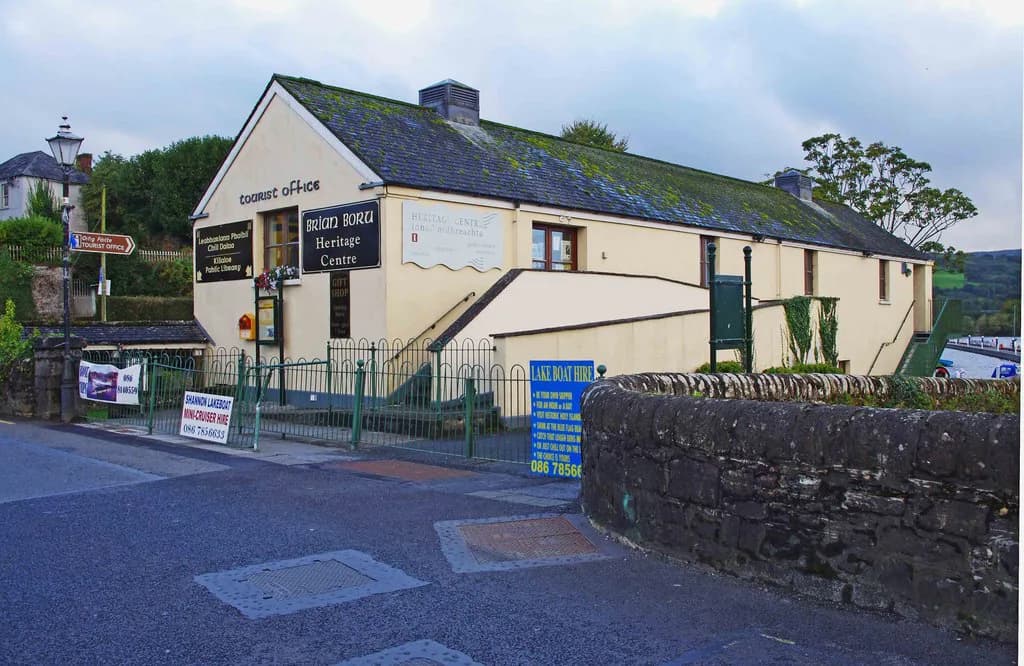
Brian Boru in Ireland: Manuscripts, Memory and Places to Trace Him
Brian Boru survives in manuscripts and libraries, not one monument. Trace his story through Trinity College Dublin, UCC and early modern book collections.
On this page
Brian Boru is remembered as Ireland's most famous high king, but there is no single site where you can stand in his world. The record survives in manuscripts, ritual objects and the books later writers built around him, much of it held by universities and libraries rather than displayed in a monument. Planning a visit means accepting that separation: some evidence can be viewed online or in a dated exhibition, while other items are known only from institutional descriptions.
This trail follows the evidence rather than the legend, from Brian's rise in Munster to the battle of Clontarf in 1014 and the centuries of retelling that followed. It also points to a bounded set of places in Ireland that let you read that story in context, and it flags the sites that belong to different chapters entirely.
Where the Story Actually Begins
Trinity College Dublin's history department frames Brian's career as beginning from modest origins and ending at Clontarf in 1014, within a longer study of Irish kingship and warfare. That framing is useful because it puts him inside a changing political system rather than treating him as an isolated hero. The same module follows the aftermath of Clontarf through inter-provincial warfare and the church's altered role, which is the context his descendants inherited.
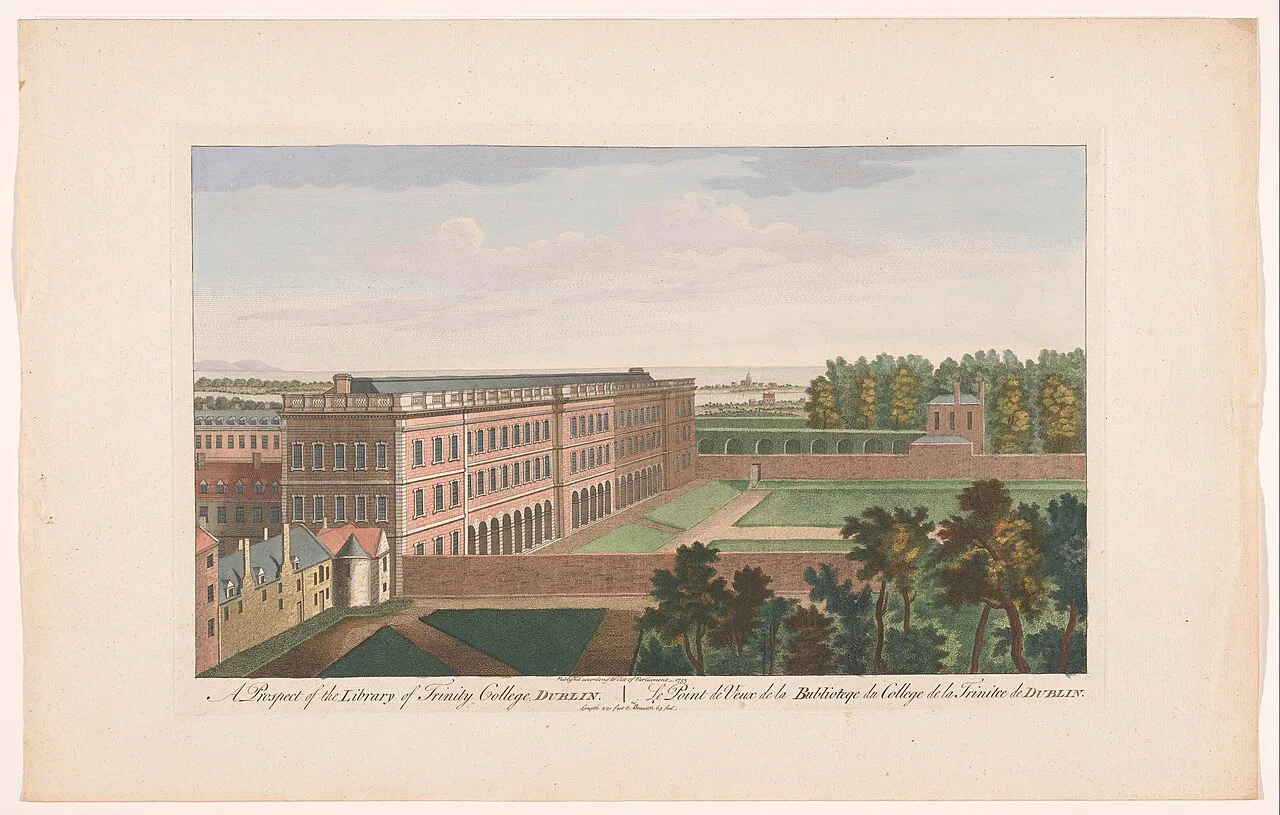
The detailed sequence comes from Trinity College Dublin Library's online exhibition on Brian, which describes his brother Mathgamain's treacherous assassination in 976 and Brian's succession in his place. He first punished his brother's killers and spent his early years securing power in Munster before looking further afield. By 1002, through political and military manoeuvring, he had gained the upper hand over Máel Sechnaill, king of Tara, then campaigned against the northern kingdoms until their important kings submitted to him.
Note the nature of that source: these pages are an online exhibition description, not a statement that the objects discussed are currently on physical display. The Book of Armagh, the bronze bell and the commemorative stamps are described in the exhibition, and visitors should not assume they can be seen in a case in Dublin. Treat the pages as the scholars' account of the evidence, and check any display separately before travelling for it.
The Book of Armagh and the Title Imperator Scotorum
The strongest surviving link to Brian's own world is a text inserted into the Book of Armagh around 1005, which records an agreement between Brian and Armagh, then Ireland's most powerful church. The insertion calls him Imperator Scotorum, emperor of the Irish. According to the Trinity exhibition, the Book of Armagh is the only surviving item known for certain to have been in Brian's presence, so the claim is narrow and worth stating precisely rather than extending it to other objects.
The manuscript itself is an early ninth-century book containing documents relating to St Patrick, a complete New Testament that is the only Irish copy to survive from the period, and texts concerning St Martin of Tours. The Brian material was added later as a record of a political agreement. Reading the Book of Armagh this way turns a famous relic into a document of negotiation, which is more revealing than treating it as a simple tribute.
Reading Objects Cautiously: The Bronze Bell
The Trinity exhibition uses an eighth- to tenth-century bronze bell to explain how oaths worked in medieval Ireland. Because bells were associated with saints, they validated rituals such as oath-swearing and excommunication, and the exhibition suggests many of Brian's political alliances were ratified on objects like this bell or on Gospel books. That is an inference from religious practice, not a record of a specific ceremony, and it should be read as such.
The bell's find-place is also a tradition rather than a certainty: it is believed to have been found in the ruins of a church near Louisburgh, County Mayo, on a site previously used as a Viking camp. Early bells were folded from iron sheets, while by Brian's time they were cast in bronze, so the object itself carries a technological story. Use it to think about how power was sworn and witnessed, not to locate a Boru site on a map.
Clontarf and Its Many Afterlives
Brian died at Clontarf in 1014, but the battle's most familiar telling owes much to later writers. The Edward Worth Library's exhibition on early medieval Ireland examines early modern books that shaped how the battle and its protagonists were understood, including commentators such as Gerald of Wales and refutations by Geoffrey Keating and Roderick O'Flaherty. Treat that material as evidence of how later generations interpreted the medieval past, not as archaeological proof of what happened on the field.
The same exhibition gives a corrective to the simple Boru-versus-the-Vikings story through Sitriuc Silkbeard, king of Dublin. Sources disagree about his role at Clontarf; what is certain is that he survived, reigned in Dublin for decades, was the first king in Ireland to mint coinage, went on pilgrimage to Rome in 1028 and on his return became founder of Christchurch cathedral. Presenting Clontarf as a clean civilisational clash flattens a far more entangled political world.
Brian's death did not end Viking or Hiberno-Norse influence in Ireland, and Dublin's rulers continued to shape politics and trade after 1014. Hiberno-Norse kings combined Gaelic and Norse alliances, and the towns they developed connected Ireland to wider sea routes. For visitors, that means the Viking story is a separate thread worth following in its own right rather than a prelude that ends at Clontarf.
The Annalist's Ireland: Annals of Inisfallen
The Annals of Inisfallen offer a different kind of evidence: a year-by-year chronicle in Irish and Latin, first copied around 1092 and continued into the fifteenth century, with the events recorded from the late eleventh to the fourteenth century contemporary with the writing and later additions extending the record into the fifteenth. They record deaths, conflict, dramatic weather and unusual occurrences, and much of the later contemporary section concerns west Munster. For the development of the Irish language and the texture of daily political life, this is among the most important surviving records of medieval Ireland.
Brian appears in the annals by proxy: in 1105 a camel was given by the King of Scotland to a great-grandson of Brian Boru, an entry that shows the family's standing long after Clontarf. The manuscript's route to survival is equally instructive. It passed through the collection of the seventeenth-century historian Sir James Ware and later collectors to Richard Rawlinson, whose bequest brought it to the Bodleian Libraries, where it has been preserved for more than 250 years.
Seeing the Evidence in Ireland
The Annals of Inisfallen returned to Ireland for a dated display at the Glucksman, University College Cork: Recording the Past: The Annals of Inisfallen and the Making of Irish History runs from 2 September to 1 November 2026, is free, and places the manuscript on public view with interpretation of its origins and journey. Because the display closes on 1 November 2026, treat it as a fixed window rather than a permanent fixture; check the Glucksman's own listings, and the Bodleian's announcement, before planning a visit.
For the rest of the year, the free digital facsimile on Digital Bodleian is the reliable way to read the manuscript, and it supports study of the original pages without risking the vellum. Pair that with the Trinity online exhibition for the Book of Armagh and the bell, and you have a coherent manuscript trail that requires no travel at all. The trade-off is obvious: digital access is excellent for reading, but it cannot substitute for seeing vellum and ink under glass.
If you want to place Brian's world within a longer Gaelic political and cultural tradition, it helps to read the high-kingship against the broader story of Irish lordship, learning and patronage that followed. That context makes the Armagh alliance and the later annalistic record legible as parts of a working political system rather than isolated episodes.
What Boru's Ireland Was Not
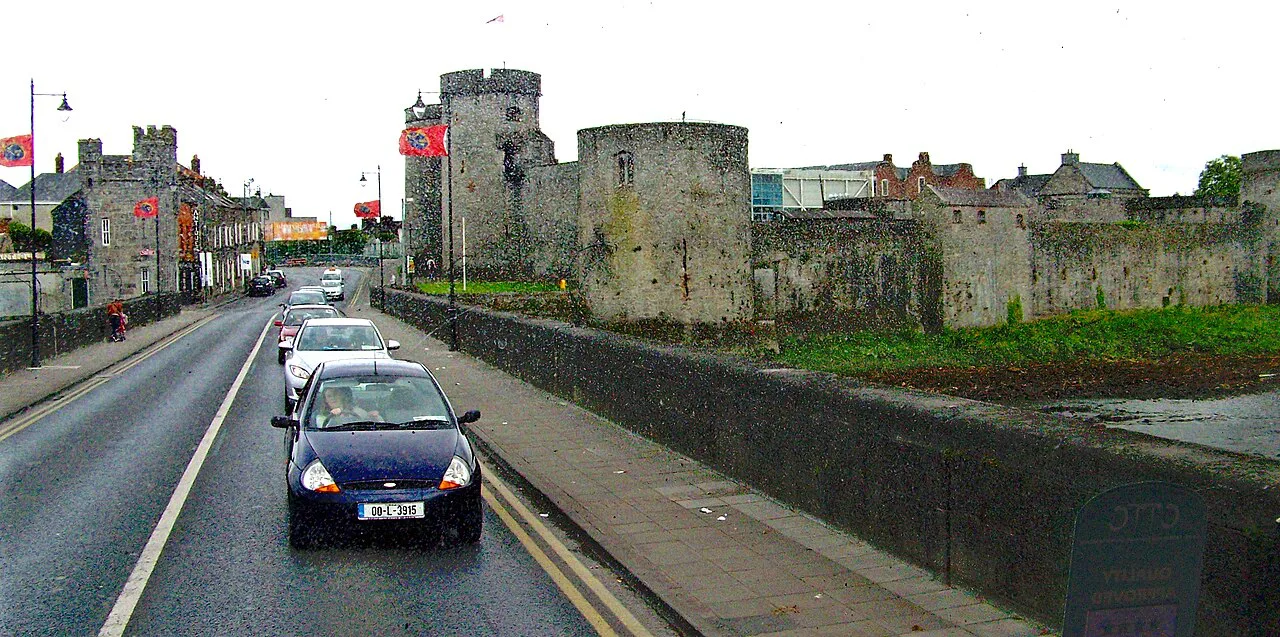
Limerick's King John's Castle is sometimes swept into Viking and Boru-era storytelling, but the castle itself is not Viking-built. The operator's history describes early ninth-century raids, a temporary ship camp in 861 and a permanent Viking settlement generally dated to 922 on King's Island, and it is that earlier settlement layer, not the standing castle, that connects the location to the period. Treat Limerick as one concrete urban example and avoid claiming that Dublin, Cork, Wexford and Limerick were all founded in the ninth century. For the full picture of the fortress on the King's Island site, see this Limerick heritage guide on King John's Castle, Limerick: A Visitor Guide to the Riverside Fortress.
Cahir Castle belongs to a still later chapter. The Office of Public Works dates it to the thirteenth century and describes it as a Butler stronghold on a rocky island in the River Suir; it fell to Essex in 1599 when heavy artillery was brought against it and was besieged again during the Confederate Wars. Much original fabric survives and an audiovisual presentation explains the site, but walkways are uneven and access is limited. It is a useful contrast in how fortification and siege warfare changed long after Clontarf, not a Boru site.
The Norman invasion of the late 1160s, which Trinity's module calls perhaps the single most formative development in Irish secular affairs, sits firmly after Brian's lifetime. Following that story separately keeps the chronology honest and stops later castles from being read back into the eleventh century.
Monastic Context Worth Adding
Glendalough gives a sense of the church world in which Armagh's alliance with Brian operated, though the connection is contextual rather than direct. Its monastery was founded by St Kevin in the sixth century, and the surviving round tower, medieval stone churches and decorated crosses span different periods, so not every building belongs to the foundation era. Start at the visitor centre for interpretation before walking the outdoor remains.
Access at Glendalough is mixed: the visitor centre is accessible, while graveyard access is difficult for wheelchair users, so plan the route accordingly and check current conditions before setting out. The site rewards slow reading of its fabric rather than a quick circuit of the tower.
How to Weigh the Legend Against the Record
Brian Boru in Ireland is best approached as a paper trail: a church agreement inserted into the Book of Armagh around 1005, a bell that explains how oaths were sworn, annals that mention his great-grandson receiving a camel in 1105, and early modern books that coloured how Clontarf was remembered. Some of this is readable online at any time; some appears only in dated displays that come and go. Check institutional listings before travelling for any single object.
The wider lesson is chronological discipline. Brian died in 1014, and Viking and Hiberno-Norse power continued afterwards; the Norman invasion came in the late 1160s, and castles such as Cahir belong to the thirteenth century and beyond. Keeping those chapters apart makes the commemorative claims easier to judge, and makes the surviving manuscripts more, not less, remarkable. For another heritage guide, read about Battle Of Clontarf.
Explore more Ireland guides
Frequently Asked Questions
Is there a Brian Boru site you can visit in Ireland?
There is no single site that preserves Brian's world for visitors. The evidence is held in manuscripts and books kept by institutions, and public access is often through online exhibitions or dated displays rather than a permanent monument. Start with Trinity College Dublin Library's online exhibition on Brian for his rise and the Book of Armagh, then check whether any institution is currently showing related material before you travel.
What does Imperator Scotorum in the Book of Armagh mean?
It translates as emperor of the Irish, and it appears in a text inserted into the Book of Armagh around 1005 to record an agreement between Brian and the church of Armagh. The title reflects a political alliance with Ireland's most powerful church rather than a modern-style national office. The Book of Armagh is described by Trinity College Dublin Library as the only surviving item known for certain to have been in Brian's presence.
Can you see the Annals of Inisfallen in Ireland?
The manuscript is displayed at the Glucksman, University College Cork, in the free exhibition Recording the Past: The Annals of Inisfallen and the Making of Irish History, which runs from 2 September to 1 November 2026. Because the display closes on 1 November 2026, check the Glucksman's own listings for any later showing. At any time, the Bodleian Libraries provide a complete high-resolution facsimile through Digital Bodleian.
Did Brian Boru's death end Viking influence in Ireland?
No. Brian died at Clontarf in 1014, but Hiberno-Norse rulers such as Sitriuc Silkbeard of Dublin continued to hold power, mint coinage and shape trade afterwards. The Viking and Hiberno-Norse story is a separate thread that runs on past Clontarf rather than ending with it. Reading Dublin's rulers on their own terms gives a more accurate picture than treating the battle as a final clash of civilisations.
Why does Sitriuc Silkbeard matter to the Clontarf story?
He was king of Dublin and survived the battle, though sources disagree about his role in it. His long reign, his coinage, his pilgrimage to Rome in 1028 and his later association with Christchurch show how Hiberno-Norse Dublin remained a serious political power. The Edward Worth Library's exhibition uses him to complicate the simple story of Brian against the Vikings.
What can you see about Brian Boru from outside Ireland?
Digital access covers most of the evidence. Digital Bodleian hosts a free facsimile of the Annals of Inisfallen, and Trinity College Dublin Library's online exhibition describes the Book of Armagh, the bronze bell and the 2002 commemorative stamps. These are readable anywhere; what they cannot replace is seeing original vellum and ink under glass, which depends on whether an institution currently has a display.
Sources
- Kingship Trinity
- Boru Trinity
- Early Medieval Ireland – Edward Worth Library
- Annals of Inisfallen to go on public display in University College Cork | Bodleian Libraries
- Viking History new – King John's Castle
- Glendalough Monastic Site and Visitor Centre | Heritage Ireland
- Cahir Castle | Heritage Ireland
You might also like



Continue reading
More guides you'll find useful





