
Medieval Ireland: How to Read Its Kings, Towns and Castles
Medieval Ireland read through manuscripts, coins, chronicles and standing monuments, with the sites and collections where you can examine the evidence yourself.
On this page
Medieval Ireland is not a single story but a set of traces: manuscripts written by named and unnamed scribes, coins struck by kings, monastic ruins in river valleys and castles rebuilt across centuries. The most rewarding way to approach it is to learn what each kind of evidence can establish, and where a label, a legend or a later chronicler has shaped the picture. Academic resources such as Trinity College Dublin's history module pages are useful for orientation, but they are teaching material rather than visitor information.
The practical layer is modest and well documented. A handful of publicly accessible sites, chiefly in Wicklow, Tipperary and Limerick, let you see monastic and military remains in the landscape, while manuscript exhibitions and library collections put the written and material record on view for limited periods. Two things are worth fixing in advance: which displays are current rather than merely described online, and which parts of a ruin are original fabric rather than later repair.
Kingship and Invasion, c.1000–1318
Trinity's module on kingship and warfare frames the period from Brian Boru's rise through the Bruce invasion of 1315–18. It treats the Anglo-Norman invasion of the late 1160s as perhaps the most formative development in Irish secular affairs, then follows the cultural interaction and Irish opposition that emerged in its wake. Reading the period this way makes clear that 1014 and 1169 are markers within a longer contest over provincial power and church authority, not a single break between eras.
Brian Boru's career began in Munster, where he succeeded his brother Mathgamain after the latter's assassination in 976 and spent his early years securing a power base. By 1002 he had outmanoeuvred Máel Sechnaill, king of Tara, and went on to force submissions from the major kings of Ireland. His alliance with the church of Armagh produced the title Imperator Scotorum, recorded in the Book of Armagh, which is a political claim as much as an accolade. For a wider treatment of the man and his legend, the separate guide Brian Boru in Ireland sets him in context.
For visitors, the value of this frame is that it supplies questions to bring to monuments. A round tower or a castle gate is not self-explanatory; knowing that kings competed for provincial overlordship, courted Armagh and faced foreign invasion helps you read defences, church sites and later rebuilding as responses to particular conflicts. Museum labels and site panels usually state which dates they accept, and it is reasonable to ask a guide or check the operator's published pages when a panel is ambiguous.
Brian Boru in Objects
Trinity Library's online exhibition on Brian's rise gathers a small group of objects that show how royal power was performed. The Book of Armagh, an early ninth-century manuscript with a complete New Testament, carries a text inserted around 1005 that honours Brian as Emperor of the Irish, apparently recording an agreement with Armagh. The library describes it as the only surviving item known for certain to have been in Brian's presence, which is a useful reminder that proximity to a famous figure is rare and worth verifying rather than assuming.
Bells in the same exhibition point to how agreements were sealed. Because bells were associated with saints, they were used to validate oaths and excommunications, and the example shown is a cast bronze bell of the eighth to tenth century, reportedly found near Louisburgh in County Mayo at a site that had earlier been a Viking camp. This is interpretation rather than an excavation report, but it gives a concrete sense of how political alliances were ratified with sacred objects rather than documents alone.
The exhibition also includes commemorative stamps designed by Finbarr O'Connor and issued by An Post in 2002, marking the thousandth anniversary of the date traditionally given for the start of Brian's reign as king of Ireland. The stamps carry the same Imperator Scotorum title drawn from the Book of Armagh, showing how medieval titles are recycled in modern public commemoration. Note that these pages describe a collection; they are not evidence that any object is currently on display in Dublin, so check with the host institution before planning a visit around them.
Viking and Hiberno-Norse Towns
Limerick offers the clearest single urban example of Viking activity, and the operator of King John's Castle separates the phases carefully. Early ninth-century raids, a temporary ship camp in 861 and the permanent settlement generally dated to 922 on King's Island are distinct events, and the account describes trade and craftsmanship alongside raiding. Use Limerick as one case rather than assuming Dublin, Cork, Wexford and Limerick all share a ninth-century foundation date. If you want to stand where that settlement layer lies, see this King John's Castle, Limerick: A Visitor Guide to the Riverside Fortress for what the site does and does not preserve.
A common misreading is to treat the standing castle as Viking-built. It is not: the stone castle belongs to later history, and its riverside position simply reflects an earlier settlement layer on the same island. When you visit, the useful mental exercise is to separate the visible medieval and later masonry from the trading settlement that preceded it, which survives mainly in the written and archaeological record rather than in standing walls. The wider story of Viking settlement and its aftermath is traced in the Vikings in Ireland guide.
Sitriuc Silkbeard and the Limits of the Evidence
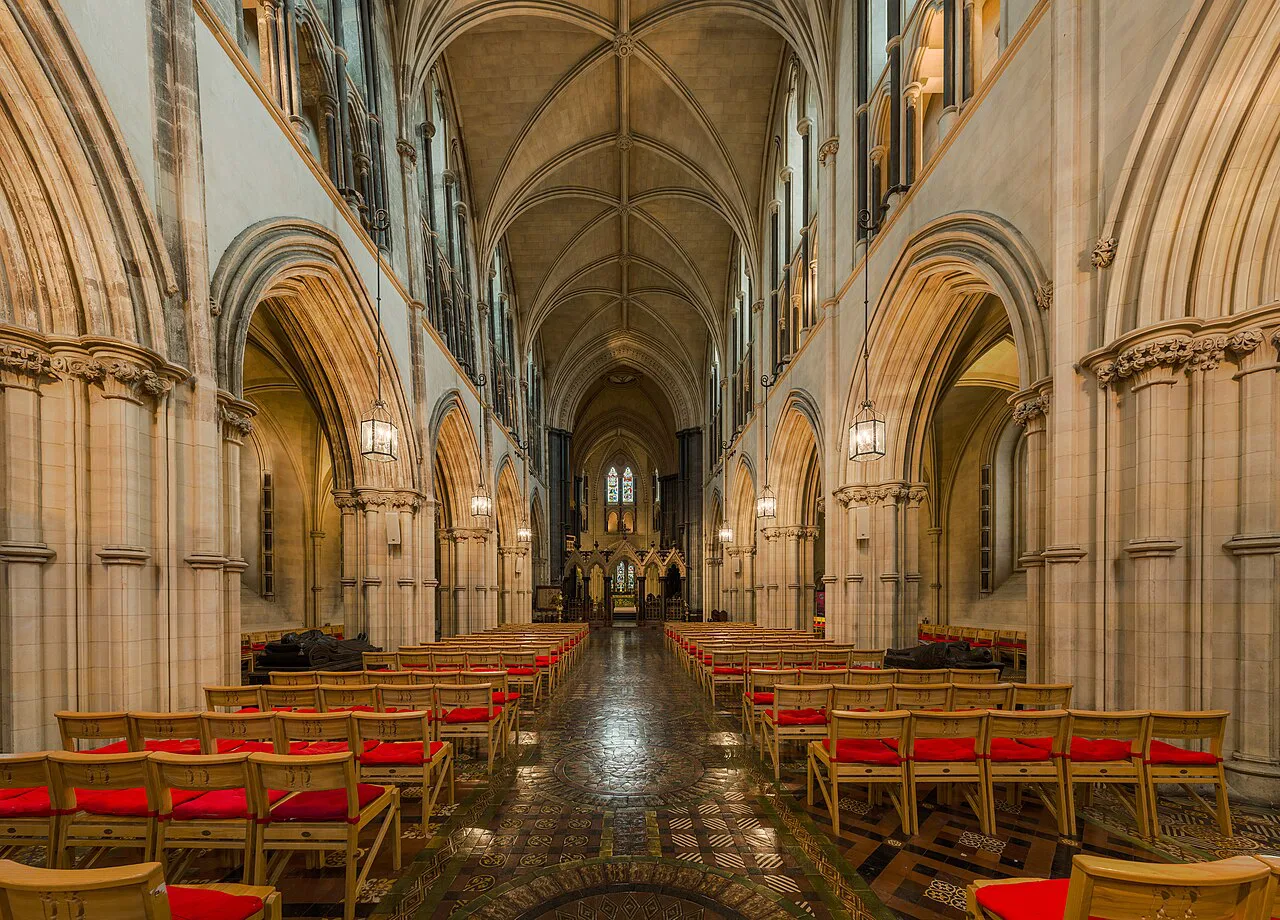
Sitriuc Silkbeard, king of Dublin from 989 to 1036, is a corrective to the idea that Clontarf in 1014 ended Hiberno-Norse power. He survived the battle, made a pilgrimage to Rome in 1028 and is associated with the founding of Christ Church Cathedral. Scholarship describes him as a leader who drew on both his Viking heritage and his Irish kin networks, and he was the first king in Ireland to mint coinage bearing his name and image.
The coins matter because they carry administrative information that narrative sources may distort. Images of Sitriuc in a numismatic catalogue by Nils Keder, held in the Edward Worth Library, show a beardless ruler styled king of Dublin, and the library notes the role of coin production in the trade that connected Dublin, Wexford, Waterford and Limerick to wider sea routes. That economic reading is an argument advanced by scholars, not an uncontested fact, so treat it as a line of interpretation worth following rather than a settled conclusion.
The same library exhibition is a study of early-modern writers, among them Gerald of Wales, Edmund Campion, Geoffrey Keating and Sir James Ware, who shaped how medieval Ireland was later imagined. That makes it valuable for understanding historiography, not for confirming what happened: its commentary and catalogue images should be read as analysis of sources, and where a chronicler's claim is the only evidence, say so rather than presenting it as established fact. The separate battle of clontarf guide follows how the encounter itself is narrated and remembered.
Monastic Ireland on the Ground: Glendalough
Glendalough's monastery was founded by St Kevin in the sixth century, but the surviving buildings span many later phases, so do not read every wall as sixth-century work. The round tower, the medieval stone churches and the decorated crosses are the core of the visit, and the visitor centre provides interpretation before you walk out to the remains. Start indoors: the sequence of periods is easier to follow once you have the timeline fixed.
Access varies across the site, which matters for planning. The visitor centre is accessible, while the graveyard is difficult for wheelchair users, so a group with mixed mobility may need to split between the indoor displays and the outdoor route. The OPW treats the cave known as St Kevin's Bed cautiously, noting that the saintly association is traditional and that the cave may predate him; it is not a destination to plan around.
Glendalough rewards slow looking rather than a checklist. On the crosses and church doorways, look for the decorative carving that survives and ask how much of the on-site explanation rests on early hagiography: the lives of saints were written to make claims, often centuries after the founding. But if you want prehistoric or later medieval ritual landscapes more broadly, the ancient sites ireland collection sets this monastic valley alongside other surviving monuments.
Castles and Later Warfare: Cahir
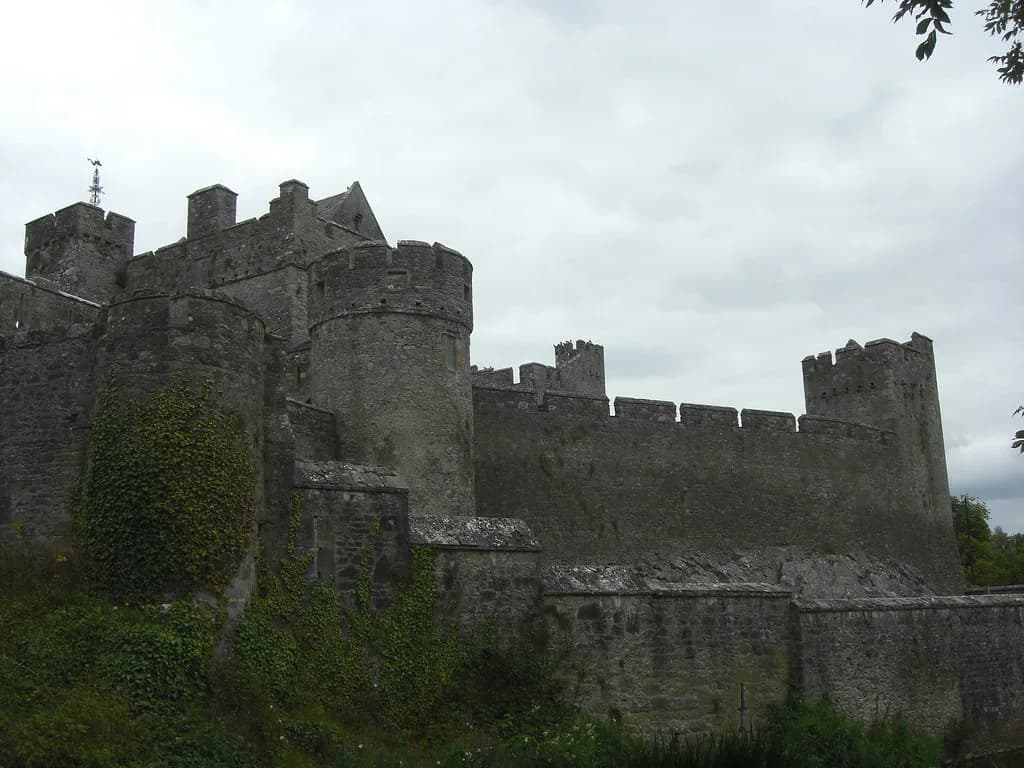
Cahir Castle is dated by the OPW to the thirteenth century and described as a Butler stronghold on a rocky island in the River Suir. Much original fabric survives and an audiovisual presentation explains its history, so the more interesting question for a visitor is how a river position and defensive building worked, and how later warfare changed their effectiveness.
That effectiveness was eventually broken by artillery. It fell to Essex in 1599 when heavy guns were brought against it, and it was besieged again during the Confederate Wars. Read the walls with those events in mind: adaptations for firearms, repaired stretches and changed sightlines tell you what each generation feared, and they warn against imagining an intact furnished medieval interior, which this is not.
Practical caution is warranted because walkways are uneven and access is limited in places, so sturdy footwear and a realistic sense of your own mobility matter more than a rigid schedule. Cahir is not a template for every Irish castle, and treating it as Norman and medieval-only flattens the record: Irish castles include earlier earthwork fortifications, later tower houses and nineteenth-century remodelling. For comparison in a different region, the castles in county galway guide covers other Irish castles with their own distinct histories.
Manuscripts as Living Heritage: The Annals of Inisfallen
The Annals of Inisfallen, a single bound volume of about fifty-seven vellum leaves written in Irish and Latin, is one of the most important surviving records of medieval Ireland. First copied around 1092 from an earlier exemplar, it was continued by successive scribes into the fifteenth century, with later additions beyond that. Its origins are not fully certain: materials from Clonmacnoise and Emly were involved, copying may have begun at Lismore, and the manuscript was later taken to west Munster, probably to the island monastery of Inisfallen.
Its contents are unusually vivid for a chronicle: comets, a great snow in 1047 and, in 1105, the gift of a camel from the king of Scotland to a great-grandson of Brian Boru. Much of the later contemporary material concerns west Munster, which makes it a key source for regional politics and for the development of the Irish language. That combination of local eyewitness record and copied earlier material is exactly what makes annals useful, and exactly what requires care in reading them.
The manuscript is held by the Bodleian Libraries, which provides a complete high-resolution facsimile online, so the text can be studied even when the original travels. It is on show at University College Cork in the free exhibition Recording the Past at the Glucksman, running from 2 September to 1 November 2026. That display is time-limited rather than permanent; with the closing date imminent, confirm its status with the Glucksman before travelling, and use the digital facsimile if you miss it. Inisfallen Island itself lies within Killarney National Park under National Parks and Wildlife Service custodianship, as landscape context rather than a visitor display.
How to Read Each Stop
At any of these places, begin with the fabric and then move to the labels. Masonry joints, blocked openings and rebuilt sections tell you where later hands intervened, while a site panel will state the dates the operator accepts. Where the two disagree or a panel is silent, note the gap and check the operator's published pages rather than filling it with a confident story.
Online library exhibitions need the same discipline. A page that describes the Book of Armagh or a commemorative stamp is a statement about a collection and its interpretation, not a guarantee that the object is on view today. For the medieval period more broadly, the gaelic ireland material covers language, law and social structures that the annals and genealogies record, and the norman ireland guide follows the invasion and settlement that reshaped landholding.
Plan Around the Evidence
Build a short route around one theme rather than trying to cover the island's medieval remains at once. A Wicklow monastic day, a Tipperary castle visit and a riverside walk on Limerick's King's Island each ask different questions of the evidence, which is the point: kingship, trade and warfare are best understood through separate kinds of source.
Two checks belong on every itinerary. Confirm whether a described display is currently running, since the Annals exhibition closes on 1 November 2026 and collection pages are not schedules; and respect outdoor and religious remains, which may be graveyards or working archaeological landscapes. Where a site's access is limited, the operator's own page is the reliable place to confirm conditions before you travel.
Explore more Ireland guides
Frequently Asked Questions
What is the best way to see medieval Ireland as a visitor?
Pick one thread and follow it through two or three places rather than trying to cover the whole island. A monastic valley such as Glendalough, a castle such as Cahir and a town with a documented early settlement layer such as Limerick's King's Island each let you test a different kind of evidence. Before travelling, check that any described exhibition is currently running, since library and collection pages often describe past displays.
Did the Battle of Clontarf end Viking power in Ireland?
No. Brian Boru died in 1014, but Hiberno-Norse rule in Dublin continued: Sitriuc Silkbeard reigned until 1036 and is associated with the founding of Christ Church Cathedral. Later chronicles and sagas shaped how the battle is remembered, and scholars read them critically rather than as a straightforward record of Viking defeat.
Was King John's Castle in Limerick built by Vikings?
The standing castle belongs to later history, not to the Viking period. Its riverside position on King's Island does reflect an earlier settlement layer: the castle operator describes ninth-century raids, a temporary ship camp in 861 and a permanent settlement generally dated to 922. When visiting, treat the visible masonry and the earlier trading settlement as two separate phases.
What can I see at Glendalough today?
The core of the visit is the outdoor remains: a round tower, medieval stone churches and decorated crosses in a valley setting. The visitor centre provides interpretation before you walk out to the ruins, and it is accessible, while the graveyard is difficult for wheelchair users. Not every surviving building dates to the sixth-century foundation, so use the centre's timeline to keep the phases straight.
Where can I see the Annals of Inisfallen?
The manuscript is held by the Bodleian Libraries in Oxford and is available as a complete high-resolution facsimile through its digital collections. It was lent for the free Recording the Past exhibition at the Glucksman, University College Cork, which runs from 2 September to 1 November 2026 and is therefore about to close. The original is not permanently displayed in Ireland, so use the Bodleian's facsimile and check any future announcements from both institutions.
Is Cahir Castle a Norman castle?
The Office of Public Works dates the castle to the thirteenth century and describes it as a Butler stronghold on a rocky island in the River Suir. Rather than filing it under a single label, look at how the building changed: it fell to Essex in 1599 when heavy artillery was used against it and was besieged again in the Confederate Wars. It retains much original fabric but is not an intact furnished medieval interior, and some walkways are uneven with limited access.
Sources
- Kingship Trinity
- Boru Trinity
- Early Medieval Ireland – Edward Worth Library
- Annals of Inisfallen to go on public display in University College Cork | Bodleian Libraries
- Viking History new – King John's Castle
- Glendalough Monastic Site and Visitor Centre | Heritage Ireland
- Cahir Castle | Heritage Ireland
You might also like



Continue reading
More guides you'll find useful




