
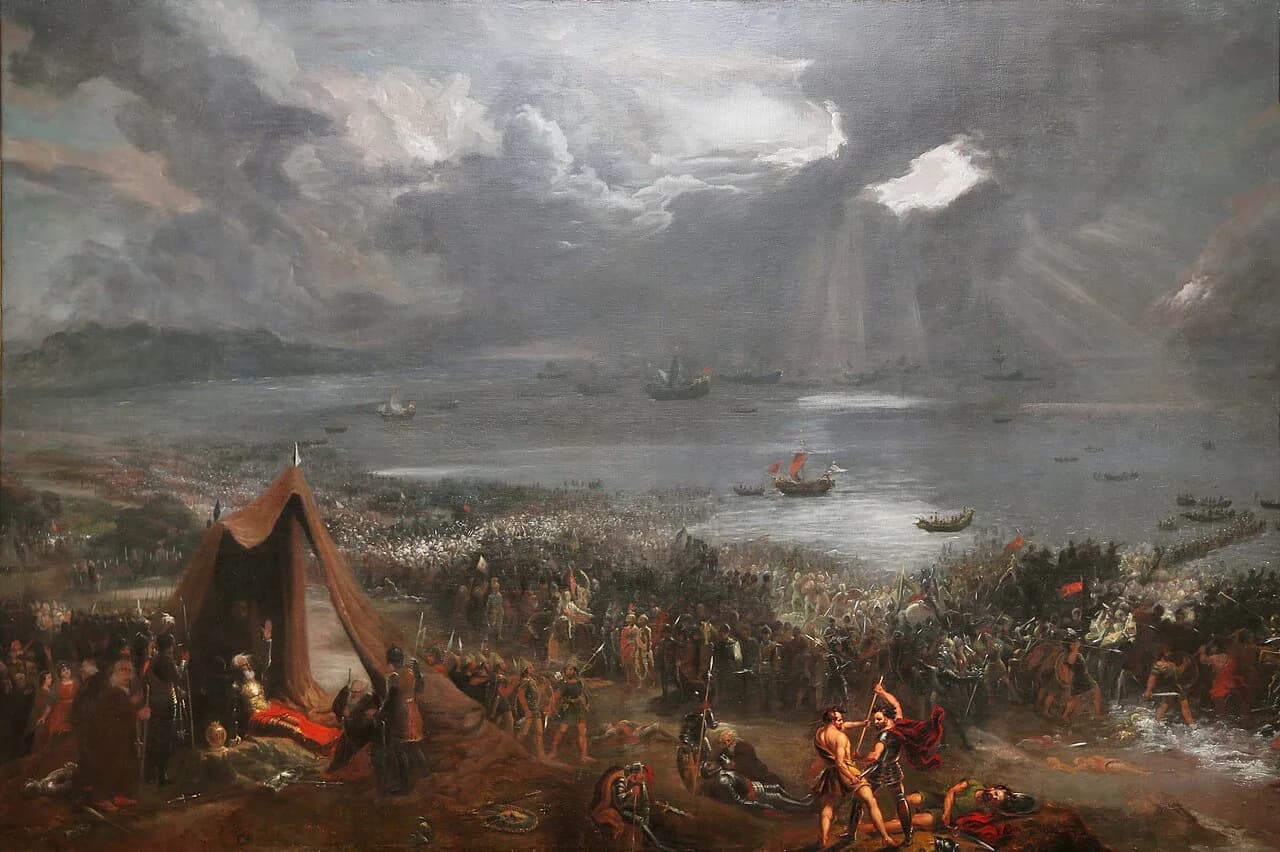
Battle of Clontarf: Evidence, Sources and Where to Encounter It
The Battle of Clontarf is told very differently by Irish and Norse sources. Compare what each says and find where in Dublin to explore the evidence.
On this page
The Battle of Clontarf was fought on Good Friday, 23 April 1014, according to the National Museum of Ireland, and it remains the best-known battle in Irish history while also being one of the least understood. The popular version, in which a Christian king drove the Vikings out of Ireland, is exactly the story the museum sets out to test rather than repeat. This guide follows that method: it compares what the medieval Irish and Norse texts actually say, sets both against archaeology and surviving manuscripts, and leaves contradictions standing where the sources disagree.
Two practical threads run through the article. One is the physical city Brian Boru and Sitriuc Silkbeard contested, which excavation has revealed in some detail. The other is where a visitor can encounter this material today, chiefly the Clontarf 1014 exhibition at the museum's Kildare Street site in Dublin, supplemented by online displays from Trinity College Dublin and the Edward Worth Library.
Why Clontarf Is Contested
The National Museum of Ireland frames Clontarf as a victory narrative that needs dismantling: the exhibition sets out to challenge the idea that Brian Boru defeated the pagan Vikings and drove them from Ireland, and presents the evidence for what happened, what led to the battle and what followed. That framing is the reason a visit rewards preparation. Knowing in advance that the displays juxtapose Viking and Irish weapons with silver hoards, religious treasures and much later objects helps you read the exhibition as an argument rather than a pageant.
The strongest single corrective to the popular story is the survival of the Dublin king. Sitriuc Silkbeard, whom the Edward Worth Library exhibition identifies as son of Amlaíb Cuarán and Gormlaith, did not die at Clontarf; he reigned in Dublin until 1036 and later founded Christ Church. A battle that supposedly ended Viking power in Ireland left its Dublin king on his throne for another two decades, which is why claims of expulsion should be treated as legend rather than record.
The Dublin Brian Faced
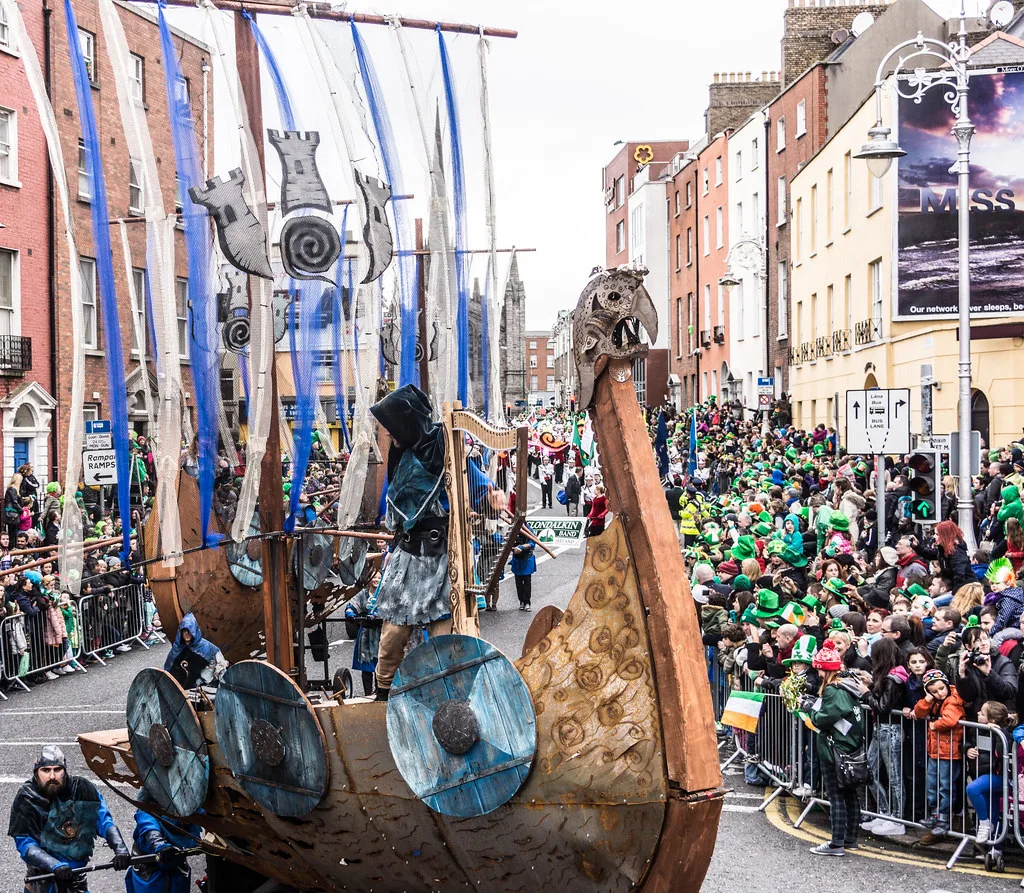
Dublin was a Viking settlement from 841, first as a longphort where Scandinavians overwintered, then re-established in 917 after an expulsion in 902 and developed into the most important town in Ireland and a hub of western Viking trade. The Viking Ship Museum's account, written by a National Museum of Ireland author, makes the political consequence plain: control of the town became a necessity for any king seeking control of all Ireland. That is the prize in the background of 1014.
Excavation between 1962 and 1981 revealed the post-917 town in remarkable detail: fenced plots or tenements traced across a dozen building levels, low rectangular houses with a central hearth and doors at either end, an earthen bank in the tenth century and a larger second bank in the eleventh, plus successive waterfronts. For a visitor, this matters because the 1014 town is known from the ground beneath Dublin rather than from standing monuments. The Kilmainham and Islandbridge graves, meanwhile, are the earliest evidence of contact, with Kilmainham described as the largest known Viking cemetery outside Scandinavia.
Anyone tracing this wider story of settlement, trade and conflict will find that it sits within the broader medieval Ireland narrative, where the Viking towns and the Irish kings who fought over them belong to the same history.
Brian Before 1014
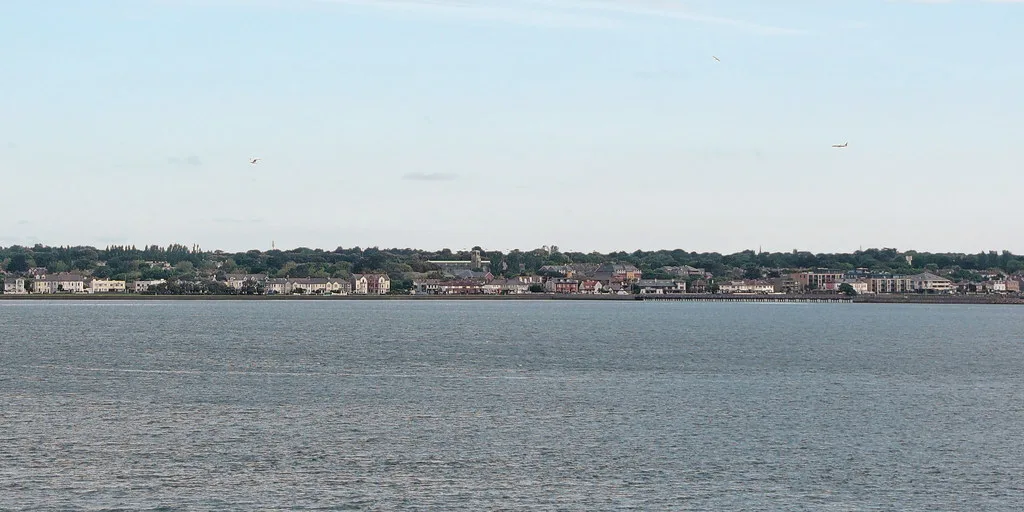
Brian succeeded his brother Mathgamain after the latter's assassination in 976 and spent his early years securing Munster before turning to wider ambitions. Trinity College Dublin's online exhibition traces the sequence: a contest with Máel Sechnaill, king of Tara, an upper hand gained by 1002 through political and military manoeuvring, and campaigns that forced the important kings of Ireland to submit. It also notes a close alliance with the church of Armagh, commemorated in the Book of Armagh as Imperator Scotorum. That manuscript, with its insertion around 1005, is the only surviving item the exhibition identifies as certainly having been in Brian's presence.
Objects in the same online display make the political machinery concrete. A bronze bell of the eighth to tenth century is described as the kind of religious object on which oaths validating alliances were sworn, and is reputed to have been found near a former Viking camp in County Mayo. The lesson for a visitor is that Brian's power rested on agreements and ritual as much as battles, which makes the Book of Armagh a more revealing exhibit than any weapon. For a fuller chronology of Brian's career beyond 1014, see the dedicated guide to Brian Boru in Ireland.
How the Irish Sources Tell It
The fullest Irish narrative is the Cogadh Gaedhel re Gallaibh, a twelfth-century text produced by Dál Cais writers close to Brian's dynasty, and a lecture for the Brian Boru Lecture Series by Dr Catherine Swift of Mary Immaculate College treats it as exactly that: dynastic material in which, in its own telling, Leinster and Dublin rebel against Brian and Máel Sechnaill of Meath asks him for help. The lecture presents that request as part of the Dál Cais version rather than as neutral record. Read on those terms, the text's speeches, prophecies and single combats are literary construction rather than eyewitness testimony, and its account of the battle's causes serves the reputation of Brian's descendants.
Within that frame the text gives a memorable sequence: mustering and preliminary raids, battle lines drawn up with Brian's son Murchad at the front, fighting from sunrise to evening, and the tide returning to cut off the foreign ships so that survivors could flee only into the sea. Brian himself is depicted at prayer behind a shield wall, receiving news of Murchad's standard, and later giving instructions that his body be carried to Armagh. These are powerful scenes, but they are the Dál Cais telling of the story, and should be read as such.
The annals offer a check, though not a decisive one. The Annals of Inisfallen and the Annals of Ulster both list the dead, but the Ulster list is longer and more geographically widespread, naming the king of Leinster, several figures among the foreigners and Brian with his son and grandson. That divergence is a reminder that even the sober notice of who fell varies between manuscripts, so casualty figures should never be quoted as settled fact.
The same lecture sets the Gaelic literary culture of these texts in a longer tradition of praise, genealogy and dynastic legitimation, which is useful background when judging how much weight to place on a flattering portrait of a king.
How the Norse Sources Tell It
The Norse tradition, most accessibly the saga of Burnt Njal, tells a different story with different heroes. In that version Sitric fights in the battle rather than watching from the town, Earl Sigurd of Orkney brings his raven banner and dies under it, and Brodir breaks through the shield wall and kills Brian, with the king's head later said to rejoin his body. The lecture is explicit that this Dál Cais version and the Norse accounts differ in important respects, and it does not adjudicate between them.
The discrepancies are not trivial details to be smoothed over. In the Irish text Sitric is a passive spectator who exchanges barbs with Brian's daughter, while in the saga he is an active commander; in the saga Brodir breaks through the shield wall and strikes Brian down, while in the Irish account Brian, armed, strikes Brodar and cuts off his left leg at the knee and his right at the foot before Brodar deals the head wound that kills him. Rather than harmonising them into a single narrative, treat the gap as evidence of how quickly a battle becomes contested memory. Anyone following the wider Viking presence in Ireland will recognise this as part of a longer pattern of mixed settlement and shifting alliance.
Sitriuc Silkbeard, the King Who Survived
The Edward Worth Library exhibition gives Sitriuc Silkbeard a fuller treatment than the battle usually allows. It describes him as a Hiberno-Norse ruler who leant on his Leinster kindred, notably his uncle Máel-Mórda, and who in 1014 allied with the Isles and Orkney under Earl Sigurd to bring reinforcements to Clontarf. According to the same exhibition, he was the first king in Ireland to mint coinage, with coins bearing his name and image, and he reigned from 989 to 1036, went on pilgrimage to Rome in 1028 and founded Christ Church after his return.
The same display is candid that the sources are not in unison about his role on the day, and that the only fact we can be sure of is that he survived. It also corrects an older antiquarian claim, found in earlier histories, that he died at Clontarf. For a visitor this is a useful test case: the coinage and the long reign are documented, the battle conduct is disputed, and a good exhibition should say so.
What the Evidence Looks Like
The Clontarf 1014 exhibition at the National Museum of Ireland — Archaeology on Kildare Street, Dublin 2, is the most direct place to see this material assembled. It is described as a temporary exhibition, and the museum's page lists it as free, displaying Viking and Irish weapons of the types used in the battle with hoards of silver and religious treasures; the museum also publishes a linked feature on nine objects from the exhibition. Other artefacts and manuscripts are presented through online exhibitions, including the Trinity College Dublin display and the Worth Library's books, so treat those as interpretation to read rather than a guarantee that a particular object is on view.
If you want to extend a museum day into the broader material culture of early Ireland, the collections covered in the guide to Celtic Ireland offer wider context for the metalwork and religious objects that such exhibitions draw on.
Later Memory: How Clontarf Was Retold
Clontarf has been remade by each generation that told it. The Edward Worth Library exhibition shows how early modern readers encountered the battle through printed histories: Edward Worth owned multiple copies of William Camden's work containing the first full printing of Gerald of Wales's Topographia Hibernica, and collected Catholic refutations by Geoffrey Keating and Roderick O'Flaherty alongside Sir James Ware's compilations. That is a reminder that the version of 1014 you meet in an old book may owe more to seventeenth-century argument than to eleventh-century memory.
Modern commemoration has its own paper trail. Trinity College Dublin's exhibition includes four An Post stamps designed by Finbarr O'Connor and issued in 2002 to mark the thousandth anniversary of the date traditionally assigned to the start of Brian's reign as king of Ireland, each carrying the title Imperator Scotorum. That anniversary marks a reign, not the battle, and conflating the two is a small but telling example of how dates drift in popular retelling.
For a broader view of how the medieval centuries are represented across Ireland's museums and monuments, the medieval Ireland collection offers a useful starting point.
Visiting: What to Know Before You Go
The exhibition is at the National Museum of Ireland — Archaeology on Kildare Street in Dublin. This is the museum location, rather than the Clontarf battlefield. The museum’s own visitor-information page announces that Kildare Street will be closed on Sunday 25 October and Bank Holiday Monday 26 October 2026 due to industrial action. For any other date, check that page for current opening information before travelling. If you want to place the exhibition within the wider story of the city around it, Dublin History: A Chronological Guide to the City's Key Sites is a useful companion.
Build in time to read the labels rather than pass through. The exhibition's value lies in the argument it makes about evidence, and the free admission means you can return after reading the Trinity College Dublin and Worth Library material online. Pairing the museum with those digital collections gives a fuller sense of the manuscripts, coins and books behind the story than any single room allows.
A Battle Best Read Through Its Sources
Clontarf rewards a visitor who arrives with questions rather than certainties. The Irish and Norse accounts disagree on who fought, who watched, and how Brian died, and the survival of Sitriuc Silkbeard to 1036 undermines the simplest version of the story. Comparing the texts, the annals, the coins and the excavated town is the only honest way to approach 1014.
Start with the museum exhibition on Kildare Street, confirm the current opening arrangements on the museum's own site, and read the Trinity College Dublin and Worth Library displays alongside it. The Battle of Clontarf emerges less as a single event than as a story retold, and the retellings are themselves part of what there is to see.
Explore more Ireland guides
Frequently Asked Questions
Did the Battle of Clontarf drive the Vikings out of Ireland?
No. The popular version, in which Brian Boru defeated the Vikings and expelled them, is precisely what the National Museum of Ireland's exhibition sets out to test. Sitriuc Silkbeard, the king of Dublin, survived the battle and continued to reign until 1036, according to the Edward Worth Library exhibition, so the battle plainly did not end Viking power in Ireland.
Why do Irish and Norse accounts of Clontarf disagree?
The fullest Irish narrative, the Cogadh Gaedhel re Gallaibh, is twelfth-century material associated with Brian's own dynasty and shaped to glorify him and his descendants. The Norse tradition, including the saga of Burnt Njal, tells a different story in which Sitric fights, Earl Sigurd of Orkney dies with his raven banner, and Brodir kills Brian. The accounts come from different audiences and purposes, so they should be compared rather than merged.
Where can I see the Clontarf 1014 exhibition?
It is at the National Museum of Ireland — Archaeology, Kildare Street, Dublin 2, D02 FH48. The museum describes it as a temporary, free exhibition of weapons, silver hoards and religious treasures, with a linked feature on nine objects. There is no exhibition or visitor centre at Clontarf itself, so check the museum's own current visitor information for opening hours before travelling.
What does the Book of Armagh tell us about Brian Boru?
Trinity College Dublin's online exhibition explains that a text inserted into the Book of Armagh around 1005 celebrates Brian as Imperator Scotorum, Emperor of the Irish, recording an agreement between him and the church of Armagh. The exhibition describes the manuscript as the only surviving item known for certain to have been in Brian's presence, which makes it unusually direct evidence for his reign.
Who was Sitriuc Silkbeard and what happened to him after 1014?
Sitriuc Silkbeard was king of Dublin, son of Amlaíb Cuarán and Gormlaith, and allied with his Leinster kindred. According to the Edward Worth Library exhibition, he was the first king in Ireland to mint coinage, reigned from 989 to 1036, went on pilgrimage to Rome in 1028 and founded Christ Church. That same exhibition states that sources are not in unison about his role in the battle and that the one fact certain is that he survived it.
Is there a battlefield site or trail at Clontarf?
No such visitor facility is evidenced. The museum exhibition is in central Dublin on Kildare Street, well away from the Clontarf area, and nothing in the available material describes a managed battlefield, marked trail or guided battle tour. Plan your visit around the museum and its online companion exhibitions instead.
Sources
- Clontarf 1014: Brian Boru and the Battle for Dublin | Archaeology | National Museum of Ireland
- lecture_clontarf_death-of-western-chivalry.pdf
- Boru Trinity
- Early Medieval Ireland – Edward Worth Library
- The City of Dublin: The Viking Ship Museum
- Opening Hours, Location and Facilities | Archaeology | National Museum of Ireland
You might also like



Continue reading
More guides you'll find useful




