
Gaelic Ireland: Learned Families, Manuscripts and Sites to See
Gaelic Ireland's learned families left law schools, poetic schools and manuscripts. Trace the aos ealadhan at named sites and learn why the language is called Irish.
On this page
Gaelic Ireland refers to the Gaelic-speaking society of medieval and early modern Ireland, and above all to the hereditary learned class that served its ruling dynasties. Heritage Ireland describes one such group, the aos ealadhan, as professional practitioners of medicine, law, poetry, history and music who trained their successors and held land in return for service. Their traces are split between stone monuments in the countryside and manuscripts in institutional collections, which is why a visit needs a little preparation.
One point of vocabulary matters before anything else. In English the language is conventionally called Irish rather than Gaelic, although the word Gaelic derives from Gaeilge, the Irish name for the language itself, as the University of Notre Dame's language initiative explains. Scottish Gaelic and Manx are its sister languages within the Celtic family. Irish and Scottish Gaelic are closely related but differ in spelling and pronunciation, and mutual understanding between speakers is uneven, so treat them as distinct languages when reading place names or manuscripts.
The aos ealadhan: a hereditary professional class
The learned families were not a loose artistic milieu but a structured profession. Heritage Ireland records that in the mid-sixteenth century more than 400 families in Ireland specialised in medicine, law, poetry, history or music, holding hereditary tenure of lands and other rewards from the Gaelic ruling dynasties they served. Skills passed down within families over successive generations, and each discipline regulated its own schools, students and texts.
Patronage was the mechanism that kept this system running. Learned practitioners were attached to the courts of local lords, and when English rule dismantled the Gaelic order after the Battle of Kinsale in the early seventeenth century, the professions lost the patronage that sustained them. For a traveller, this explains why the surviving evidence is so scattered: a school here, a manuscript there, with the households that paid for both largely gone.
Reading Gaelic Ireland across several counties rewards a broader frame than any single monument. The same institutions appear in the wider story of medieval lordships and their conflicts, which shaped where schools were founded and which families prospered. The high-kingship politics of the eleventh century, including the career of Brian Boru, belongs to that same world of dynastic patronage.
Medicine, the O'Lees and the Book of Hy-Brasil
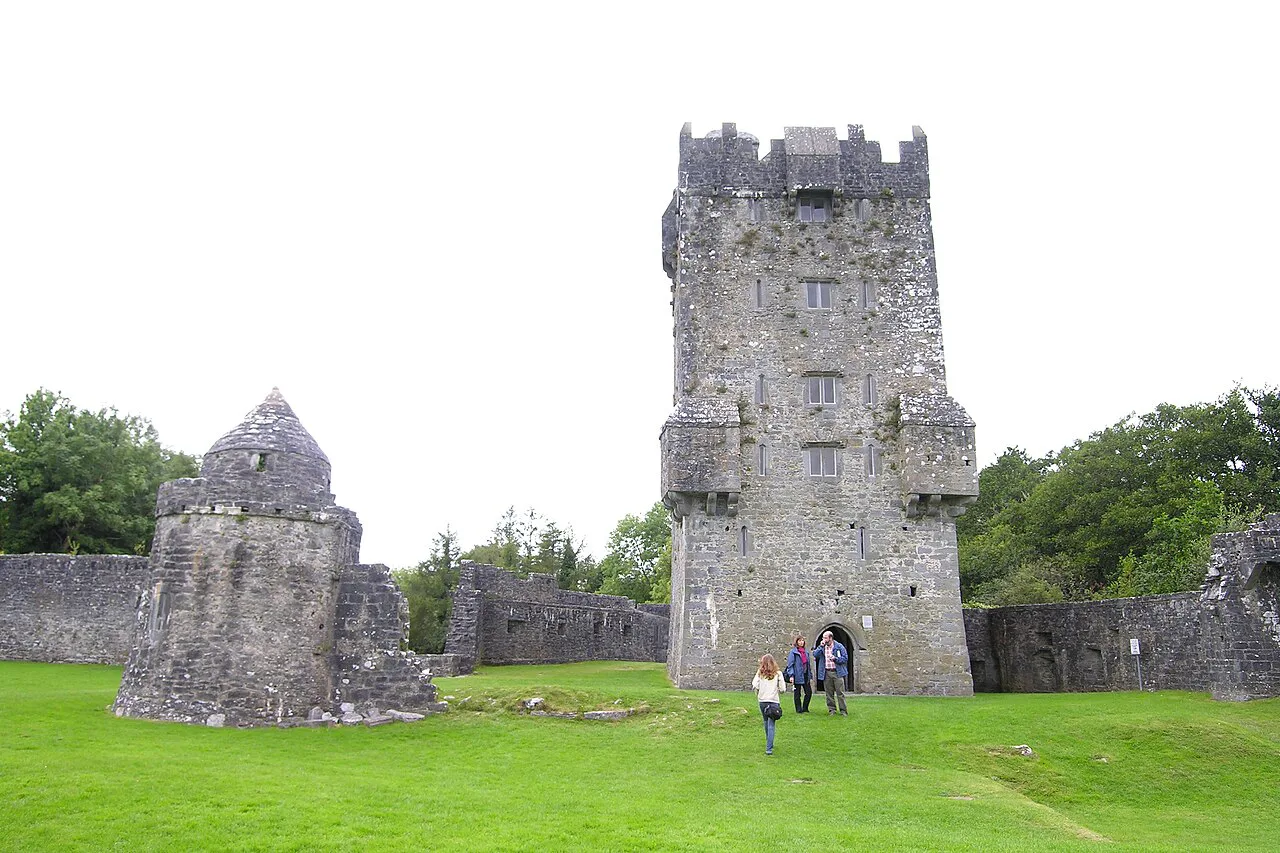
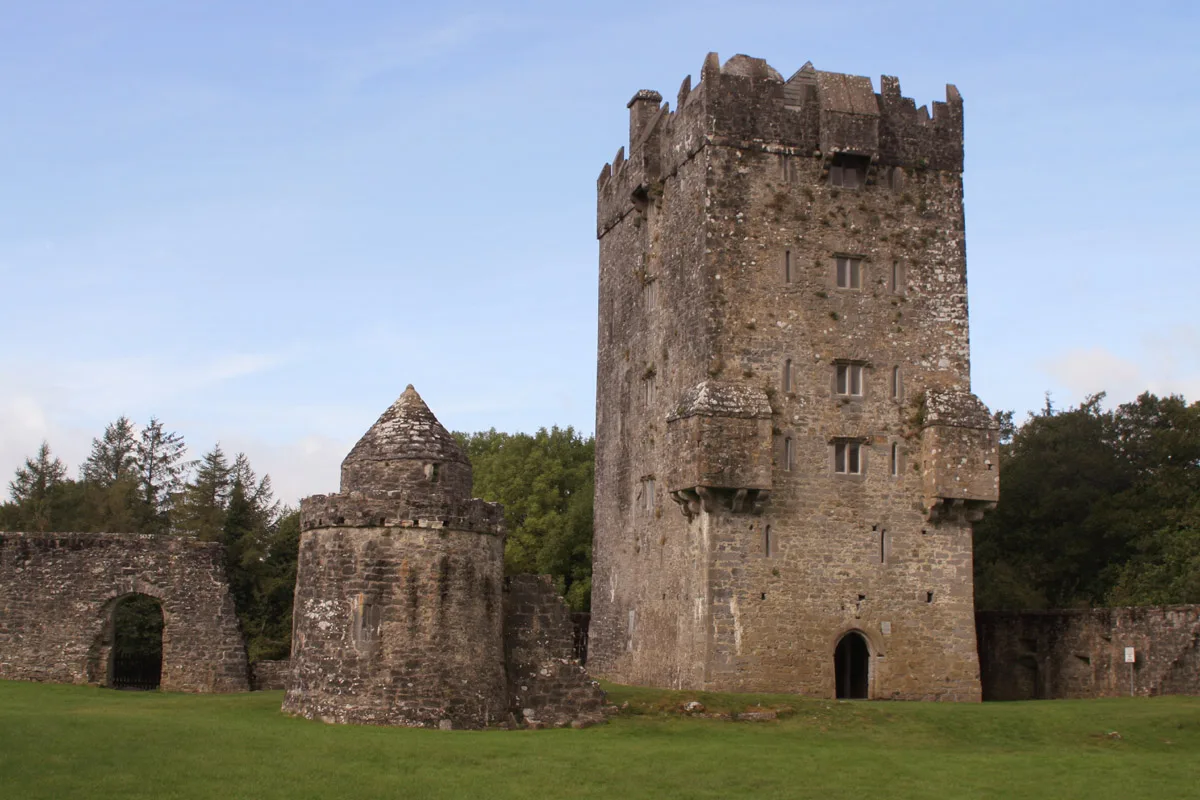
Medicine was the preserve of a small number of learned families across generations. The O'Lees were among the leading Gaelic physicians in Connacht and served as hereditary physicians to the O'Flaherty lords of Iarchonnacht, whose chief stronghold stood near Lough Corrib at Aughnanure Castle. That castle is cited as the patrons' base, not as a medical school, so do not expect a classroom or a physic garden there; the association is one of patronage rather than practice.
The family's best-known product is the Book of Hy-Brasil, also called the Book of the O'Lees, compiled during the fifteenth century as a reference handbook for practising physicians. Heritage Ireland traces its lineage to an eleventh-century Arabic text written in Baghdad, rendered into Latin in 1281 by the Jewish physician Faraj ibn Salim in Sicily, and translated into Irish in 1443. The vellum manuscript sets out treatments for diseases of the period in tables with illuminated initials, and it is held today by the Royal Irish Academy in Dublin rather than kept at any western site.
A colourful story attaches to the book and should be read as legend. Heritage Ireland recounts that Murrough O'Lee claimed in 1668 to have been carried to the enchanted island of Brasil off the west coast, received the manuscript there, and later acquired healing powers on opening it. The tale is a piece of early modern storytelling, not a chronicle of medical training, and it is worth separating from the documented translation history above.
Law at Cahermacnaghten: cashel and schoolhouse
The clearest surviving trace of a Gaelic law school lies in County Clare. At Cahermacnaghten, records show a school founded by Giolla na Naomh O'Davoren around 1500 and used well into the seventeenth century for teaching Fénechas, the body of law commonly called Brehon law. Archaeology has identified a gatehouse and five stone buildings added inside an earlier stone enclosure, with the single-storey schoolhouse outside it to the south-west.
The schoolhouse, known as Cabhail Tighe Breac, is where students gathered for instruction in Latin and Brehon law and where many legal texts were transcribed. Its proportions and internal arrangement are described as typical of a Gaelic schoolhouse, and a fragment of inscribed slate recovered there parallels finds from medieval and Renaissance schools elsewhere in Europe, evidence of a building used for teaching. Its later reuse as a residence belongs to a separate, later phase.
The school's most celebrated product is the Book of Donal O'Davoren, compiled in Irish over seven years in the mid-sixteenth century and covering legal scholarship alongside a glossary and old literary tales. Its largest surviving section, known as MS Egerton 88, is preserved in the British Museum, so a reader hoping to consult it in Clare will be disappointed. After the school closed, the schoolhouse was refurbished as a residence and later abandoned; this is a historical sequence, not a current household.
Setting the law school beside other medieval power centres helps explain its purpose. Brehon law governed Gaelic society at every level, and schools such as this trained the administrators and judges who applied it.
Poetry and patronage at Church Island, Lough Gill
Poets held high status in Gaelic Ireland, and their training was long. Heritage Ireland describes the poet as a rounded scholar who also worked as historian, genealogist, adviser and recorder of tributes, trained in bardic schools for an average of seven to twelve years. The O'Cuirnin family served the O'Rourke chiefs of West Bréifne as hereditary poets and historians for three centuries at Church Island on Sligo's Lough Gill, where the head of the family maintained a school of learning.
That school had a documented end. In 1416, two years after the sacking of Sligo Abbey, a fire destroyed the school and its extensive library, including the Leabhar Gearr of the O'Cuirnins. The loss of that manuscript is recorded as an irreparable blow to Gaelic literature. The island setting makes the story vivid, but it also means access must be checked rather than assumed, and no landing rights or boats should be presumed.
The poetry these schools produced survives in quantity and is fundamental to understanding the period. Heritage Ireland puts the surviving corpus of bardic poetry at roughly two thousand poems. Modern Irish writing inherited part of this legacy, and the language's broader manuscript and literary tradition ran alongside the schools described here.
A network of schools across the country
Gaelic learning was connected rather than clustered in one region. The O'Davoren school at Cahermacnaghten was affiliated with the MacEgan law school at Park near Tuam in County Galway, where much of Donal O'Davoren's book was written. Donal and his scribes also visited the O'Doran law school at Ballyorley in County Wexford and the history school of the O'Mulconrys at Ardkyle in Clare. A route through Gaelic Ireland therefore spans Clare, Galway, Sligo and Wexford rather than a single county.
These affiliations were practical arrangements for sharing knowledge between kindreds and maintaining contact between scholars. Knowing the network existed helps a visitor interpret individual ruins, which can look isolated in the landscape but belonged to a wider professional world. Those interested in the period's secular lordships and conflicts will find the same names recurring across the surviving records.
Collapse and manuscript survival
The end of the schools was gradual and political. Many legal families survived the first wave of Tudor expansion through negotiation and adaptation before fading under the early Stuart monarchy in the seventeenth century, and by the mid-seventeenth century most organised bardic schools had ceased to function. Yet the tradition reached beyond that point: it fed into the literary revival of the late nineteenth century and remains present in modern Irish verse and musicianship.
Survival depended heavily on manuscripts rather than print, an unusual pattern for a major European language, as the University of Notre Dame notes. Irish literature of the seventeenth to early nineteenth centuries is described there as particularly interesting and productive despite the language's shrinking public role. Ireland also had early European links: from the seventh century Irish monks and scholars were at the Carolingian court, and the oldest manuscripts contemporary with the written language are in Cambrai, Würzburg and Milan, mostly glosses on Latin devotional texts.
The language's institutional position today is a separate chapter. The University of Notre Dame reports that Irish is an official language of the Republic of Ireland and of the European Union, and a recognised minority language in Northern Ireland, and that a lively contemporary literature exists. That makes the term Gaelic Ireland a label for a historical society and its learning rather than a description of a vanished language.
What to see, and how to check access before travelling
A realistic visit separates monuments from manuscripts. Cahermacnaghten's cashel and schoolhouse in Clare and Church Island in Lough Gill are outdoor heritage features, and neither Heritage Ireland nor any source consulted here records opening hours, guided entry or boat landings for them. Aughnanure Castle is cited in the record as the O'Flaherty stronghold where the O'Lees' patrons were based, not as a venue demonstrating Gaelic medicine. Confirm current access with the relevant public authority or site operator before you commit to a journey.
Manuscripts need a different approach. The Book of Hy-Brasil is held by the Royal Irish Academy in Dublin, and the largest surviving section of the Book of Donal O'Davoren is in the British Museum, so neither should be planned as a viewing destination without confirmation. Treat them as research collections to locate through their holding institutions. Anyone tracing the castles and lordships around Lough Corrib will find the Galway material a useful complement to the medical patrons' story.
Readers who want to place these schools in a wider sequence can follow them through early medieval Ireland before the Tudor collapse. The same landscape holds earlier monuments that shaped where churches, schools and strongholds were later sited.
Planning a Gaelic Heritage Route
Build a Gaelic Ireland itinerary around two or three named places rather than a long list, and give each one time. Pair Cahermacnaghten's stone enclosure in Clare with the manuscript histories in Dublin, or set Church Island's story against the wider poetry corpus; for the capital's holdings there is a dedicated Dublin heritage guide to work from. Check current access and any collection viewing arrangements directly before travelling, since the evidence here records heritage features and holdings rather than visitor facilities.
Explore more Ireland guides
Frequently Asked Questions
What does "Gaelic Ireland" mean?
It describes the Gaelic-speaking society of medieval and early modern Ireland and its hereditary learned class, the aos ealadhan. These families specialised in medicine, law, poetry, history or music, served ruling dynasties and trained successors at schools such as Cahermacnaghten and Church Island.
Is Gaelic the same as Irish?
In English the modern language is conventionally called Irish, not Gaelic, although the word Gaelic comes from Gaeilge, the language's own name. Scottish Gaelic and Manx are sister languages within the Celtic family, and Irish and Scottish Gaelic differ noticeably in spelling and pronunciation.
What was the aos ealadhan?
It was the professional learned class of Gaelic Ireland: physicians, lawyers, poets, historians and musicians who held hereditary land and privilege in return for service to their patrons. Skills passed down within families over generations, and each discipline maintained its own schools and texts.
Where was the O'Davoren law school?
At Cahermacnaghten in County Clare, where records place a school founded by Giolla na Naomh O'Davoren around 1500 and used into the seventeenth century for teaching Brehon law. The site includes an early stone enclosure with later buildings and a separate single-storey schoolhouse to the south-west.
What happened to Gaelic learned families after the Battle of Kinsale?
The conquest that followed dismantled the Gaelic order and the patronage that supported the learned professions. Many legal families adapted through negotiation before fading under the early Stuart monarchy, and by the mid-seventeenth century most organised bardic schools had ceased to function.
Where is the Book of Hy-Brasil kept today?
It is held by the Royal Irish Academy in Dublin. The manuscript is a fifteenth-century Irish-language medical handbook, translated in 1443 from a Latin treatise. Its presence in a research collection should not be taken as an indication that it is on public display.
Sources
You might also like



Continue reading
More guides you'll find useful




