
Ferns Castle: A Guide to the Norman Stronghold at Ferns
Ferns Castle is a Norman stronghold begun around 1200. Learn what survives, what the Ferns Tapestry records, and how to plan around its closure until 2027.
On this page
Ferns Castle is not a place you can walk into today. Heritage Ireland, which publishes the site's visitor information, states plainly that the castle is closed until 2027, so this guide is written for planning a future visit rather than describing a day out now.
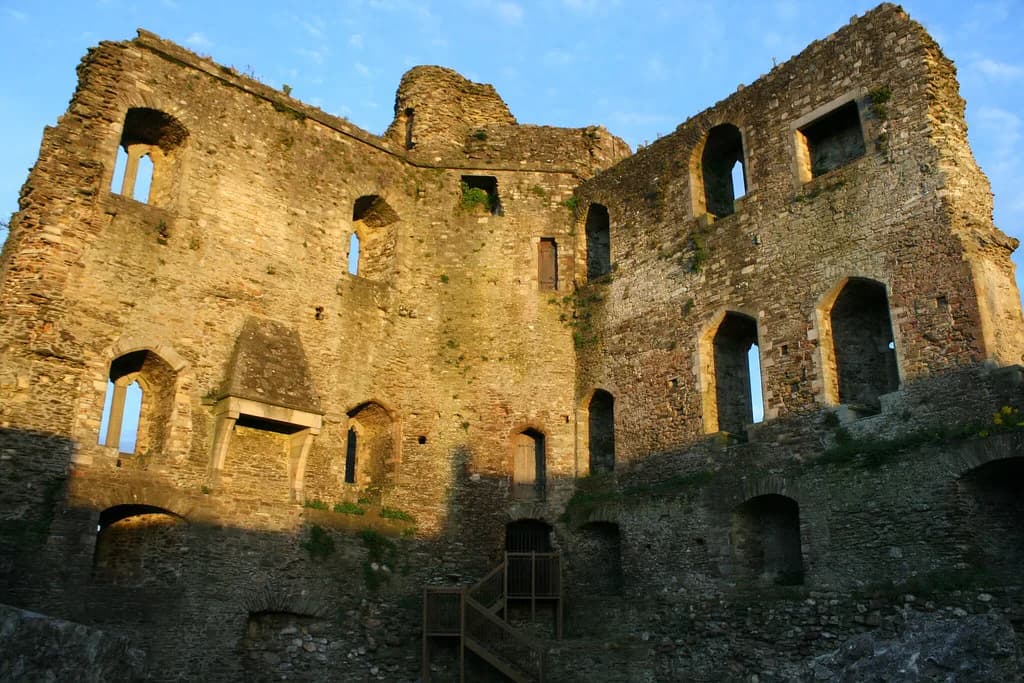
What waits behind that closure is a substantial fragment of a Norman fortress: roughly half of a square castle, with the most complete tower retaining a circular chapel, fireplaces and a vaulted basement. The same operator page describes the Ferns Tapestry, a 15-metre community-made embroidery that tells the town's earlier story. If you want the broader context of Irish fortification, our guide to medieval castles ireland sets the scene.
Why the castle is the headline but not the whole story
Ferns was a political centre before any Norman arrived. Heritage Ireland notes that the site was the base of Diarmait Mac Murchada, king of Leinster, before the Normans came, and that William, Earl Marshal built the castle around 1200. That single sentence does two jobs: it anchors the castle to a named builder and a date, and it reminds you that the mound was already significant when the stone went up.
The village's own heritage pages place St Aidan's monastic foundation in the sixth century and describe Ferns as the seat of the kings of Leinster in the eleventh and twelfth centuries, with the Norman arrival following in 1169. Treat that as the longer arc the castle sits inside, not as a claim that everything happened at one address. The castle page's 'closed until 2027' notice is the practical fact that shapes any trip.
What survives of the square fortress
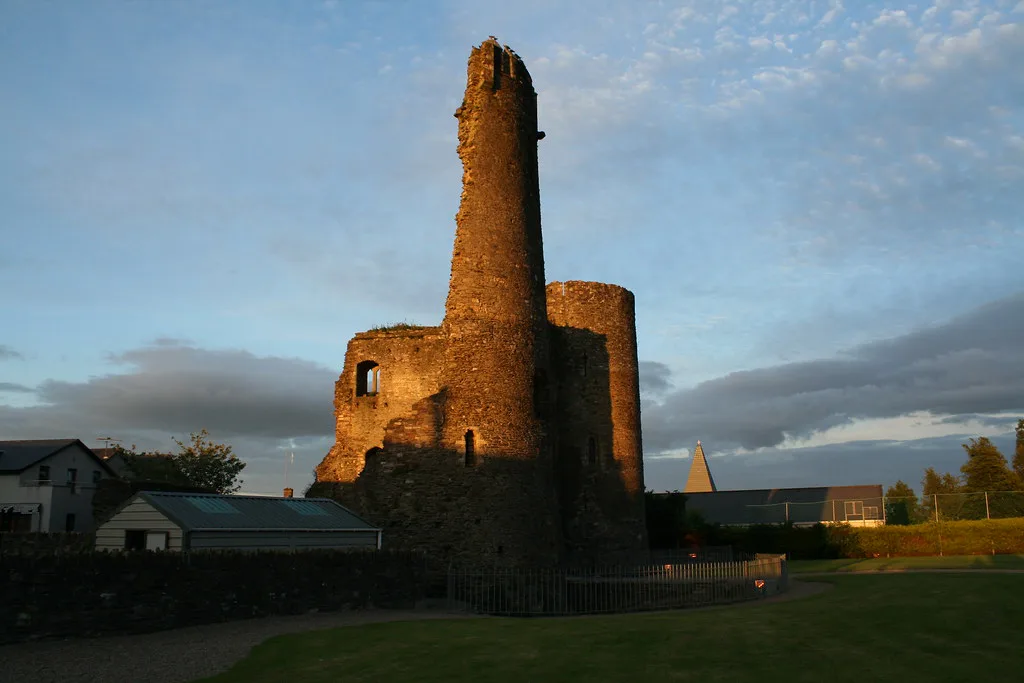
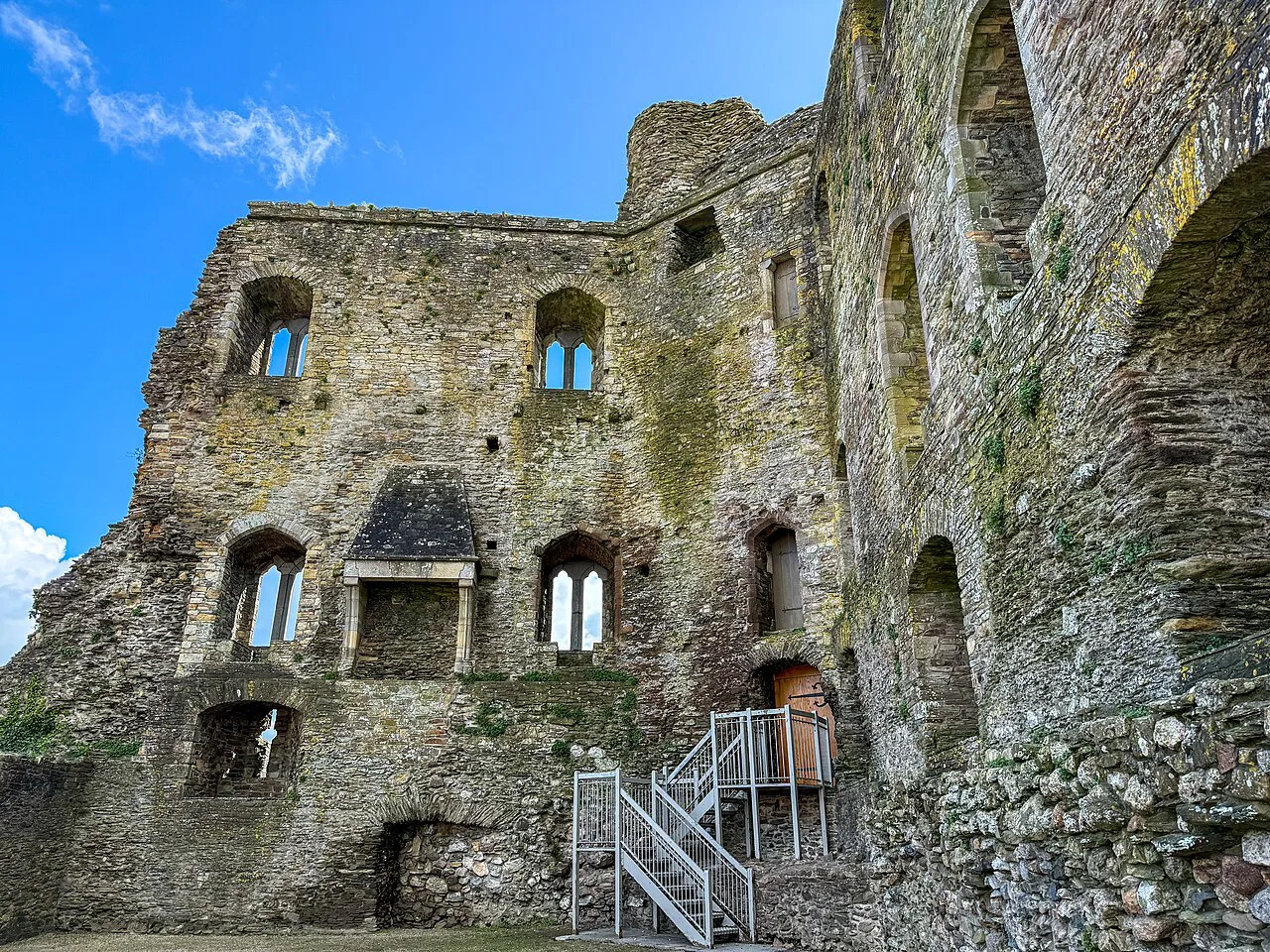
The castle was originally square, with large corner towers; only half of it now stands, though the operator calls what remains impressive. That half is worth understanding as a fragment rather than a ruin: the most complete tower holds several original fireplaces, a vaulted basement and the circular chapel. Do not expect a full circuit of walls or furnished rooms, because the surviving plan is partial.
Heritage Ireland's highlights page adds a detail that makes the site legible on the ground: the surviving tower is the one the operator singles out as intact, and the climb to its top is described as part of the experience when the site is open. That is a future-facing description, not an invitation today. Check the main site page before you travel, since the closure notice sits there.
Reading the defences: fosse, drawbridge and awkward stairs
The defensive features are what make a half-ruined castle worth reading. Heritage Ireland's highlights page names the stone-cut fosse and drawbridge as surviving elements, along with arrow-loop and cross-loop windows. Those are fabric to look for, not equipment you operate: the point is to see how approach and sightlines were controlled.
Inside the surviving tower, the same page describes a spiral staircase designed to trip attackers and slow their advance to the upper floors. That is a useful corrective to romantic castle imagery: the awkwardness is the architecture doing its job. When the castle reopens, treat these as features to notice rather than a route you can assume is fully accessible.
The south-east tower chapel and its carved details
The circular chapel sits on the second floor of the south-east tower according to the operator's description, and it is the most refined survival in the complex. Its moulded rib-vaulted ceiling, six carved heads and two small aumbries for storing sacred vessels are cut from Dundry stone from Bristol. That attribution matters: it tells you the chapel was built with imported material and decorative ambition, not thrown up as a utilitarian garrison room.
The main castle page also lists the chapel and fireplaces among the most complete tower's features. Because the site is shut, you cannot verify sightlines or access now; the useful takeaway is that the chapel, not the walls, is the reason to prioritise this tower once reopening is confirmed.
The rooftop view that explains the castle's dominance
The rooftop is where the castle's logic becomes obvious. Heritage Ireland's highlights page says those who reach the roof with guides are rewarded with views over historic Ferns and the surrounding countryside, and that from there you can see how the castle dominated the area. The same roof carries an original garderobe, described as a medieval 'long drop'. Both details are for the future visitor, since the site's closure stands.
That phrase about guides is worth noting carefully. It describes how the operator presents the rooftop experience on its highlights page, not a booking service you can use while the castle is closed. Ferns is far from the only Irish castle where guided access shapes what you actually see, and the castles in county galway guide shows how Athenry, Aughnanure and Portumna each set their own terms. Do not connect it to other castles' tour arrangements; other Irish castles run their own programmes on a separate basis, as you can see in our guide to Medieval Castles in Ireland.
The Ferns Tapestry: a community-made record
The Ferns Tapestry is the collection highlight to plan around. Heritage Ireland describes it as 15 metres long with 25 panels in crewel wool embroidery, depicting the town's history from St Aidan's arrival in 598 to the coming of the Normans in 1169, and says it took over five years to complete as a local community initiative. The main castle page adds that it is displayed in the visitor centre, where it showcases the pre-Norman history of the town.
Because the castle complex is closed until 2027, treat the tapestry as something to see on a future visit rather than a current display. The date range on the panels is a useful study aid: it gives you a sequence to read the village's monuments against, from the monastic foundation to the Norman arrival.
Planning around the closure: what the listed details mean
The Ferns Castle page still lists free admission and daily hours of 09:30 to 17:00 with last admission at 16:45, but those lines sit alongside the 'closed until 2027' notice. Do not read them as a current promise; they are the operator's listed details for the site. Before you build a trip around the castle, confirm the reopening status on Heritage Ireland rather than relying on an old listing or a third-party summary.
The village heritage pages frame Ferns as a walk between two ends: the medieval monastic remains at one end and the Norman castle at the other, linked by the Ferns Heritage Trail. That is useful even now, because the trail context helps you plan the village on foot while the castle itself stays shut. For a sense of how other Irish castles handle access and display, compare Blarney castle, where the grounds and the Blarney Stone draw their own crowds, or weigh the castles in county galway if you would rather plan around western sites with their own opening arrangements. If early Christian and Norman earthworks appeal more than towers, our guide to ancient sites ireland covers the tombs, forts and trackways worth planning around.
The village beyond the walls: monastic remains and high crosses
Heritage Ireland's highlights page notes that a short stroll from the castle brings you to St Mary's, a twelfth-century Augustinian priory, the remains of a thirteenth-century cathedral, and St Peter's, a small nave-and-chancel church, with high crosses and fragments in the cathedral grounds. These are the monuments that make Ferns worth the trip even while the castle is closed, and they connect directly to the tapestry's 598-to-1169 span.
The village heritage pages list the castle, St Edan's Cathedral and the surrounding ecclesiastical monuments among Ferns' visitor assets, and note that four high crosses remain in the grounds of St Edan's Cathedral. A community report by Ferns Development Association argues that Ferns is unusual because its castle, cathedral and ecclesiastical monuments survived together. Use those named sites as your walking plan, and remember that the castle end of the trail is the part currently unavailable.
While the castle is shut: Altamont Gardens
If you want a Heritage Ireland site in the area that is open while Ferns Castle is not, Altamont Gardens is a separate estate of 16 hectares laid out in the style of William Robinson, with a lake, arboretum, bog garden and an Ice Age Glen leading to the River Slaney. It is its own place with its own rules, not an annex of the castle, so plan it as an alternative rather than a substitute.
Altamont is open all year subject to change, closed on Christmas Day, with last entry 30 minutes before closing; seasonal times run from 09:00 to 16:00 in the winter months to 09:00 to 18:30 from April to September. The operator warns that the gardens may close in severe weather and asks visitors to telephone ahead, and lists assistance dogs only with dogs on leads permitted near the front of house and picnic area. Check those conditions before travelling.
Plan Your Visit
Ferns Castle rewards planning precisely because you cannot see it yet. The surviving half-tower, its south-east chapel, the defensive fabric and the Ferns Tapestry are all described by the operator, and all sit behind a closure notice that runs until 2027. Use the village's monastic remains and high crosses to understand the story now, and keep the castle for the trip when Heritage Ireland confirms it has reopened.
For the wider context of Irish fortification, read our Medieval Castles in Ireland guide, which covers the range of sites and their settings. Your one practical rule is simple: verify the castle's status on the operator's page before you set out, and treat any listed hours or admission as historical until the closure is lifted.
Explore more Ireland guides
Frequently Asked Questions
Is Ferns Castle open to visitors now?
No. Heritage Ireland's page states that the castle is closed until 2027. The main page still lists free admission and daily hours, but those lines sit alongside the closure notice and should not be treated as a current entitlement. Check the operator's page for the reopening status before planning a trip.
What does the Ferns Tapestry show and who made it?
The tapestry is a community project: 15 metres long with 25 panels in crewel wool embroidery, depicting the town's history from St Aidan's arrival in 598 to the Norman arrival in 1169, made over more than five years by local stitchers. It is described as displayed in the visitor centre, but the closure means you should confirm display access before travelling.
What survives of Ferns Castle and its chapel?
About half of a square castle with corner towers survives, including the most complete tower with original fireplaces, a vaulted basement and the circular chapel on the second floor of the south-east tower. The chapel has a rib-vaulted ceiling, six carved heads and two aumbries, all cut from Dundry stone from Bristol. The site is closed until 2027, so these are features to plan for, not to visit now.
What can I visit in Ferns while the castle is closed?
A short walk from the castle takes you to St Mary's, a twelfth-century Augustinian priory, the remains of a thirteenth-century cathedral and St Peter's church, with high crosses in the cathedral grounds. The village heritage pages also describe Ferns as a walk between its monastic remains and the castle, so you can still follow most of that route on foot.
How long has the castle been standing, and who built it?
Heritage Ireland credits William, Earl Marshal with building the castle around 1200. Ferns itself was already a significant place before that, having been the base of Diarmait Mac Murchada, king of Leinster, before the Normans arrived.
Is there a nearby Heritage Ireland site I can visit instead?
Altamont Gardens is a separate Heritage Ireland estate of 16 hectares, open all year subject to change and closed on Christmas Day, with last entry 30 minutes before closing. It may close in severe weather, and the operator asks visitors to telephone ahead. It is its own site with its own rules, not part of the castle.
Sources
You might also like



Continue reading
More guides you'll find useful



