
Parke's Castle Guide: O'Rourke Tower House on Lough Gill
Parke's Castle on Lough Gill's northern shore layers an O'Rourke tower house beneath a seventeenth-century manor. Plan the courtyard visit and seasonal boat.
On this page
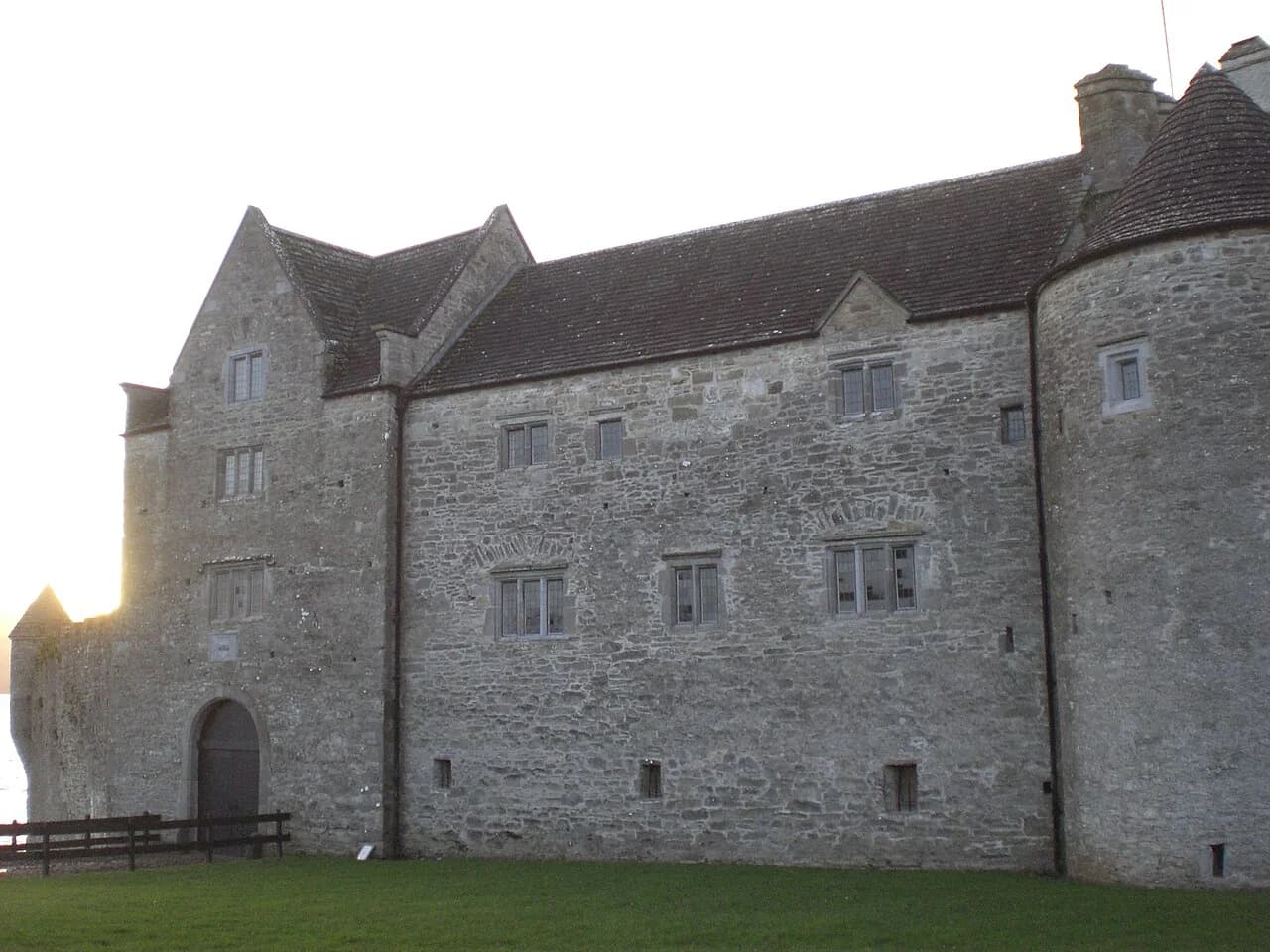
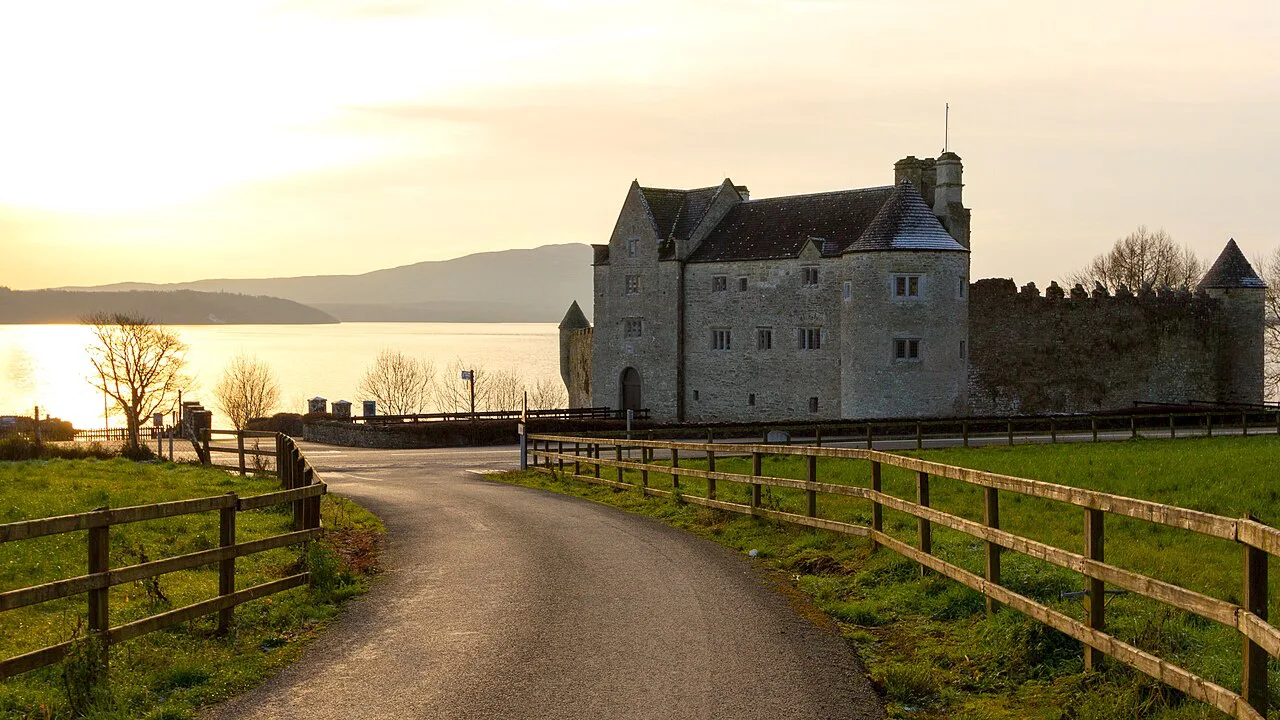
Parke's Castle is a restored fortified manor of the early seventeenth century, standing on the northern shore of Lough Gill in County Leitrim, and its interest lies as much beneath the walls as in them. The Office of Public Works property preserves evidence of an earlier tower house owned by Sir Brian O'Rourke, lord of West Breifne, so a visit reads as two castles stacked in one footprint rather than a single-period house. Because the surviving structure is a restoration, knowing what was rebuilt and why changes how you look at the stonework.
The site suits travellers already moving between Sligo and Leitrim who want a compact, interpretable stop with a strong landscape setting. It will not fill a day on its own, and the honest trade-off is that the manor is a reconstruction rather than an untouched original. Plan it as one substantial element of a half-day loop with other named sites nearby. If your wider itinerary leans toward older monuments, our guide to ancient sites ireland shows how tombs, forts and trackways fit a similar half-day rhythm.
What Parke's Castle Is and Where It Stands
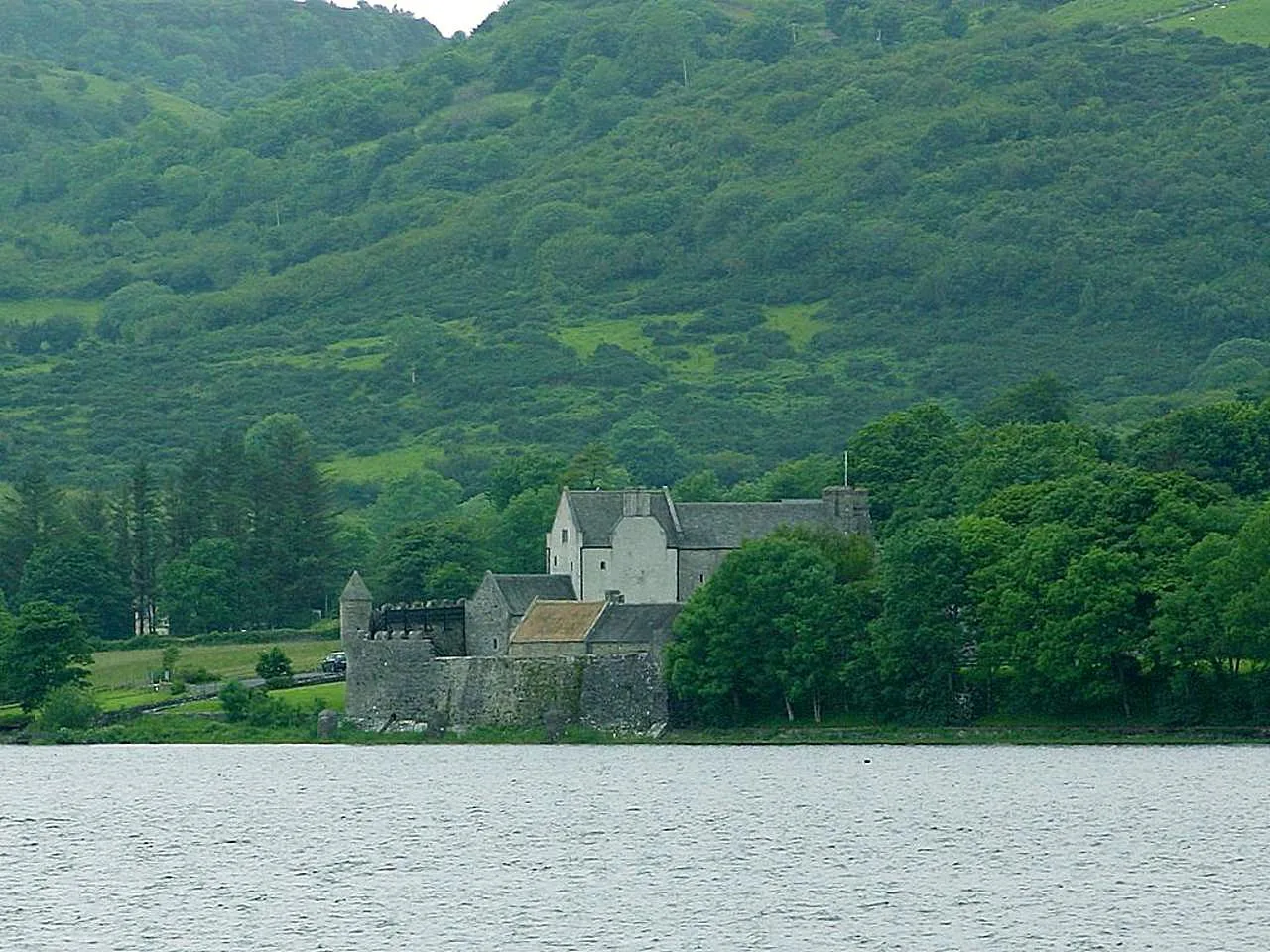
The castle occupies a striking setting on the northern shore of Lough Gill, in County Leitrim rather than County Sligo, even though Sligo town is the nearest practical base for many visitors. Heritage Ireland presents it as a restored castle of the early seventeenth century and identifies Robert Parke, an English planter, as its occupant. Approach it as an OPW heritage property with a courtyard core, not as a bare ruin to be wandered at will.
For orientation, the operator publishes a downloadable social guide aimed at first-time visitors, which is worth reading before you travel if you want to know what to expect on arrival. Use it alongside the site page rather than instead of it, since practical notices can change with the season.
Two Castles in One Footprint
The layered history is the reason this site rewards a slower look: Robert Parke's manor was raised on ground previously occupied by a tower house belonging to Sir Brian O'Rourke, lord of West Breifne. One independent account describes the manor as built directly over the O'Rourke tower house after the crown confiscated the family's lands, and reports that excavation in the 1970s exposed the earlier foundations in the courtyard. Treat that account as third-party description, but it explains why the yard is the most revealing part of the visit.
Heritage Ireland describes the standing building simply as early seventeenth century, while the independent outlet dates the manor to the 1630s; both are bounded descriptions rather than a single measured construction date. What matters for a visitor is the sequence: Gaelic tower house first, planter's fortified house second, ruin and later restoration third. Set against the wider story of medieval castles in Ireland, the instructive contrast is between a structure built for a Gaelic lord and one built to secure confiscated land; Roscommon Castle is one nearby OPW example of a castle with a different, later medieval story. If you want more sites of this kind to compare, our guide to castles in county galway covers four more with current access details.
O'Rourke of West Breifne: The Gaelic Story the Site Keeps
Heritage Ireland records that O'Rourke resisted crown rule, fled Ireland, and ended up in the hands of Queen Elizabeth's forces, tried and hanged at Tyburn after imprisonment in the Tower of London. The operator page does not give the year of execution, so anyone repeating a specific date should attribute it to the secondary account that supplies it rather than assume it comes from the official record. The fragment about an English governor calling him the proudest man then living is best read as a contemporary verdict quoted for effect, not as neutral biography.
This is the interpretive core of the site: the courtyard foundations mark a lordship displaced by plantation, not merely an older building phase. Visitors who skim the exhibition and go straight to the lake view miss the point of the place. Read the O'Rourke material before walking the courtyard so the exposed stone footings have meaning when you reach them.
Decline, Drowning and Restoration
Heritage Ireland notes that two of Robert Parke's children drowned on the lake in 1677, after which the castle fell into disrepair; it was not restored until the late twentieth century, when traditional Irish oak and craftsmanship were used. That long gap between decline and restoration explains the mixed character of the fabric today. Read the restoration as a conservation and interpretation project rather than an attempt to fake an untouched original.
The independent outlet adds that the restoration used locally quarried Leitrim sandstone and Irish oak, and was carried out to stabilise and explain the building; it also says the house passed out of the Parke family and decayed over two centuries. Those details are that outlet's account rather than operator-confirmed statements, but they are consistent with the exposed foundations and mixed masonry you encounter. Knowing this in advance prevents disappointment if you expected a fully furnished historic house.
Inside the Courtyard and Exhibition Rooms
The most specific description of the courtyard interior comes from the independent outlet, which reports a paved courtyard entered through a three-storey gatehouse, ground-floor rooms holding period furnishings and dioramas, and a reconstructed thatched forge showing how the estate and local community worked. It also describes exposed O'Rourke foundations, a dry moat once fed from the lake, a pigeon tower and dovecotes in the bawn walls, and a reconstructed well. These are useful cues for what to look for, but they are a third party's description rather than an operator inventory.
The same account mentions a twelfth-century sweathouse on the site, which it likens to a medieval sauna, and distinguishes it from a souterrain. If your interest is in earlier stonework rather than the planter's house, that structure and the courtyard footings are the elements to prioritise. Set your expectations by the scale of the site: it is a courtyard and a modest exhibition, not a large country house.
Arriving by Water: The Dated Wednesday Boat
The operator page publishes a dated notice for a Rose of Innisfree boat tour that departs from Doorly Park Jetty in Sligo, describing a Wednesday service with a crossing to the castle and a guided tour after docking. Because that notice is dated from 1 July 2026, it should be treated as a seasonal, date-specific arrangement rather than a permanent timetable. Confirm sailing directly with the operator before you build a day around it.
The independent outlet gives corresponding times of roughly 10.30am from Sligo, a short tour on arrival and a return to the jetty around 1.30pm, and stresses that the service runs on Wednesdays only. That is a real constraint: if the boat is the reason for your visit, a different day means a different plan. Driving gives you more control over timing and lets you combine the castle with nearby sites.
Planning the Visit: Admission and Hours to Confirm
The operator page carries an admission section and opening-times notices, but the extracted notices are truncated, so they cannot be quoted here as a complete timetable; check the current season, last admission time and any restrictions on the operator's own page before travelling. The independent outlet lists its own admission figures and seasonal hours, which are helpful as a planning estimate but not an official statement. Treat any charge or closing time you read elsewhere as needing confirmation at the desk or by phone.
One practical step is to allow more time than the building alone suggests, because the courtyard, exhibition and lake setting reward slow looking. If you arrive late in the day, check the last admission time first rather than assuming the gates stay open until the advertised closing hour. This is also a sensible place to ask about guided tours on the day rather than expecting one to be running.
Access on the Ground: Road, Bus and Step-Free Limits
The independent outlet places the castle on the R286, roughly 11 km from Sligo town and 7 km from Dromahair, with on-site parking for cars and coaches and the TFI Local Link 563 between Sligo and Dromahair stopping outside. Those distances and the bus route are that outlet's description, so verify the current service before relying on it. Having your own transport removes the risk of a missed connection on a short visit.
The same account describes the ground-floor exhibition rooms, courtyard and forge as wheelchair accessible with accessible toilets, while upper floors, wall walks and uneven courtyard surfaces are not; it also says assistance dogs are welcome and other pets are not, and that photography is allowed on the grounds but needs permission inside exhibition rooms. These are third-party descriptions rather than operator-confirmed rules, so ask staff on arrival if access is critical to your visit.
Around the Castle: Building a Half-Day
The independent outlet names Creevelea Abbey a short drive away, Sligo Abbey about 9 km off and Carrowmore Megalithic Cemetery about 12 km away, which together make a plausible half-day circuit from Sligo town. Heritage Ireland's own nearby-sites panel also lists Sligo Abbey and Carrowmore, corroborating those connections. Carrowmore's passage tombs make a natural pairing with the older monuments covered in our guide to ancient sites in Ireland. This is a set of options rather than a complete list of what the region offers.
If you are touring Irish castles more broadly, Parke's Castle is unusual for showing a Gaelic foundation beneath a planter's house, which makes it a useful counterpoint to the better-known big-ticket sites. Blarney Castle draws crowds with a single famous stone, while here the draw is the excavated footprint of an earlier lordship, so the two reward entirely different kinds of attention. Keep the castle as the anchor of the day rather than an afterthought between larger stops.
Plan Your Visit
Parke's Castle is best approached as a layered site rather than a single building: read the O'Rourke story first, then walk the courtyard with an eye for the exposed foundations, and finish with the lake setting that gives the place its atmosphere. Confirm opening hours, admission and any boat sailing on the operator's page before you set out, since the published notices are date-specific and seasonal.
Allow a couple of hours on site and build the rest of the day around nearby Sligo and Leitrim sites rather than expecting the castle to fill it. If you need step-free access or are travelling without a car, check the specifics in advance instead of discovering limits at the gate.
Explore more Ireland guides
Frequently Asked Questions
What is Parke's Castle and where does it stand?
It is a restored early seventeenth-century fortified manor on the northern shore of Lough Gill in County Leitrim, built on the site of an earlier O'Rourke tower house. Heritage Ireland, which manages it, describes Robert Parke as an English planter and the castle's occupant.
Why are there two castles at Parke's Castle?
The planter's manor was built on ground previously occupied by a tower house belonging to Sir Brian O'Rourke, lord of West Breifne. An independent account reports that excavation in the 1970s exposed the earlier foundations in the courtyard, so the site reads as two building phases in one place.
Who was Brian O'Rourke and what happened to him?
He was lord of West Breifne and resisted crown rule. According to Heritage Ireland he fled Ireland, was captured by Queen Elizabeth's forces, imprisoned in the Tower of London, tried and hanged at Tyburn; the operator page does not give the year, so attribute any specific date to the source that supplies it.
Can you still see the O'Rourke tower house foundations?
An independent account describes exposed stone footings in the courtyard, uncovered during 1970s excavation. Because this is a third-party description rather than an operator inventory, check on arrival what is currently visible and interpreted.
Is there a boat from Sligo to Parke's Castle?
Heritage Ireland publishes a dated notice for a Wednesday Rose of Innisfree service from Doorly Park Jetty in Sligo, with a guided castle tour, described as running from 1 July 2026. Treat it as seasonal and confirm sailing with the operator before planning around it.
How much does it cost to visit Parke's Castle?
Admission figures appear on the operator page and on an independent outlet's page, but the operator's extracted notices are incomplete. Check the current charge on Heritage Ireland or at the desk before you travel rather than relying on a figure quoted elsewhere.
Is Parke's Castle wheelchair accessible?
An independent account describes the ground-floor exhibition rooms, courtyard and forge as wheelchair accessible with accessible toilets, while upper floors, wall walks and uneven courtyard surfaces are not. These are third-party descriptions, so confirm the details with staff if access is essential to your visit.
What else can you visit near Parke's Castle?
Named nearby options include Creevelea Abbey, Sligo Abbey and Carrowmore Megalithic Cemetery, the latter two appearing on both Heritage Ireland's nearby-sites panel and the independent outlet's account. These are options for a half-day circuit, not a complete list of the region's sites.
Sources
You might also like



Continue reading
More guides you'll find useful





