
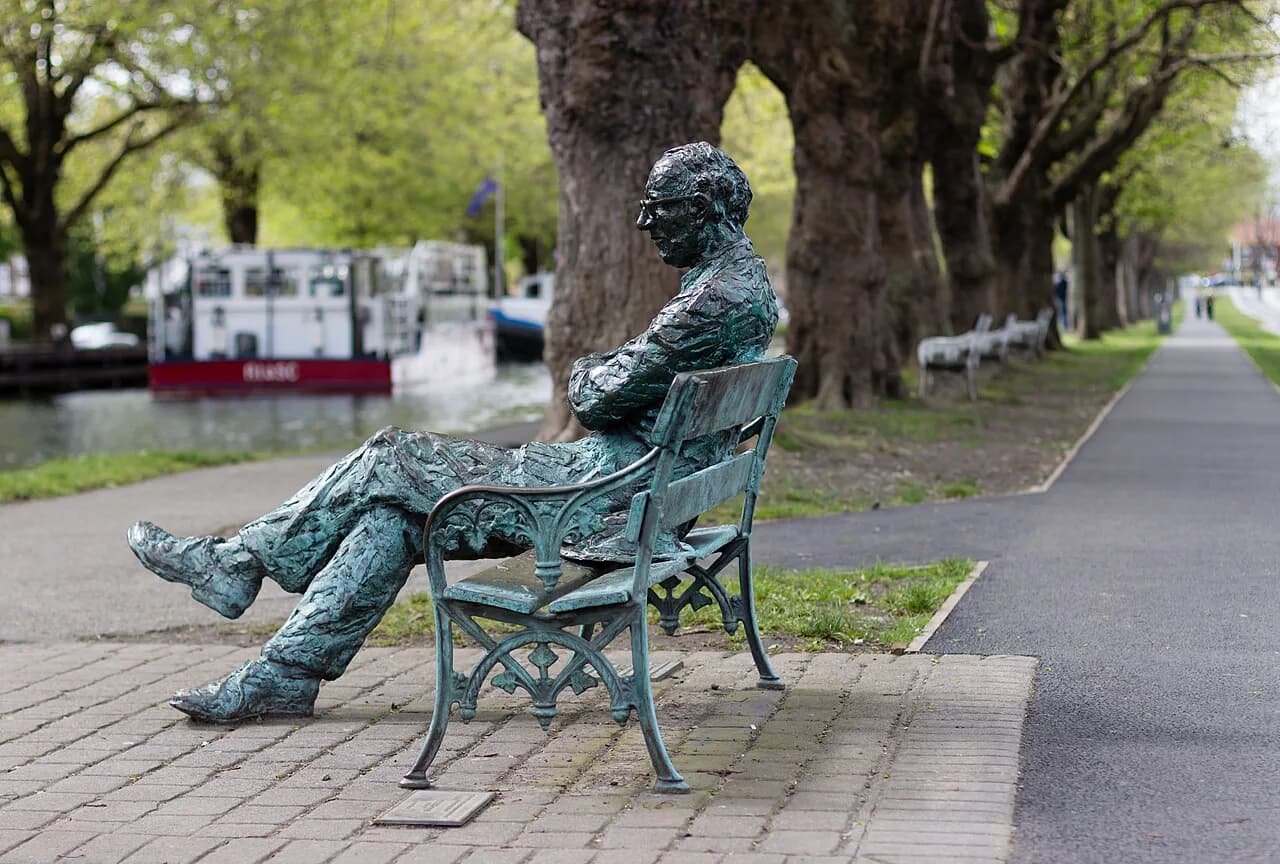
Patrick Kavanagh Centre, Inniskeen: What to See and How to Visit
The Patrick Kavanagh Centre in Inniskeen tells the poet's story inside a former church, with his grave nearby and tours of the Monaghan landscape.
On this page
The Patrick Kavanagh Centre is in Inniskeen, County Monaghan, and tells the poet's life through an exhibition housed in the former St Mary's church. As of 23 October 2026 the centre's own website carries a closure notice, so the building cannot presently be entered.
The same notice states that the centre reopens to the public on Tuesday 27 October, though no outside body has confirmed that date. Anyone planning a journey around that time should treat the published date as the operator's stated intention rather than a guarantee. It is worth checking before setting out, because the church, the exhibition and the grave sit in a small village where a wasted trip is hard to salvage.
Where the Centre Sits in Inniskeen
Inniskeen lies in County Monaghan, and the centre is the village's literary anchor, drawing its identity from the poet born there in 1904. The building sits within the village itself, so a visit can combine the exhibition with a walk through the streets Kavanagh knew. The centre frames the surrounding Monaghan landscape as inseparable from the poetry, a point that becomes clearer once you are standing in it.
At the time of writing the site's closure notice takes precedence over everything else on the page. Because reopening dates can shift, confirm the status directly with the centre rather than assuming the stated date will hold. The centre publishes a phone number and email for enquiries, and a quick call is the most reliable way to check before travelling.
The Former St Mary's Church
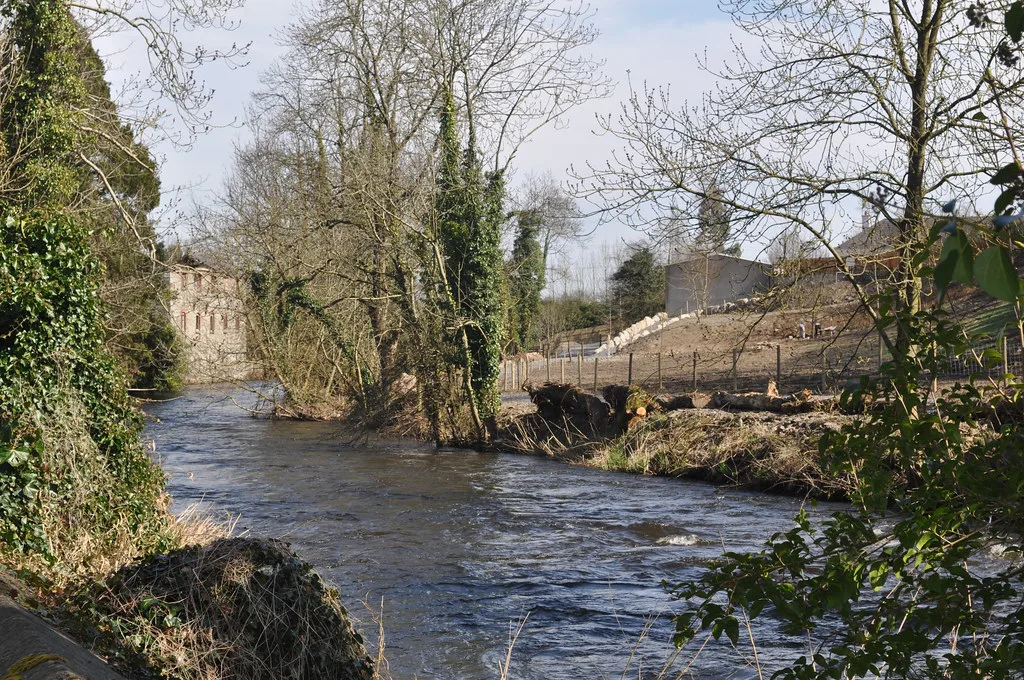
The centre occupies a former Roman Catholic church, St Mary's, which dates from 1820 and was deconsecrated in 1974 when a new parish church was built. Kavanagh was baptised here, attended regular Mass and served as an altar boy in his youth. The building also appears in his novel Tarry Flynn and in the semi-autobiographical The Green Fool, so the fabric of the place is woven into the writing rather than merely housing it.
That history gives the visit an unusual quality: you are not walking through a purpose-built museum but through a deconsecrated parish church whose associations predate the exhibition by more than a century. The contrast between ecclesiastical architecture and modern interpretation cases is part of what makes the centre distinctive. Readers who enjoy that layering of sacred building and literary collection may also find the wider literary heritage of Ireland a useful context for planning. Those planning a wider heritage itinerary through the region can set the centre alongside the ancient sites in Ireland covered in our separate guide.
Inside the Exhibition
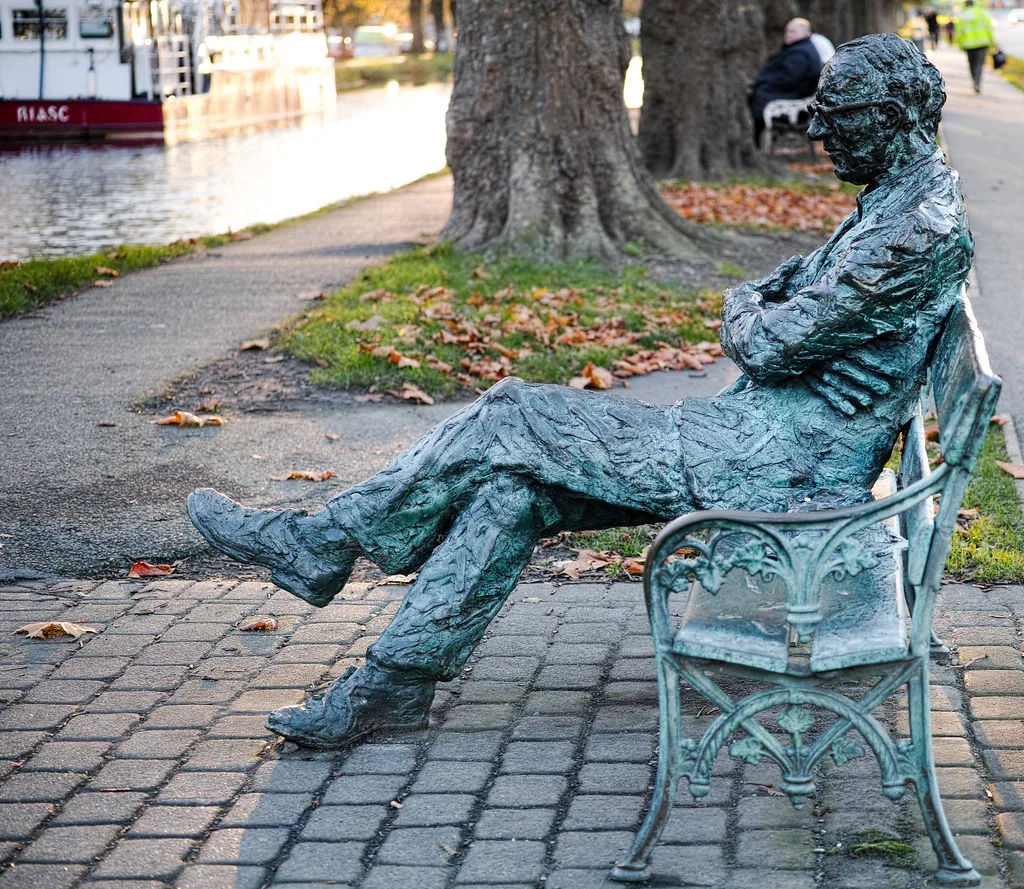
The exhibition traces the stages of Kavanagh's life and the development of his craft using artefacts, multimedia, text and film alongside touchscreens, memory boxes, letters and early twentieth-century ephemera. The combination suits a poet whose work is rooted in ordinary rural life, because the objects and documents connect the writing to the world that produced it. The centre describes the exhibition as sitting at the heart of the refurbished building, which sets expectations for a focused rather than sprawling display.
Because the displays mix interpretative media with original material, allow enough time to read rather than simply pass through. Visitors who know the poems will find the biographical thread easier to follow; those new to Kavanagh can use the exhibition as an introduction before reading further. The experience is self-guided, so the pace of the visit is yours to set.
Kavanagh's Grave and the Churchyard
Kavanagh is buried in the churchyard adjoining the former church, and the grave is part of the same compact site as the exhibition. The centre lists those buried with him as his wife Katherine Moloney Kavanagh, his brother Peter and his sisters Anne and Mary, so the churchyard is a family plot as much as a literary monument. Visitors should treat it as a working cemetery and behave accordingly, keeping voices low and paths clear.
The guided tour option includes a visit to the grave along with a short tour of Inniskeen village, which puts the churchyard in its local setting rather than treating it in isolation. Standing in a small churchyard beside the building where the poet was baptised gives the poems a specific geography that a book cannot. Those with a broader interest in writers' graves will find useful context in the guide to the W B Yeats grave at Drumcliffe.
Landscape, the Kavanagh Trail and the Poetry Jukebox
The Monaghan landscape that shaped Kavanagh, with its lanes, triangular fields and whitethorn hedges, has changed little according to the centre's own description, and this landscape is the setting for the Kavanagh Trail. The centre presents the trail as a way of walking in the poet's footsteps through the drumlin country of County Monaghan. The River Fane and its Poetry Jukebox feature in the guided and deluxe tour offerings, giving the landscape a listening dimension as well as a walking one. Readers who enjoy literary landscapes can compare the treatment of other Irish settings in the wider literary Ireland collection, or look at how the ancient sites in Ireland sit within the same countryside.
The deluxe guided tour extends further, using a bus along the trail to reach the Kavanagh Homestead and Billy Brennan's Barn as well as the Poetry Jukebox and the exhibition. These places are presented as elements of the centre's own tour offering, and the centre does not publish independent access arrangements for them, so treat them as part of an organised visit rather than a free-standing walk. That distinction matters for anyone planning their own itinerary.
Ways to Visit and What They Cost
The centre publishes three experiences with prices: the self-guided Patrick Kavanagh Experience at ten euros per person, with children under seven free; a guided tour at fifteen euros per person, requiring a minimum of five paying participants and adding the grave and a short village tour including the Poetry Jukebox by the River Fane; and a deluxe guided bus tour at twenty euros per person with a minimum of ten participants, subject to bus availability and with discounts for larger groups.
Booking for the guided options runs through the centre's phone number or email, both published on the experiences page. Smaller parties should note the minimum numbers, since a couple cannot simply book the guided tour and expect it to run. These figures are published as standard rates, and travellers should confirm them with the centre given the current closure notice.
Collections and the Gift Store
The Kavanagh Craft Collection brings together work by three Monaghan designer makers: textile designer and handweaver Liz Christy, fused glass artist Grace Brennan and batik artist Louise Loughman. Each made pieces inspired by Kavanagh's poetry and by the drumlin landscape, with woven textiles, glass designs and silks carrying words of poetry. The result is a collection with a genuine local provenance rather than generic museum merchandise.
A separate commission for the centre's reopening went to the local artist Kate Beagan, whose artwork INNOCENCE is displayed in the centre. Six greeting cards from her designs each pair a Kavanagh poem with an image, and they are sold through the online store or the centre's gift shop. The gift store also stocks Kavanagh's poetry and prose, including Tarry Flynn and The Green Fool, plus cards based on his poems and a craft collection by local makers.
Practical Planning and the Current Closure
The operator's plan-your-visit page publishes opening times of Monday to Friday from ten in the morning until five in the afternoon, closed on bank holidays and Saturdays, with the exhibition box office closing at a quarter past four. Those hours are the standard published schedule and are governed by the current closure notice, which takes precedence until the centre confirms it has reopened.
Because the centre is currently closed, the practical step is to check its status before making plans rather than relying on the weekday hours alone. The reopening date given on the website is the operator's own statement, and confirming by phone removes the uncertainty. Visitors combining Inniskeen with other stops in the region should build in that check rather than treat the centre as a guaranteed part of the day, and the same caution applies to opening arrangements when comparing castles in county galway.
Plan Your Inniskeen Visit
The Patrick Kavanagh Centre compresses a great deal into a small Monaghan village: a deconsecrated church linked to the poet's childhood, an exhibition built from documents and media, a family grave in the adjoining churchyard and a landscape that fed the poems. Its guided options, at published rates with stated minimum numbers in the centre's own experiences listing, add the village and trail to the exhibition visit.
The overriding consideration for now is the closure notice on the centre's own website and its stated reopening on 27 October. Confirm before travelling, and if the timing does not work, the landscape and the churchyard setting remain part of the village visit while the building stays shut. For a broader sense of how Ireland's writers are interpreted at heritage sites, the Blasket Centre offers a useful comparison.
Explore more Ireland guides
Frequently Asked Questions
Is the Patrick Kavanagh Centre open right now?
As of 23 October 2026 the centre's own website carries a closure notice stating that it is currently closed and will reopen to the public on Tuesday 27 October. That reopening is the operator's stated intention and has not been confirmed by any outside body, so check directly with the centre before travelling.
Where exactly is the Patrick Kavanagh Centre?
It is in Inniskeen, County Monaghan, in the former Roman Catholic church of St Mary's. The building dates from 1820 and was deconsecrated in 1974, and Kavanagh's grave lies in the churchyard adjoining it.
What can you see inside the exhibition?
The exhibition covers the stages of Kavanagh's life and the development of his poetry through artefacts, multimedia, text and film, together with touchscreens, memory boxes, letters and early twentieth-century ephemera. It occupies the refurbished former church at the heart of the village.
Is Patrick Kavanagh buried at the Centre?
He is buried in the churchyard adjoining the former church, alongside his wife Katherine Moloney Kavanagh, his brother Peter and his sisters Anne and Mary. The guided tour option includes a visit to the grave and a short tour of Inniskeen village.
Do you need a guided tour, and what do the options cost?
The centre publishes a self-guided exhibition visit, a guided tour and a deluxe guided bus tour; the two guided options charge higher per-person rates and require minimum numbers of paying participants, and children under seven go free. Current prices and minimums are listed on the experiences page of the centre's own website, and rates should be confirmed given the closure. Booking runs through the centre's published phone number or email.
What is the Kavanagh Trail?
The centre describes the trail as a way of walking through the Monaghan lanes, triangular fields and whitethorn hedges that shaped Kavanagh's poetry. The deluxe guided tour uses a bus along the trail to reach the Kavanagh Homestead and Billy Brennan's Barn, and the centre does not publish independent access arrangements for these places.
What can you buy at the Centre?
The gift store stocks Kavanagh's poetry and prose, including Tarry Flynn and The Green Fool, cards based on his poems, and the Kavanagh Craft Collection by Liz Christy, Grace Brennan and Louise Loughman. The Kate Beagan greeting cards, each paired with a Kavanagh poem, are sold online or in the shop, and her artwork INNOCENCE is displayed in the centre.
What are the opening hours?
The operator publishes hours of Monday to Friday, ten in the morning to five in the afternoon, closed on bank holidays and Saturdays, with the exhibition box office closing at 4.15pm. Those times are currently governed by the closure notice, so confirm before travelling.
Sources
You might also like



Continue reading
More guides you'll find useful



