
Glebe Gallery and Garden: Derek Hill House Visitor Guide
Plan a visit to Glebe Gallery and Garden, Derek Hill's Regency house near Letterkenny, with its art collection, woodland garden and nearby Donegal sites.
On this page
Glebe Gallery and Garden is the former home and studio of the painter Derek Hill, a Regency house set in woodland gardens near Letterkenny in County Donegal. Hill lived and worked there from the 1950s until the 1980s, then presented the house to the Irish state together with his art collection, so a visit combines period interiors, a garden and a small gallery rather than a single exhibition room.
The site suits travellers interested in twentieth-century collecting, domestic design and garden settings, and it works best as a deliberate stop rather than a quick roadside pause. Before you set out, check the Heritage Ireland listing for the current admission arrangements and opening times for the house and garden; that check is the single most important planning step for this site.
The House: An 1828 Regency Building Near Letterkenny
The house itself dates from 1828 and is described by Heritage Ireland as an elegant Regency building set in woodland gardens near Letterkenny. That date matters for reading the interiors: the rooms are a nineteenth-century domestic shell that Hill later furnished and used, so you are looking at a historic house adapted to a collector's tastes rather than a purpose-built museum.
The operator presents the house as Hill left it, decorated with William Morris textiles and furniture of oriental design. For a visitor, the practical consequence is that the rooms reward slow looking at surfaces, fabrics and furnishings rather than a checklist of framed works. Allow time to read the rooms as an interior, not to hurry from one object label to the next.
Derek Hill's Collection and How the Rooms Are Presented
According to the Heritage Ireland page, Hill's collection includes hundreds of works, with named artists such as Pablo Picasso, Georges Braque, Louis le Brocquy and Auguste Renoir, plus pieces from Japan and the Islamic world. Treat that as a description of the collection's range rather than a guaranteed display list; if a specific artist is the reason for your trip, ask about current displays when you confirm opening details.
Hill's identity as a painter and collector is the thread that ties the rooms together: he lived and worked here from the 1950s until the 1980s before handing the property and its contents to the state. That combination of a working artist's home and a personal collection is what distinguishes the Glebe from a conventional county museum, and it is the reason the interior presentation carries as much weight as any individual picture. If you enjoy comparing how small Irish collections are presented, our Galway heritage guide covers comparable museum stops on the west coast.
The Woodland Garden and the Studio Gallery
The garden is woodland rather than formal, and the operator page frames the whole property as a house in woodland gardens near Letterkenny. Plan the outdoor element as a walk that surrounds the house rather than a separate botanical attraction, and judge for yourself how long to give it against the time you have for the interiors.
Hill's studio adjoins the house and has been converted into a modern gallery that hosts changing exhibitions. This is the part of the site most likely to differ between visits, so treat the historic rooms as the constant and the studio as the variable. If you are travelling specifically for an exhibition, confirm what is showing before you go.
Read the site as three elements in sequence: the 1828 house and its collection, the woodland garden, and the studio gallery. That structure helps you decide how much time to give each and prevents the common mistake of arriving expecting one gallery building and finding a domestic collection spread through rooms.
Practical Decisions Before You Travel
The Heritage Ireland listing should be your first stop for admission arrangements and opening times before you travel. Check it close to your travel date, since a house of this kind can vary its access with staffing and season, and note that the site's restrictions section is the place to confirm rules on dogs and assistance animals.
Pair the house with a broader reading of Irish cultural collections if that is your main interest; a stop like this works well within a themed trip, and our guide to literary Ireland shows how writer and artist interiors fit into a wider itinerary. Keep the Glebe as a half-day anchor and build the rest of the day around what is genuinely open when you travel.
Donegal Castle: A Town-Centre Counterpart
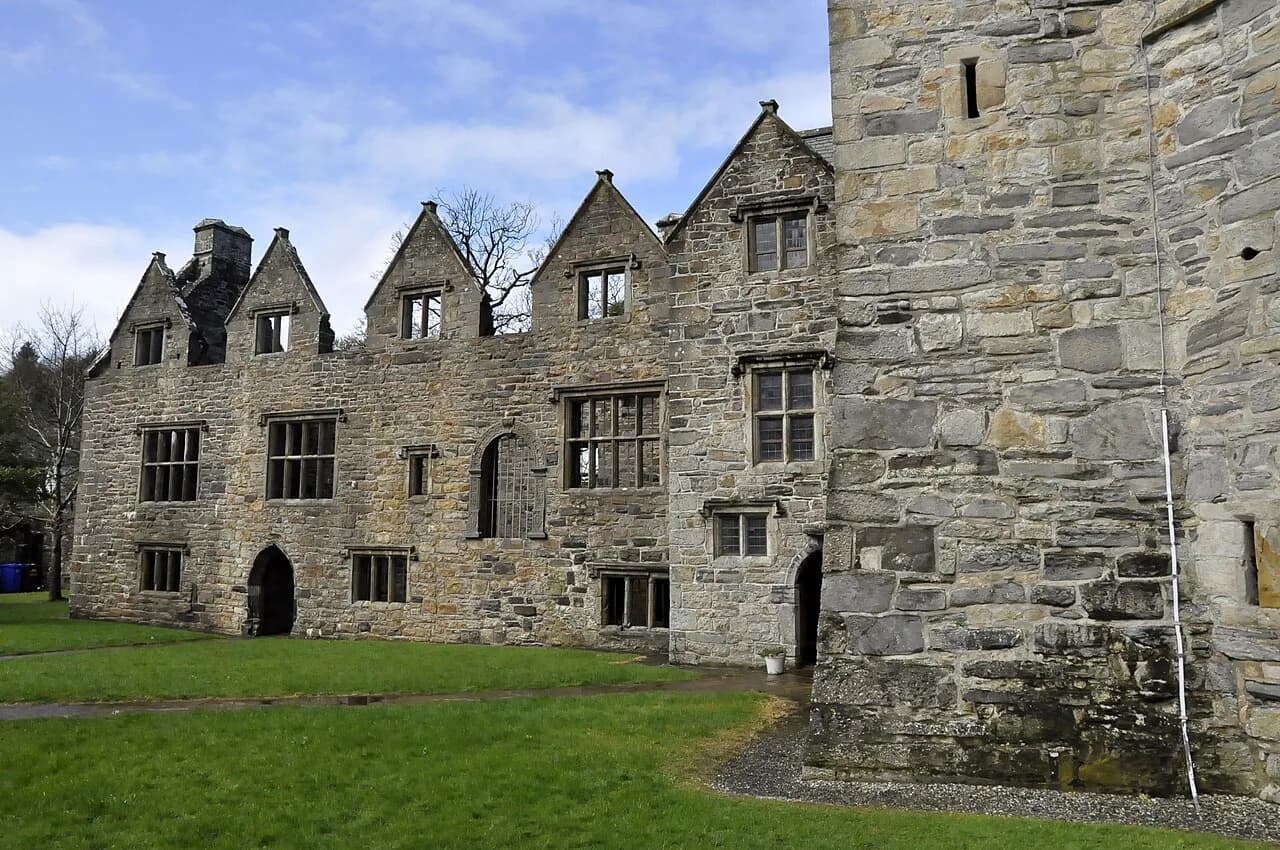
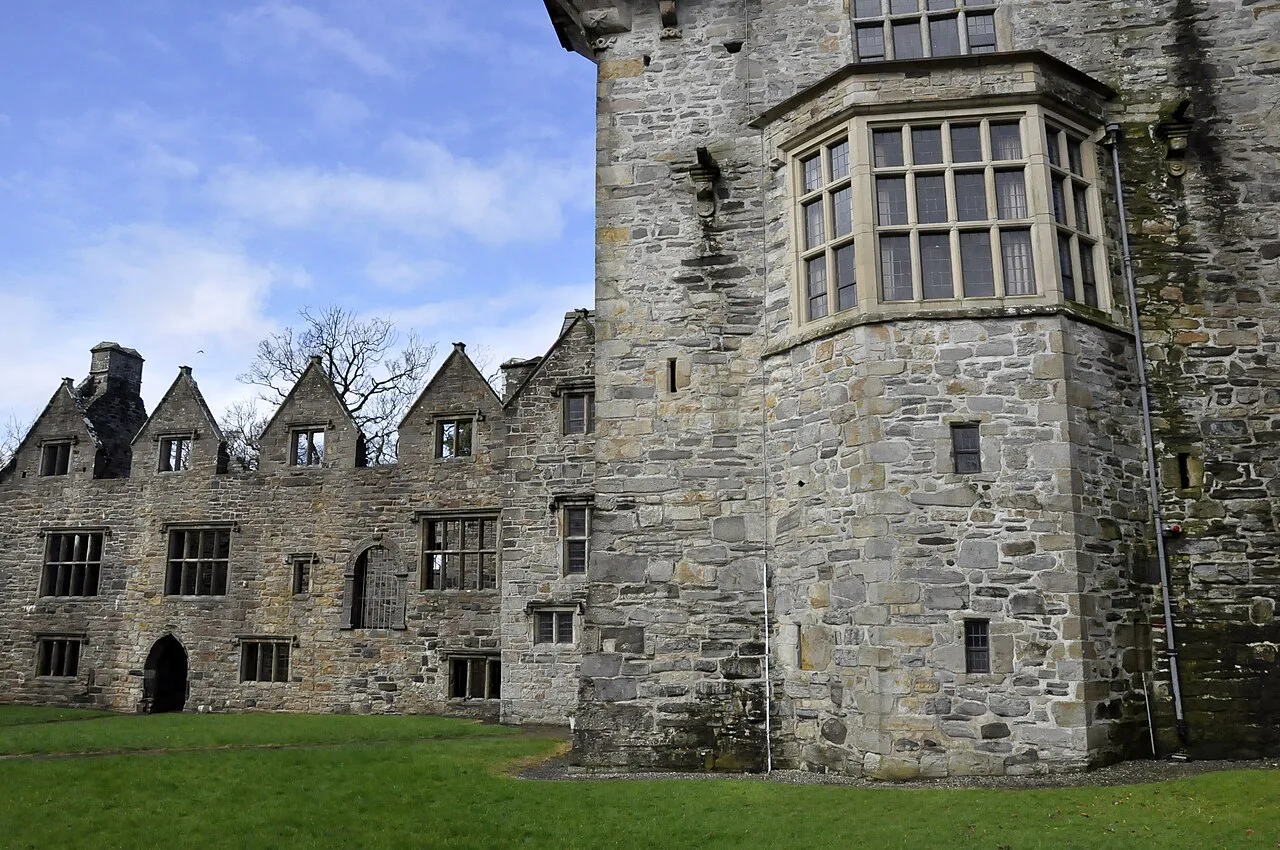
Donegal Castle stands in the centre of Donegal town above the River Eske, and Heritage Ireland attributes its fifteenth-century tower to Red Hugh O'Donnell. Sir Basil Brooke became lord in 1616 and added a manor house and a carved chimney-piece bearing his coat of arms; the complex fell into ruin in the twentieth century and was restored in the 1990s, with information panels now explaining its owners.
The operator page lists daily opening from 9:00 to 17:00 with last admission at 16:15, card payment accepted, guided tours as a facility rather than a fixed schedule, and limited access; confirm the hours again before relying on them. Donegal Castle is an operational site with published daily hours, so it can anchor the day while you confirm the Glebe's own admission and hours separately.
Doe Castle: Grounds, Keep and the Appointment Rule
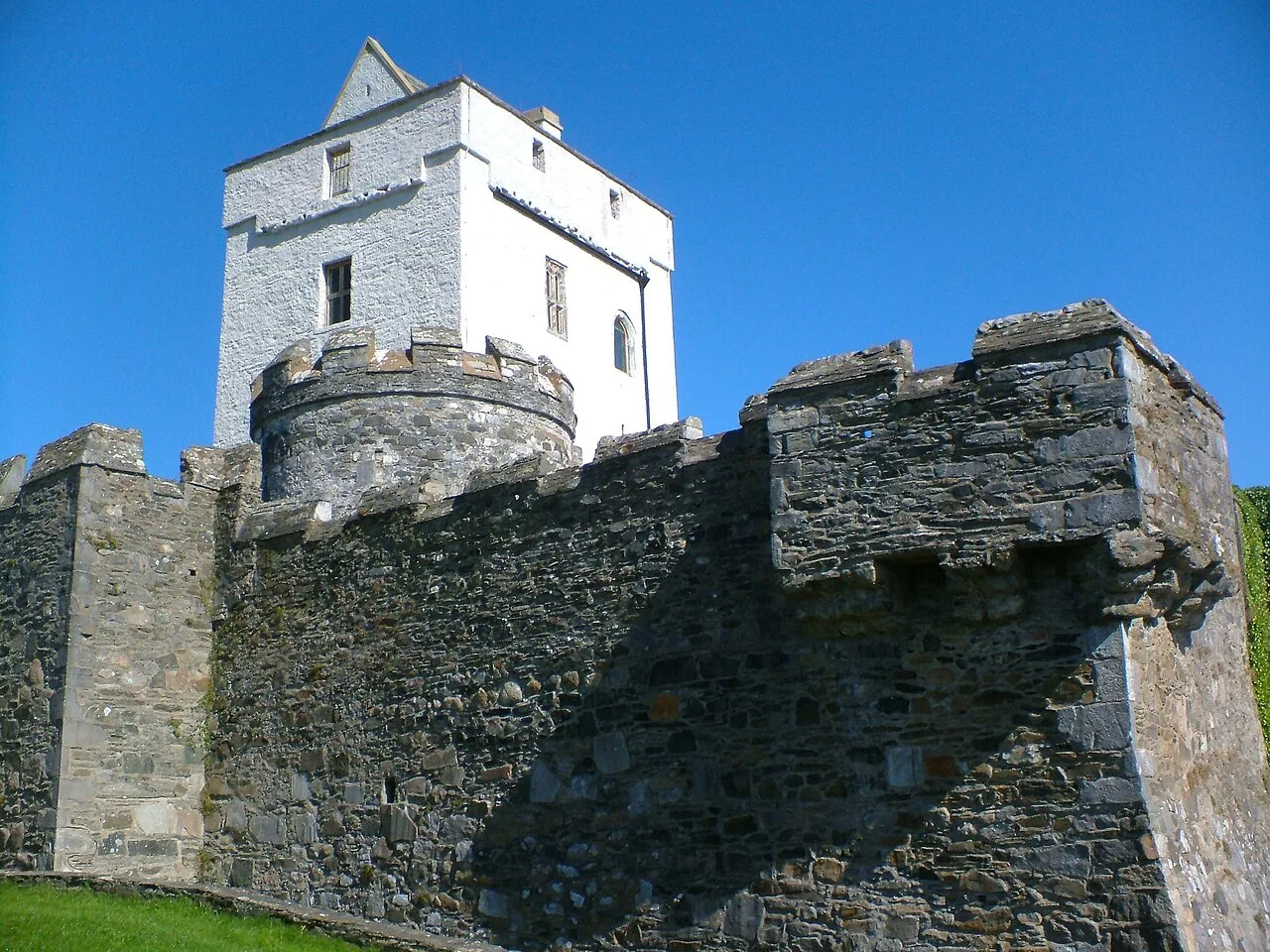
Doe Castle sits on the shoreline of Sheephaven Bay off the R245 between Carrigart and Creeslough, and Heritage Ireland dates the MacSweeney stronghold to the 1420s, when it served at least thirteen chiefs over roughly two centuries. The page records that a MacSweeney chief sheltered survivors of the 1588 Spanish Armada there, and that the last chief marched with Red Hugh O'Donnell to the Battle of Kinsale in 1601; a carved MacSweeney grave-slab of 1544 is displayed inside the tower house.
Access is the key distinction. There is no OPW visitor centre, the grounds are free and open daily all year, and guided tours of the keep are by appointment only through the email address on the operator page, with cancellations required 48 hours ahead. The page also notes a car park and limited access. Do not turn up expecting to walk into the keep; plan the grounds as the reliable element and treat the interior as something to arrange in advance.
Newmills Corn and Flax Mills: A Seasonal Stop
Newmills Corn and Flax Mills, a short trip from Letterkenny, traces the technology behind Ulster's linen economy and later food trade. Heritage Ireland describes a Victorian flax mill at the core of the complex, a corn mill grinding barley, oats and imported maize, and expansion to include a public house, a scutcher's cottage and a forge, with the working waterwheel among the largest in the country.
Its opening is seasonal: the operator page gives a 2026 season of 16 May to 02 October, daily 10:00 to 18:00 with last admission at 17:15, which means the site is closed as of late October 2026. Treat those dates as a past-season pattern rather than a promise of next year's calendar, and check the page for a new season before planning around it. The page lists a car park, exhibition, toilets, a wheelchair-accessible toilet, uneven walkways and assistance dogs only.
Combining the Sites: Distance Clues and Separate Checks
The Heritage Ireland pages give approximate kilometre figures between nearby sites rather than drive times, and these help you judge combinations. The Glebe page places Newmills about 10.3 km away, Doe Castle about 14.8 km and Donegal Castle about 41 km, while the Newmills page puts Doe at roughly 23.2 km and Donegal Castle at about 36.1 km. Use them as rough spatial clues and check routes yourself rather than treating them as schedules.
Each site has its own access rule: confirm the Glebe's admission and hours on its listing, note Donegal Castle's published daily hours and last-admission cut-off, remember that Doe Castle's grounds are open but its keep needs an appointment, and expect Newmills to follow a seasonal calendar. If you want a wider set of comparable castle visits elsewhere in the country, our castles in county galway guide offers a different regional frame, but do not assume any of these Donegal sites share one opening pattern.
A sensible default is to hold the Glebe as the anchor once you have confirmed admission and hours, add Donegal Castle for a verified open stop with published daily hours, hold Doe Castle's grounds for a weather-friendly coastal walk with the keep booked ahead if wanted, and keep Newmills for a future season. That sequencing respects the access differences rather than forcing three sites into a single day.
Plan Your Visit
The Glebe Gallery and Garden rewards travellers who treat it as a house, a garden and a studio in one, with Derek Hill's collection as the thread through the rooms. Confirm admission and opening arrangements on the Heritage Ireland listing before travelling, and ask about current displays if a particular artist matters to you.
Build the surrounding day around verified access: Donegal Castle for published daily hours, Doe Castle for free year-round grounds with the keep booked ahead, and Newmills only when a new season has been announced. If your interests run toward literary collections as well as artist interiors, the Blasket Centre, Dún Chaoin shows how another Irish cultural collection handles its setting, and it makes a useful benchmark for what the Glebe does differently.
Explore more Ireland guides
Frequently Asked Questions
What can you see at the Glebe Gallery and Garden?
The site combines Derek Hill's 1828 Regency house, woodland gardens and an adjoining studio converted into a gallery for changing exhibitions. Inside the house, the operator describes rooms as Hill left them, furnished with William Morris textiles and oriental furniture, alongside his collection.
Is the Glebe Gallery the same as Derek Hill House?
Yes. Heritage Ireland lists the property as Glebe Gallery and Garden – Derek Hill House, and the painter lived and worked there from the 1950s until the 1980s before presenting the house and collection to the state.
Are the Picasso and Renoir works always on display?
The operator page names painters such as Picasso, Braque, Louis le Brocquy and Renoir among Hill's collection, but a collection description is not a display guarantee. Ask about current displays when you confirm your visit, and treat the studio gallery's changing exhibitions as a separate element.
Can you tour the keep at Doe Castle without booking?
No. The grounds are free and open daily all year, but guided tours of the keep are strictly by appointment through the email address on the Heritage Ireland page, and cancellations must be advised 48 hours in advance. There is no OPW visitor centre on site.
Is Newmills Corn and Flax Mills open in late October?
The operator page gives a 2026 season of 16 May to 02 October, so the site is closed as of late October 2026. Do not assume the same dates for other years; check the Heritage Ireland page for a new season announcement.
Do you need to check opening details before travelling?
It is worth confirming each site before you travel. Donegal Castle publishes daily hours with a last-admission time, Doe Castle's keep is by appointment only while its grounds are open daily all year, and Newmills runs to a seasonal calendar. Confirm the Glebe Gallery and Garden's admission and hours on its own Heritage Ireland page.
Sources
You might also like



Continue reading
More guides you'll find useful





