
Lady Gregory in Ireland: Coole Park and the Abbey Theatre
Trace Lady Gregory across Ireland at Coole Park's Walled Garden and Autograph Tree, and at the Abbey Theatre she co-founded.
On this page
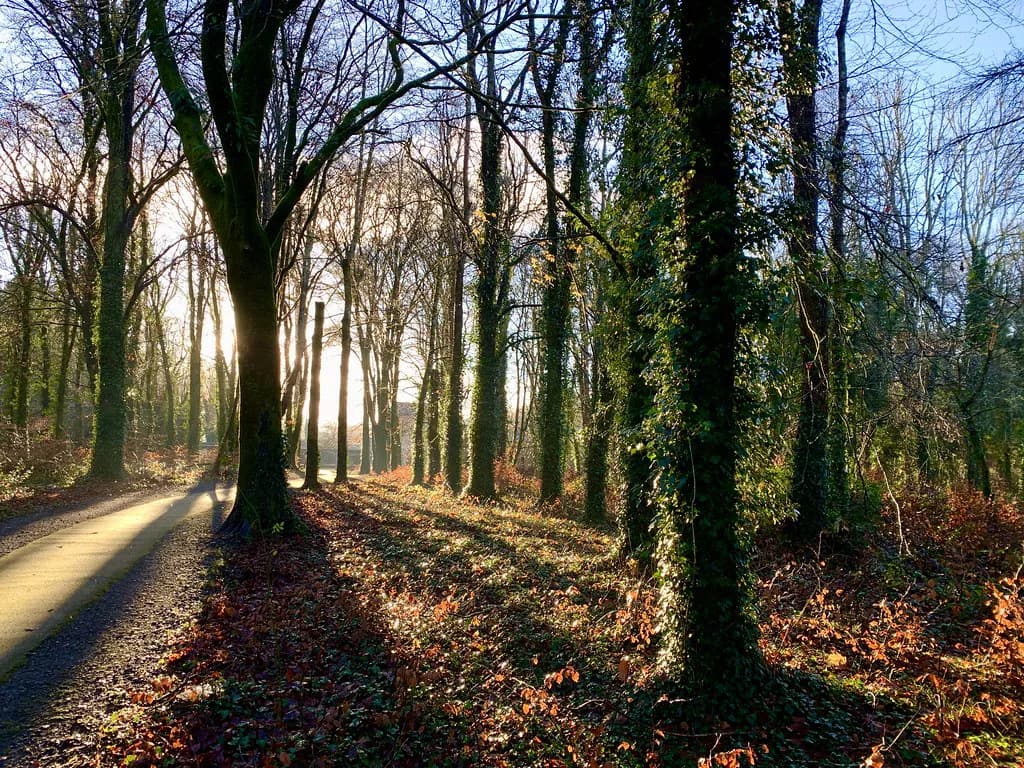
Lady Gregory's Ireland is best read as a landscape and a stage rather than a house. At Coole Park in County Galway, the Georgian mansion she lived in was demolished in 1941, but the walled garden, the copper beech known as the Autograph Tree and the surrounding woods remain. In Dublin, the Abbey Theatre carries the institutional legacy of the company she helped create.
The practical point for a visitor is that Coole rewards an outdoor visit, while the Abbey rewards advance planning. Neither is a museum of her belongings: one is a nature reserve with literary associations layered onto trees and walls, and the other is a working theatre with a research archive that must be booked ahead.
Why Lady Gregory Still Matters in Ireland
Isabella Augusta Persse was born at Roxborough House in 1852 and married Sir William Gregory of Coole in 1880; the Kiltartan Gregory Museum notes he was thirty-five years her senior. Widowed in 1892, she turned to editing, folklore collecting and translation, learning Irish and drawing on stories from local speakers around Coole and Kiltartan.
Her public significance rests on three activities that still have addresses you can visit: she collected and translated folklore, she wrote plays, and she co-founded the theatre company that became Ireland's national theatre. Coole Park's own history page describes her as a dramatist, folklorist and co-founder of the Abbey Theatre with W.B. Yeats and Edward Martyn.
For travellers working through Irish writers, she is a useful anchor because her story connects a rural Galway estate to a Dublin institution. The same Revival generation reaches forward to later poets such as Seamus Heaney, whose own landscapes of place and memory make a rewarding sequel to a Coole visit.
Coole Park: The Estate She Married Into
Coole was acquired by Robert Gregory in 1768 after his service with the East India Company, per the park's own history, and stayed with the Gregory family until 1927, when it was sold to the Irish State. Lady Gregory was living there at the time of the sale and was permitted to remain. The house she knew was demolished in 1941, so there is no interior to tour today.
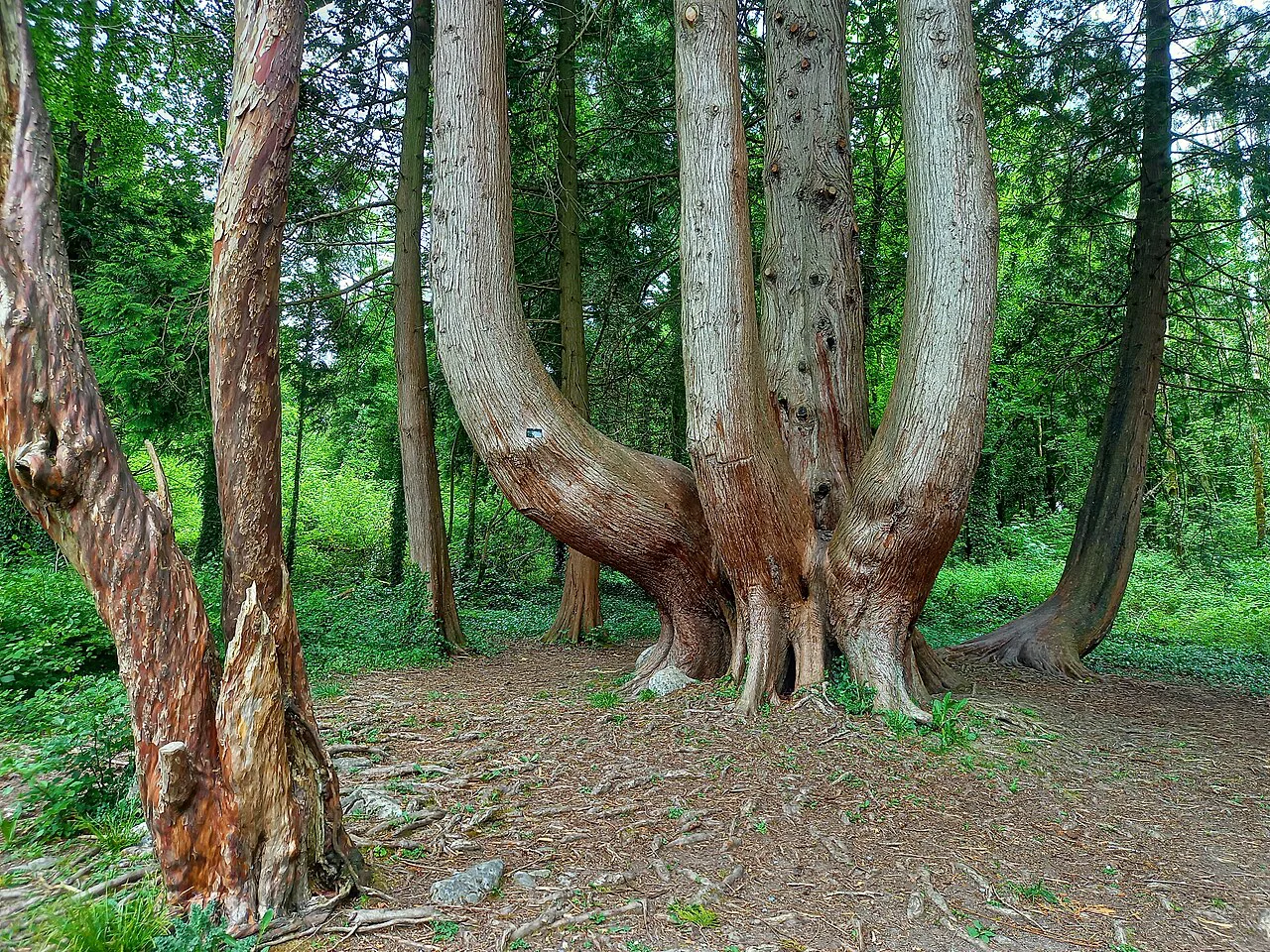
The demesne itself was heavily planted across generations, including a pinetum of exotic conifers completed in 1856. Some of those trees survived the limestone soil and can still be seen, which is why a walk here reads as a layered arboretum as much as a literary shrine. Since 1987 the reserve has been managed by the National Parks and Wildlife Service for conservation and public amenity.
Lady Gregory made Coole a gathering point for the Irish Literary Revival, drawing writers who came to talk, plan and work. The park's own page records that George Bernard Shaw once described her as the 'greatest living Irishwoman'. Treat that as an attributed compliment rather than a ranking, and let the surviving grounds carry the visit.
The Seven Woods and Yeats
Yeats first came to Coole in 1897 in a state of exhaustion and was nursed back to health by Lady Gregory, according to the park's literary connections page. He returned repeatedly, and the woods and water of the demesne became recurring material in his poetry. The phrase Seven Woods is now a way of naming that literary landscape rather than a formal botanical category.
Walking the grounds with that in mind changes what you notice: the woods, the turlough system and the remaining tree plantings matter more than any single monument. The park's history page describes the turlough complex as among the finest in the world, which is a reminder that the ecological interest stands on its own. Readers who want to follow Yeats further can use the irish poets pages on this site as a companion.
Synge, by Lady Gregory's own account as quoted by the park, spent his time at Coole in the woods rather than on the roads, while Sean O'Casey learned tree names from her as they walked. Those anecdotes are best treated as period colour, not as a route map. The value of the walk is atmospheric and historical rather than waymarked to individual poems.
Walled Garden Walk and the Autograph Tree
The walled garden covers roughly 1.8 hectares and was the part of Coole Lady Gregory loved most. Its high walls sheltered tender plants and hothouses, and a row of upright Irish yew still stands where the vineries were. Remains of the hothouses now serve as a covered seating and picnic area, which makes the garden a natural pause on a longer walk.
In 1898 Lady Gregory asked Yeats to carve his initials into a mature copper beech, and over the following decades other guests were invited to add theirs. The tree became known as the Autograph Tree. A plaque at its base helps visitors identify carvings, because the bark has been healing over the wounds and many signatures are faint.
Other features reward a slow circuit. A marble bust of Maecenas, brought from Italy in the early nineteenth century, stands against the eastern wall, and an analemmatic sundial sits behind the yews. A Catalpa said to be favoured by Lady Gregory was replaced by her grand-daughters in 1995.
Reading the Signatures on the Beech
The named signatories include Sean O'Casey, George Bernard Shaw, Jack B. Yeats, John Millington Synge, John Masefield and Augustus John, alongside Douglas Hyde under his pen name and Lady Gregory herself. Several names are listed on the park's page without a carving date, so avoid assuming they were all cut on the same occasion, or that each person carved unaided.
The honest trade-off is legibility. A copper beech grows, and the tree's own healing process obscures history faster than any curator could prevent. Go expecting to read a few marks clearly and to infer the rest from the plaque and the recorded list, and the visit will be more satisfying than hunting for every signature.
The Vanished House: Landscape as the Visit
Visitors sometimes arrive at Coole expecting a Big House experience and are surprised to find open ground instead. The mansion was demolished in 1941, and Coole was opened for public amenity use in the late 1960s. What you experience now is a designed landscape: trees, walls, water and the traces of a garden economy.
The old stables and outbuildings were restored and converted into a visitor centre and café that opened in 1992. That adaptive reuse is itself part of the estate story, but it is not a substitute for the house, and the visitor centre is currently closed under the NPWS water-supply notice discussed below. Plan your time around the walled garden and the woods, and treat any indoor space as unavailable until that closure is lifted.
The Abbey Theatre: From Literary Theatre to Opening Night
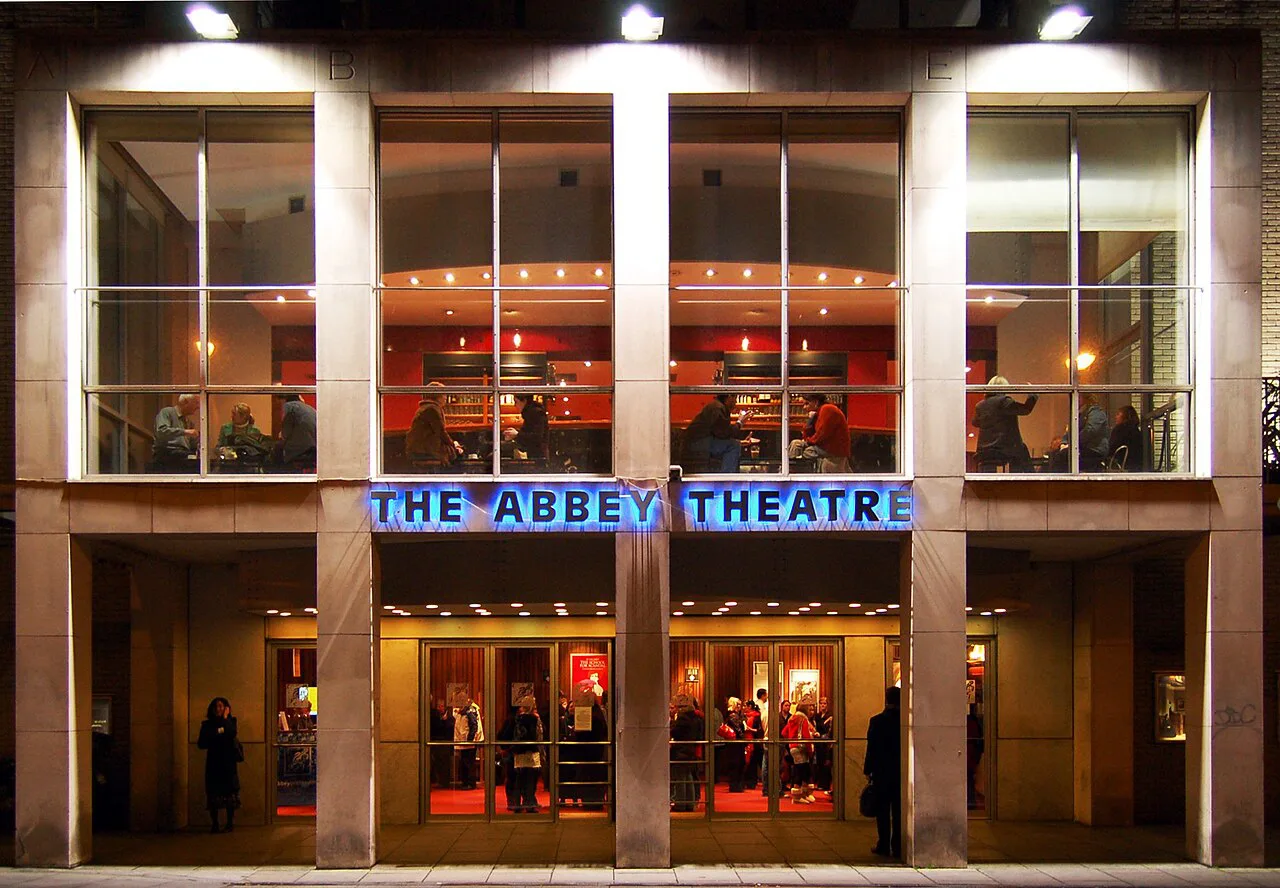
Lady Gregory, Yeats and Edward Martyn founded the Irish Literary Theatre in 1899; the Abbey Theatre opened on 27 December 1904 with a programme that included Gregory's Spreading the News. Annie Horniman's patronage paid for the conversion of the Mechanics Institute building on Abbey Street.
The theatre's subsequent history is inseparable from the Revival: Synge's Playboy caused riots in 1907, and O'Casey's The Plough and the Stars provoked another disturbance in 1926. A fire damaged the original buildings in 1951, and the company moved back to a new building on the same street in 1966. The address you visit today is therefore modern even though the institution is not.
Attending a performance is the simplest way to encounter the theatre as a working institution. It is a separate activity from archive research, which requires booking, and anyone planning a literary trip around Dublin can pair an evening here with the city's other writer-focused walks such as James Joyce's Dublin.
Abbey Archive and Research Access
The Abbey Theatre Archive holds posters, programmes, photographs, lighting plans, set and costume designs, scripts and administrative records, with a major digitisation project run jointly with NUI Galway. Minute books from the theatre's founding in 1904 through to 1939 are among the transcribed records.
Research visits are not walk-in. Records on and off site are made available by appointment, booking well in advance is advised, and staff ask researchers to flag their subject areas beforehand. Photographic ID, and sometimes a university letter of introduction, may be requested.
On-site research appointments run Monday to Thursday in two blocks, morning and afternoon. Confirm current arrangements with the archivist before travelling, and if your interest is a particular production or the Gregory correspondence, say so in your first email so material can be prepared.
Practical Access at Coole Park
As of 29 May 2026, a water supply interruption has closed the Coole Park Visitor Centre, Cobblestone Café and toilet facilities, and no reopening date has been published. The notice does not say the reserve as a whole is shut, so check the NPWS notice before travelling and plan around the possibility that indoor facilities are unavailable on the day you arrive.
That makes the walled garden and woods the dependable focus of a visit, but do not count on indoor shelter or toilets while the closure stands. Build a day around the outdoor grounds rather than the exhibition or café, and check the NPWS notice again shortly before you travel for any change in status.
Coole is in County Galway, and visitors assembling a wider Galway itinerary often pair heritage landscapes with castle sites. Our guide to castles in county galway covers a different kind of monument and works well as a contrast rather than a substitute.
Biography Context and the Gregory Family
The Kiltartan Gregory Museum page is a useful companion for family chronology: Lady Gregory's son Robert was born in 1881, died in Italy in 1918 while serving with the Royal Flying Corps, and is buried in Padua. She died on 22 May 1932 and is buried at Bohermore Cemetery in Galway, which is covered in our Bohermore, Galway: A Historic Approach Road and Its Cemetery guide.
The museum page gives no opening hours or admission details, so check directly before building it into a day. Use it for context on her marriage, widowhood and writing career, not as a source of visitor logistics.
Read alongside the Coole Park pages, the biography explains why the estate mattered so much to her. She wrote of the woods as her care and comfort, and that sentiment is easier to understand when you are standing in the walled garden among the yews rather than reading it in isolation.
Plan Your Visit
Plan Lady Gregory's Ireland in two parts. Give Coole Park the better part of a day so the walled garden, Autograph Tree and woods can be walked properly, and check the water supply notice before setting out so you know whether café and toilet facilities are available.
Then reserve a separate Dublin day for the Abbey Theatre, either as an audience member or, if you have a research purpose, as a booked archive visitor. Following the thread from a copper beech in Galway to a theatre on Abbey Street gives you a clearer picture of the Revival than either site does alone.
Explore more Ireland guides
Frequently Asked Questions
Where in Ireland can I see places connected to Lady Gregory?
The two strongest places are Coole Park in County Galway, where the walled garden and woods she loved survive, and the Abbey Theatre in Dublin, which she co-founded. The Kiltartan Gregory Museum supplies biographical context; check its opening arrangements directly before visiting. Coole's mansion was demolished in 1941, so the experience is an outdoor landscape rather than a house tour.
Can you visit Lady Gregory's house at Coole Park?
No. The house at Coole was demolished in 1941, and there is no interior to visit. What remains is the designed landscape: the walled garden, the Autograph Tree, the yew walk and the woods. Plan the visit as a walk rather than a museum tour, and check the current status of the visitor centre before travelling, since it is presently closed under the NPWS water-supply notice.
What is the Autograph Tree at Coole Park?
It is a mature copper beech in the walled garden. In 1898 Lady Gregory asked W.B. Yeats to carve his initials into the bark, and later guests were invited to add theirs, including Shaw, Synge and Jack B. Yeats. A plaque at the base helps identify the carvings, though many are faint because the bark heals over time.
Is the Coole Park Visitor Centre open?
No. A National Parks and Wildlife Service notice dated 29 May 2026 states that the visitor centre, Cobblestone Café and toilets are closed due to a water supply interruption, with no reopening date published. The notice does not close the reserve itself, but with indoor facilities shut, plan on the garden and woods being the reliable part of the visit and check the NPWS notice before travelling.
How do I research Lady Gregory at the Abbey Theatre archive?
The Abbey Theatre Archive is open to researchers by appointment only, and booking well in advance is recommended. Advise the archivist of your areas of interest beforehand; photographic ID and sometimes a university letter of introduction may be requested. On-site research appointments run Monday to Thursday in morning and afternoon blocks. Confirm current arrangements directly before making travel plans.
Sources
- History - Coole Park Nature Reserve
- Literary Connections - Coole Park Nature Reserve
- Walled Garden & Autograph Tree - Coole Park Nature Reserve
- Interruption to water supply at Coole Park | National Parks & Wildlife Service
- Lady Gregory | kiltartan-gregory
- History - Abbey Theatre
- Archive - Abbey Theatre
You might also like



Continue reading
More guides you'll find useful




