
James Joyce's Dublin: Literary Places to Visit and How They Connect
Trace James Joyce's Dublin through named literary landmarks, from Newman House and the National Library to Sandycove and Glasnevin, with practical walking context.
On this page
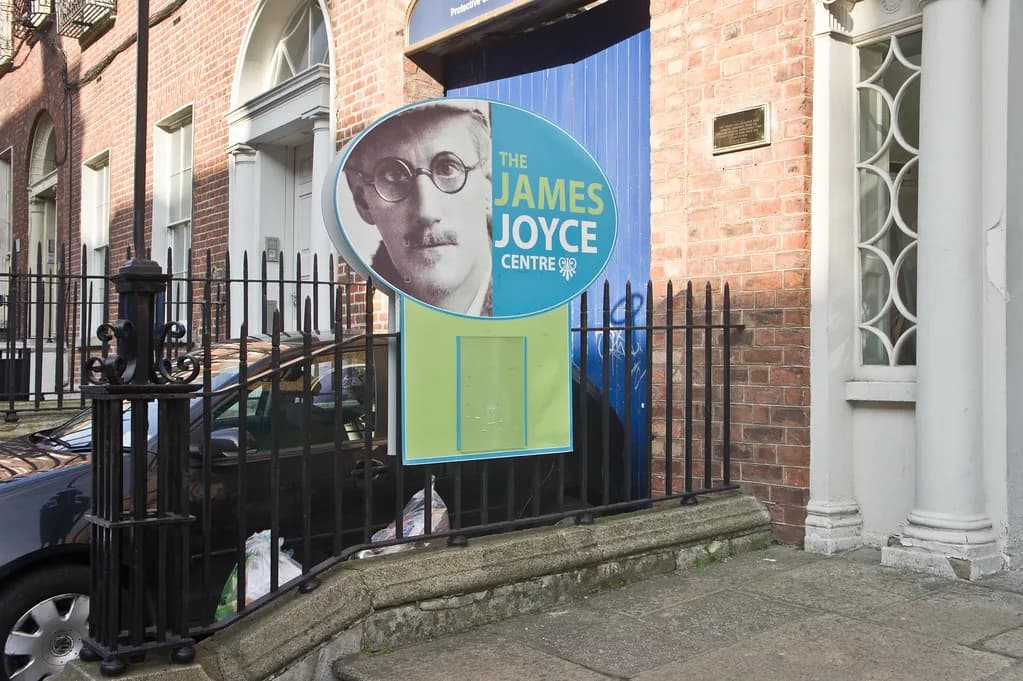
James Joyce's Dublin is not a single museum or trail but a scatter of named places across the city centre, the northside and the coast, each tied to his writing rather than to a formal exhibition. The James Joyce Centre on North Great George's Street is the sensible first stop, in part because its own site sets out a place-by-place selection of associated locations. From there you can build a walking plan around what you actually want to see.
Treat this as a geography, not a ranked itinerary. Some entries are institutions you can enter, others are streets, bridges and strands that function as literary settings, and at least one is an address in a novel rather than a place to knock on a door. Knowing which is which saves a wasted afternoon.
Why Dublin Is the Subject of the Writing
Joyce was born in Rathgar in 1882 and studied at University College Dublin, and although he spent much of his adult life abroad, Dublin remained the focus of nearly all his major work. The James Joyce Centre's own account of his Dublin notes his remark that the city could be reconstructed from his book, which is a useful way to understand why so many real streets appear in the fiction. That framing, rather than a full biography, is the context worth carrying with you.
The practical consequence is that Dublin reading and Dublin walking reinforce each other. A bridge or a library means more when you know it sits inside a book you have half-remembered, and the city itself supplies the scale and distances the prose assumes. You do not need to have finished Ulysses to follow the geography.
For readers who want to widen the frame beyond one writer, the same city holds a dense literary layer worth exploring in parallel. The wider overview of irish writers helps place Joyce among contemporaries and successors rather than alone.
Start at the James Joyce Centre on North Great George's Street
The James Joyce Centre sits near the centre of Dublin, which makes it a workable orientation point before a day on foot. Its site presents an exploration of Joyce-related Dublin locations, from the National Library and Newman House to Glasnevin Cemetery and Sandymount Strand, laid out place by place rather than as a fixed route. Use it to choose two or three clusters rather than to tick off every entry.
Opening arrangements are the one detail worth confirming before you travel, since they change with staff and season. Even where a Tuesday-to-Saturday scheme has been posted, treat it as a dated notice rather than a standing promise, and check the Centre's own current information in the days before you go rather than relying on any secondhand summary, including this one.
The Central Literary Core on Foot
Several of the Centre's named locations sit within a short stretch of each other: the National Library, Trinity College, Kildare Street, Westmoreland Street, Grafton Street and O'Connell Bridge. These are working city streets and institutions, not staged heritage exhibits, so the pleasure lies in reading the urban fabric as the setting it became. A loose loop between them works better than a fixed route, because you will want to stop.
The National Library on Kildare Street is a working institution as well as a literary landmark, and the area around it rewards slow walking rather than rushing between addresses. Plan the centre of your day here and let the surrounding streets fill in around it, checking the library's own site for reading-room access and exhibition arrangements.
Dublin's literary geography is crowded, and readers often pair a Joyce day with other writers connected to the same streets. A guide to samuel beckett dublin and a separate piece on oscar wilde dublin both cover figures whose city overlaps with Joyce's, which makes them useful for a longer stay rather than a substitute for this one.
Newman House and the Museum of Literature Ireland
Newman House on St Stephen's Green is the strongest single stop for combining Joyce's student years with an actual collection. Discover Ireland notes that the Museum of Literature Ireland is housed in Newman House, where Joyce studied, and that copy number one of Ulysses is displayed there. For readers interested in the book as a physical object, that is the reason to go. If you want to make a full loop of the green itself, see this St Stephen's Green, Dublin: A Victorian Park Visitor Guide.
Because MoLI is a museum with its own admissions and programme, confirm admission arrangements and current displays directly before setting aside time. The surrounding green and the Georgian streets give you a natural walking base for the central cluster either way.
North of the Liffey and North of the City
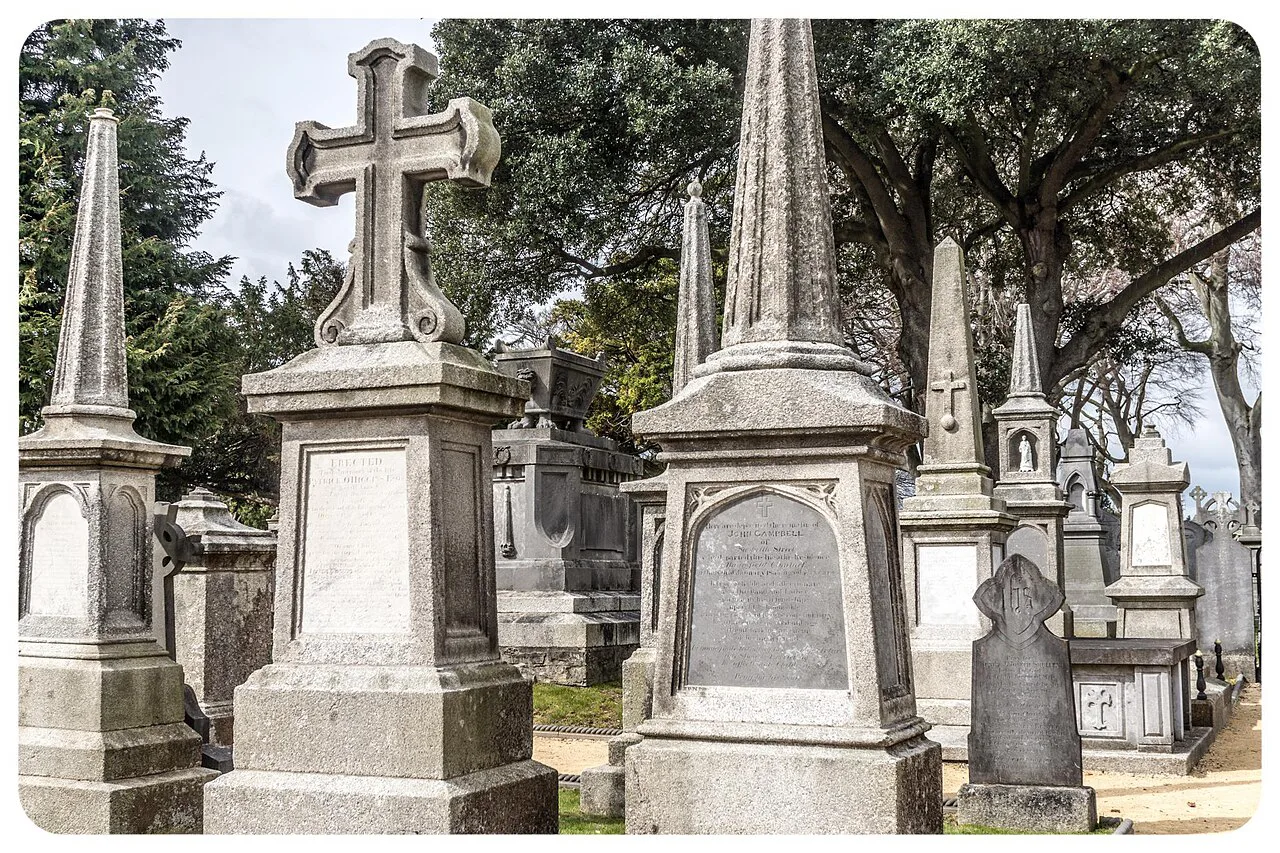
The Centre's list also crosses the river and reaches north, naming the Pro-Cathedral, the Rotunda, the Gresham Hotel and the Parnell Monument, with Glasnevin Cemetery listed separately much further north. These are working city institutions and streets rather than staged visitor exhibits, and interior access is not established for them, so read them as setting rather than as attractions. Glasnevin in particular sits well north of the central streets and is best treated as its own excursion rather than an extra stop on a lunchtime walk.
Some entries need a small correction in expectation. No. 7 Eccles Street appears in the Centre's selection as a literary location, and it should be read that way: the address belongs to the novel, and visitors should not expect to approach an original house preserved for tours. The Rotunda and the Gresham are working institutions on busy streets rather than visitor attractions in the conventional sense, while Glasnevin Cemetery is a large operating cemetery that sets its own visitor arrangements.
For a north-of-the-city day, Glasnevin Cemetery repays separate planning because of its scale and its own visitor arrangements. Check those arrangements locally rather than assuming a Joyce-themed experience on arrival.
The Coast and the Southern Shore
Sandycove and the James Joyce Tower and Museum form the most rewarding outlying stop, and the approach is straightforward. Discover Ireland describes the tower and museum as about a 14-minute walk from the DART station, which makes it practical without a car and easy to combine with a coastal hour. The walk itself is part of the visit rather than dead time between attractions.
Closer to the centre, Sandymount Strand and the Star of the Sea Church appear among the named locations, and the Royal Canal also features in the Centre's selection. These are outdoor or urban settings where the point is the place itself, so plan around weather and daylight rather than around opening times.
If your interests lean toward earlier Irish heritage, ancient sites ireland covers a different layer of the landscape entirely and pairs well with a multi-day trip rather than a single literary day.
Bloomsday and Living Tradition
Dublin marks Bloomsday on 16 June, the date celebrated in honour of Ulysses, and the city fills with readings and events around it according to Discover Ireland. If you are travelling specifically for that date, check the programme of individual venues rather than assuming any one site's plans, since events are organised separately by each host.
Outside that date, Sweny's Chemist on Lincoln Place is described by Discover Ireland as hosting daily readings from Joyce's works, which makes it a low-commitment way to hear the prose aloud in a small setting. Confirm the current reading schedule on arrival, as informal daily traditions depend on the people keeping them going.
Readers drawn to the poetic side of Irish writing will find complementary ground in the wider story of irish poets, whose Dublin haunts overlap in places with the streets described here.
Reading the Landscape Honestly
The most common mistake is to treat every name on a Joyce list as a destination with a door. Distinguish categories before you go: institutions such as the National Library and MoLI that run their own visitor operations and should be checked directly, public street and coastal settings like O'Connell Bridge and Sandymount Strand that are part of the ordinary city, and literary addresses that exist in the text rather than as visitable sites.
The second is to assume that what one source lists is everything. The Centre's page is a selection of associated locations, and other writers with strong Dublin connections sit just outside it. A guide to lady gregory ireland and a piece on seamus heaney ireland cover figures whose work and commemorations follow different geographies, useful if you want to extend a literary trip beyond a single author.
Finally, treat any published schedule as a starting point rather than a promise. Opening hours, tour times and event programmes are set by each operator and change; the responsible approach is to check the venue's own current information in the days before your visit.
Plan Your Visit
A good Joyce day in Dublin needs three decisions: which cluster you walk, whether you are going for a collection or for streetscape, and how far out you are willing to travel. The centre, Newman House and the National Library make a coherent first day, while Sandycove justifies a half-day of its own via the DART.
Leave room for the unplanned. The value of this landscape is that it is a living city, and the best moments often come from a street you did not mark on the map. Confirm the few operational details that matter, then let the walking do the rest.
Explore more Ireland guides
Frequently Asked Questions
Where should I start a James Joyce walk in Dublin?
Start at the James Joyce Centre on North Great George's Street, which sits near the city centre and publishes its own selection of Joyce-related Dublin places. Use it to pick two or three geographic clusters, then walk the central streets around the National Library, Trinity College and Kildare Street before deciding whether to cross the Liffey or head to the coast. Confirm the Centre's current opening arrangements before you set out.
Which Dublin places linked to Joyce can actually be visited?
Institutions such as the National Library, the Museum of Literature Ireland at Newman House and the James Joyce Tower and Museum at Sandycove each run their own visitor operations, so check their own current access and opening information directly rather than treating a listing as a promise of entry. Public street and coastal settings, including O'Connell Bridge, Grafton Street, Sandymount Strand and the Royal Canal, form part of the ordinary city rather than ticketed attractions. Some names on published lists are literary settings rather than visitable sites.
Is No. 7 Eccles Street open to the public?
No. 7 Eccles Street appears in Joyce's writing and on the James Joyce Centre's list of associated Dublin locations, but it is a literary address belonging to the novel rather than a preserved house presented for visitors. Treat it as part of the book's geography and do not plan a visit expecting entry or a tour.
What is there to see at Newman House?
Newman House on St Stephen's Green is where Joyce studied, and it now houses the Museum of Literature Ireland. Discover Ireland notes that copy number one of Ulysses is displayed there. Check the museum's own current information for admission and what is on display when you plan to go.
How do I reach the James Joyce Tower at Sandycove?
Discover Ireland describes the tower and museum as roughly a 14-minute walk from the DART station, which makes the train the practical way to get there without a car. Confirm the museum's own opening arrangements before travelling, and allow time for the coastal walk itself rather than treating it as pure transit.
What happens in Dublin on Bloomsday?
Dublin celebrates Bloomsday on 16 June in honour of Ulysses, with readings and events across the city according to Discover Ireland. Individual venues organise their own programmes, so check specific listings closer to the date if you are travelling for it. Outside that day, Discover Ireland describes Sweny's Chemist on Lincoln Place as hosting readings from Joyce's works, though you should confirm the current schedule with the venue.
Sources
You might also like



Continue reading
More guides you'll find useful




