
Yeats Society Sligo: Exhibition, Gallery and Building Guide
A guide to Yeats Society Sligo: the 1899 Yeats Building on Hyde Bridge, the ticketed Poetic Mind exhibition, the free Hyde Bridge Gallery and the summer school.
On this page
Yeats Society Sligo is a literary society housed in the Yeats Building on Hyde Bridge in the centre of Sligo town, where it runs its own exhibition, gallery and summer school. The key planning point is that the exhibition is seasonal: the Society listed The Poetic Mind of WB Yeats for May to the end of September 2026, so by 23 October 2026 that season had closed and the exhibition should not be assumed open.
This guide separates what carries a ticket from what is free, explains the building you are actually entering, and sets out how the summer school works for travellers who want a programme rather than a display case. Dates and prices follow what the Society publishes, and where a 2026 season has finished it is described as finished rather than presented as current.
What Yeats Society Sligo Is and Where It Sits
The Society describes itself as a company limited by guarantee and a registered charity, managed by a director with an independent board of eight people who live and work locally and give their time voluntarily. That structure explains the tone of a visit: this is a small literary organisation running its own programmes, not a large staffed museum with continuous daily opening.
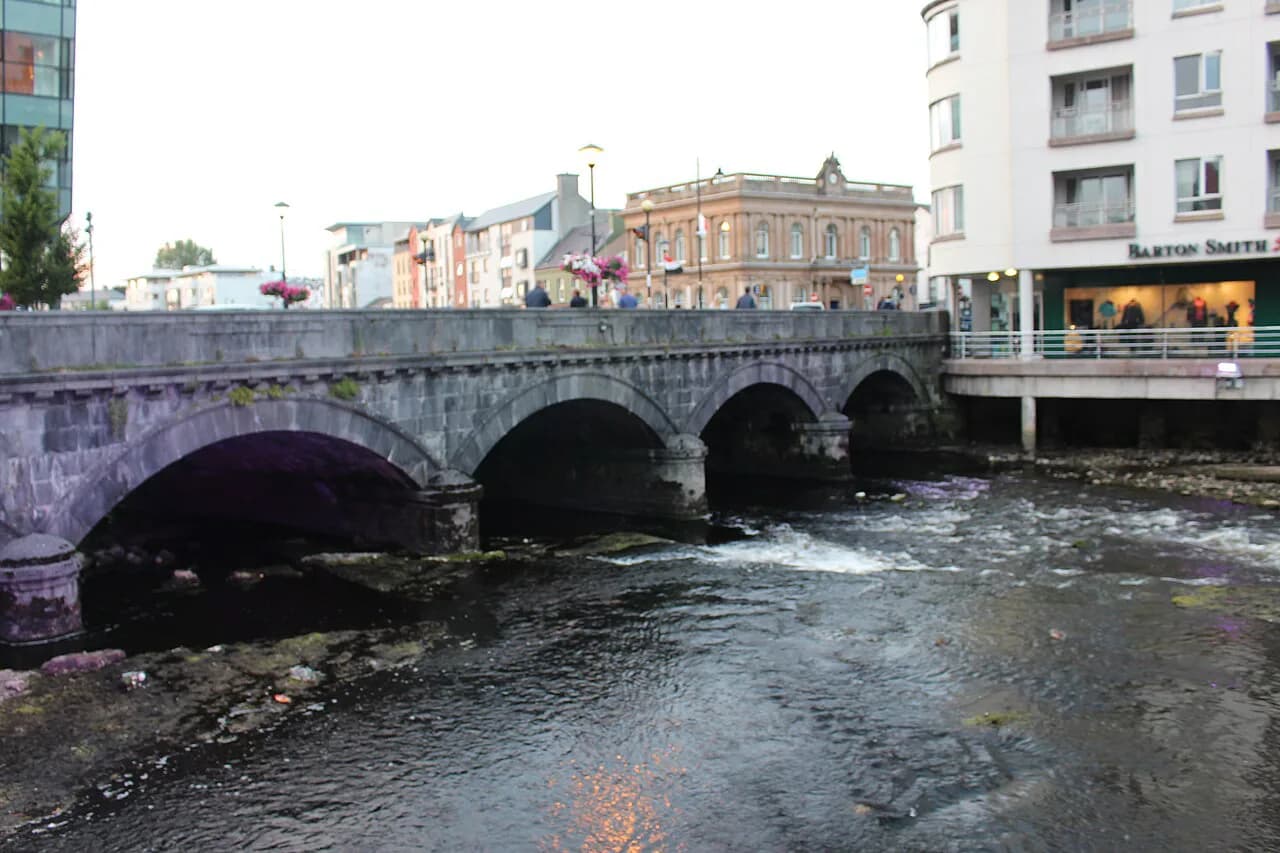
Its home is the Yeats Building in the heart of Sligo town, which the Society calls a hub for literary culture and the arts and which houses a permanent Yeats exhibition and the Hyde Bridge Gallery on the first floor. For a literary tour of Ireland more broadly, it sits naturally alongside other writer-focused stops covered in the literary Ireland guide.
The Society appointed a poet in residence for the first time in 2018, on Poetry Day Ireland, a detail worth knowing because it signals that the building is used for living literary work rather than only commemorating a dead poet.
The 1899 Yeats Building on Hyde Bridge
The building began as a branch of the Belfast Banking Company, designed in the Arts and Crafts style by the Belfast architect Vincent Craig and completed in 1899 by the Sligo builder Dennis McGlynn. The Society notes that the non-classical style was unusual for a bank, and the fabric shows it: two and a half storeys of red Belfast brick with stone detailing on an asymmetrical plan.
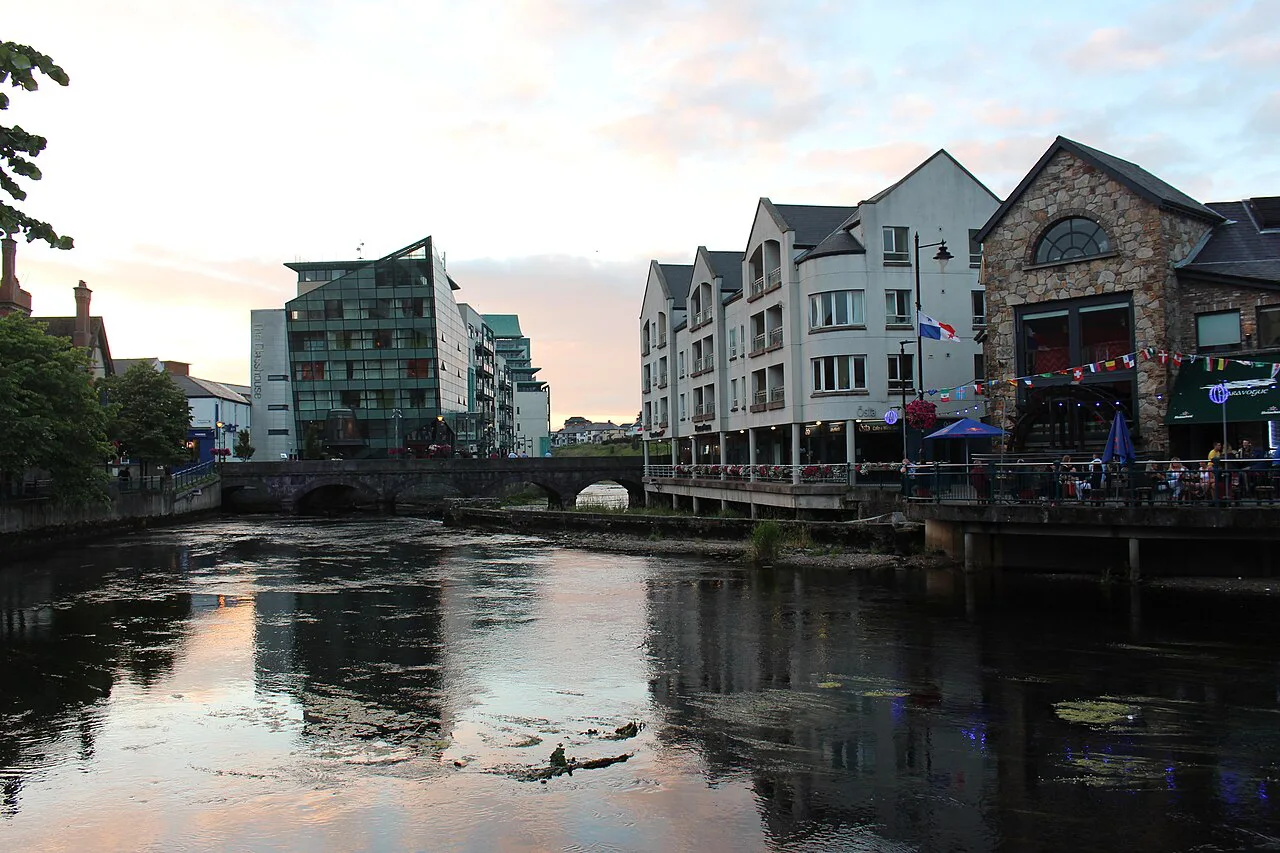
The site sits beside a bridge renamed Hyde Bridge after independence, and the bank's presence was tied to Sligo's port trade: the town was then a busy seaport, and the poet's mother, Susan Pollexfen, came from a family that owned and ran the Sligo Steam Navigation Company. Knowing that link makes the building's position by the river read as commercial history rather than backdrop.
After independence the Belfast Banking Company withdrew from the new Irish Free State and sold the business on, and the building later passed to Allied Irish Banks, which agreed a long lease to the Yeats Society in 1973. Visitors should read the exterior and the rooms as an adapted bank, since the Society does not present the building as a purpose-built museum.
The Poetic Mind of WB Yeats Exhibition
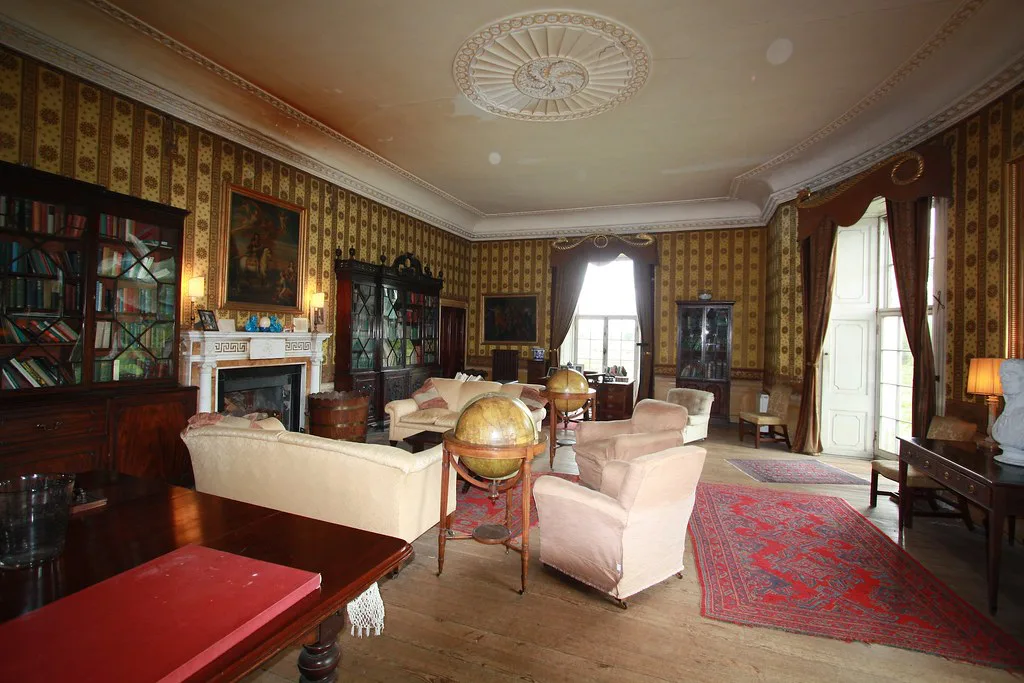
The Society's ticketed exhibition is The Poetic Mind of WB Yeats, listed for May to the end of September in 2026 with opening from Wednesday to Saturday, 11am to 3pm. That season has now closed, so treat the pattern as a dated 2026 record and confirm any later schedule directly with the Society before travelling.
The exhibition content is the Society's own presentation of the poet's life and work, so it is a different proposition from the National Library of Ireland's permanent Yeats exhibition in Dublin, which draws on the archive the Yeats family donated to the library between 1939 and 2017. Neither collection should be assumed to be the other, and the Sligo building is not described as holding the library's archive. If you are weighing the two, our Dublin heritage guide sets out the city's key sites in chronological order.
The Society warns that its exhibition space is occasionally closed temporarily for events, and says it will try to notify visitors in advance. For a traveller making a special journey during a future season, that caveat is a reason to check shortly before travelling rather than to abandon the visit.
Hyde Bridge Gallery: The Free Half of the Visit
On the first floor the Society runs Hyde Bridge Gallery, a contemporary visual arts space whose entry it lists as free, with a 2026 season from March to December on Tuesday to Saturday, 11am to 4pm. Free entry applies to the gallery, not to the Poetic Mind exhibition, so budget for one and not the other.
The gallery's programme spans a range of contemporary exhibitions, so repeat visitors see something different and first-time visitors should not expect a fixed Yeats display upstairs. Contemporary art is the draw here rather than a Yeats collection.
The two spaces keep separate schedules and separate seasons. The gallery's published 2026 season runs to December, but its daily pattern is a dated schedule rather than a standing year-round arrangement; by late October 2026 the exhibition season had already closed.
Admission and Booking Decisions
The Society's booking page lists exhibition tickets at €6 for adults, €18 for two adults and two children over 12, €10 with a talk, and €12 with a talk and library visit, with entry for children under 12 free. These are the Society's stated tiers, so ask which one applies to the day you want rather than assuming a talk is included.
Tickets can be booked online through the Society's booking engine or paid for at the door on the day, which gives you a fallback if plans firm up late. Paying at the door is the flexible choice; booking ahead makes more sense if you are tied to a specific date or want a talk.
Groups of more than eight, out-of-hours requests and tour enquiries go through the Society by email at info@yeatssociety.com or by telephone on +353 719142693. The Society asks for at least three weeks' notice on tour enquiries so it can shape the tour and match a guide, which is the main scheduling constraint for group organisers.
The Yeats International Summer School
The summer school is the Society's flagship programme, combining an academic schedule of lectures and seminars with poetry readings, tours, music and cultural events. That mix suits readers, writers and students who want structured talks and discussion rather than a walk-through display, and the Society notes that people can attend individual events rather than the whole school.
The Society's homepage announces the 67th Yeats International Summer School as taking place Wednesday 22 to Friday 31 July 2026, and by 23 October 2026 that 2026 school and its exhibition season had passed, so anyone planning around the programme should look for the next announced dates rather than reuse those. Individual event tickets were sold through a separate booking route, which is worth knowing if a full programme feels too much.
The Society thanks participants, speakers and funders on its summer school page after the most recent school, which is the place to watch for the next programme announcement.
How the Summer School Began
The school grew from an idea the Society's own history page attributes to the scholar T R Henn, with the first school launched in August 1960 and shaped by Henn alongside Nora Niland, Frank Wynne, Eileen Lambert, Jim McGarry, Tom McEvilly, Fr Tom Moran and Sheelah Kirby. The Society characterises the resulting school as the longest-running literary school in the world, a claim presented here as its own description rather than an independently verified fact.
The history page also lists an academic council and a long line of past directors drawn from universities in Ireland, Britain, the United States and beyond, which explains the school's international pull. For a visitor deciding whether to build a trip around it, that academic anchoring is the strongest argument for the programme over a general literary festival.
Founding Roots and Sligo's Port Context
The Society traces its origins to 1957, when a small group met in Sligo during the national tourism drive known as An Tostal and decided to hold a Yeats Country Festival; that festival ran on 11 to 15 May 1958 and was judged a success. The group met again on 20 May 1958 and founded the Yeats Society, Sligo, with the summer school as its stated purpose.
That founding story matters to a visit because it explains why a literary society ended up in a bank building: the town's trading wealth, including the Pollexfen shipping interest, had produced the architecture the Society later inherited. Sligo's connection to the Yeats family is commemorated elsewhere in the region too, including at the poet's grave in Drumcliff, which some travellers pair with a town visit.
The Society's honorary president is the Director of the National Library of Ireland, a link the Society announced at the opening of its 66th summer school on 24 July, reflecting a partnership rather than a transfer of collections to Sligo.
Planning a Visit to the Yeats Building
A realistic visit to the Yeats Building combines two things: a look at the 1899 bank architecture and whatever the gallery is showing, then the ticketed exhibition if it is in season. Allow a comfortable hour rather than a half day, and treat the summer school as a separate, bookable commitment if the dates suit you.
Before travelling, check the Society's own site for the current exhibition season, any temporary closure for events and the latest summer school dates, since the 2026 seasons have passed. Readers building a wider literary itinerary can compare house-based collections such as the Blasket Centre (Ionad an Bhlascaoid) for a sense of how Irish literary sites vary in scale.
If your interests run to folklore and oral tradition rather than the printed page, Irish storytelling covers that ground and complements a Sligo stop built around a poet who drew heavily on local lore.
Explore more Ireland guides
Frequently Asked Questions
Can you visit the Yeats Building outside the exhibition season?
Sometimes, but not on the strength of the exhibition alone. The Poetic Mind of WB Yeats ran on a dated 2026 season, and the free Hyde Bridge Gallery keeps its own published schedule, so the gallery may be open when the ticketed display is not. The Society also notes that its exhibition space closes temporarily for events. Check the Society's visitor page or email info@yeatssociety.com before making a special journey, and do not assume year-round exhibition access.
Is entry to Hyde Bridge Gallery free?
Yes. The Society lists entry to Hyde Bridge Gallery as free, and describes it as a contemporary visual arts space on the first floor with a changing programme of exhibitions. That free entry should not be extended to the ticketed Yeats exhibition, which is priced separately. Check the gallery's current season and daily pattern before you go, because the published 2026 dates are a dated schedule rather than a permanent one.
Do you need to book the Yeats exhibition in advance?
No. The Society offers both routes: booking online through its booking engine and paying at the door on the day. Booking ahead makes sense if you are fixed to a date or want a ticket that includes a talk, while paying at the door keeps you flexible. Group bookings of more than eight go through the Society directly, and out-of-hours requests also need to be arranged in advance.
What is the Yeats International Summer School and can individuals attend?
It is the Society's annual programme, built around lectures and seminars and supplemented by poetry readings, tours, music and cultural events. According to the Society, people who do not want the full school can attend individual events. The academic side attracts an international group of academics and students, so the programme is more substantial than a general festival. Look for the next announced dates on the Society's summer school page; the 67th school ran from 22 to 31 July 2026.
How old is the Yeats Building and who designed it?
The building was completed in 1899 to a design by the Belfast architect Vincent Craig, and built in Sligo by Dennis McGlynn. It was originally a branch of the Belfast Banking Company, which explains its unusual Arts and Crafts style for a bank, with red Belfast brick and asymmetrical planning. The Yeats Society has occupied it under a long lease from 1973, so you are visiting an adapted bank rather than a purpose-built museum.
Sources
You might also like



Continue reading
More guides you'll find useful




