
Blasket Centre, Dún Chaoin: A Visitor Guide to the Island Story
Plan a visit to the Blasket Centre at Dún Chaoin, where exhibitions tell the Great Blasket story, its writers and the 1953 evacuation.
On this page
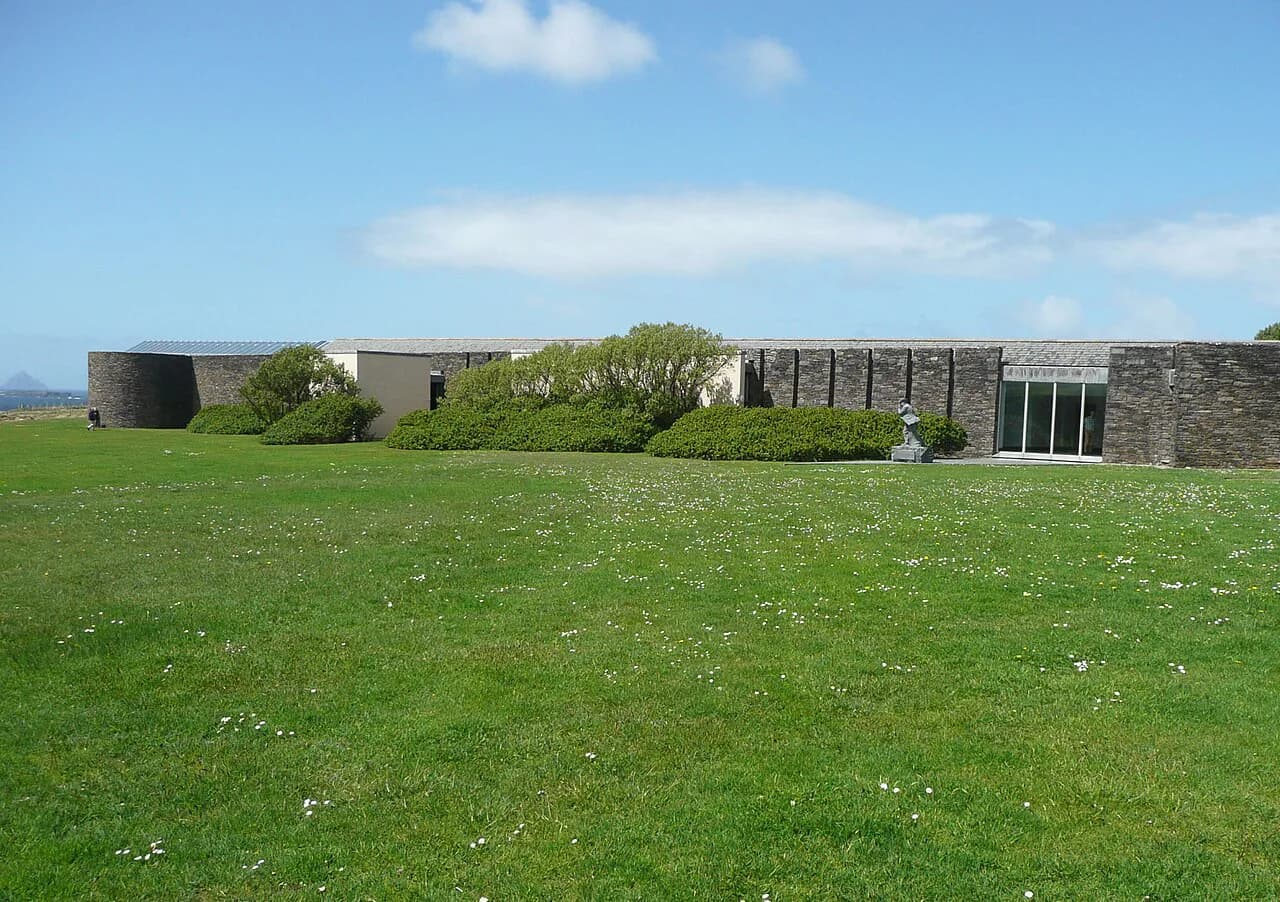
The Blasket Centre, Ionad an Bhlascaoid, is a heritage centre and museum at Dún Chaoin (Dunquin), in what the operator describes as the most westerly parish of the Dingle Peninsula. It interprets the Blasket Islands and the Irish-speaking community who lived there until the mid-twentieth century, so it works as a mainland introduction to a story whose physical setting lies offshore.
Build a visit around it if you want the social and literary context before or instead of looking out at the islands; skip it if you only want a quick photo stop, because the galleries reward a slower pass. The centre is a Wild Atlantic Way Signature Discovery Point, which makes it a natural halt on a west Kerry drive rather than a detour.
Where the Centre Sits and Why It Exists
Dún Chaoin is the address the operator gives, at the tip of the peninsula facing the Blasket archipelago. The centre's purpose is interpretive: it gathers the island story, its language and its literature in one place on the mainland, where visitors can engage with a community that no longer lives on the Great Blasket.
That mainland position matters for planning. The sources describe the centre as telling the island story; they do not set out boat crossings, landing arrangements or access to the island itself, so treat the centre as its own destination and confirm any separate island travel directly with the operators who run it. For the wider literary map of Ireland, the literary Ireland pages give useful context on how regional writing sits together.
What the Galleries Interpret
The exhibitions cover a hard daily reality: fishing and farming as subsistence work, the struggle against Atlantic weather, and the routines of home life, housing, work and transport. The Heritage in Schools programme page describes displays built from exhibitions, interactive elements, artefacts, audio-visual presentations and artworks rather than text panels alone.
That mix of media suits visitors who prefer to hear and see a place explained rather than read a timeline. Expect the emphasis to fall on community life and survival rather than on grand architecture or military history, which is why the centre pairs well with the peninsula's landscape: the displays explain the conditions the view outside only hints at.
Decline and the 1953 Evacuation
Emigration and decline drained the island community, and the operator records the final evacuation of the Great Blasket in 1953. That date is the clearest historical anchor in the centre's narrative, marking the end of continuous settlement rather than the end of the story, since the islanders' writings carried the community's voice far beyond the island.
Keep that sequence in mind as you move through the galleries: the everyday detail of fishing, farming and home life gains its weight from the knowledge that this way of living was winding down. It also explains the tone of the interpretation, which treats the evacuation as a loss with cultural consequences, not simply a remote administrative event.
The Literary Legacy of the Island Writers
Island authors documented their own community in books that the operator calls classics of Irish literature and invaluable social records. The Heritage in Schools page names The Islandman, Twenty Years A-Growing and Peig among the works connected with this legacy, presenting them as windows into island life as well as literature.
Read them as testimony rather than as fiction or folklore, and the centre's approach makes sense: the writing is presented as a record of a specific Irish-speaking place made by the people who lived there. If that documentary impulse interests you, the material on irish storytelling helps frame how oral and written traditions overlap in Ireland more broadly.
What Changed in the 2022 Renewal
The centre's exhibitions were completely renewed in 2022, with interactive displays replacing or reshaping earlier presentations and a fresh retelling of the island story. For visitors, that means the interpretive layer is recent even though the history it covers is older, and the galleries are designed for engagement rather than passive reading.
The fit-out contractor records a visitor exhibition, theatre, café, reception and retail area within the building, and describes audio-visual displays as a core part of the presentation. Those are useful clues to the scale of the interior, but the description comes from the contractor and does not confirm which facilities are currently open to the public, so check with the centre rather than assuming a café stop.
The Building, the Clifftop Platform and the View
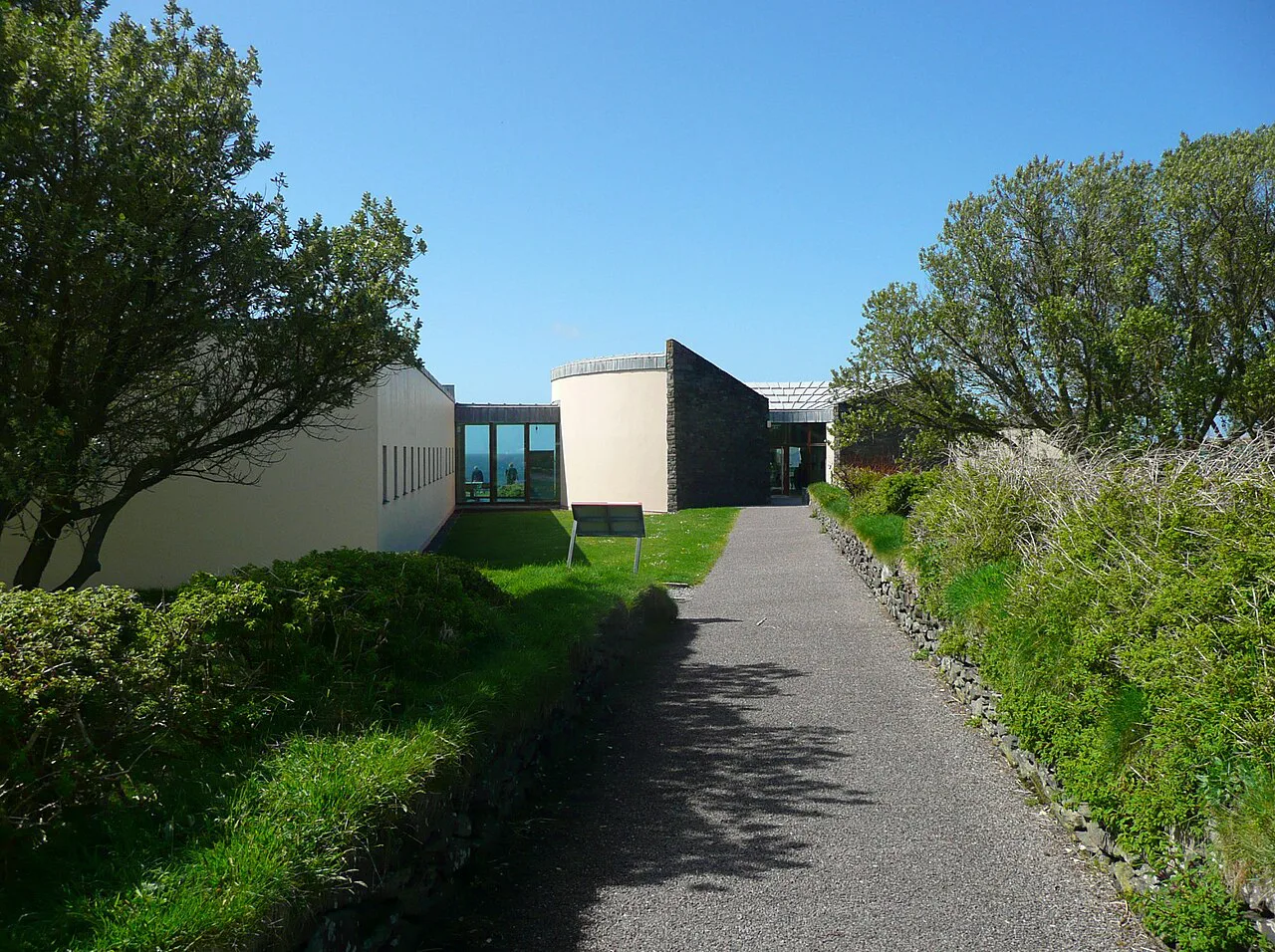
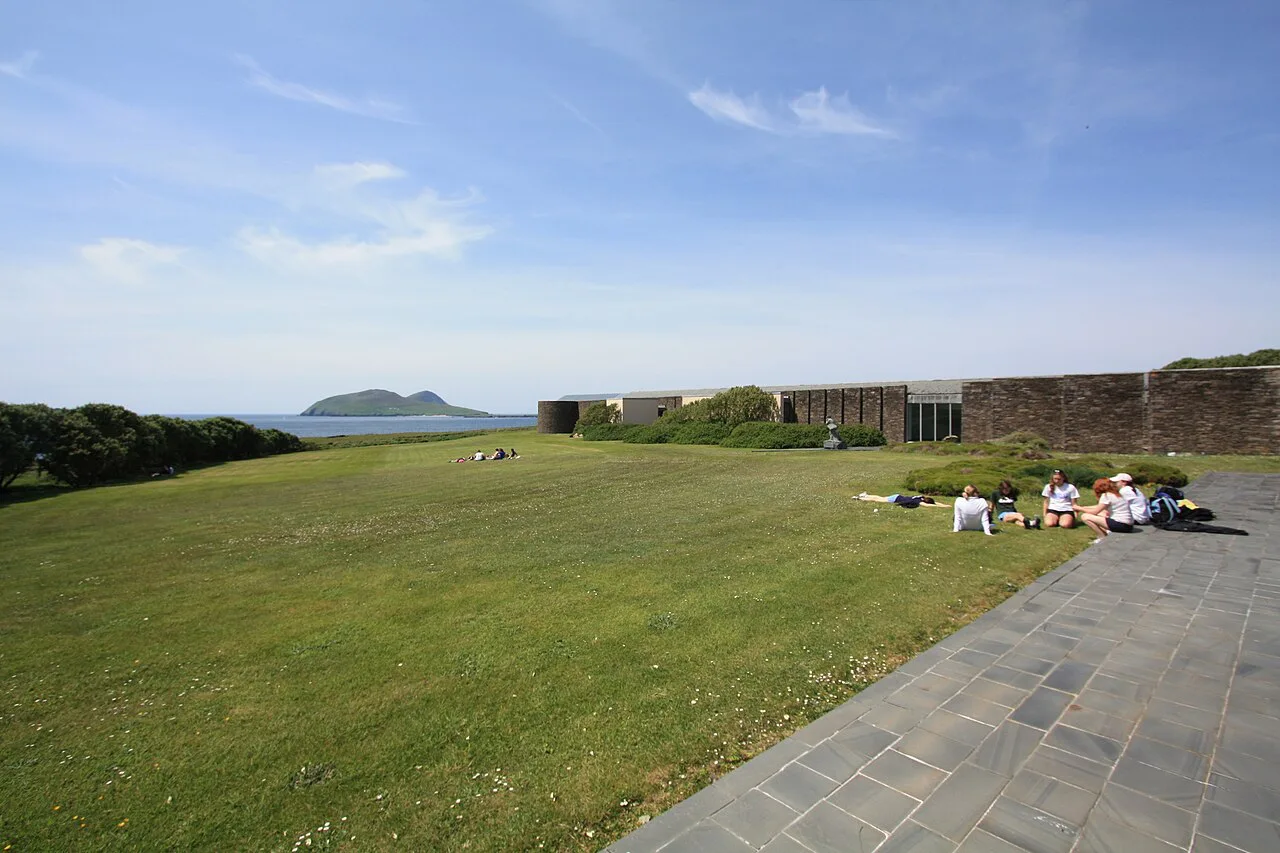
The operator describes the building itself as a striking piece of architecture, and it includes a fully accessible clifftop viewing platform looking out over the Blasket archipelago and the Atlantic coastline. That platform is a distinct reason to visit: even a short stop gives you the geographic context the galleries explain, with the islands visible offshore.
Plan for weather, because the platform faces open Atlantic and the peninsula catches wind and rain even when the rest of Kerry is mild. Give yourself time outdoors on the platform as well as inside the galleries: the view sets the islands in their real setting, while the exhibitions supply the detail and context behind it.
Opening Notice and Practical Checks
The official page carries a current operational notice of daily opening from 10:00 to 18:00 with last admission at 17:15, and gives the contact location as Dún Chaoin. Treat that as a notice rather than a permanent schedule: opening arrangements can change seasonally or around holidays, and the sources establish nothing beyond this listed pattern.
No admission price, booking requirement or tour schedule is set out in the official material, so confirm those directly with the centre before travelling rather than relying on older trip reports. The last-admission cut-off is the detail most likely to catch out a late arrival on a long driving day, so aim to be at the door well before it.
School Visits, Groups and How to Use the Centre
The Heritage in Schools page notes that the Office of Public Works runs a free school-visit programme for school-going children at its heritage sites, which places the centre within an educational framework. That programme is context for teachers, not general admission information for independent visitors, so don't read it as a statement about regular entry.
For mixed-interest groups, the centre works because it offers two different experiences under one roof: the exhibitions and the clifftop view. Allocate your time according to which half matters more to you, and if some of the party would rather be outdoors, the platform gives them a genuine reason to come along.
Nearby Context on the Dingle Peninsula
The operator's own page lists other heritage sites at some distance, including Sceilg Mhichíl, Derrynane House and Ardfert Cathedral, which are useful anchors if you are stringing together a longer west Kerry route. Distances and access arrangements for each are separate matters, so check each site's own page rather than assuming a single ticket or timetable covers them.
If your interest in the centre lies in the visual and cultural story of the west, the Glebe Gallery in County Donegal offers a different angle on Irish art and landscape, and it does not duplicate what Dún Chaoin does. Keep the centre as the island-specific stop and use other collections for the broader picture.
For travellers building a heritage itinerary, the ancient sites and castles material for the west provides a landscape-level frame around this peninsula. County Galway's Coole Park, further east, offers a different kind of landscape visit, pairing a demesne setting with its own associations rather than interpreting an offshore island community. If you are extending the route eastward, the castles in county galway guide covers four sites and their current access arrangements.
Plan Your Visit
The Blasket Centre is best understood as an entry point: it explains the island community, its evacuation in 1953 and the books its writers left behind, then sends you out to the clifftop to see where all of that happened. That combination of interpretation and setting is why it earns a place on a Dingle Peninsula itinerary rather than functioning as a rainy-day extra.
Before you travel, confirm the day's opening and last admission on the official Heritage Ireland page, and settle any questions about admission or booking directly with the centre. Give the galleries enough time to do their job, then step out to the platform with the islands in view.
Explore more Ireland guides
Frequently Asked Questions
Where is the Blasket Centre located?
It is at Dún Chaoin, also written Dunquin, in the most westerly parish of the Dingle Peninsula in County Kerry. The building sits on the mainland facing the Blasket Islands, and the operator gives Dún Chaoin as the contact location.
What does the Blasket Centre tell visitors?
The exhibitions interpret the Irish-speaking community of the Blasket Islands: subsistence fishing and farming, home life and work, the language and culture, the community's decline and the final evacuation of the Great Blasket in 1953. The island writers' literary legacy is a central part of the story.
Which island writers and books are represented?
The Heritage in Schools programme page names The Islandman, Twenty Years A-Growing and Peig as works tied to the island community, describing them as classics of Irish literature and social records. The centre presents this writing as documentation of community life by the islanders themselves.
What changed at the centre in 2022?
The operator describes a complete renewal of the exhibitions in 2022, with interactive displays and a fresh retelling of the island story. The upgrade reshaped how the galleries present the material rather than changing the history itself.
Can you see the Blasket Islands from the centre?
Yes. The operator says the site has a fully accessible clifftop viewing platform with views of the Blasket archipelago and the Atlantic coastline. It gives the exhibitions a visible setting, though the sources do not establish any boat trips or island landings from the centre.
Do you need to book, and what does admission cost?
The official Heritage Ireland page does not set out an admission price or a booking requirement, so those details need to be confirmed directly with the centre before travelling. Check the official page for the current opening notice as well, since it is subject to change.
How long should you allow for a visit?
Allow enough time for the galleries and the clifftop platform together, since they offer different parts of the experience. The sources do not publish a recommended duration, so plan around your own interest in the exhibitions and the weather on the day.
Is the centre a substitute for visiting the island itself?
The centre is an interpretation point on the mainland: it tells the island story through exhibitions rather than offering island access. The sources do not describe boat trips or landing arrangements, so treat any island visit as a separate plan to confirm with the operators concerned.
Sources
You might also like



Continue reading
More guides you'll find useful





