
Norman Castles in Ireland: Five Anglo-Norman Sites to Know
Compare five Anglo-Norman castles in Ireland, from Trim's great keep to Carlow's ruined towers, with what survives at each site and how visitor access differs.
On this page
Norman castles in Ireland are best understood through the sites that survive: Anglo-Norman foundations where keeps, curtain walls and arrow loops can still be read in stone. The five documented examples here, at Trim, Athenry, Roscommon, Carlow and Limerick, span staffed monuments, open ruins and a managed city attraction. Treat them as examples rather than a complete survey, because each reflects a different level of preservation and public access.
What an Anglo-Norman Castle Looks Like on the Ground
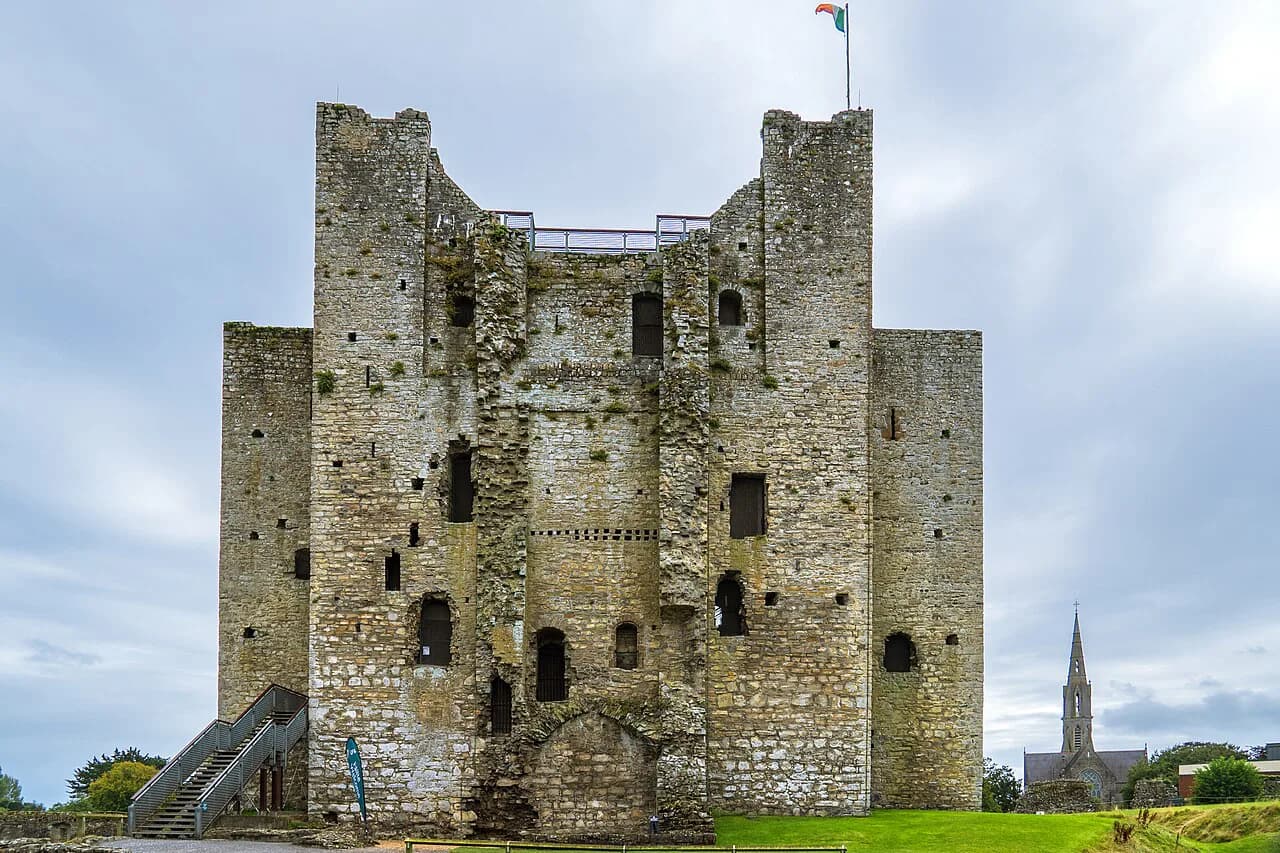
The Anglo-Norman castle arrived in Ireland with fortifications built to combine defence, administration and residence, and later centuries layered new work over the original stone. Trim Castle, for instance, is described as the largest Anglo-Norman fortification in Ireland, built over roughly thirty years by Hugh de Lacy and his successors. That scale helps explain why its keep, not its setting, remains the dominant feature today.
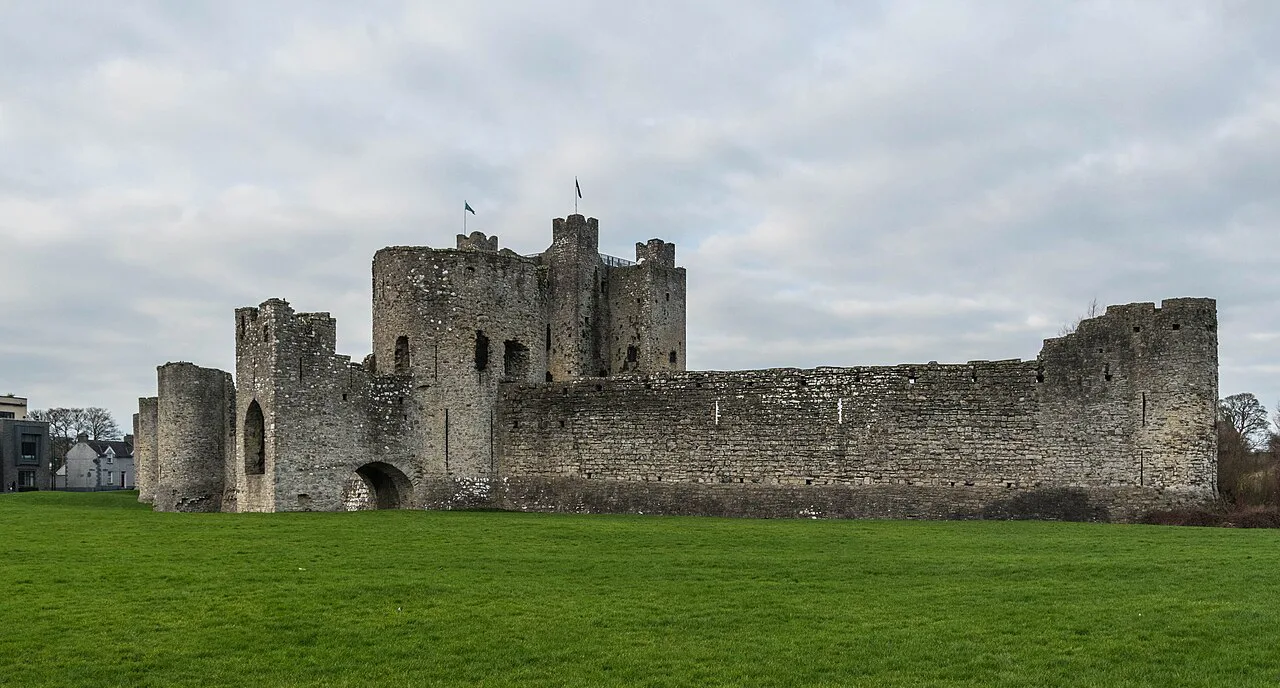
A castle's defences were rarely a single wall. Trim's keep was protected by a ditch, a curtain wall and a water-filled moat, while Athenry's thirteenth-century battlements and cruciform arrow loops show how openings were shaped for defenders. When you walk these sites, look for the sequence of outer defence, gate and inner keep rather than isolated features.
Later owners changed these buildings rather than replacing them. Carlow's castle gained a third storey in the late fourteenth century to house the Irish Exchequer, and Roscommon's large rectangular windows show Sir Nicholas Malby's modernisation after 1578. Reading a castle means separating its Anglo-Norman foundation from the Tudor and later alterations visible in the fabric.
Trim Castle, County Meath: The Great Keep and Its 2026–27 Works Closure
Trim Castle must lead any list for scale, but it also carries the most important current caveat: the site is closed for works from 1 November 2026 to 1 April 2027. Outside that window, opening times run in seasonal blocks rather than a single set of hours, so check the current schedule before setting out. The castle is a busy site in summer, and access cannot be guaranteed, so arriving early is the practical response.
The central fortification is a monumental three-storey keep, a twenty-sided tower cruciform in plan that was protected by ditch, curtain wall and moat. Modern walkways now let visitors look down into the keep's interior, which reveals the thickness of the walls more clearly than the exterior can. Guided tours, toilets and card payment are listed among the facilities.
Trim is often nicknamed King John's Castle, though the site notes that John preferred to stay in a tent across the river when he visited. Richard II came to Trim in 1399 and left Prince Hal, later Henry V, imprisoned in the castle. Access inside the keep is very restricted for visitors with disabilities, with steep, narrow stairs; the grounds have interpretation panels for self-guiding and are the only part with access.
Athenry Castle, County Galway: A Hall-Keep Above the Clareen River
Athenry Castle guards a strategic ford on the Clareen River, and its three-storey hall-keep survives from the mid-thirteenth century. The interior holds a substantial basement, the Great Hall and an attic, with a modern audio-visual room on the third floor showing a twenty-minute film on the castle's history. That film is a useful starting point before you examine the stonework.
The finest carvings sit at the entrance to the Great Hall, where floral motifs in the local School of the West style decorate the doorway and two window openings. The site describes that style as unique in Irish castles, which makes this small detail worth pausing over. Original thirteenth-century battlements and cruciform arrow loops remain visible elsewhere in the structure.
In 2026 the castle opened daily from 13 March to 21 October between 9:30 and 18:00, with last admission at 17:15; the final block of that season runs from 9:30 to 17:00 with last admission at 16:15 until 5 November. Check the current schedule before travelling. Expect uneven walkways and limited access, and hold the hand rail where it is provided. Dogs must be on a lead, and the surrounding town of Athenry is described as one of Ireland's best-preserved medieval towns.
Roscommon Castle: A Symbolic Site Beside Loch na nÉan
Roscommon Castle's position was chosen for symbolism as much as strategy: it stood beside a crannóg on Loch na nÉan that was an Ó Conchobair power base. Legend places the burial of Fergus Mac Róich on the lake shore and calls the lake an entry to the Otherworld, and the site's own account labels these as myth and legend rather than fact. Building an Anglo-Norman royal castle next to the ancestral home of the Ó Conchobairs was a deliberate statement.
The O'Conors took possession of the castle in 1340 and held it for nearly two hundred years before surrendering it to the English in 1569. It was granted to Sir Nicholas Malby in 1578, and his modernisation is visible in large rectangular windows, particularly in the north-east, along with a walled garden, fishponds and a tree-lined avenue. Later sieges in 1596 and 1599, attacks in the 1640s, Cromwell's seizure in 1652 and a fire in 1690 left it to decay.
Access is limited and seasonal, scoped to the South West Tower, and the site currently carries a closed notice. In 2026 it opened on Saturdays and Sundays only, from 30 May to 13 September, between 10:00 and 17:00, with free admission. That season has now ended, and the published schedule should be checked before planning a return. From Roscommon town, head north to Castle Street and turn down Castle Lane, where parking is available; the railway station is just over twenty minutes away on foot, served at least three times daily each way by the Dublin Heuston to Westport and Ballina service.
Carlow Castle: A Four-Towered Keep Reduced to Two Towers
Carlow Castle was built in the early thirteenth century, dated between 1208 and 1213, and replaced an earlier Norman earthwork at the meeting of the Barrow and Burren. Its construction is attributed to William Marshal, who held the Lordship of Leinster through his wife Isabel de Clare. It belongs to a small group of four-towered keeps that also includes Ferns in Wexford, Lea in Laois and the original Kilkenny Castle.
Excavations in the 1990s showed the original structure was two storeys high, with walls 2.7 metres thick rising from a battered plinth, timber floors and roof, and staircases built into the walls. The entrance sat at first-floor level in the north wall, reached by a doorway rather than steps from the ground. A third storey was added in the late fourteenth century for the Irish Exchequer.
Much of the castle was lost in 1814 when Dr Philip Parry Middleton used blasting powder to create extra space, causing the eastern half to collapse. Only two towers and the wall between them survive, and the site is an unguided state-owned National Monument where visitors are warned to take care. There are no staffed facilities or tours to plan around, so treat it as an open-air ruin rather than a visitor centre. If you want to add a later country house to a Carlow itinerary, Huntington Castle, Clonegal makes a separate stop rather than an Anglo-Norman comparison.
King John's Castle, Limerick: A Managed Attraction in the Medieval Quarter
Limerick's King John's Castle offers a very different visitor model from the ruined sites. It sits at the heart of the city's medieval quarter on King's Island, and the Limerick City and County Council page frames it as bringing over 800 years of local history to life. An interactive exhibition uses 3D models and computer-generated animation to cover soldiers, sieges and the River Shannon, so the castle is presented as an interpreted attraction rather than purely a ruin. For opening hours, facilities and what to expect on the day, see this King John's Castle, Limerick: A Visitor Guide to the Riverside Fortress.
In the outdoor courtyard, visitors can try medieval games including quoits, horseshoe throwing and tug of war, with castle characters on hand to explain them. Climbing the ancient towers gives views across the Shannon and the city rooftops. The Siege Café and a craft and gift store stocking local and Irish designers complete the visit.
The council page lists opening hours of 9.30am to 6pm with last admission at 5pm, and describes the Discover Limerick Pass as the official sightseeing pass for the city and region, offered in one-, two- and three-day versions. These are council-published details rather than the castle operator's own material, so confirm anything time-sensitive before you go.
Reading the Ruins: Architectural Clues to Compare
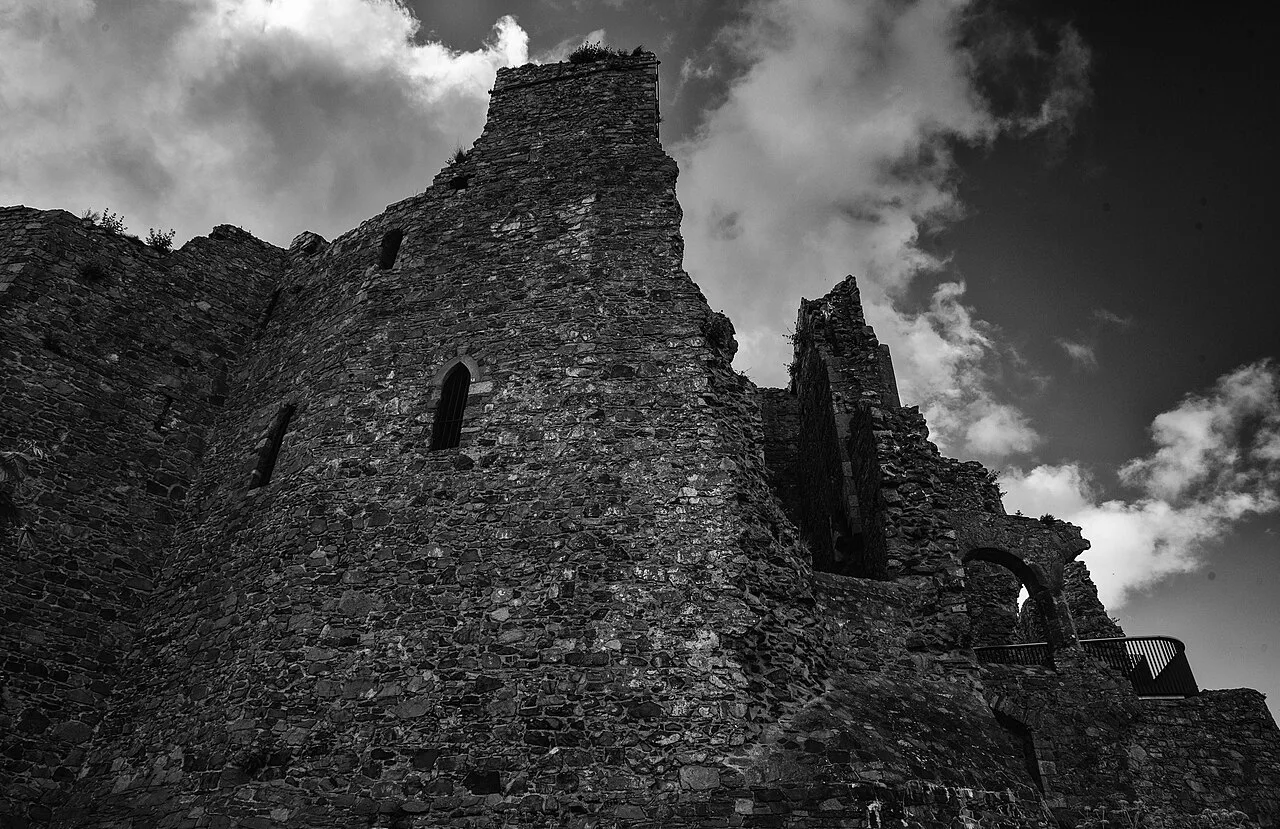
Four features let you compare these castles on site. A battered plinth, like Carlow's, is a sloping base that strengthens the wall foot; drum towers at the corners, also at Carlow, mark the four-towered keep family; cruciform arrow loops, seen at Athenry, are cross-shaped openings for defenders; and a cruciform plan, as at Trim's keep, describes a tower shaped like a cross.
Look next for later insertions, which often tell the more interesting story. Roscommon's rectangular windows record Malby's Tudor remodelling, and Carlow's lost third storey records the arrival of the Irish Exchequer. At Athenry, the School of the West carvings around the Great Hall doorway mark a distinctive local decorative tradition rather than a standard Anglo-Norman design.
Access at a Glance: Staffed Sites, Open Ruins and Seasonal Limits
The five sites do not share facilities, so plan each separately. Trim and Athenry are staffed state-managed monuments with guided tours and toilets, while Carlow is an explicitly unguided open-air ruin. Roscommon's season was weekend-only and seasonal, and Limerick's castle is a staffed attraction with a café and shop.
Seasonality matters most outside the summer months. As of late October 2026, Trim is closed for works from 1 November 2026 to 1 April 2027, Athenry's 2026 season runs only to 5 November, and Roscommon's South West Tower access ran only from 30 May to 13 September. If you are travelling in winter, verify which site is actually open before committing a day to it.
Accessibility is also uneven. Trim's keep is not accessible for visitors with disabilities, with restricted access to the grounds only, and Roscommon offers only partial accessibility for limited mobility. Athenry notes uneven walkways and limited access, so anyone with mobility concerns should read the site's restrictions before visiting.
Plan Your Visit
A sensible route through these five castles pairs history with access. Athenry and Trim suit travellers who want interpretation, tours and facilities; Carlow suits those content to read an open ruin; Roscommon rewards a weekend visit when its season is running; Limerick's castle works as a city-centre stop with exhibitions and tower views. Wherever you go, check the operator's current page for opening times and restrictions before travelling, since the published seasons and closure dates on these sites change year to year. For another heritage guide, read about Castles In Roscommon.
Explore more Ireland guides
Frequently Asked Questions
Are there Norman castles in Ireland you can visit?
Yes. Trim Castle in County Meath, Athenry Castle in County Galway, Roscommon Castle, Carlow Castle and King John's Castle in Limerick are all documented Anglo-Norman-era sites with some form of public access. They differ widely in preservation and facilities, so check each site's season and restrictions before you travel. Trim is closed for works from 1 November 2026 to 1 April 2027, Roscommon currently carries a closed notice, and Athenry's 2026 season runs only to 5 November.
Which Norman castle in Ireland is the largest?
Trim Castle is described by Heritage Ireland as the largest Anglo-Norman fortification in Ireland. It was built over about thirty years by Hugh de Lacy and his successors, and its central three-storey keep is a twenty-sided tower cruciform in plan.
Is Trim Castle open, and when does it close for works?
Trim Castle operates seasonal opening blocks, but it is closed for works from 1 November 2026 to 1 April 2027. Outside that window, summer demand means access is not guaranteed, and the site advises arriving early. Check the current schedule before travelling.
Why is Trim Castle called King John's Castle?
The castle is often nicknamed King John's Castle, although the site notes that when John visited the town he preferred to stay in a tent on the other side of the river. Richard II visited Trim in 1399 and left Prince Hal, later Henry V, imprisoned there.
What can you see at Carlow Castle today?
Carlow Castle is an unguided state-owned National Monument where only two towers and the intervening wall survive, following the collapse of much of the structure in 1814. You can read its battered plinth and corner drum towers, but there are no staffed facilities or tours, and visitors are advised to take care.
Is Roscommon Castle free to enter?
Admission is listed as free, but access is limited and seasonal and the site currently carries a closed notice. In 2026 the South West Tower opened on Saturdays and Sundays only, from 30 May to 13 September, between 10:00 and 17:00, and only part of the site is open. That season has now ended, so check the published schedule for any future opening dates.
What makes Athenry Castle different from the others?
Athenry preserves a mid-thirteenth-century three-storey hall-keep with a basement, Great Hall and attic, and its Great Hall entrance carries floral carvings in the School of the West style, described as unique in Irish castles. It also has an audio-visual room and guided tours, and sits in one of Ireland's best-preserved medieval towns. Its 2026 season runs only to 5 November.
Is King John's Castle in Limerick a ruin or a visitor attraction?
It is presented as a managed visitor attraction. Limerick City and County Council's page describes an interactive exhibition, medieval courtyard games, tower views, a café and a gift shop. The council also lists opening hours and the Discover Limerick Pass, so check those details before visiting.
Sources
You might also like



Continue reading
More guides you'll find useful





