
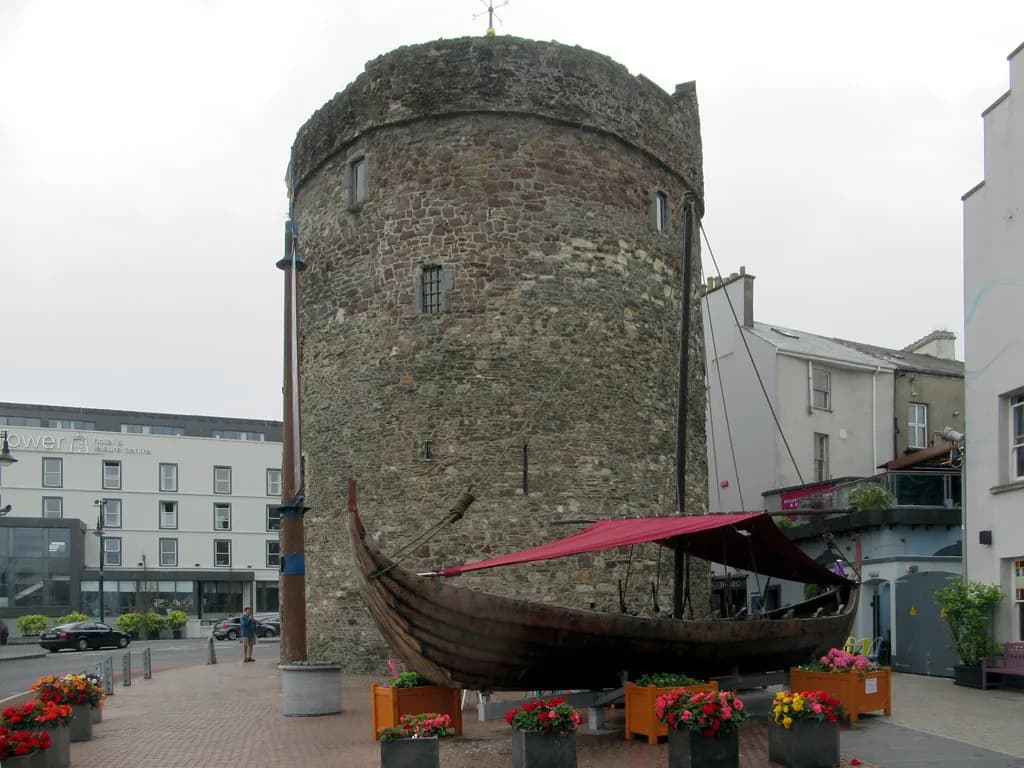
Reginald's Tower, Waterford: Viking Fortress Visitor Guide
Reginald's Tower on Waterford's quay holds a branch of the Waterford Museum of Treasures and over 800 years of history. Plan your visit with this guide.
On this page
Reginald's Tower is a round stone tower standing on Waterford's historic quay, the anchor of the Viking Triangle and the setting for one branch of the Waterford Museum of Treasures. It is an Office of Public Works site, and the Heritage Ireland listing sets out what a visitor actually encounters inside and when the doors are open. This guide separates the operator's practical information from the city tourism body's historical framing so you can judge each claim for what it is.
Direct answer: what Reginald's Tower is and where it stands
The tower rises beside the River Suir on Waterford's quay, at the heart of the district marketed as the Viking Triangle. Visit Waterford, the city tourism body, describes it as a round stone tower overlooking the river and a key stop on that walk, which makes it easy to fold into a morning on foot rather than a separate excursion. Because it sits in the city centre rather than on a rural site, the visit works as a compact stop rather than a half-day outing.
Inside, the tower is not a single-period monument but a building that has been adapted repeatedly. Heritage Ireland explains that two floors hold a branch of the Waterford Museum of Treasures concentrating on the town's Viking heritage, so the interior collection and the surviving fabric tell different parts of the same story. Plan to read both together: the artefacts cover the Viking town, while the walls show what later occupants did with it.
Why the tower matters: continuous use and civic status
Heritage Ireland states that the tower has never fallen into ruin and has been in continuous use for more than 800 years, a rare record for an Irish urban building. Visit Waterford goes further and calls it Ireland's oldest civic building, a framing worth attributing to the tourism body rather than treating as a neutral measurement. Either way, the practical point for a visitor is that you are walking through a structure that has been occupied and repurposed rather than restored from a ruin.
That continuity explains why the interior feels layered instead of archaeological. Each generation left a use behind, from defence and storage to administration and, eventually, museum display. If you have an interest in how Irish buildings survive by changing function, the tower is a useful case study alongside the broader patterns covered in our guide to irish architecture.
Reading the fabric: from Viking fort site to Anglo-Norman strongpoint
The site began as a wooden Viking fort, and the stone tower you see today is the work of the Anglo-Normans, who made it the strongest point of Waterford's medieval defensive walls. Heritage Ireland sets out that sequence plainly, and it is the key to reading the building: the round form and thick walls belong to the later military phase, while the Viking story survives mainly through the objects displayed inside. If this Anglo-Norman phase is what interests you most, the castles in county galway show how the same builders' descendants fortified Ireland elsewhere. Keep the two phases separate in your mind and the visit makes more sense.
The tower's position on the quay was itself part of the defence, controlling the river approach to the walled town rather than standing apart from it. Walking the quayside before or after your visit gives you the geography the masons were working with. For a contrasting Irish stronghold where masonry sits on a bare hill rather than in a street, the rock of dunamase shows how dramatically setting shapes a castle's character.
Later lives of one tower: mint, ordnance and storage
Heritage Ireland records that the tower was used as a mint under King John before passing through various functions under later English monarchs. Weapons, gunpowder and cannons were all stored there at different times, reflecting Waterford's turbulent history. These are broad phases rather than precisely dated episodes, so treat any specific year you encounter elsewhere with caution unless a source states it.
Visit Waterford summarises the same range of roles, listing fortress, prison, mint and royal storehouse among the tower's past uses. That overlap between the two sources is reassuring: the building really did serve many masters, and the exhibition frames that variety rather than focusing on a single era. When you move through the rooms, the changing function of each space is the thread to follow.
Climbing the spiral stairs: what you pass en route
Access to the upper floors is by spiral stairs, and the climb is part of the visit rather than an inconvenience to be rushed. Heritage Ireland notes that on the way up you pass the remains of a 19th-century prison cell, a reminder of the tower's use as a place of confinement. Visitors who find narrow, winding stairs difficult should weigh that against the collection on the upper floors before committing.
The tower's spiral stairs are a common feature of historic Irish structures, and similar constraints apply at many other sites. Treat stair-heavy monuments as a distinct category when planning: narrow, winding steps and uneven surfaces are typical, and neither this site nor comparable ancient places should be assumed to offer lifts or step-free routes. Our guide to ancient sites ireland is a useful place to compare how access varies from one monument to the next. Check with the operator directly if mobility is a concern before you commit to a climb.
The Waterford Museum of Treasures branch: what is on display
Two floors of the tower hold one branch of the Waterford Museum of Treasures, focused on the city's Viking heritage. Heritage Ireland lists the kinds of material you will see: artefacts from Waterford's Viking history and the sword of the Chief Constable, whose family were the last residents of the tower. Visit Waterford adds weapons, coins and treasures uncovered in the city to that description. Together these give a sense of a collection built from finds and objects tied to Waterford itself rather than a general survey of the Viking world.
Because this is a branch rather than a stand-alone museum, the displays are compact and tied to the building around them. That is an advantage if you prefer objects with a clear local provenance, and a limitation if you expect a comprehensive Viking exhibition. Allow time to read the labels rather than hurrying up and down the stairs, since the collection's value lies in the specific Waterford material.

Planning the visit: opening days, hours and last admission
Heritage Ireland gives the opening pattern as Wednesday to Sunday, 09:30 to 17:00, with last admission at 16:15. Seasonal opening times apply from December to March, and the operator does not publish the winter hours on the listing, so check current times before travelling in those months. Arriving after the last-admission cut-off means being turned away even if the building is still open, so treat 16:15 as your practical deadline.
On admission, Visit Waterford reports that this Office of Public Works site offers free entry on the first Wednesday of each month. That is a day-specific arrangement reported by the city tourism body, not a general free-entry policy, and it should not be assumed for other days or extended to other OPW properties. Standard-day charges are not published in the sources used here, so check the operator's own listing for the current position.
Practical trade-offs before you go
The main trade-off is between the tower's compact scale and its constraints. The spiral stairs mean the upper floors, where the museum displays sit, are reached by climbing, and the last-admission cut-off limits a late-afternoon stop. A visit fits comfortably into a city walk, but it rewards a slower pace than a quick photo from the quay, so budget time for the stairs and the labels rather than treating it as a passing landmark.
The sources do not establish tours, a cafe, a shop, parking or lift access, so plan on the basis of what is confirmed and ask the operator about anything you rely on. If comparing arrangements across Irish sites is useful, consider the castles in county galway, each with its own access details to check. If your interests run to other historic interiors in Ireland, borris house offers a very different experience of a preserved building with its own visiting arrangements to check. Being clear about what each site does and does not provide is the most useful preparation.
Placing it in a walk: the quay and nearby sites
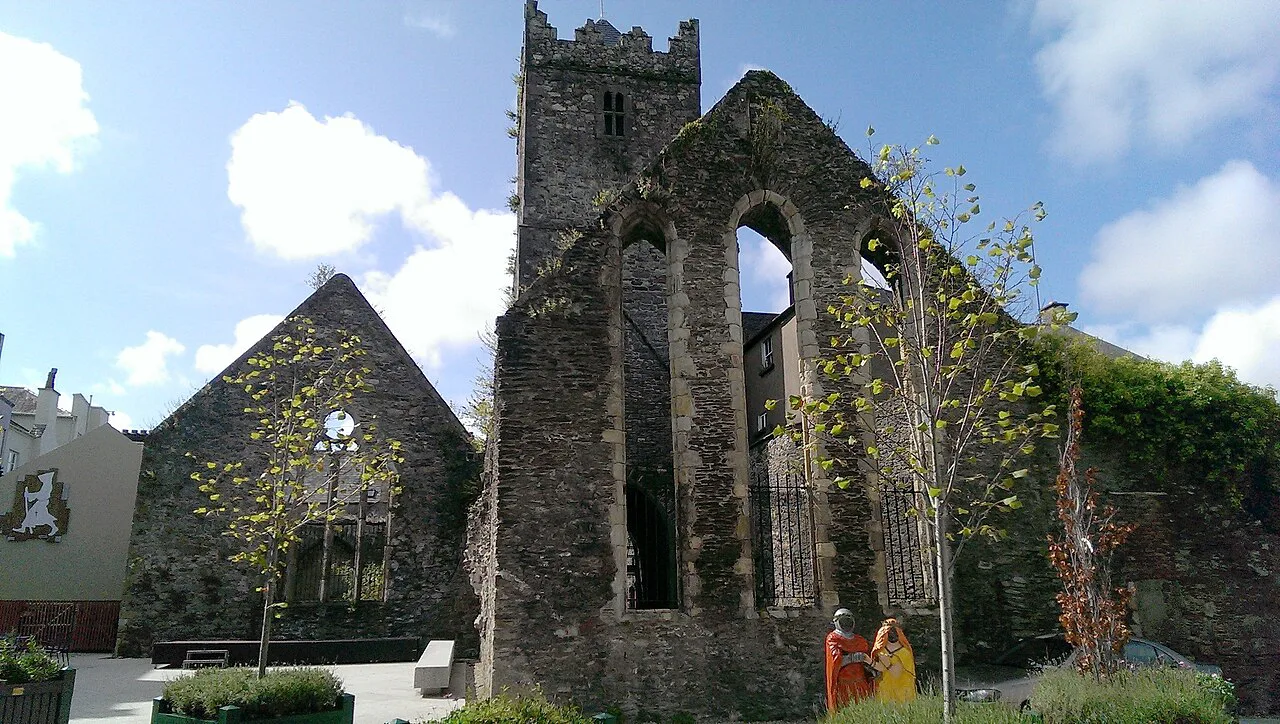
Reginald's Tower's quayside position makes it a natural starting point for a walk through the Viking Triangle, with the River Suir as a constant reference. The Heritage Ireland listing also names nearby sites to visit, including Greyfriars/French Church and Ballyhack Castle, which lets you build a route around confirmed OPW properties rather than guesswork. Check each site's own arrangements before linking them into a single day, and see our broader notes on Irish architecture if you want to compare Reginald's Tower with other building types.
Waterford's urban layers, from Viking port to Anglo-Norman walled town, make it a good companion to Ireland's broader assembly of ancient and medieval places. Our ancient sites ireland collection sets out how dispersed monuments differ from a city-centre tower like this one. For travellers building a wider architectural itinerary, that contrast is the most useful planning tool.
Plan Your Visit
Reginald's Tower rewards visitors who arrive knowing what they are looking at: a Viking fort site rebuilt as an Anglo-Norman strongpoint, later a mint and ordnance store, and now the home of a compact Waterford Museum of Treasures branch. Confirm the current opening pattern and any winter changes with the operator before you travel, and plan around the spiral stairs and the last-admission deadline.
Explore more Ireland guides
Frequently Asked Questions
What is there to see inside Reginald's Tower?
Inside, two floors hold a branch of the Waterford Museum of Treasures focused on the city's Viking heritage, including Viking artefacts, weapons, coins and treasures, along with the sword of the Chief Constable. On the way up the spiral stairs you pass the remains of a 19th-century prison cell.
Is Reginald's Tower the oldest civic building in Ireland?
Visit Waterford, the city tourism body, describes it as Ireland's oldest civic building. The operator-side listing states that the tower has never fallen into ruin and has been in continuous use for more than 800 years, which supports the building's unusual continuity even if the superlative framing comes from the tourism body.
When is Reginald's Tower open to visitors?
The operator lists Wednesday to Sunday, 09:30 to 17:00, with last admission at 16:15. Seasonal times apply from December to March, and the specific winter hours are not published on the listing, so confirm current times before travelling in those months.
Do you need to pay to enter Reginald's Tower?
Visit Waterford reports free admission on the first Wednesday of each month at this Office of Public Works site. That is a day-specific arrangement rather than a general free-entry policy, so check the operator's listing for the standard-day charge and do not assume the same terms apply on other days.
How long does a visit to Reginald's Tower take?
The displays occupy two floors reached by spiral stairs, so the visit is compact but not instant. Allow time to climb at an unhurried pace and read the labels, and remember that last admission is at 16:15, which effectively caps a late-afternoon visit.
Is Reginald's Tower suitable for visitors who struggle with stairs?
Access to the upper floors is by spiral stairs, so visitors who find narrow, winding steps difficult should consider that before entering. The sources do not confirm lift access, so contact the operator directly if step-free access is essential to your plans.
Sources
You might also like



Continue reading
More guides you'll find useful




