Dublin Walking Tours: Guided, Self-Guided and App Options
Compare Dublin walking tour formats: operator-led themed walks, Trinity's self-guided campus trail, app trails and Dublinia's Viking walk, with access notes.
On this page
Dublin's compact centre rewards walking, and the city's tour scene reflects that: a single afternoon can offer a historian-led 1916 walk, a folklore-themed free tour or a self-guided campus trail delivered through your phone. The formats are not interchangeable, and choosing well means deciding whether you want a guide, a theme or simply a structure for wandering. This guide sets out the verified options in the city centre, names who runs each one, and flags a major site that is currently closed to the public so you do not build a route around it.
What Counts as a Dublin Walking Tour
The phrase covers at least four distinct products. Operator-led tours put a guide in front of you and run on a set theme, from political history to music. Self-guided app trails let you move at your own pace with audio, augmented reality or GPS-triggered content. Museum-led walks combine a collection visit with a guided walk through the surrounding streets. Knowing which of these you are booking matters, because booking methods, prices and start times differ sharply between them.
The city council's own visitor portal treats the subject as a broad round-up rather than a ranking, listing operators by theme and style instead of awarding places. That is a useful framing for independent travellers: the listing shows the range available in the city centre, not a verdict on quality. For a deeper chronological backdrop to any route you choose, the city's Viking and medieval layers are covered in our guide to dublin history.
Because so many tours start in the same small central area around O'Connell Street, Trinity College and Temple Bar, the practical differences between them are thematic rather than geographic. Decide first whether you want a fixed narrative or the freedom to stop for a coffee, then pick the format.
Operator-Led and Free Themed Walks
The council round-up lists Pat Liddy's team for themed walks that range from hidden corners of the city to St Patrick. It also names Lorcan Collins for a 1916 Rising walk, and a separate walk that begins at Richmond Barracks, where the signatories of the Proclamation were held before being marched to Kilmainham Gaol. These are distinct products with different starting points, so check the meeting location before you commit.
Free-tour options in the listing include a Fables & Folklore walk covering mythology, traditions and characters both real and fictional, and a Musical Dublin walk led by a musician who sings during the route. Other entries cover literature and pub culture, food, Irish music in pubs, a James Joyce and Ulysses route, and local-history walks of the north inner city. The council listing flags these as free themed tours; confirm how tipping works with the operator directly.
Dublin Free Walking Tours leaves twice a day from the Spire on O'Connell Street, splitting between a south route taking in Trinity College, Temple Bar, Dublin Castle and both cathedrals, and a north route covering the Garden of Remembrance, Moore Street, the Custom House and the GPO. Note that the castle on that south route is closed to the public for the EU Presidency period, so you will pass it rather than enter. For newcomers working out the city's layout, the split is useful: it shows how the Liffey divides the historic centre.
The Icon Walk in Temple Bar takes a different approach, threading murals of legends such as W.B. Yeats, Oscar Wilde, Luke Kelly and Phil Lynott through the district's quieter side streets, with the Icon Factory nearby showing work by the same artists. Treat it as a street-level wander rather than a scheduled tour, and pair it with the wider picture of street art across the city.

Self-Guided with an App: Trinity's Campus Trail
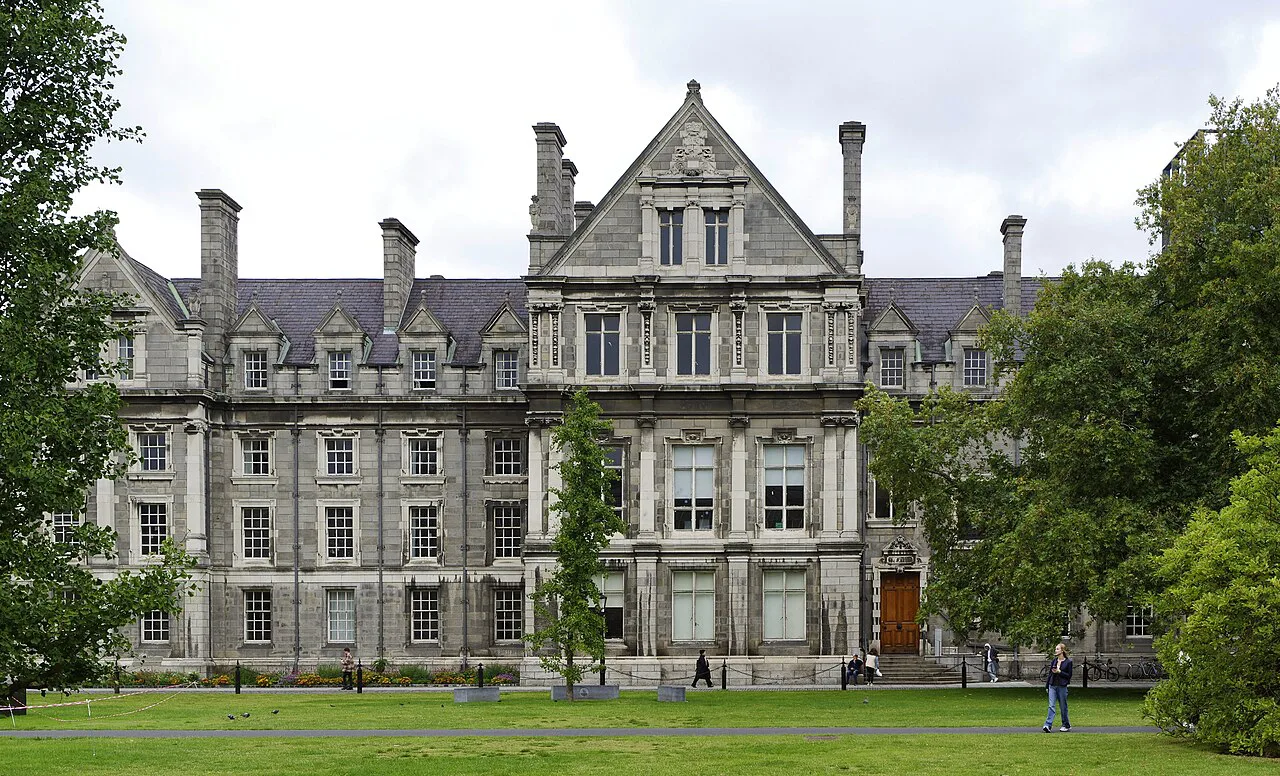
Trinity College runs its own self-guided trail through the Visit Trinity app, which can be downloaded free from the Apple App Store and Google Play. The ticket costs €6.50 per person and is bought online to unlock the audio content. The route is fully outdoors, covering 14 points of interest across the historic campus with audio from students and academics plus augmented reality elements.
One exclusion catches visitors out: entry to the Book of Kells Experience is not included in the trail ticket, so anyone expecting the manuscript should book that separately. The official site also states that campus tours can only be conducted through Visit Trinity's official guides and authorised staff.
Timing is flexible, though the operator recommends walking during daylight hours. Accessible walkways are used for guided tours, but some areas may occasionally be unsuitable, causing a slight delay rather than a detour. Check the current details before travelling.
Dublin's Discovery Trails from the Tourism Authority
Visit Dublin, the city's tourism authority, promotes Dublin Discovery Trails: themed walking routes delivered through an app, using GPS to trigger immersive content including virtual elements. The trails cover areas such as the Docklands, villages along the Dublin Coastal Trail and local neighbourhoods, and the authority says new routes are added over time.
The official description does not set out a fixed list of stops, so treat the app itself as the route map and check what is available before you set out. This format suits travellers who want structure without a guide's schedule, and it works well for areas beyond the medieval core, where architecture and dockland regeneration carry the story.
Because the trails extend into coastal villages and residential neighbourhoods, they reward a half-day rather than a spare hour. Pairing one with Dublin's Georgian streets gives a useful contrast between planned eighteenth-century terraces and the later industrial waterfront.
Museum-Led Walking Tours at Dublinia
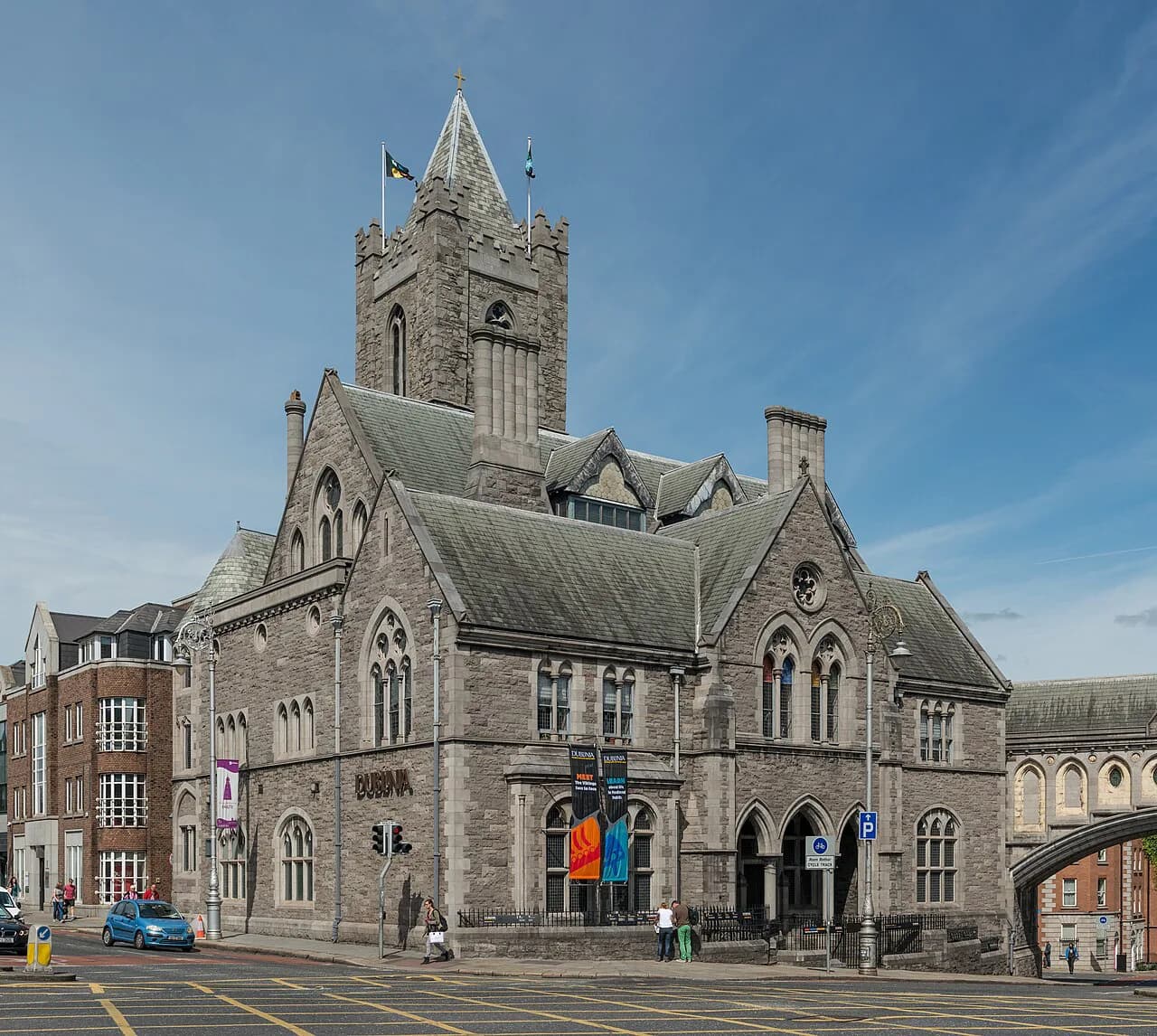
Dublinia, the Viking and medieval museum, runs its own walking tours of the city at 11.00am Monday to Saturday, as listed on its site and subject to availability. Tickets are free with general admission and can be pre-booked, and the tours are conducted in English only. Starting from the museum places the walk in the historic heart of the city, which makes it a logical pairing with a collection visit.
Inside the museum, Living History guides stationed around the exhibition explain Viking weapons, the barber surgeon's trade, medieval medicine and herbs, and teach visitors Hnefatafl, a Viking board game. Daily exhibition tours of either the Viking or Medieval exhibition run at 2.00pm and are included in admission without advance booking, though the museum notes that exhibition tours are unavailable during July.
For travellers interested in the medieval city's church architecture, Dublinia sits within easy reach of several historic places of worship. Our guide to dublin churches covers the buildings and their context, and it can be combined with the museum's walk for a fuller picture of the period.
Note the caveats as listed: the walking tour time is subject to availability, and the museum states that tours are in English only. Confirm the day's arrangements on arrival rather than assuming a departure.
Historical Context Along the Way: Christ Church Cathedral
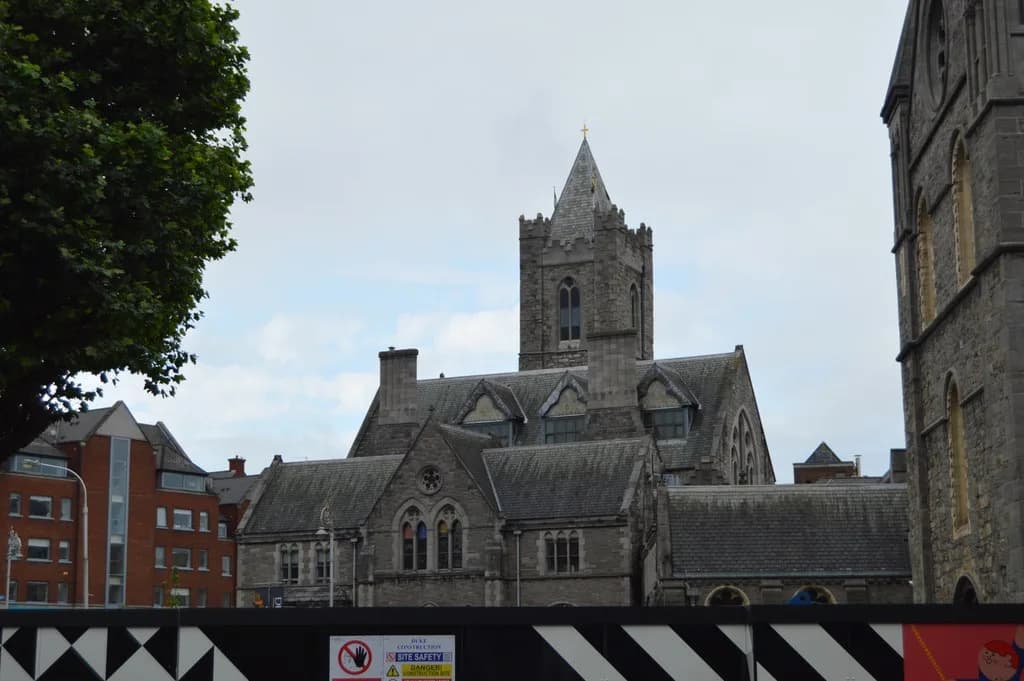
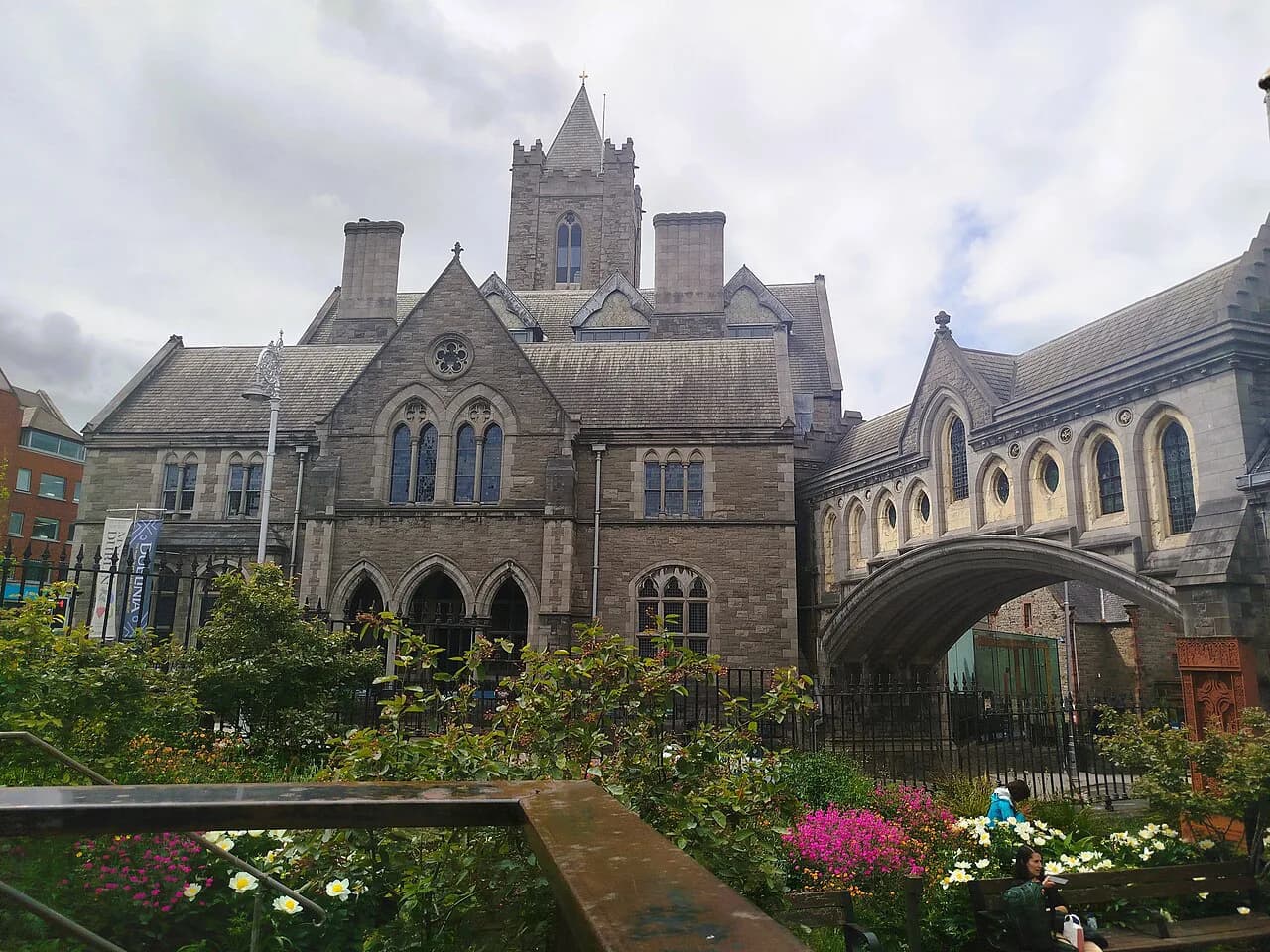
Christ Church Cathedral tells its own history in unusually specific terms. Its earliest manuscript places the cathedral at the present site around 1028, when Dúnán, first bishop of Dublin, and Sitriuc, Norse king of Dublin, founded the original Viking church. That foundation makes the building a natural anchor for any walk about the city's Norse and medieval layers.
The cathedral's timeline continues through the Anglo-Norman replacement of the Hiberno-Norse building, the 1395 visit of Richard II to receive homage from the kings of the four Irish provinces, and the crowning of the pretender Lambert Simnel in 1487. In 1562 the nave roof vaulting collapsed and Strongbow's tomb was smashed, prompting emergency rebuilding. Since that collapse, the north nave wall has leaned outward by 46cm, or 18 inches.
The Victorian restoration by architect George Edmund Street ran between 1871 and 1878, funded by the distiller Henry Roe. The cathedral's own page notes that in 1742 its choir sang with the choir of St Patrick's at the world premiere of Handel's Messiah in nearby Fishamble Street. The crypt now houses the Treasures of Christ Church exhibition, which the cathedral describes as drawing on nearly a thousand years of worship.
Belfry tours are a separate proposition with serious physical limits. The cathedral states that the belfry is reached by a narrow spiral staircase of 86 steps and is not suitable for visitors with reduced mobility, vision impairments, claustrophobia, a fear of heights, or children under 12. Sensible footwear is required and large bags are not allowed, so leave them behind if you plan to climb.
Dublin Castle: A Strong History Stop, Currently Closed
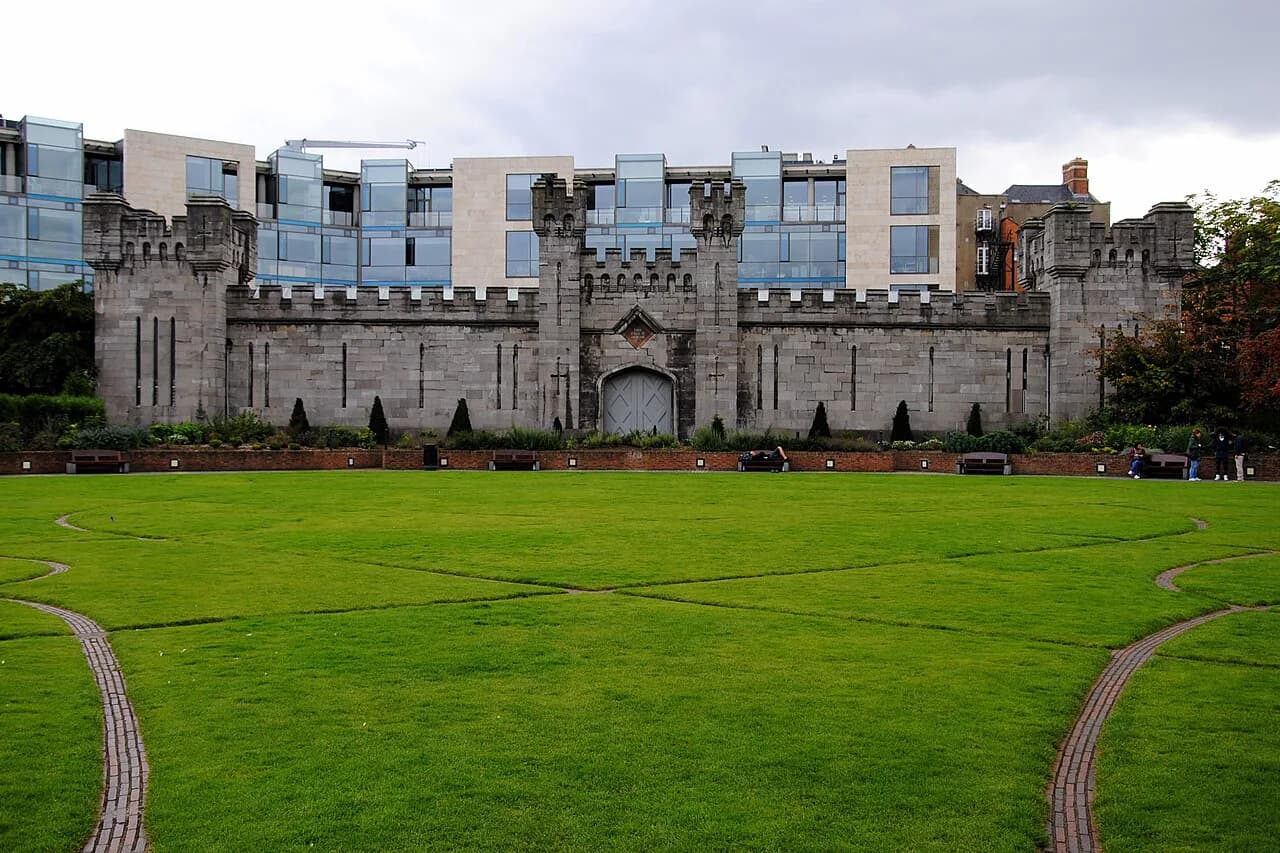
Dublin Castle would normally be a highlight of any route between Trinity College and Christ Church, and the OPW's page sets out why: a site with Viking-age origins, a castle built in the thirteenth century, and a role as fortress, prison, treasury and courts before serving as the seat of English and later British rule from 1204 until independence. The page states plainly that the site is closed, so plan to see it from outside only.
Dated notices on the same official page state that the campus closed to the public on 15 June 2026 for Ireland's Presidency of the Council of the European Union, with a separate notice giving a closure of 5 May to 31 December 2026. During this period there is no public access and no through route from the Palace Street Gate on Dame Street to Ship Street. The page looks forward to welcoming visitors back in January 2027.
The practical consequence for walkers is direct: do not plan a route that cuts through the castle grounds to reach Ship Street or the Coombe, and do not expect to see the state apartments during this period. The page looks forward to welcoming visitors back in January 2027, but treat that as stated intent rather than a confirmed date. For other fortified sites with visitor access, see our guide to Dublin Castles.
How to Choose a Format
Match the format to how much control you want. A guide delivers interpretation you could not assemble yourself, which matters most on subjects such as the 1916 Rising where street-level detail carries the story. A self-guided app trail suits travellers who prefer to linger, skip or double back, and who are comfortable navigating from their phone.
Check booking requirements before the day. Trinity's trail must be bought online in advance because the ticket unlocks the app content, while the council listing includes several free themed tours; check each operator's page for whether advance booking is needed. Dublinia's walking tours are free with admission, subject to availability, and can be pre-booked, which makes them a low-risk add-on to a museum visit.
If walking is a means of seeing buildings rather than a theme in itself, the city's churches, theatres and galleries all reward a self-planned route. Our guides to Dublin theatres and Dublin art galleries can anchor a quiet afternoon away from the busiest circuits.
Beyond Dublin, the same guided-versus-self-guided decision applies on our Galway walking tour. For a deeper chronological view of the capital's layers before you set out, start with Dublin History.
Plan Your Walk Around Current Access
Dublin rewards walkers, but the best choice depends on whether you want a historian, an app or a museum guide beside you. Decide the format first, then pick the theme, and check each operator's own page for meeting points and booking requirements rather than relying on third-party listings. The two things worth pinning down in advance are Trinity's online ticket and Dublinia's pre-bookable walk.
Above all, plan around the castle closure. With no through access between Dame Street and Ship Street for the stated period, a route built on old assumptions will send you the long way round. Build your walk from Christ Church, the cathedral quarter and the Liffey crossings instead, and revisit the official page before a later trip.
For a themed walk that you assemble yourself, our Dublin History Walking Tour guide traces the city's past street by street.
Explore more Dublin guides
Frequently Asked Questions
Is a self-guided walking tour in Dublin worth it for independent travellers?
It depends on the subject. Trinity's app trail gives you audio commentary and augmented reality across 14 outdoor campus stops at your own pace, which suits travellers who dislike fixed departure times. For political or social history, a guide adds interpretation that an app cannot easily replace, so consider mixing the two across a trip.
What does the Trinity College self-guided tour include?
The ticket unlocks an outdoor route of 14 points of interest across campus through the Visit Trinity app, with audio from students and academics and augmented reality elements. Entry to the Book of Kells Experience is not included and must be booked separately. The current price is listed on Trinity Trails' official self-guided tour page; the operator recommends walking in daylight, and campus tours are otherwise limited to official guides.
Are Dublinia's walking tours included in admission?
Yes. Dublinia lists Viking and medieval walking tours departing at 11.00am Monday to Saturday, subject to availability, free with a general admission ticket. They can be pre-booked, are given in English only, and start from the museum in the historic heart of the city.
Can you walk through Dublin Castle during the EU Presidency closure?
No. Official notices state the campus is closed to the public for Ireland's EU Presidency period, with no through access from the Palace Street Gate on Dame Street to Ship Street. The OPW says it intends to welcome visitors back in January 2027, but check the official page before relying on any reopening.
What themes do Dublin's guided walking tours cover?
The city council's round-up names tours on the 1916 Rising, folklore and mythology, music, literature and pub culture, food, local north inner city history, the Ulysses route and U2. The council lists several of the themed tours as free, while others are ticketed, and starting points vary, so check each operator's meeting details.
Sources
You might also like

Continue reading
More guides you'll find useful