
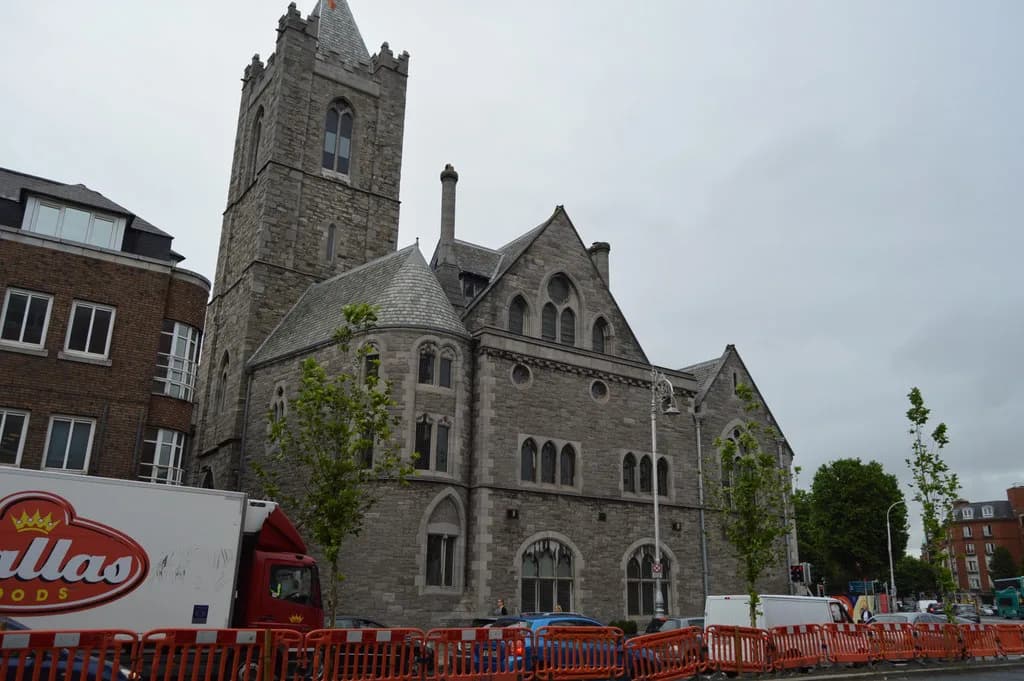
Dublin History Walking Tours: Guided, App and Self-Guided Options
Compare Dublin history walking tours: council-listed guided walks, Dublinia's Viking tour, Trinity's self-guided campus trail and GPS trails.
On this page
A Dublin history walking tour is best chosen by format rather than by route. You can join a themed guided walk led by a named historian or storyteller, take a museum's own Viking and medieval tour, follow an app-based campus trail, or use free GPS trails mapped onto the city's older quarters. The historic layers sit close together in the centre, so the real decision is how much interpretation you want and how much freedom of pace.
One current constraint shapes any plan near the medieval core. Dublin Castle's campus is shut to the public, and there is no through route between Dame Street at Palace Street Gate and Ship Street, so designers of a self-made route should not count on crossing the grounds.
Guided Themed Walks Listed by Dublin City Council
Dublin City Council's own visitor portal surveys a range of guided walks, which makes it a useful place to understand what guided formats exist without relying on a single operator's pitch. Its listings cover revolutionary-history routes, literary and pub-linked walks, a Ulysses trail, the Icon Walk through Temple Bar's side streets, and a north-inner-city history walk known as the Monto tour. Use these descriptions to judge subject matter and style, then book directly with the operator that matches your interest.
For revolutionary history, the council's roundup notes a walk following the 1916 Rising through the streets where fighting took place, and a separate route that begins at Richmond Barracks and traces the signatories' journey toward Kilmainham Gaol. Literary travellers can choose a pub-culture walk or the Joyce-focused Ulysses route, while the Monto walk covers the north inner city's former red-light district and tenements. These are distinct thematic walks, not one continuous trail, and each operator sets its own schedule and price, which you confirm at booking rather than assuming.
Newcomers who mainly want orientation have a lower-commitment route: free city-centre tours that leave from the Spire on O'Connell Street, with one loop passing Trinity College, Temple Bar, Dublin Castle and the two cathedrals, and another heading north past the Garden of Remembrance, Moore Street, the Custom House and the GPO. Note that this is orientation on foot through the streets, not entry into any building, and Dublin Castle is not open to visitors at all under the current closure.
Medieval Dublin on Foot: Fragmentary Stops, Not a Single Trail
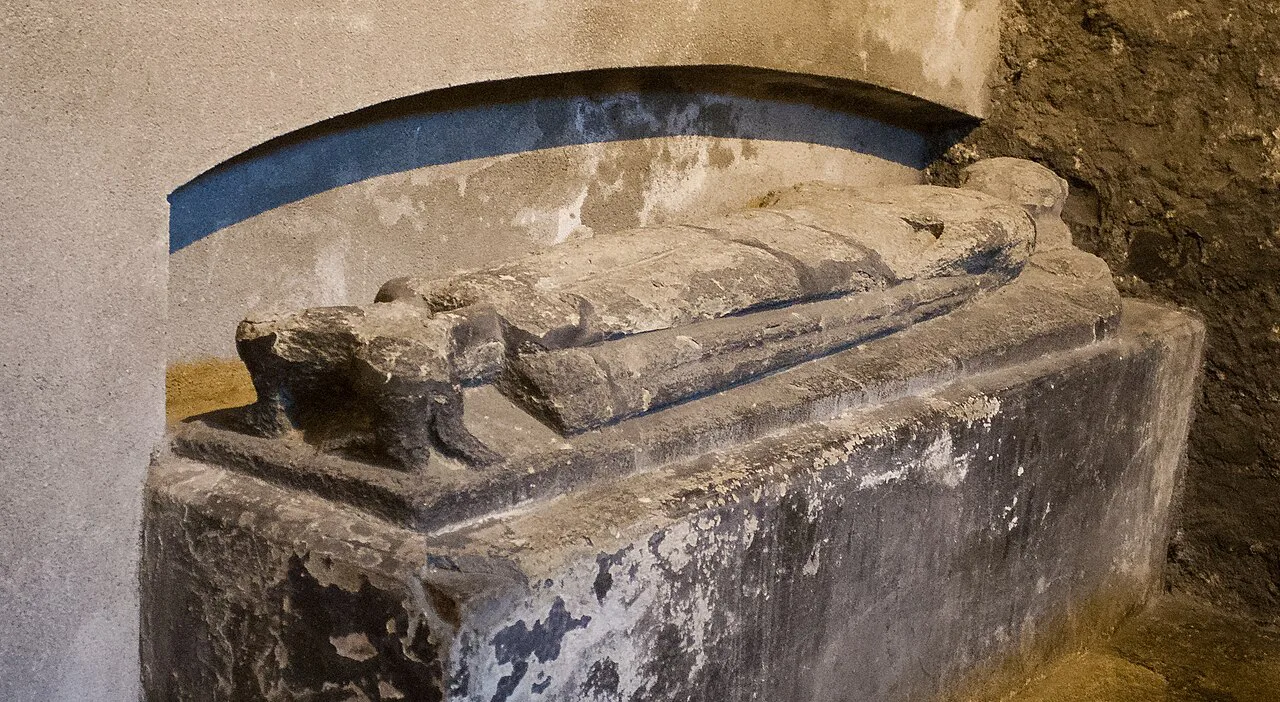
Medieval Dublin survives mostly as fragments scattered through the modern street pattern. Remaining stretches of the city wall still stand, and sections of street follow lines set by gates and tolls; St Audoen's Arch, for instance, was locked each night and used to collect tolls by day. St Audoen's Church itself is believed to have been built around 1190 and is still used as a church. Treat these as interpreted stops on an ordinary urban walk rather than as ticketed attractions with set visiting hours.
Other medieval sites are now only places where something stood. The Heritage Ireland educational material identifies a site of a medieval prison, a water cistern placed in 1308 by the mayor, the Carpenters' Guildhall site, and medieval houses on Cook Street built outside the walls and named after the bakeries there. Because nothing intact remains at several of these, a walker needs a map or guide to read them; the same material points to the National Inventory of Architectural Heritage for local maps.
Dublinia, the Viking and medieval museum in the heart of the old city, provides context before or after such a walk by recreating Viking and early Norman Dublin, including video reconstructions of the medieval city. That makes it a sensible base for understanding what the street fragments once belonged to, rather than a substitute for seeing them.
Dublinia's Viking and Medieval Walking Tour
Dublinia runs its own guided walking tour of Viking and medieval Dublin, around 11.00am Monday to Saturday, starting from its building in the historic heart of the city. The museum states that tickets are free with general admission and can be pre-booked, that tours are in English only, and that they are subject to availability. Confirm the day you want before building your plan around it.
Inside the museum, costumed living-history guides explain Viking weapons, medieval medicine and herbs, and even how to play the Viking board game Hnefatafl. A separate exhibition tour of either the Viking or the Medieval displays takes place around 2.00pm each day, needs no advance booking, and is included in admission, though the museum notes it is not available in July. Pairing the morning walk with the afternoon exhibition tour gives a structured day of interpretation without extra ticket juggling.
Christ Church Cathedral in a Walking Context
Christ Church Cathedral's story reaches back to about 1028, when the original Viking church was founded by Dúnán, the first bishop of Dublin, and Sitriuc, the Norse king of Dublin. The building you see today has been rebuilt repeatedly; in 1562 the nave roof vaulting collapsed, and since then the north nave wall has leaned outward by roughly 46 centimetres. Knowing this helps a walker read the cathedral as a record of successive rebuilding rather than a single-period monument.
The cathedral's crypt once served as a market and meeting place for business, and even housed tippling houses in the seventeenth century, according to its own history. It now holds the Treasures of Christ Church exhibition, displaying manuscripts, artefacts and church silver. Check current opening arrangements before planning to go inside, since the crypt exhibition is an indoor visit rather than something visible from the street.
The cathedral choir sang at the 1742 premiere of Handel's Messiah in nearby Fishamble Street, a detail worth knowing as you pass between the cathedral and the river. If you want the belfry, note that it is reached only by a narrow spiral staircase of 86 steps and tours are not suitable for people with reduced mobility, claustrophobia, a fear of heights, or children under 12. Those constraints make the crypt the more broadly accessible element of a visit.
Trinity College: The Official Self-Guided Campus Trail
Trinity College offers an official self-guided trail of its campus through the Visit Trinity app, covering 14 points of interest with audio from students and academics plus augmented reality elements. It costs €6.50 per person, must be purchased online, and does not include entry to the Book of Kells Experience. Because it is a fully outdoor route, take the university's advice on daylight, and remember that campus tours can only be conducted through Visit Trinity's official guides and authorised staff members.
The appeal of this format is freedom: you can start at any time and move at your own pace, which suits travellers who dislike fixed departure slots. The trade-off is the absence of a live guide to question, and the outdoor-only scope means you leave the historic interiors to other visits. Because the trail is fully outdoors, the university recommends daylight hours.
Council GPS Trails and App-Led Neighbourhood Walks
Dublin Discovery Trails, published by the city's official tourism body, are themed walking trails delivered through a GPS-enabled app, with audio guides, family-friendly framing and some virtual content. They cover areas such as the Dublin Docklands, villages along the coastal trail and local neighbourhoods, so they suit travellers who want to explore beyond the medieval centre. The city lists neither route lengths nor timings, so the app itself is the place to judge how long a chosen trail will take.
These app trails are a different proposition from a guided walk: no narrator watches the clock, and you can split a route across a morning or an afternoon. The trade-off is that interpretation is pre-recorded, so follow-up questions go unanswered. They work well as a complement to a guided walk the day before, once you recognise the street pattern.
How to Choose Between Guided, App-Led and Self-Guided
Choose a guided themed walk if you want a historian or storyteller to connect events to specific streets, as with the 1916 or Monto walks. Choose Dublinia's tour if you want a museum-based Viking and medieval focus with an indoor collection to follow, and book ahead because places are subject to availability. Choose Trinity's app trail if you want campus heritage at your own pace and are content with an outdoor route and no live guide.
Build your own walk around interest rather than distance. Medieval fragments, cathedral history and museum interpretation cluster in the old city, while the Discovery Trails reach the Docklands and coastal villages. Keep the Dublin Castle closure in mind when sequencing stops, since the campus offers no through access and no public entry right now, and look to the city's castles more broadly if fortification history is your main interest.
Match the Walk to Your Interest
Dublin rewards a walker who picks a single theme. Revolutionary history, the literary city, medieval fragments, the cathedral, a museum's Viking tour and a campus trail each need different booking steps and different amounts of time. Deciding what you want to understand first makes the choice between guided, app-led and self-guided straightforward.
Check two things before setting out: Christ Church Cathedral's current opening arrangements for the crypt and treasures, and Dublinia's tour availability for your chosen day. Also treat Dublin Castle as closed to the public, with no through route across its grounds, so your route does not depend on it. For another heritage guide, read about Dublin Art Galleries.
Explore more Ireland guides
Frequently Asked Questions
Is Dublin Castle open for a walking tour?
No. The castle campus is closed to the public, with no through access between Dame Street at Palace Street Gate and Ship Street, from 15 June 2026 for the duration of Ireland's EU Presidency. The operator states that visitors will be welcomed back in January 2027, so check the official page again before planning anything around the site.
What is the difference between a guided and a self-guided Dublin history walk?
A guided walk pairs you with a person who interprets the streets in real time, such as the revolutionary, literary or Monto-themed tours listed by the city. A self-guided option, like Trinity's app trail, gives you pre-recorded audio and augmented reality content to follow at your own pace, with no live guide to ask questions.
Do I need to book Dublinia's Viking and Medieval walking tour?
The museum says tickets are free with general admission and can be pre-booked, and that tours are subject to availability. Pre-booking is the safer choice. Tours run in English only, around 11.00am Monday to Saturday, while the afternoon exhibition tour needs no advance booking and is not available in July.
What does Trinity's self-guided campus tour include?
It gives access through the Visit Trinity app to a 14-stop outdoor trail across campus, with audio from students and academics plus augmented reality elements. The ticket is bought online at the official Trinity Trails page, where the current price is listed, and the Book of Kells Experience is not included. You can start at any time, though daylight is recommended.
Can I walk the medieval walls of Dublin?
Only in fragments. Surviving stretches of the city wall stand in the old city, alongside sites such as St Audoen's Arch, which was locked at night and used to collect tolls by day. Several medieval features are known only from the places where buildings stood, so you need a map or a guide to read them.
How long does a Dublin history walking tour take?
Durations vary by format and operator, and this guide does not set them. Some city-listed walks are described by theme rather than length, while Dublinia's morning walk and afternoon exhibition tour are separate programmes with their own timing. Confirm the length with the operator when you book.
Sources
You might also like



Continue reading
More guides you'll find useful





