Dublin Cemeteries: Four Heritage Sites and How to Visit Them
Compare Glasnevin, Goldenbridge, Arbour Hill and Grangegorman: what makes each Dublin cemetery historically distinct, and how pedestrian access differs.
On this page
Four working Dublin cemeteries are open to pedestrians, and each tells a different part of the city's story. Glasnevin and Goldenbridge belong to Dublin Cemeteries Trust, while Arbour Hill and Grangegorman are maintained by the Office of Public Works and presented through Heritage Ireland. Choosing between them is less about ranking than about matching your interest in scale, burial history or 1916 commemoration.
The practical differences matter as much as the history. Grounds hours are not the same as office hours, car access is restricted at some sites, and one cemetery closes its gates on bank holidays. This guide separates what each institution publishes about visiting from the historical background, so you can plan a respectful, realistic outing.
Four Sites, Two Operators, Very Different Grounds
Dublin Cemeteries Trust manages two of the four sites as working cemeteries that also preserve social and architectural heritage. Glasnevin is the large national cemetery on Finglas Road, while Goldenbridge is a compact walled ground in Inchicore. The Trust frames both through burial, conservation and education rather than tourism alone.
Heritage Ireland, the public-facing arm of the Office of Public Works, presents Arbour Hill and Grangegorman as maintained memorial grounds. Arbour Hill holds the executed leaders of the 1916 Rising, and Grangegorman is described as the largest military cemetery in Ireland. Both publish seasonal guided tours alongside self-guided access.
Glasnevin Cemetery: Scale and the Garden Tradition
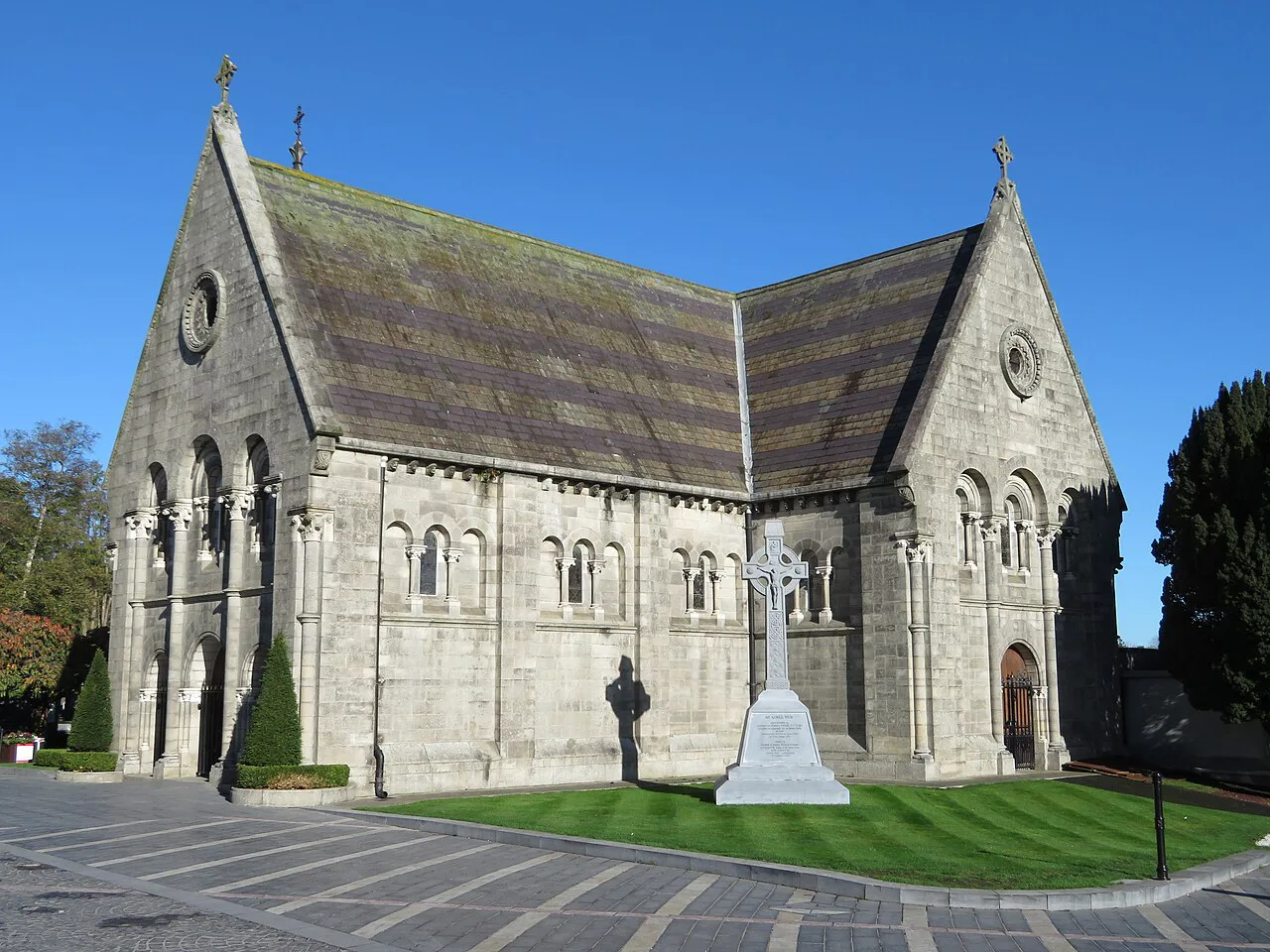
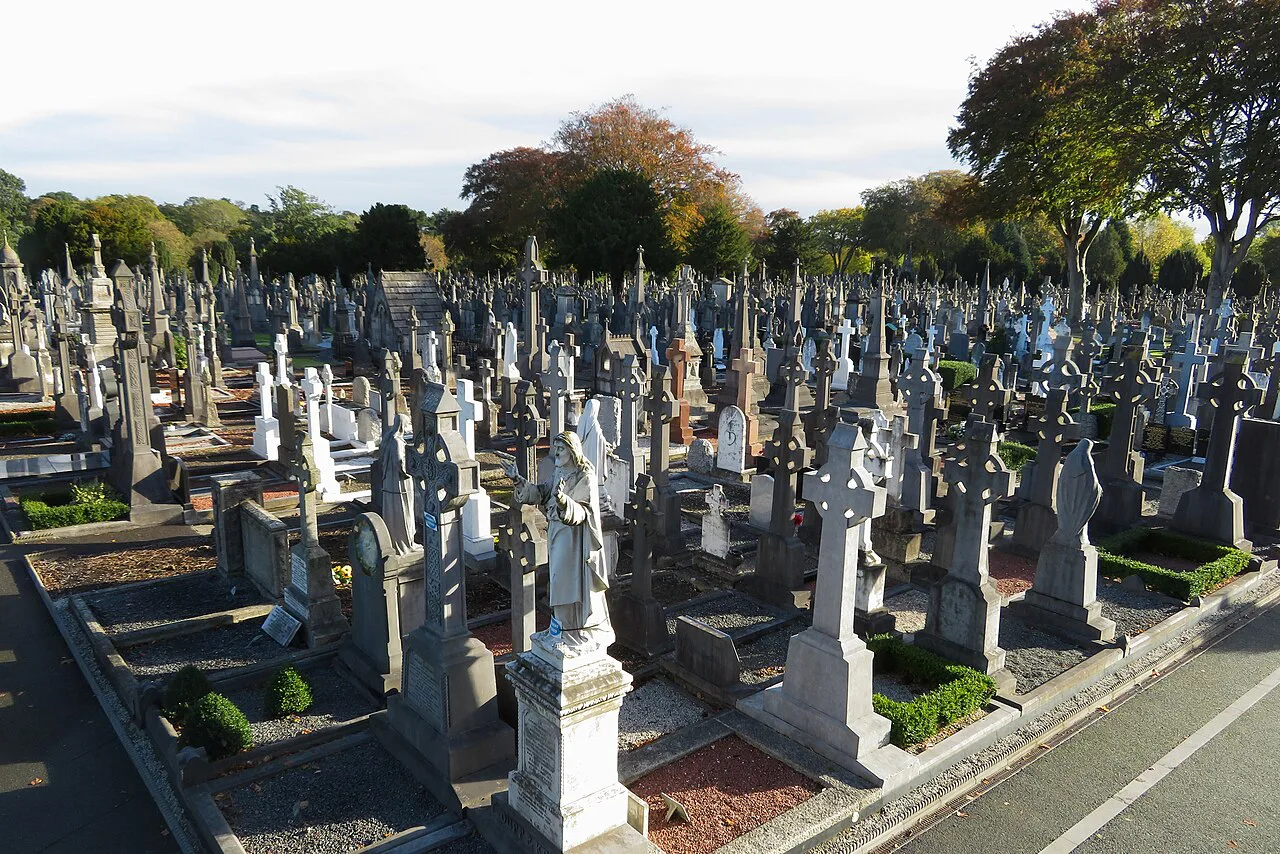
Glasnevin was established by Daniel O'Connell in 1832 and has become the Trust's flagship ground, laid out as a Victorian garden cemetery. The cemetery covers 124 acres and holds almost 1.5 million people, which explains why a walk here feels more like a landscaped park than a single burial plot. The same grounds have also grown to include newer lawn-style plots and memorial gardens.
That combination of old garden cemetery and modern working burial ground shapes what you see. Expect a mix of monumental Victorian tombs, open lawns and contemporary memorial areas rather than a uniform historic landscape. If your interest is Dublin's broader history, the cemetery rewards slow wandering instead of a short stop.
Visiting Glasnevin: Hours, Office and Car Access
Pedestrian access to the grounds runs every day from 8.00am to 6.00pm, which makes Glasnevin the most flexible of the four for a spontaneous walk. The office keeps separate hours: Monday to Friday 9.30am to 5.00pm, Saturday 9.30am to 1.00pm and closed on Sunday. A Sunday visit is therefore possible even though the office is shut.
Car access is much tighter than pedestrian access and should not be assumed. Vehicles are admitted only within set weekday and Saturday windows, with no access on Sundays or bank holidays, so treat the car as a bonus rather than the default plan.
Goldenbridge Cemetery: The Trust's First Ground
Goldenbridge opened in 1828 as the first cemetery established by Daniel O'Connell and the Dublin Cemeteries Committee. The Trust describes its founding purpose as providing dignified burial space for people of all religions and none, which gives the site a reformist character rather than a purely monumental one. It sits on St Vincent's Street in Inchicore, Dublin 8.
The comparison with Glasnevin is telling. Glasnevin is vast and landscaped, Goldenbridge is small and enclosed; together they show how the Trust's burial philosophy developed. Visitors interested in 19th-century Dublin social history will find Goldenbridge's compact scale easier to read in a single visit.
Reading Goldenbridge's Walls and Chapel
The neo-classical Mortuary Chapel was completed in 1835, and the Trust interprets its vaults as having been built to house guards and bloodhounds protecting the cemetery from bodysnatchers. High walls were finished before any burials took place, and a staircase inside the chapel reached the roof for surveillance. This is the Trust's own reading of the surviving fabric.
Goldenbridge reopened as a working cemetery in 2017, offering new burial plots for the first time in nearly 150 years, with income directed to conservation and maintenance. Among the graves the Trust names is W.T. Cosgrave, the first head of government of the Irish Free State. That mix of active burial and 19th-century architecture makes the site unusually layered for its size.
Visiting Goldenbridge: Short Hours and a Bank-Holiday Trap
Pedestrian access at Goldenbridge runs from 9.30am to 3.00pm Monday to Sunday, but the grounds are closed on bank holidays. There is no office on site, so anyone enquiring about purchasing a plot must arrange an appointment through the Trust's contact details rather than turning up. Plan a mid-day arrival and double-check the holiday calendar before you go.
The 3.00pm close is notably earlier than Glasnevin's 6.00pm, so Goldenbridge suits a morning visit rather than an evening one. Because the site is small, you can see the walls, chapel exterior and named graves well within those hours. Visitors looking for a broader walking itinerary around Inchicore should build in time before gates close.
Arbour Hill: The 1916 Leaders' Grave
Arbour Hill's focus is a burial pit holding 14 of the executed leaders of the 1916 Rising, including Patrick Pearse, James Connolly and Major John MacBride. Bodies were placed in an unmarked pit and covered with quicklime; a memorial inscribed in English and Irish now marks the spot. Heritage Ireland describes the site as a place of pilgrimage as well as history.
Beyond the 1916 grave, an adjoining church serves as the chapel for Arbour Hill Prison, with the old cemetery behind it containing memorials to British military personnel. The site sits at the rear of the National Museum of Ireland at Collins Barracks, which makes it easy to pair a cemetery visit with a museum stop. For visitors following the Easter Rising across the city, this is a natural addition to a dublin 1916 walking tour.
Visiting Arbour Hill: Different Hours by Day
The cemetery promises year-round access, but daily hours vary: Monday to Friday 8.00am to 4.00pm, Saturday 11.00am to 4.00pm, and Sunday 9.30am to 4.00pm. Guided tours run on Fridays at 2.00pm from April to October and are booked through the Heritage Ireland visitor centre contact. Walkways are uneven, so appropriate footwear is advised, and dogs are not permitted at the 1916 grave.
The Saturday opening at 11.00am is later than the weekday one, which is easy to overlook if you treat heritage sites as interchangeable. A weekday visit also gives you the widest morning window, while Sunday visitors see a 9.30am start. Checking the current hours before travelling is sensible, since seasonal schedules can shift.
Grangegorman Military Cemetery: Ireland's Largest
Grangegorman opened in 1876 as a burial place for service personnel of the British Empire and their families, and Heritage Ireland calls it the largest military cemetery in Ireland. It lies on Blackhorse Avenue in Dublin 7, close to Phoenix Park. Its layout of mature trees and maintained lawns gives it a distinctly reflective atmosphere.
What distinguishes Grangegorman from Arbour Hill is breadth rather than a single grave. It holds war graves from both world wars as well as graves of British soldiers killed during the 1916 Rising. A limestone screen-wall memorial, standing nearly two metres high, commemorates war casualties buried elsewhere in Ireland whose graves can no longer be maintained.
Visiting Grangegorman: Daily Access and a Social Guide
Grangegorman opens daily from 10.00am to 4.00pm, year round, with guided tours on Thursdays at 2.00pm between April and October. The cemetery's own page advises appropriate footwear and lists dogs on a lead and uneven walkways among its site restrictions. A downloadable social guide is intended to help first-time visitors, families and people with developmental and learning disabilities prepare for the visit.
The single 10.00am opening time is simpler to remember than Arbour Hill's varied schedule, but the 4.00pm close applies every day. If you want the optional guided tour, build your plan around Thursday afternoons in season. Otherwise, a self-guided walk needs no booking.
Comparing Access: Hours, Holidays and Terrain
Pedestrian hours differ across the four: Glasnevin 8.00am to 6.00pm daily, Goldenbridge 9.30am to 3.00pm daily, Arbour Hill with varying daytime hours, and Grangegorman 10.00am to 4.00pm daily. Only Goldenbridge closes its grounds on bank holidays, so do not assume the same rule applies everywhere. At Glasnevin, the office Sunday closure is separate from grounds access.
Guided tours are seasonal and limited to one weekday each: Fridays at Arbour Hill and Thursdays at Grangegorman, both April to October. Outside those months, or on other days, expect self-guided visiting. Arbour Hill and Grangegorman both warn of uneven walkways, while Glasnevin's size means more ground to cover on foot.
Respectful Visiting and What Each Site Offers
Glasnevin and Goldenbridge are active burial grounds, so funeral services and family visits may be underway. Keep to paths, keep noise low and give mourners distance, particularly near chapels and new plots. Arbour Hill and Grangegorman are maintained memorial grounds with their own etiquette: Arbour Hill asks visitors to keep dogs on leads and bars them from the 1916 grave, while Grangegorman lists dogs on a lead and uneven walkways among its restrictions.
If you want monumental scale and garden landscaping, Glasnevin is the obvious choice. For Victorian architecture and a compact story, Goldenbridge is the more intimate option. Arbour Hill suits those focused on 1916, while Grangegorman covers Ireland's military and wartime graves over a longer span. If your wider itinerary leans toward fortifications and medieval civic building, the dublin castles guide offers a complementary frame for the city's stone heritage.
Match the Cemetery to Your Interest
Treat Dublin's cemeteries as four distinct places rather than a single category. The two Dublin Cemeteries Trust sites are working burial grounds with layered history; the two Heritage Ireland sites are memorial grounds with a clear commemorative purpose.
Before setting out, confirm grounds hours and seasonal tours, and remember that Goldenbridge closes on bank holidays while Glasnevin restricts car access. Arriving on foot is the most reliable approach for all four.
For another heritage guide, read about Dublin Free Museums.
Explore more Dublin guides
Frequently Asked Questions
Which Dublin cemeteries can you actually visit?
Glasnevin, Goldenbridge, Arbour Hill and Grangegorman all admit pedestrians, though their hours differ. Glasnevin and Goldenbridge are run by Dublin Cemeteries Trust; Arbour Hill and Grangegorman are presented by Heritage Ireland. Check each operator's page before travelling.
Is Glasnevin Cemetery free to walk around?
Dublin Cemeteries Trust publishes pedestrian grounds access every day but does not publish an admission charge for walking the grounds. Paid services such as plot purchases or funerals are separate. Confirm details with the Trust's office if your visit involves more than a walk.
What is the difference between Glasnevin and Goldenbridge cemeteries?
Glasnevin is the large national cemetery, founded in 1832 and covering 124 acres. Goldenbridge is the Trust's first cemetery, opened in 1828, walled and compact, with a neo-classical chapel completed in 1835. Both are working cemeteries rather than museums.
What is buried at Arbour Hill?
The remains of 14 executed leaders of the 1916 Rising, including Patrick Pearse, James Connolly and Major John MacBride, lie in an unmarked pit covered with quicklime and now marked by a bilingual memorial. The adjoining old cemetery also holds memorials to British military personnel.
How does Grangegorman Military Cemetery differ from Arbour Hill?
Grangegorman is Ireland's largest military cemetery and holds war graves from both world wars alongside soldiers killed in 1916. Arbour Hill is smaller and centred on the executed 1916 leaders' grave. Both are OPW sites presented through Heritage Ireland, with seasonal guided tours.
Are Dublin cemeteries open on bank holidays?
Not uniformly. Goldenbridge's grounds are closed on bank holidays, while Glasnevin admits pedestrians daily but bars car access on bank holidays. Check the individual operator page before a holiday visit rather than assuming a citywide rule.
Do you need to book a guided tour at Arbour Hill or Grangegorman?
Tours are seasonal, running April to October, on Fridays at Arbour Hill and Thursdays at Grangegorman. Self-guided visits need no booking. To confirm a guided tour or arrange one, contact the Heritage Ireland visitor centre in advance.
Sources
You might also like

Continue reading
More guides you'll find useful