Dublin Statues: A Walk Through the City's Public Sculptures
Dublin's statues record labour, literature, music, legend and famine. Use Rowan Gillespie's Custom House Quay memorial and three loose clusters to read them on foot.
On this page
Dublin's statues read as a portrait of a city with several selves at once. Labour heroes, writers, a rock musician, a legend and the dead of the Great Famine all occupy publicly sited ground close together in the centre and the Docklands. This guide names the sculptures, gives the supported location for each, and groups them so you can read them on foot rather than ticking off a list.
Why the Famine Memorial Anchors This Guide
Start at Custom House Quay in the Dublin Docklands, where the Famine statues stand beside the river. Visit Dublin records that the group was presented to the City of Dublin in 1997 and was designed and crafted by the Dublin sculptor Rowan Gillespie. A named maker, a documented date and a riverside public setting make it the best-evidenced sculpture treated here, and the natural centre of any statues walk.
Treat this as one of the sober stops rather than another photo moment. Visit Dublin's Famine Memorial page commemorates the Great Irish Famine of the mid-nineteenth century and dates it to 1845 to 1849, describing it as the event with the most profound effect on Ireland and the worldwide Irish community. Read the figures as a group, since the work is an ensemble rather than a single heroic portrait.
The Famine Context Behind the Sculptures
The memorial's weight comes from the scale of loss it marks. Visit Dublin states that roughly one million people died during the famine and a million more emigrated, reducing the island's population by between 20 and 25 percent, and dates the Great Irish Famine to 1845 to 1849. Treat these as the page's stated figures and its framing of the catastrophe rather than a substitute for reading a dedicated history.
The same page is careful about causation. It notes that potato blight damaged crops across 1840s Europe, but that the impact in Ireland, where a third of the population depended entirely on the potato, was worsened by political, social and economic factors that remain debated by historians. If you want that deeper background before or after the visit, our Dublin history guide sets the city in a longer story.
What to Look for at Custom House Quay
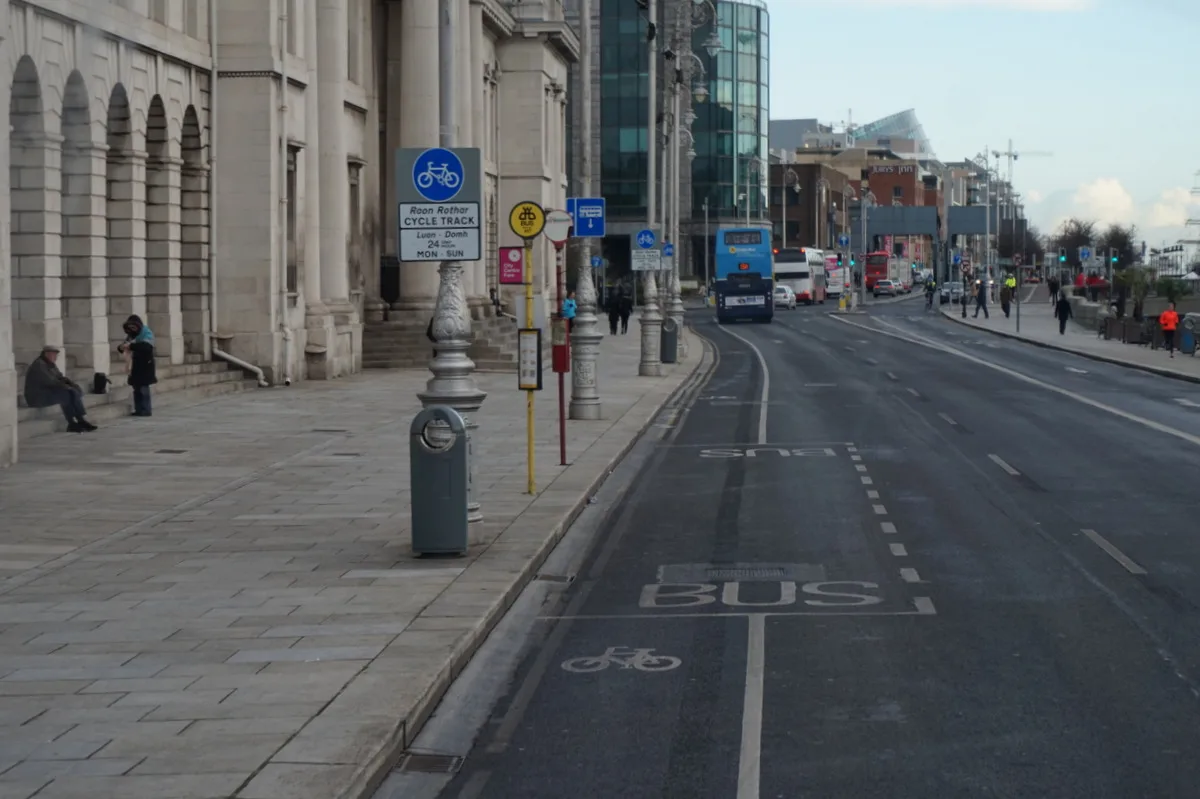
The Docklands setting shapes how the memorial reads. It stands on Custom House Quay beside the river, in a district long associated with departure and trade rather than in a museum interior. Give the group time from more than one angle: the emotional force comes from the accumulation of figures rather than from any single pose.
O'Connell Street: Civic and Literary Memory Side by Side
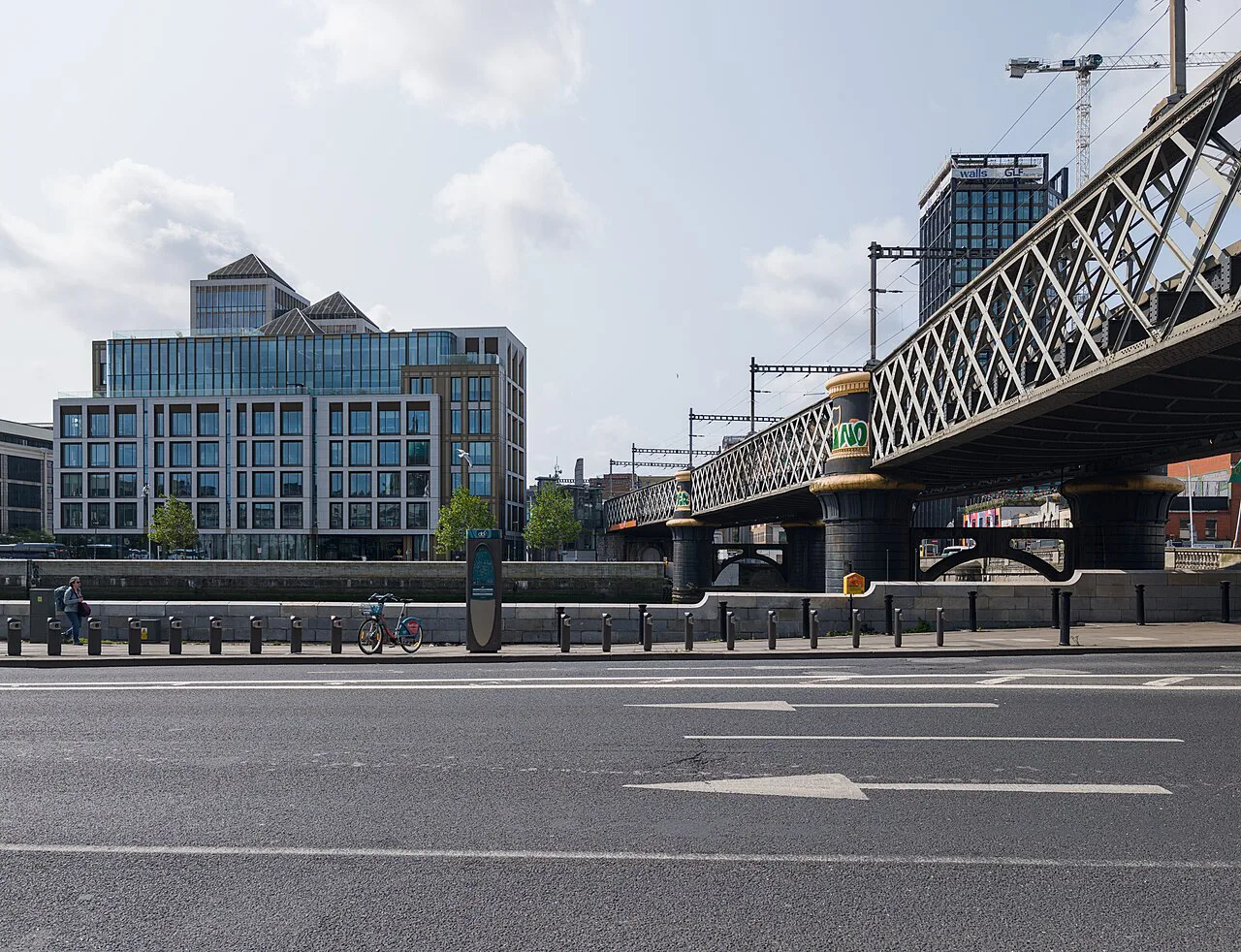
O'Connell Street and its side streets gather two very different kinds of commemoration within a short stretch. A lifestyle guide published by the O'Callaghan Collection places the Jim Larkin statue in the middle of O'Connell Street, a short distance from the General Post Office, honouring the trade unionist and republican. It places the James Joyce statue on North Earl Street, opposite the Spire.
The pairing is the point. One figure represents organised labour and political struggle, the other a twentieth-century novelist whose reputation rests on his writing. Walk the length of the street rather than heading straight for one statue: a public monument to a union leader and a literary portrait tucked onto a side street say a lot about what Dublin honours and where it places it.
Merrion Square and St Stephen's Green: A Parkland Cluster
South of the river, the two Georgian squares hold a looser scatter of figures. The O'Callaghan guide groups statues of Oscar Wilde, W.B. Yeats and Wolfe Tone among those sited in St Stephen's Green Park and Merrion Square, without pinning each one to a particular park. Treat them as a cluster to wander rather than a sequence to follow, since the squares themselves do much of the work of making the sculptures readable.
The settings reward attention to the surroundings as well. Georgian squares and terraces frame the figures, so the walk between them doubles as a lesson in the city's domestic architecture. If the terraces interest you as much as the statues, our guide to Dublin Georgian architecture explains what you are looking at on the surrounding streets.
Molly Malone and Phil Lynott: The Popular Favourites
Two city-centre figures turn up repeatedly in walking descriptions of Dublin. The O'Callaghan guide describes Molly Malone near Suffolk Street, just off Grafton Street, as a figure tied to the song, and places the Phil Lynott statue, bass guitar in hand, on Harry Street, commemorating the Thin Lizzy frontman. Both are described by that commercial lifestyle guide as figures you will pass while walking the central streets; treat the pointers as a starting point rather than a heritage-authority record.
The Molly Malone figure is the one whose location is reported to have changed. An independent Italian travel blog reports that the statue was moved to Suffolk Street on 18 July 2014, having previously stood at the Grafton Street end. That relocation comes from a single secondary source rather than an official record, so confirm the position on the ground rather than relying on older descriptions.
The sculpture will not settle questions about the woman herself. The same blog notes that it is unknown who exactly the woman was and that the statue depicts a fishmonger, while its suggestions about her occupation are its own speculation. Read the figure as a monument to a song and a city character rather than as a documented biography.
Folklore in Public Space: The Children of Lir
Not every Dublin statue commemorates a documented life. The O'Callaghan guide lists a Children of Lir sculpture in the Garden of Remembrance, north of O'Connell Street, representing the legend of King Lir's children, who were turned into swans by their stepmother and kept their voices for centuries until the spell was lifted. The identification rests on that single lifestyle guide, so treat the sculpture's exact place in the Garden as something to confirm on arrival.
Label this clearly as legend rather than history. The value of the sculpture, as listed by the O'Callaghan guide, is that Dublin's public art makes room for myth alongside the politicians and writers. As a northern stop it makes a logical bookend to a walk that began on a different register at Custom House Quay.
How to Group These Statues on Foot
Rather than a prescribed route, think in three loose groups. The O'Connell Street area covers the Larkin and Joyce figures and the Garden of Remembrance; the southside squares cover Merrion Square and St Stephen's Green; Custom House Quay holds the Famine Memorial. You can combine any two in one walk, or treat the quay on its own and spend longer there.
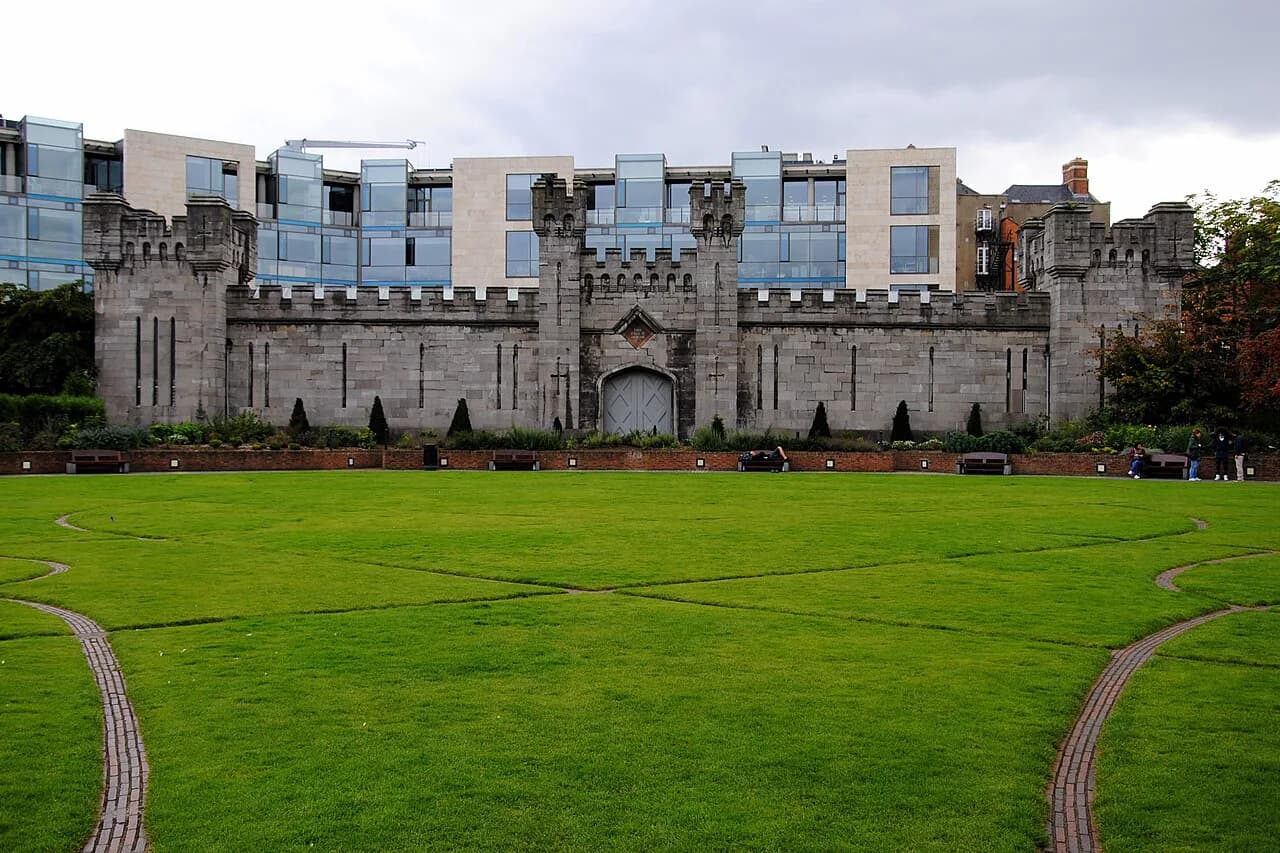
Keep your expectations of facilities modest. These are publicly sited outdoor sculptures, not ticketed attractions, and the sources here do not establish opening times, guided tours or interior access. If you want stone towers and fortified walls instead of bronze figures, our guide to Dublin Castles covers a different layer of the city's built memory; our Dublin 1916 walking tour, meanwhile, follows the revolutionary period rather than the sculptural one.
Reading Dublin Through Its Statues
Taken together, these sculptures show a city commemorating several things at once: labour and republicanism on O'Connell Street, literature in the squares and side streets, music on Harry Street, legend in the Garden of Remembrance and catastrophe at Custom House Quay. The Famine Memorial is the anchor, because it is the one with a named sculptor, a documented date and a clear historical commission.
What the evidence supports is identification and location, not a definitive survey or a ranking. Go with the named statues in mind, let the groupings carry the meaning, and confirm practical details on the ground if anything depends on them. For a wider historical frame, see our Dublin History guide; for more of the city's visual culture, browse Dublin Art Galleries.
Explore more Dublin guides
Frequently Asked Questions
Where is Dublin's Famine Memorial and who made it?
It stands on Custom House Quay in the Dublin Docklands, beside the river. Visit Dublin records that the sculptures were designed and crafted by the Dublin sculptor Rowan Gillespie and were presented to the City of Dublin in 1997. They commemorate the Great Irish Famine, which the same page dates to 1845 to 1849. Read the figures as an ensemble rather than looking for one central portrait, and approach from the quay so the riverside setting is part of the visit.
Which Dublin statues can you see on a short city-centre walk?
Three loose groupings work better than one long route. Around O'Connell Street and its side streets, the Jim Larkin statue near the General Post Office and the James Joyce statue on North Earl Street sit close together, with the Children of Lir listed in the Garden of Remembrance to the north. South of the river, statues of Oscar Wilde, W.B. Yeats and Wolfe Tone are grouped among those in St Stephen's Green Park and Merrion Square. Custom House Quay, holding the Famine Memorial, works best as its own stop. These are outdoor figures rather than ticketed attractions.
Where are the James Joyce and Jim Larkin statues in Dublin?
A lifestyle guide published by the O'Callaghan Collection places the Jim Larkin statue in the middle of O'Connell Street, a short distance from the General Post Office, and the James Joyce statue on North Earl Street, opposite the Spire. Those locations come from a secondary commercial guide rather than a heritage authority, so treat the street-level pointers as a starting point and confirm exact positions once you are there. Both are outdoor figures you can see while walking the street.
Where is the Oscar Wilde statue in Dublin?
The O'Callaghan Collection guide groups a statue of Oscar Wilde among those sited in St Stephen's Green Park and Merrion Square, and does not pin each figure to a specific park. Because that is a secondary lifestyle source, use the squares themselves as the frame and wander rather than hunting a precise plinth.
Where is the Molly Malone statue now?
The O'Callaghan guide locates Molly Malone near Suffolk Street, just off Grafton Street. One independent Italian travel blog reports that the statue was moved to Suffolk Street on 18 July 2014, having previously stood at the Grafton Street end, but that relocation detail comes from a single secondary source. Confirm the current position on the ground rather than relying on older descriptions. The sculpture is best read as a monument to the song, since that blog says it is not known who exactly the woman was.
Where is the Phil Lynott statue?
The O'Callaghan Collection guide places the Phil Lynott statue on Harry Street, depicting the Thin Lizzy frontman with a bass guitar. It presents the figure as a well-visited city-centre landmark for fans, locals and tourists. The location comes from a secondary commercial guide rather than a heritage authority, so confirm the exact spot once you arrive.
Sources
You might also like

Continue reading
More guides you'll find useful