
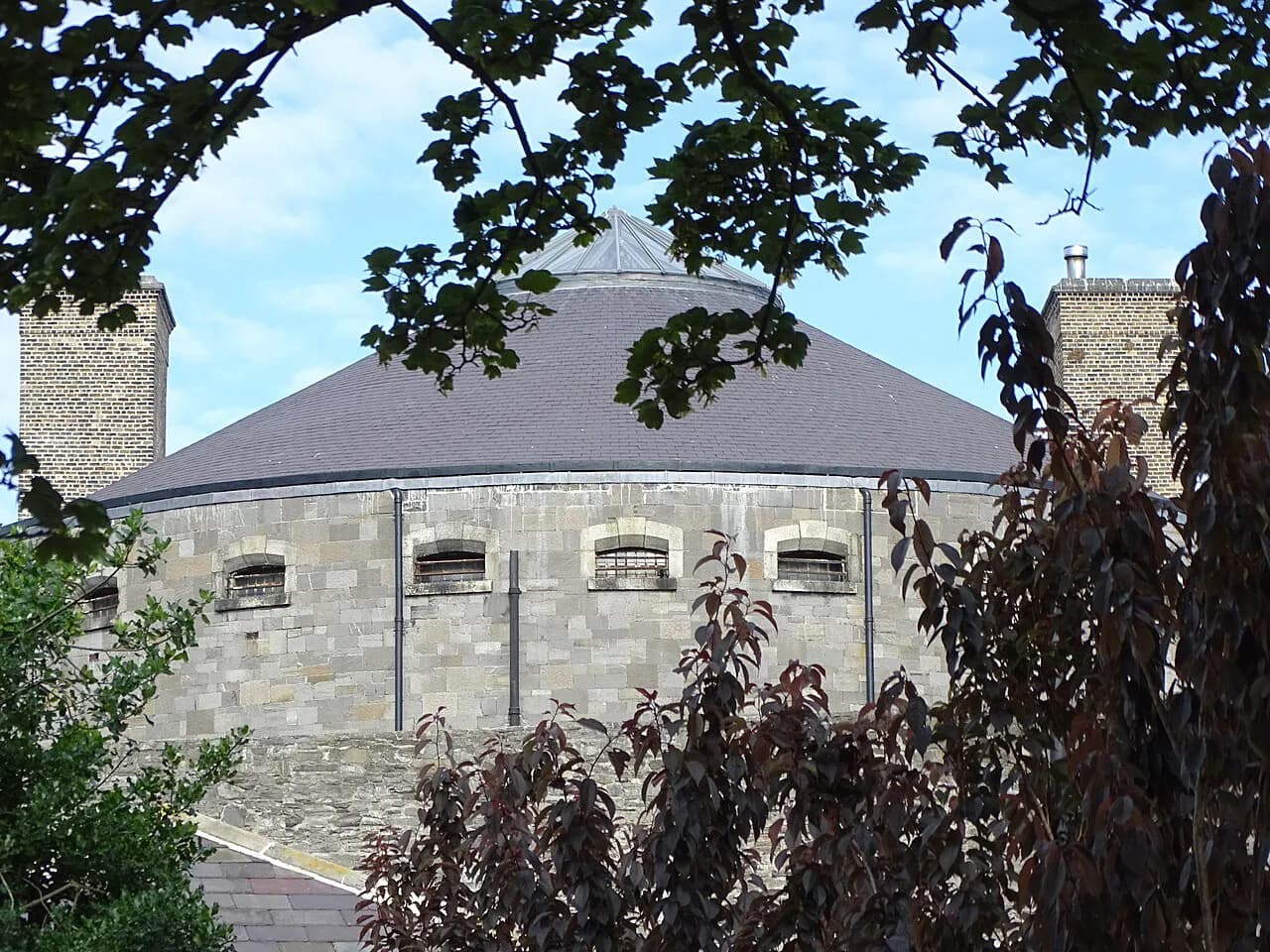
Dublin 1916 Walking Tour: A Self-Guided Route Through the Rising
Plan a self-guided Dublin 1916 walking tour around Liberty Hall, the GPO, Moore Street and North King Street, with advice on guided tours and Kilmainham Gaol.
On this page
Yes, you can walk the 1916 Rising in central Dublin on your own. The route below is an outdoor orientation over public streets and building exteriors, ordered by the sequence of events rather than by distance: Liberty Hall and the printing of the Proclamation, O'Connell Street and the GPO, Moore Street and North King Street. No interior entry is assumed at any stop.
Two things sit outside that central walk. Kilmainham Gaol is a separate, pre-booked guided visit, and archival collections in Dublin and at Kew are research resources rather than on-street interpretation. Keep that division in mind and the walk stays honest about what a street corner can and cannot show you.
Why Central Dublin Works as the Setting
The central streetscape is the main reason a 1916 walk holds together. Reviewing Dublin's 1916 tours for History Ireland, Tony Canavan observed that key buildings, squares and streets in the city remain much as they appeared a century earlier, which he argued turns Dublin itself into a kind of museum of the Rising. That is a useful mental model: you are not reconstructing a vanished city, you are reading surviving fabric against a documented sequence. For background on the city's layers, see our guide to dublin history.
Read that observation as a reviewer's assessment from the time of publication, not a present-day guarantee about any single address. Facades change, ground floors are refitted, and a building's exterior tells you nothing reliable about what is inside or whether you may enter. Treat each stop as a point from which to narrate an event, with the historical claim resting on published accounts rather than on what the wall in front of you looks like today.
The Decisions That Put Men on These Streets
The National Library of Ireland's 1916 exhibition explains why the fighting happened where it did. After the First World War broke out in August 1914, the Irish Republican Brotherhood resolved to stage an insurrection at the next opportune moment, and in May 1915 it set up a military committee of Patrick Pearse, Joseph Plunkett and Éamonn Ceannt, later joined by Seán MacDiarmada and Tom Clarke. That small, secret group is the origin point of everything you will walk past.
The plan nearly collapsed before it began. The exhibition notes that the council placed too much reliance on Roger Casement's proposed arms shipment from Germany; the ship Aud arrived off the Kerry coast on Holy Thursday but failed to make contact with local Volunteers and was scuttled by its captain. When news of Casement's arrest and the lost arms reached Dublin, Eoin MacNeill definitively countermanded Pearse's orders for Easter manoeuvres.
The countermand is the hinge of the story. The Military Council met early on Easter Sunday at Liberty Hall, weighed the consequences of MacNeill's notice in that morning's Sunday Independent, and decided to postpone the Rising until noon the following day so Volunteers around the country could be told it was going ahead. The Proclamation, the exhibition records, was printed that same day on the press at Liberty Hall.
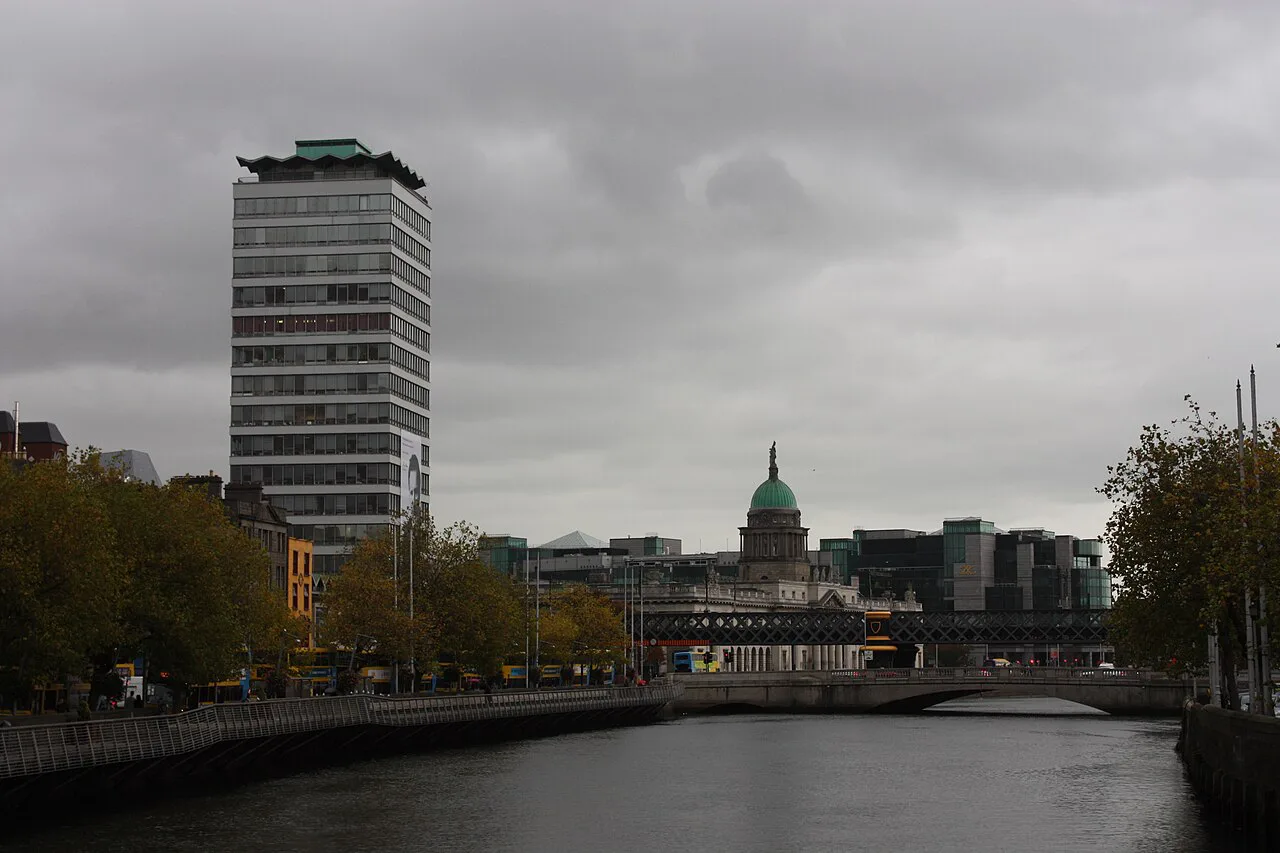
Liberty Hall: Reading the Start From Outside
Liberty Hall earns its place at the beginning of a central route precisely because of the printing decision recorded by the National Library. Stand where you can see the building from the public street and use it to explain the compressed timetable: a plan postponed by a day, a proclamation rushed onto a press, and a city that would be occupied within twenty-four hours. The interest is documentary: what was decided and printed here, understood from outside.
Be strict with yourself about access. The National Library's account establishes the printing at Liberty Hall but gives no basis for treating the building as an interior stop on a 1916 walk; read it from outside and move on. If you want a broader frame for the buildings around you, other heritage guides cover the city's wider story, including its castles.
The Easter Monday Fact to Fix in Your Mind
Before you walk north, anchor the date. The National Archives records that on Easter Monday, 24 April 1916, members of the Irish Volunteers and the Citizen's Army occupied buildings in Dublin and proclaimed an Irish Republic. That single sentence is the frame for every stop: an occupation of buildings, announced as a republic, in a city centre you can still walk through.
Keep that fact's limits in view. It tells you what happened on the first day; it does not map the fighting for you, and it should not be stretched into claims about particular buildings beyond what published accounts state. Let the National Library's day-by-day narrative supply the detail for each address, and let this sentence do the job of fixing the start date in your head.
O'Connell Street and the GPO by Friday
The General Post Office is the stop most walkers connect with the Rising, and the exhibition's account of Friday 28 April explains why. That day Pearse issued a statement admitting the Rising was almost over, and by evening the GPO was on fire; the garrison evacuated to houses in the Moore Street area. The building you face on O'Connell Street is therefore the setting for an ending, not a beginning, and the story continues a short distance north.
The same Friday entry adds two details worth carrying with you. General Maxwell had arrived in Dublin early that morning, and at Ashbourne in County Meath Thomas Ashe and the 5th Dublin Battalion forced a large contingent of police to surrender — what the National Library calls the greatest success of the Rising, and one that happened well outside the city centre. A central walk cannot show you Ashbourne, which is a reminder that the Rising was not confined to the streets under your feet.
Moore Street and North King Street
Moore Street is where the GPO garrison's story spills into a wider area. According to the National Library's account, the evacuation on the evening of 28 April took the garrison into houses in the Moore Street area, and The O'Rahilly was mortally wounded while leading a charge to clear the way for that breakout. Walk the street as the corridor of a retreat rather than a monument, and note how narrow the distance is between the ruined headquarters and the terraces behind it.
North King Street, close by, carries a different weight. The exhibition records intense fighting that night in the area held by Commandant Ned Daly's men. Because these are working city streets rather than a managed site, the useful approach is to read the accounts before you arrive and then walk the line between Moore Street and North King Street slowly, matching the narrative to the street pattern rather than looking for plaques or displays that may not exist.
How to Walk It: Sequence Over Distance
Order the walk by narrative, not by mileage. Begin with the decision-making at Liberty Hall, cross to O'Connell Street for the GPO's Friday, then continue to Moore Street and North King Street for the evacuation and the fighting. This sequence means each stop answers a question raised by the previous one, and it keeps the walk short enough that you can stand still and read rather than hurrying between points.
The trade-off is that this is an orientation over public streets and exteriors only. You will not be entering the GPO, Liberty Hall or any other named building on the strength of a walking route, and no account here should be read as promising an interior display at any address. For a different kind of city walk, our dublin walking tour guide covers other routes.
Guided Tours Versus Walking It Yourself
Guided formats exist, and an independent review gives a sense of how they differed from a self-guided walk. Writing for History Ireland, Tony Canavan described two formats he experienced: one that moved around the city in a military-style vehicle with stop-offs at locations such as the Royal College of Surgeons, Dublin Castle and the GPO, and a separate walking tour that began with an introductory lecture in the International Bar on Wicklow Street and, he estimated, lasted about two hours on foot.
Read that review as what one reviewer experienced at the time of publication, not as a current schedule. He noted cold conditions inside the windowless vehicle in January and heavy walking on the other format, and observed that the walking tour assumed some prior knowledge of Irish history. Present departure points, timings and prices are not settled by a dated magazine piece, so confirm any tour's arrangements directly with its operator before relying on them.
Kilmainham Gaol: A Separate Pre-Booked Visit
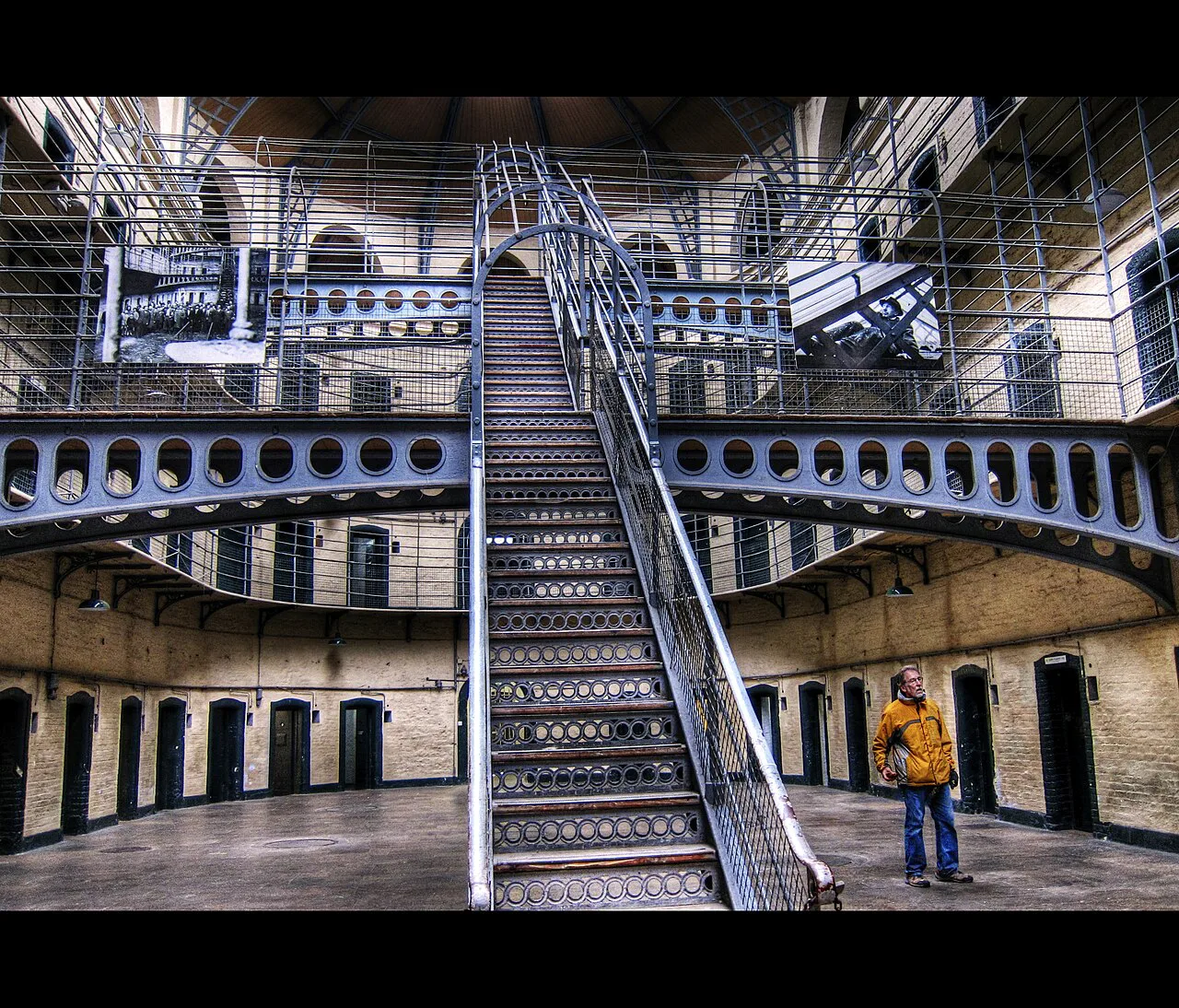
Kilmainham Gaol is not a stop on the central walk. Heritage Ireland explains that the gaol opened as Dublin's county gaol in 1796 and operated until 1924, holding ordinary men, women and children as well as political prisoners connected with rebellions, the War of Independence and the Civil War — which makes it a site of penal and political history rather than simply a roll-call of executed leaders.
Plan it as its own excursion. The Office of Public Works requires pre-booked guided access, suggests allowing about 90 minutes, and notes that part of the tour is outdoors and the interior is cold in winter, so dress for standing about rather than for a heated museum. The museum and the gaol tour are related but distinct parts of the visit, and neither should be treated as interchangeable with the other.
This is the point to check current details rather than assume: confirm availability and booking arrangements with the operator before building a day around it, especially in winter when the interior cold matters more. Pairing the gaol with the central streets works well as a two-part visit — the walk for the week itself, the gaol for its penal and political afterlife — but they are different trips and should be planned as such.
Researching the Streets Afterwards
If the walk leaves you wanting documents, the National Archives of Ireland offers free online collections covering 1912 to 1923, a period running from the 1913 Lockout through the First World War, the Rising, the War of Independence and the Civil War. Among them are daily Dublin Metropolitan Police detective reports on the movements and associations of pro-independence suspects between 29 May 1915 and 20 April 1916, plus the surviving full censuses of 1901 and 1911.
These are research materials, not on-street interpretation, so treat them as an evening's reading rather than another stop. The police reports are especially useful for the pre-Rising city you have just walked through, while the censuses let you place named individuals at addresses. If you want another heritage strand for the same trip, our guide to Dublin's cemeteries is a natural companion.
For original British administrative and military records, the research guide at The National Archives in Kew sets out where courts-martial files, prisoner records and intelligence reports sit among series such as WO 35, CO 904 and HO 45. Some material is online, much of the rest requires a visit to Kew or paid copies. That is a project for after the trip, not a walking stop, and the guide is the right starting point before ordering anything.
Plan Your Visit
Walk the central route in documentary order and keep your expectations calibrated: Liberty Hall for the decision and the printed Proclamation, O'Connell Street for the GPO's fire on 28 April, then Moore Street and North King Street for the evacuation and the fighting. All of it is read from public streets and exteriors, and no stop depends on getting inside a building.
Then separate the two other experiences. Book Kilmainham Gaol in advance as its own guided visit of roughly 90 minutes, and keep the archives for afterwards, whether the free National Archives of Ireland collections or the Kew research guide. Two check-current-details reminders cover the essentials: confirm Kilmainham booking arrangements with the operator, and confirm any guided tour's present arrangements directly rather than relying on older reviews.
For another heritage guide, read about Dublin Cemeteries.
Explore more Ireland guides
Frequently Asked Questions
Can you do a 1916 walking tour in Dublin on your own?
Yes. Central Dublin's Rising story can be followed on foot along public streets and building exteriors, using published accounts to narrate each stop rather than relying on signage or entry to buildings. Order the sequence around the events themselves — the printing of the Proclamation, the GPO's final evening, the Moore Street evacuation and the North King Street fighting — and treat interiors as outside the walk unless a site separately publishes its own visiting arrangements.
Why did the Rising begin on Easter Monday rather than Easter Sunday?
The National Library of Ireland's exhibition explains that Eoin MacNeill countermanded Pearse's orders for Easter manoeuvres once he learned the German arms shipment had been lost and Casement arrested. The Military Council met at Liberty Hall early on Easter Sunday and decided to postpone the Rising until noon the following day so Volunteers around the country could be told it was going ahead, and the Proclamation was printed at Liberty Hall that same day.
Is Kilmainham Gaol part of a central Dublin 1916 walk?
No. Kilmainham Gaol sits outside the central street route and is visited as a separate excursion, with pre-booked guided access rather than walk-in entry. Heritage Ireland notes that the visit includes outdoor sections and a cold interior in winter, so it rewards planning rather than being tacked onto a morning's walk. Check current booking arrangements directly with the operator before you build a day around it.
How can you research the people and records of the Rising after the walk?
The National Archives of Ireland publishes free online collections for 1912 to 1923, including Dublin Metropolitan Police detective reports covering 29 May 1915 to 20 April 1916 and the surviving 1901 and 1911 censuses. For British administrative and military material, the research guide at The National Archives in Kew explains which series hold courts-martial, prisoner and intelligence records, and how much of that material is available online rather than only in person.
Sources
You might also like



Continue reading
More guides you'll find useful





