Viking Dublin: History, Archaeology and Places to Visit
Trace Viking Dublin from the 841 longphort to its excavated houses and graves, and see where that history survives at Christ Church and Dublinia.
On this page
Dublin's Viking history is not a single founding moment but two settlements and a slow transformation into a walled trading town. The evidence comes largely from archaeology rather than battle narratives, and most of what survives above ground is either later building on older ground or museum interpretation. Knowing which is which prevents a lot of disappointment on a walking day; our Dublin History guide is a useful companion for the centuries that followed.
What Viking Dublin Actually Means
Three terms recur in any account of the city's Norse past. A longphort was a defended winter anchorage, not a town; the town that followed had fenced plots, streets and defences; and Hiberno-Norse describes the mixed Gaelic-Scandinavian society that produced both. Treating these as stages rather than synonyms is the clearest way to read the surviving evidence.
According to the Viking Ship Museum's account of Dublin, written by National Museum of Ireland archaeologist Maeve Sikora, the Scandinavians settled from 841 onward and made the site the most important town in Ireland as well as a hub for western Viking trade. That interpretation rests on excavation as much as on written records, which is why the city's Viking story is told through soil layers as often as through kings.
The same account notes that the development was not a smooth upward curve. Dublin's importance fluctuated with wider politics, and control of the town became a necessity for any king seeking authority over the whole island. That political weight, rather than any single battle, is what later medieval writers remembered about the place.
Two Foundations: 841, 902 and 917
The chronology most often cited splits into two acts. The first settlement began in 841 as a longphort where Scandinavians overwintered; it ended in 902 when the settlers were expelled, largely to northern England. They returned in 917 and re-established the site, which then developed into the town of Dublin.
One influential argument, reported in the museum's summary, holds that the Norse learned about urban life during their time in northern England and brought that knowledge back with them in the early tenth century. Whether or not that transmission was quite so direct, the archaeology shows a marked change in density and organisation after the return. That makes 917 a more useful dividing line for visitors than any notion of a single Viking founding.
The Excavated Town: Tenements, Houses and Banks
The most detailed picture comes from excavations carried out by the National Museum of Ireland between 1962 and 1981. Their single most important result, per the museum summary, was evidence of town layout in the tenth and eleventh centuries: a series of fenced plots or tenements traced across more than a dozen successive building levels.
The typical house was a low-walled rectangle with a doorway at each end and a wide living strip running between them, flanked by raised side areas that served as seats or beds. A stone-kerbed hearth sat in the middle of the floor. Visitors who picture a timber hall should adjust: this was dense, repetitive urban housing, rebuilt on the same plots over generations.
Defences evolved too. The settlement was enclosed by an earthen bank in the tenth century, with a second and larger bank added in the eleventh. Successive waterfronts from between the tenth and thirteenth centuries were also recorded, a reminder that the river edge has shifted substantially since the Viking Age.
Trade, Reach and the Wider World
Dublin began as a slaving emporium, with captives largely taken from monasteries and shipped out into the wider Scandinavian world. It developed into the most important trading town in the western Viking world; by the early eleventh century, the museum account suggests, the Irish Sea area could be regarded as a Dublin lake at the height of the town's commercial contacts. That trajectory explains why the town's commercial reach mattered far beyond its walls.
It is worth resisting the idea that Viking Dublin ended neatly at a single founder's moment. The museum account presents the town as founded twice — the 841 longphort and the 917 re-establishment that developed into the city — rather than as a single event with a single ending. The archaeology records town layout, defences and waterfronts across the tenth to thirteenth centuries, so the story is one of cumulative development rather than a curtain falling on one date.
The Dead Outside the Walls: Kilmainham and Islandbridge
Pagan Viking graves of the ninth and tenth centuries were found at Kilmainham and Islandbridge, representing the earliest contacts between Scandinavians and Ireland. Most of the artefacts were recovered in the course of gravel digging and in the building of the railway line in the 1840s, 50s and 60s, not through a planned archaeological campaign, which is why the record is uneven.
Weapons, tools and brooches among the finds indicate that both men and women were buried there, and the material represents at least fifty burials. Kilmainham alone remains the largest known Viking cemetery outside Scandinavia. A possible third cemetery lay north of the Liffey, in what is now the Phoenix Park.
These are not marked visitor monuments, and no one should plan a trip expecting to see graves. The value lies in what the finds say about early contact and about the dead being kept away from the settlement itself. For the city's later burial landscapes, a separate look at Dublin cemeteries is a different subject entirely.
Ships in the Record: Shipbuilding Evidence
Excavation also produced direct evidence of shipbuilding in the Scandinavian manner. Surviving pieces include stems, keels and nailed ship's planks from Viking Age levels, alongside sketches of ships on planks, model or toy ships and lead fishing weights shaped like vessels. The influence ran into language as well: many Irish words for ships and their parts appear to be loan words from Old Norse.
For a visitor, this is the part of the story least visible on the ground. The ships were built, repaired and drawn at a river edge that has since shifted, and the surviving evidence is in the archaeological record — stems, keels and planking — rather than in a Viking street you can walk. The right expectation is to encounter the evidence through interpretation and the archaeological record rather than at a surviving shipyard.
Christ Church Cathedral: A Viking-Era Foundation
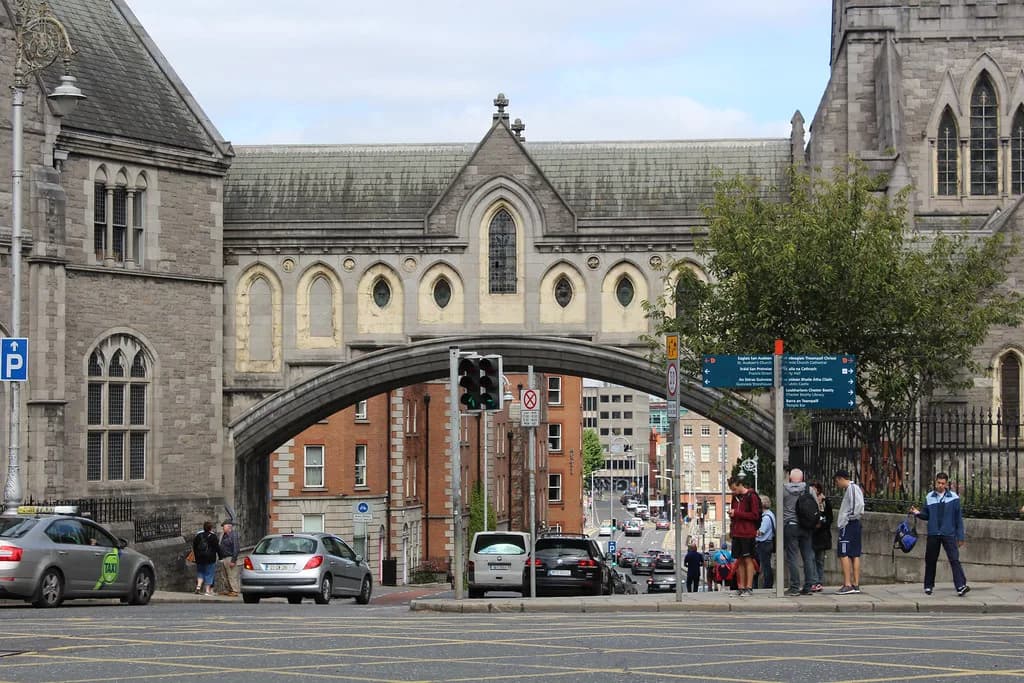
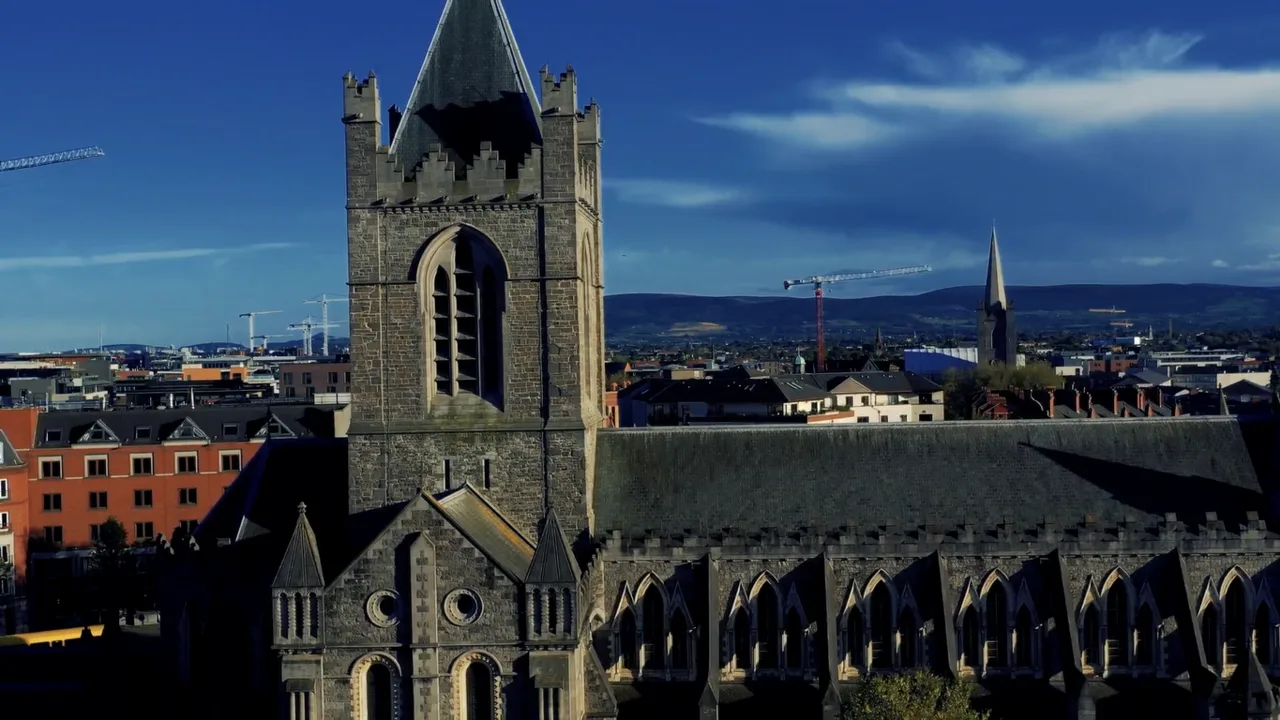
The earliest manuscript dates Christ Church Cathedral to its present location at around 1028, when Dúnán, the first bishop of Dublin, and Sitriuc, Norse king of Dublin, founded the original Viking church. That foundation sits squarely within the Hiberno-Norse town described by the excavations. The cathedral's own history page is the authority for the date and the founders.
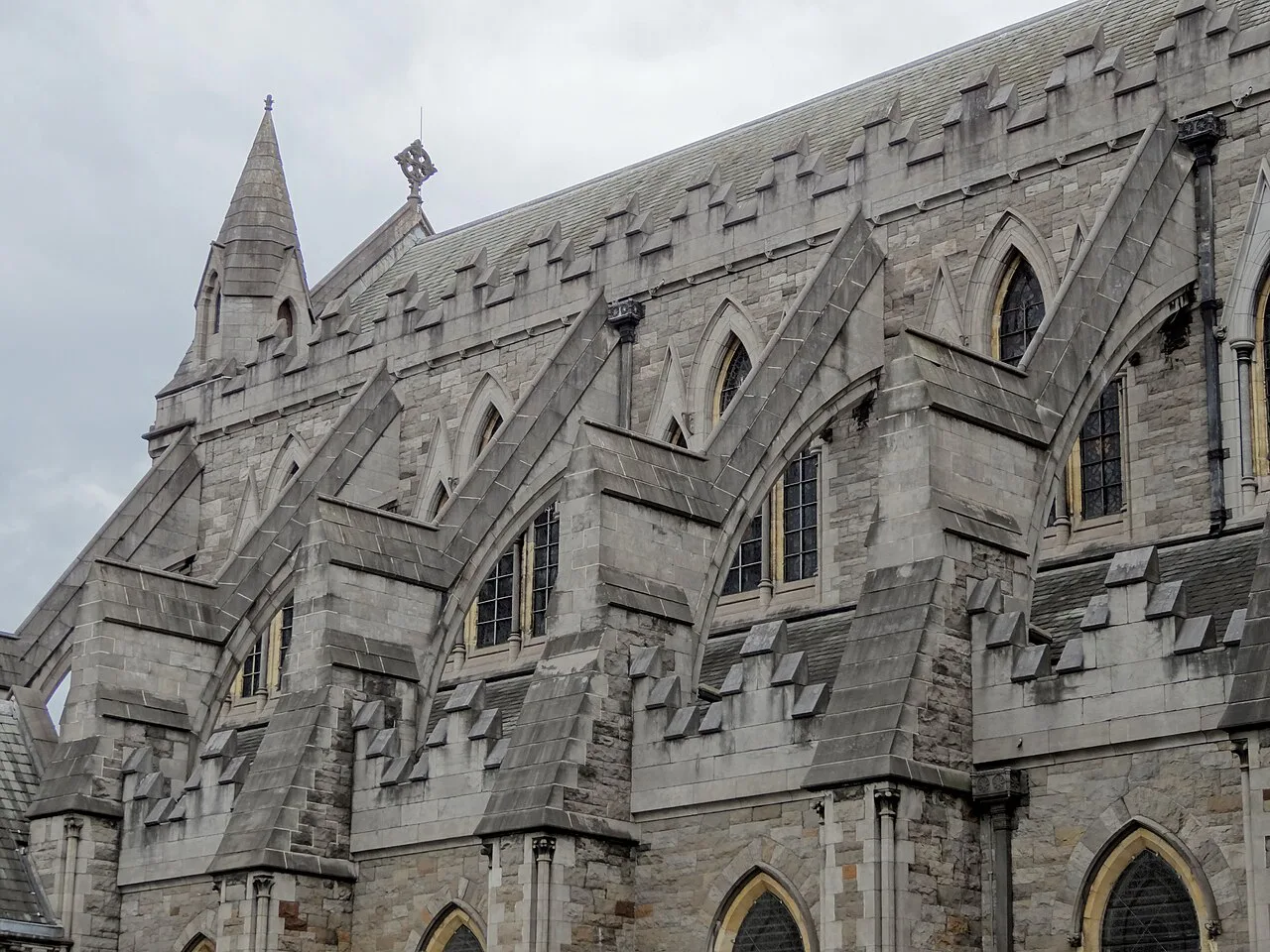
The building you enter today is not the Viking church. The Hiberno-Norse cathedral was replaced under John Cumin, the first Anglo-Norman archbishop, and the present fabric was heavily Victorianised by George Edmund Street's restorations between 1871 and 1878, funded by distiller Henry Roe. Look for the Romanesque and later Gothic survivals, but do not expect to touch 1028 stonework.
The crypt now houses the Treasures of Christ Church exhibition, displaying manuscripts and church silver that convey nearly a thousand years of worship, including royal plate given by William III. The cathedral also states plainly that it has no library or archive on site, so historical queries go to its research advisor rather than to a reading room.
Belfry tours are a separate commitment: the tower is reached by a narrow spiral staircase of 86 steps, and the cathedral advises that these tours are unsuitable for people with reduced mobility or vision impairments, claustrophobia, a fear of heights, or children under twelve. For a broader survey of the city's religious buildings, Dublin churches covers a wider set of sites.
Dublinia and St Michael's Tower
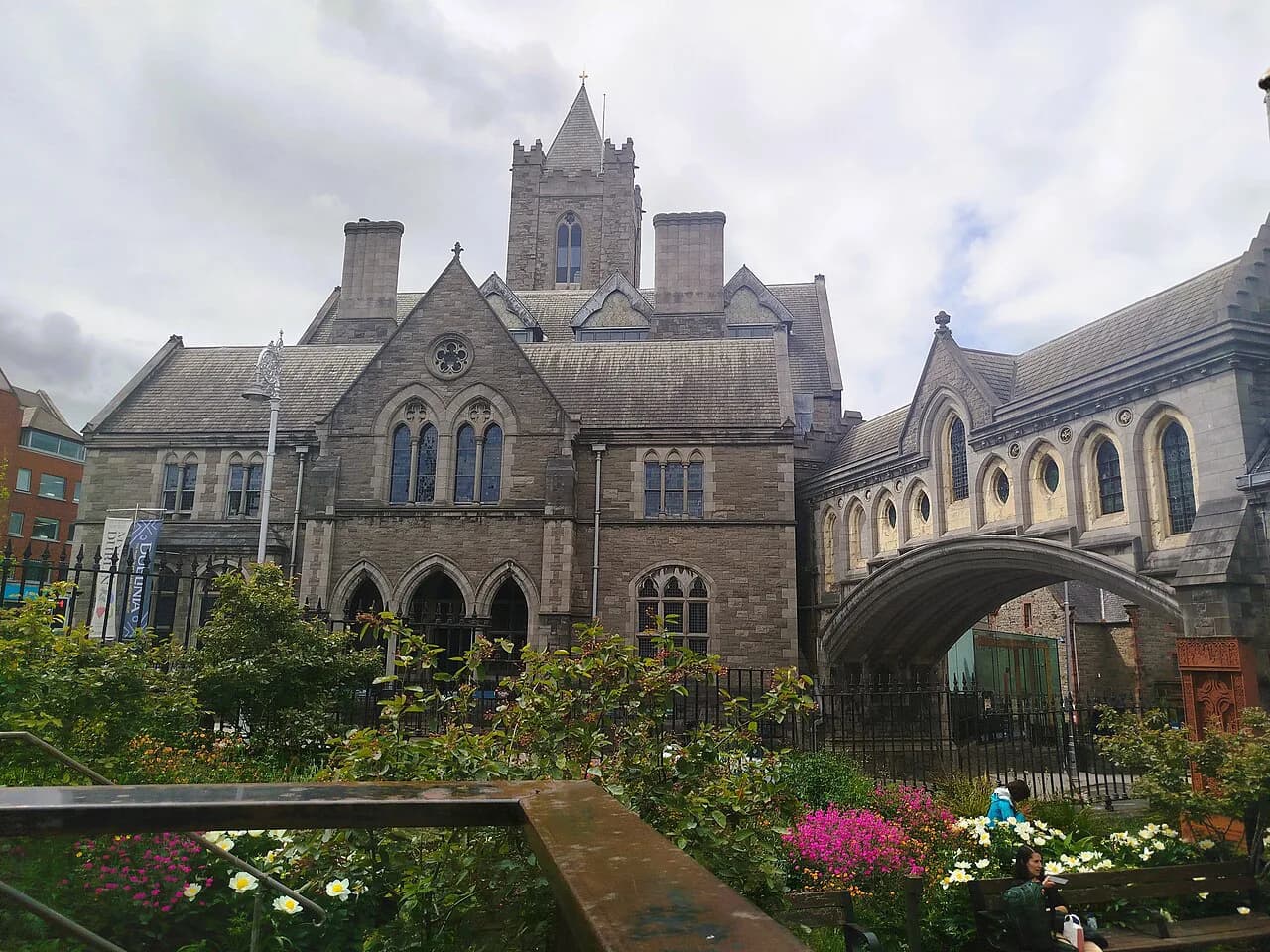
Dublinia handles interpretation, using costumed living-history guides stationed around the exhibition to explain Viking weapons, medieval medicine and herbs, and the board game Hnefatafl. The operator states that a daily exhibition tour runs at 2.00pm and walking tours of Viking and Medieval Dublin run at 11.00am Monday to Saturday; both are included with general admission, given in English only, and flagged as subject to availability. Exhibition tours are not available in July.
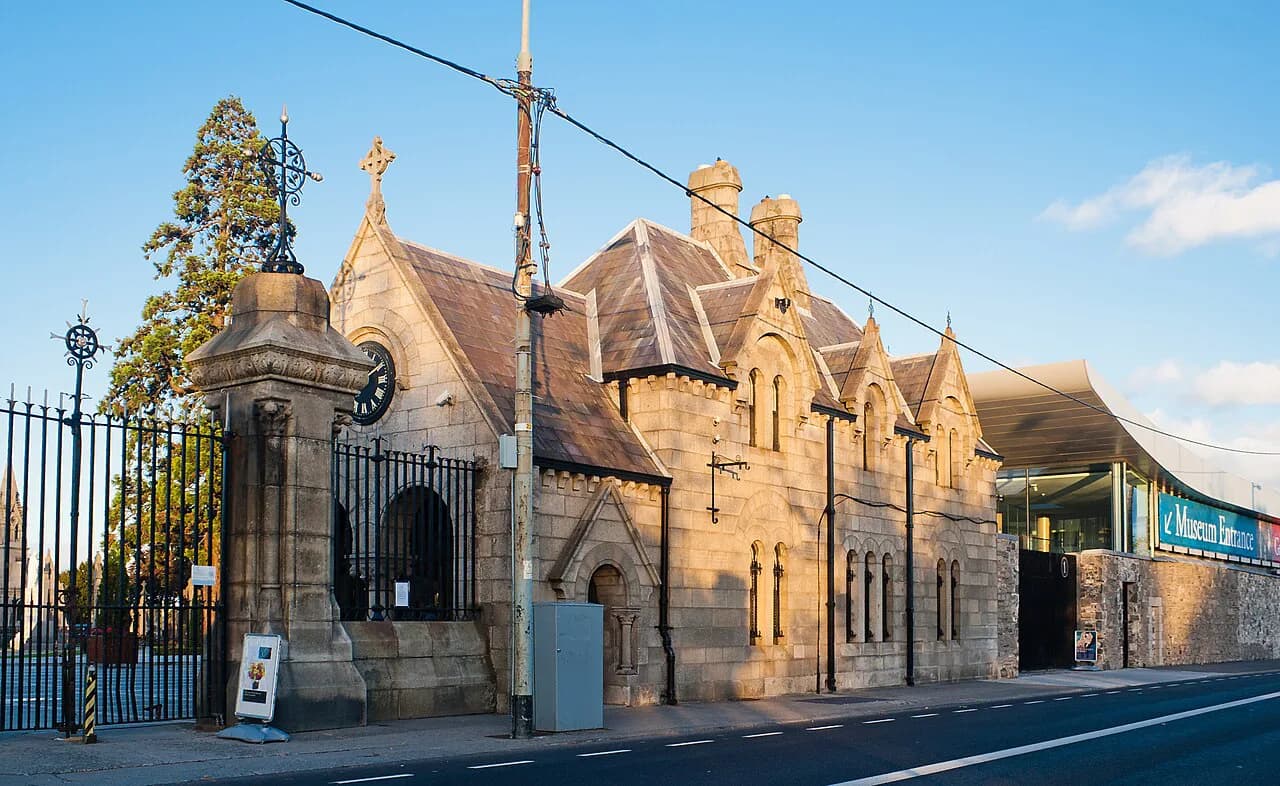
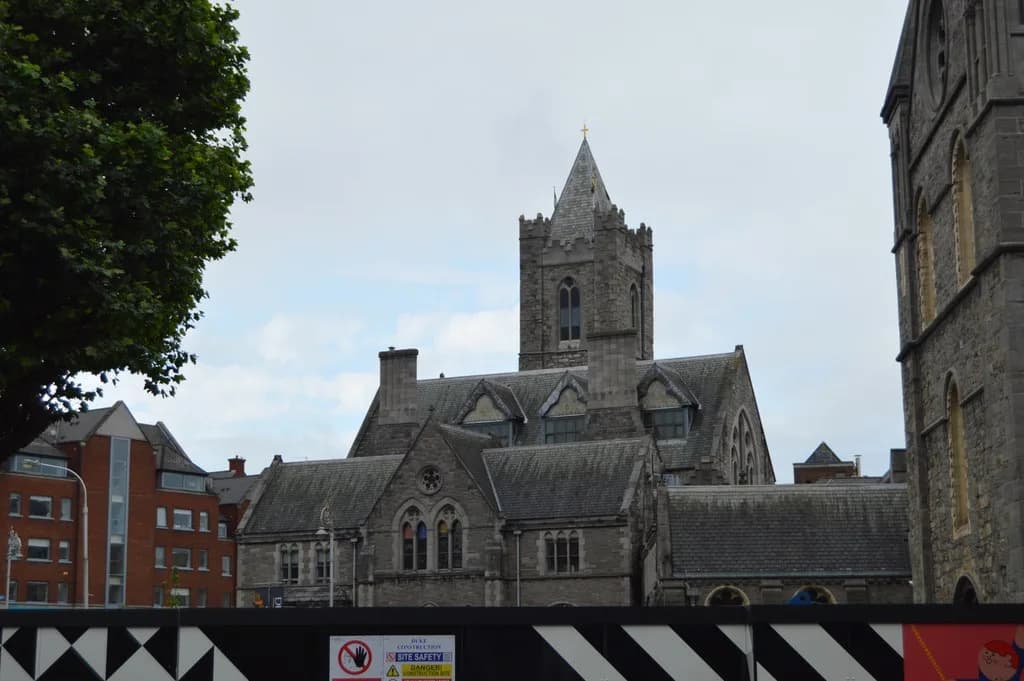
St Michael's Tower is part of the Dublinia visit. The late seventeenth-century viewing tower belonged to the church of St Michael the Archangel, which once stood on the site; the medieval tower was incorporated into the design of the Synod Hall, and remnants of that medieval past survive in the footprint of the nineteenth-century building. An exhibition at the tower's base covers the tower and its surrounding parish.
The climb involves 96 steps, with city views at the top as the reward. Treat that as the deciding factor if anyone in your group has limited mobility or a fear of heights, and note that Dublin Attractions offers a wider choice of places nearby if you want to split a party.
Dublin Castle: Origins, Closure and Planning Around It
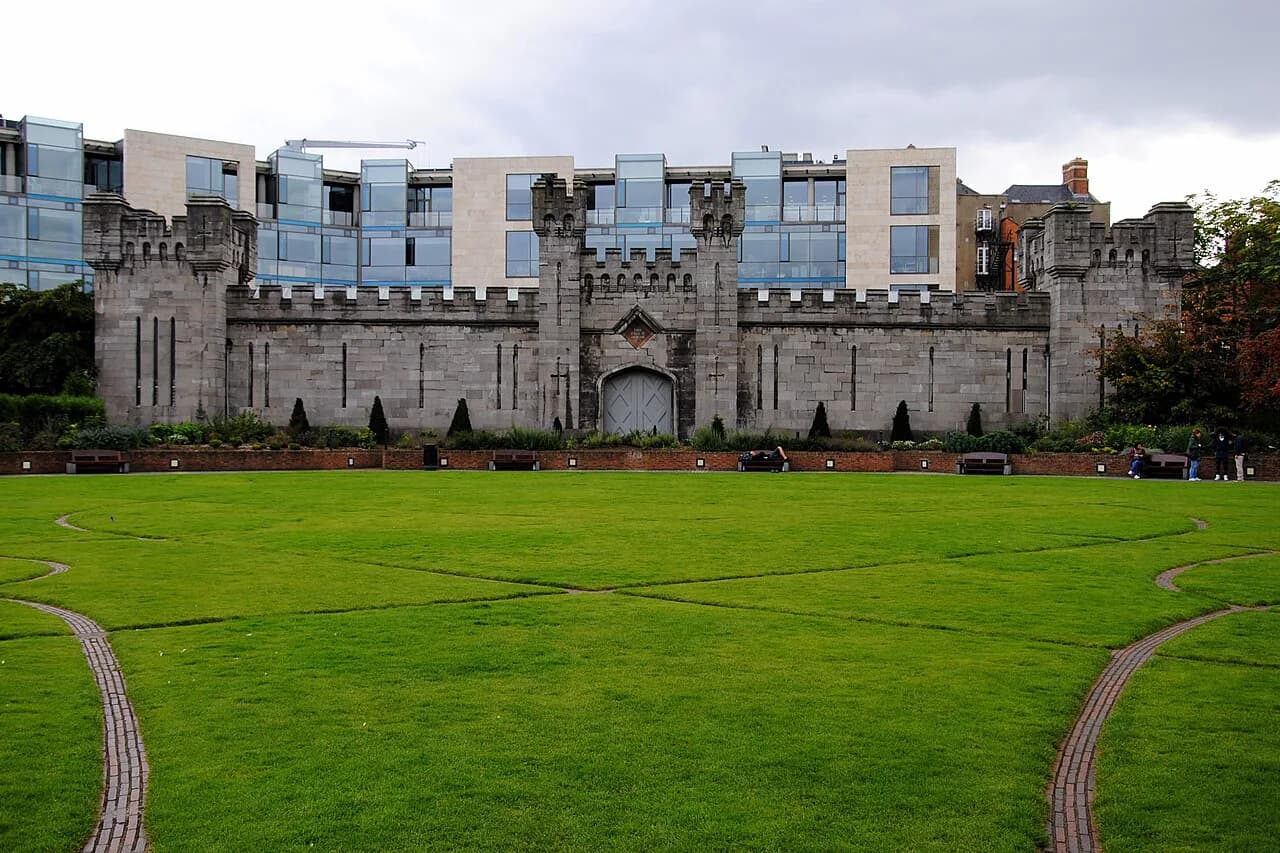
Dublin Castle's history reaches back to the Viking Age, and the castle itself was built in the thirteenth century, serving for 700 years from 1204 until independence as the seat of English and then British rule. That is historical context for the Viking town, not a Viking display: the visit concerns the castle and its later state apartments rather than any Viking fabric, so treat the castle story as part of the wider Dublin Castles heritage.
More immediately, the castle is closed to the public through 31 December 2026 for Ireland's Presidency of the Council of the European Union, with no public access and no through route from Dame Street at Palace Street Gate to Ship Street. Heritage Ireland states that visitors are expected back in January 2027 without publishing an exact reopening day. Plan Christ Church and Dublinia independently rather than routing a walk through the grounds, and verify the notice before you travel.
Trade-Offs: What Each Place Does and Does Not Show
Christ Church gives you a documented Viking-era foundation and a crypt exhibition, but the medieval and Victorian building dominates what you see. Dublinia gives you reconstructed interpretation, guided tours and tower views, but not primary archaeology. The castle, once it reopens, gives you the machinery of later rule. None of the three lets you walk through a Viking street.
Visitors who want material culture should accept that the excavated finds are not tied to a named public gallery, and the cemetery evidence is not a visitor monument. The honest itinerary pairs one interpretive museum with one historic building, then treats the rest as context read in advance; the archaeology rewards background reading more than it rewards an extra stop on foot.
Planning a Viking History Visit
Start with Dublinia for orientation and the St Michael's Tower climb, then walk to Christ Church for the c.1028 foundation and the crypt exhibition. Both are enterable today; the castle is not, and the cemeteries were never a marked site. Confirm tour availability with each operator on the day, since times are given as subject to availability.
Read the archaeology before you go, because the most interesting parts of Viking Dublin are underground or dispersed. The tenement plots, the double earthen banks and the Kilmainham graves are among the evidence behind Dublin's place as the western Viking world's leading trading town, and knowing that makes the surviving buildings read very differently.
Explore more Dublin guides
Frequently Asked Questions
When did the Vikings first settle in Dublin, and was the city founded more than once?
The settlement is usually dated from 841, when Scandinavians established a longphort or defended winter anchorage. That first phase ended in 902 with the expulsion of the settlers, many of whom went to northern England. They returned in 917 and re-established the site, which then developed into the town of Dublin. So there were effectively two foundations rather than one founding event.
What did excavation reveal about Viking-Age Dublin?
National Museum of Ireland excavations between 1962 and 1981 uncovered a town layout of fenced plots or tenements traced over many successive building levels. Houses were low-walled rectangles with a doorway at each end, raised side areas and a central stone-kerbed hearth. The town was enclosed by an earthen bank in the tenth century and a larger one in the eleventh, and successive waterfronts were recorded.
Is Dublin Castle open to visitors, and does it show Viking remains?
Heritage Ireland states that the castle campus is closed to the public through 31 December 2026 for the EU Presidency, with a planned return in January 2027 and no exact reopening day published. Its history reaches back to the Viking Age, but the visit, once it resumes, concerns the thirteenth-century castle and the later state apartments rather than Viking fabric. Check the official notice before planning around it.
Can you see Viking graves at Kilmainham or Islandbridge?
No. The ninth- and tenth-century pagan graves found in these areas are known from finds, most of which were recovered during gravel digging and railway construction in the 1840s to 1860s. They are not presented as marked visitor monuments, so plan to encounter the story through published interpretation rather than at a site.
Does Christ Church Cathedral contain Viking-era fabric?
The original Viking church was founded around 1028 by Dúnán and the Norse king Sitriuc, but the present building is much later and was heavily restored by George Edmund Street between 1871 and 1878. You visit a foundation and an exhibition in the crypt, not Viking stonework. The cathedral notes it has no library or archive on site.
How do you plan a Viking history walk in Dublin without the castle?
Pair Dublinia, which offers costumed interpretation and the St Michael's Tower climb, with Christ Church Cathedral for the c.1028 foundation and the crypt exhibition. Keep the two visits independent rather than routing through the castle grounds, which are closed. The operator lists its tour times as subject to availability, so confirm on arrival.
Sources
You might also like

Continue reading
More guides you'll find useful