
Nenagh Castle: A Norman Tower in the Town's Story
Nenagh Castle is an OPW-managed Norman tower built between 1200 and 1220. Plan the 101-step climb, seasonal access and the walk around it.
On this page
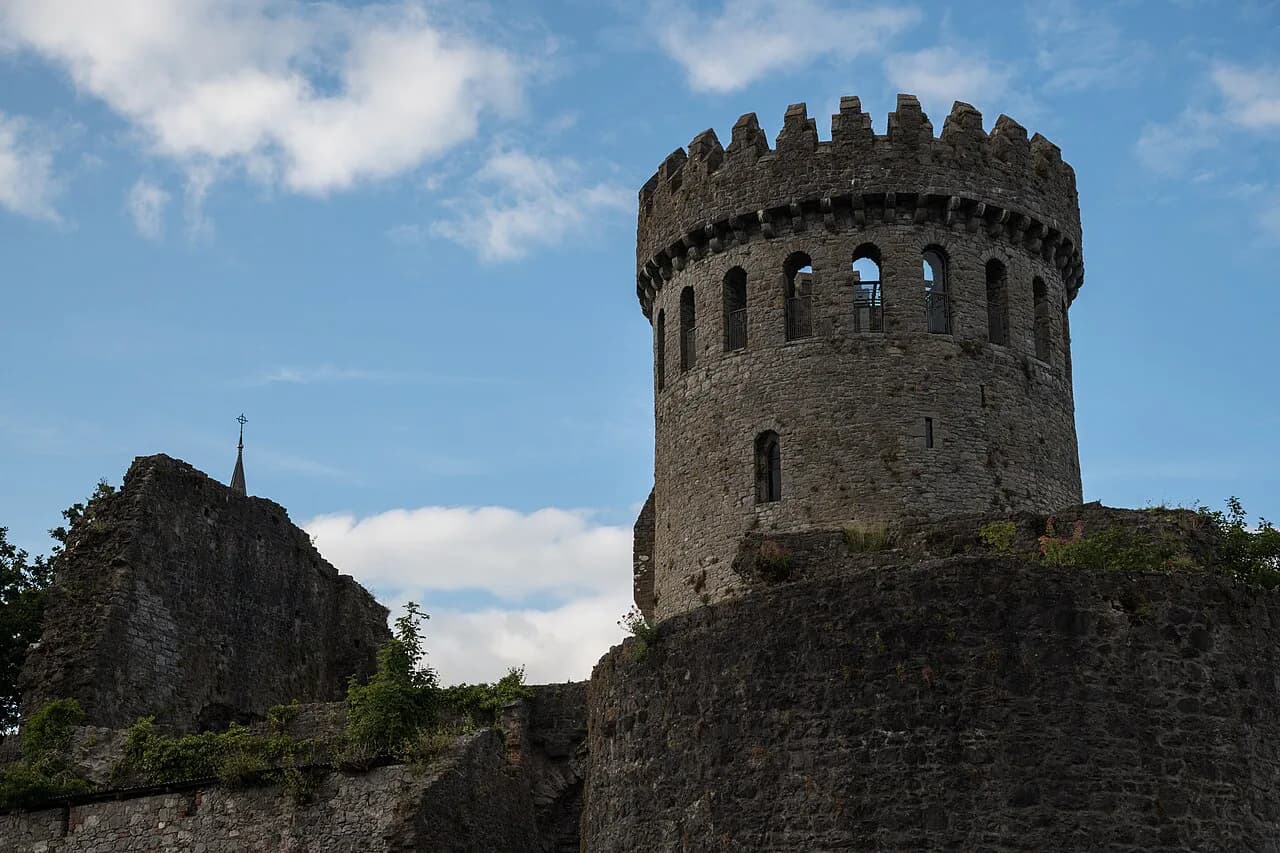
Nenagh Castle is a state-owned National Monument in the care of the Office of Public Works, and it is best understood as one surviving tower rather than a complete castle. The tower is five storeys high with 101 steps to the top, and it was built as part of a Norman castle between 1200 and 1220. That construction is tied to the beginnings of Nenagh town itself, which makes the climb less a viewpoint exercise than a way of standing inside the town's origin story.
Visitors should arrive expecting an unguided monument, not a staffed attraction. The Office of Public Works asks people to take care throughout, and no tickets, guided tours or indoor facilities are published for the site. The main decision is whether you want to make the climb: it rewards those who do with a wide outlook over the town and surrounding area, but the staircase is steep and narrow.
If you are touring County Tipperary's medieval buildings, Nenagh works well as one stop among several rather than the whole day. It sits within the town and is described as walking distance from the tourist office and heritage centre, so orientation is straightforward once you are in the centre. Broader routes through the county are covered in the guide to castles in tipperary, which helps place this tower alongside other sites.
What Nenagh Castle Is Today
Heritage Ireland describes Nenagh Castle as a fine example of a Norman structure, and its protected status is explicit: it is a national monument safeguarded under the National Monuments Acts 1930 to 2014. That legal framing matters to visitors because it explains the character of the place. You are visiting a state-owned monument in the care of the Office of Public Works, so the stone itself and the setting are the attraction.
The castle's significance is inseparable from the town. Its construction between 1200 and 1220 marked the beginning of the creation of Nenagh, so the tower is effectively the anchor point around which the settlement grew. Standing at its base gives you a concrete sense of how a Norman lordship planted itself in a landscape and drew a town around its walls.
The Tower You Climb: Five Storeys and 101 Steps
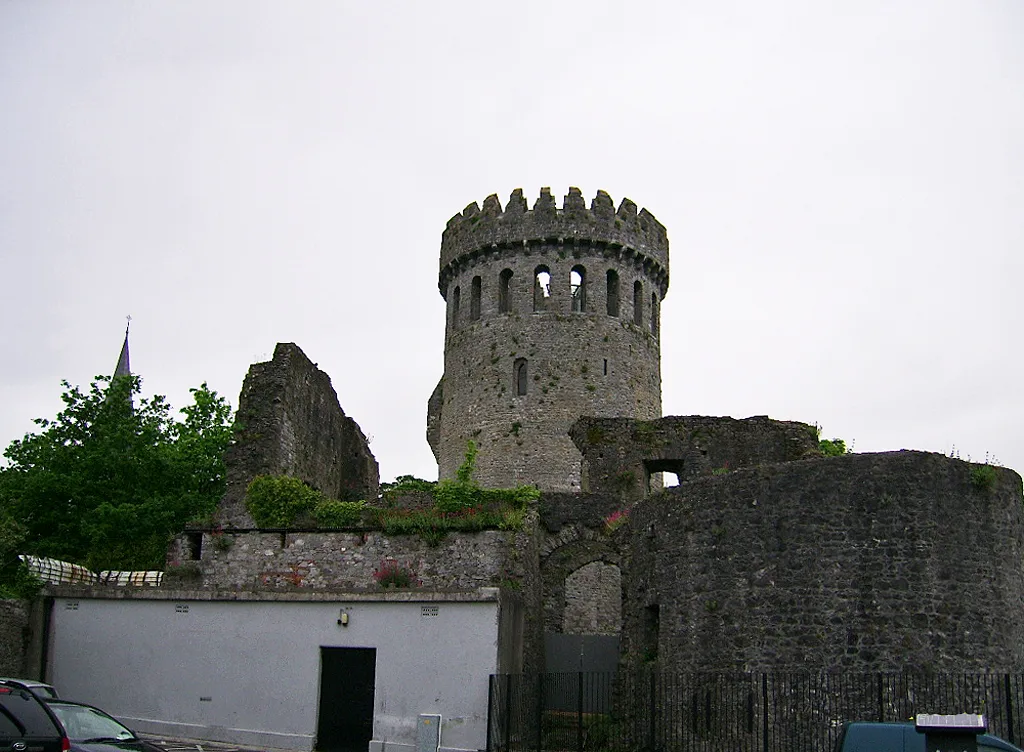
The surviving structure is a five-storey tower, and the full ascent involves 101 steps. Heritage Ireland hedges the interior reading carefully: the second floor is believed to have once been the main public hall, while the third floor served as the lord's private residence. Treat those as informed interpretations rather than furnished rooms awaiting you, because the floors are empty spaces you pass through on the way up.
An independent visitor account adds the physical detail that the official page leaves out: the climb is a steep, narrow spiral staircase. That is the practical crux of a visit. Anyone uneasy with confined, winding stairs should decide before starting, because turning back partway on a spiral is awkward, and the ascent is the main reason to enter at all.
What Once Stood Here
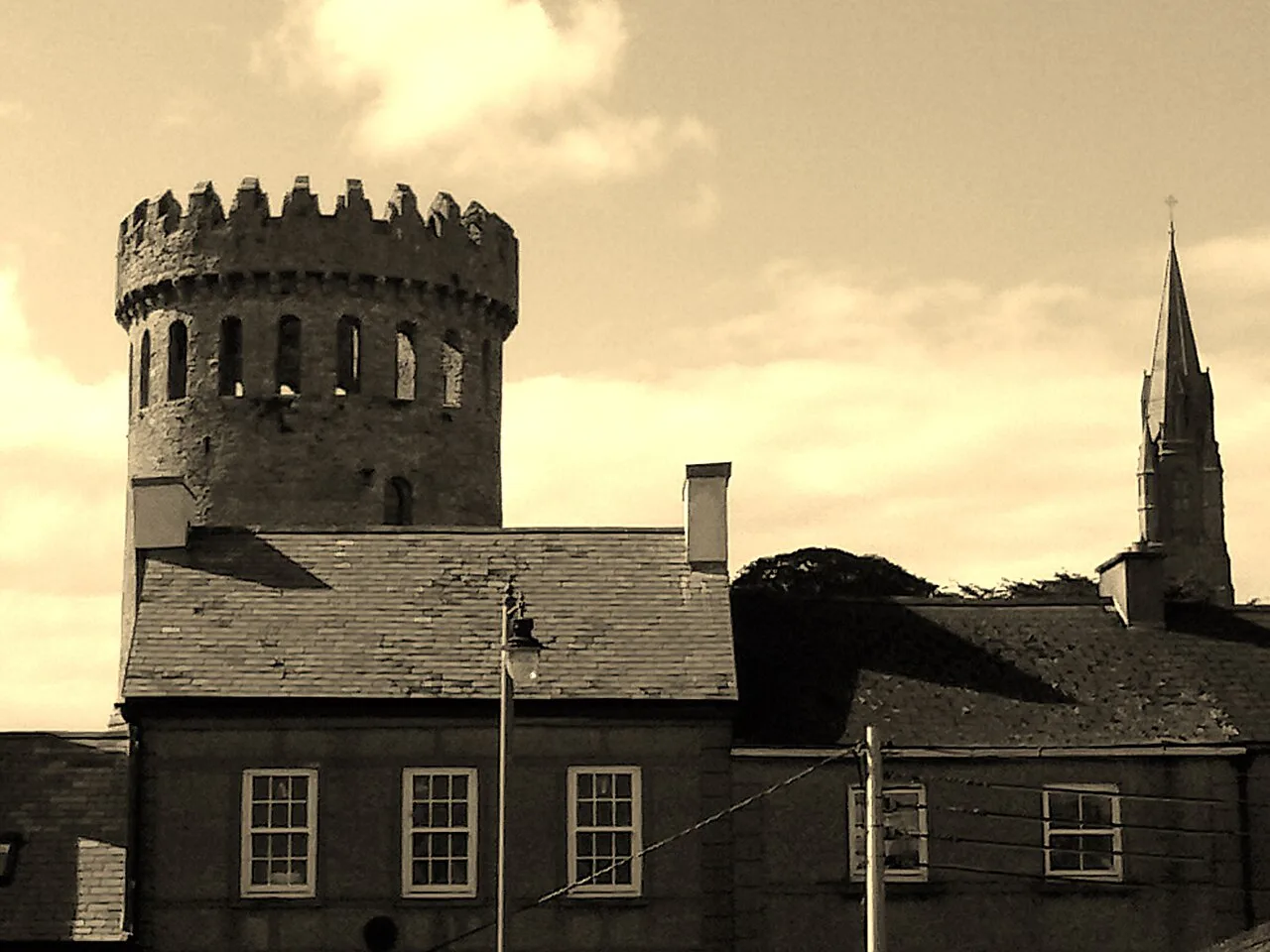
What you see is the last remaining tower of three. The original castle had a curtain wall, a two-towered gatehouse and what was likely a moat, all features that would have surrounded the towers rather than anything a visitor can now walk along. There is a real temptation to scan the ground for traces of these structures; understanding that they are gone saves confusion and sharpens attention on the single tower that survived.
That loss is part of the story. A castle reduced to one vertical element reads differently from a sprawling ruin, and it changes how you experience the site: the tower becomes the entire visit, and the missing walls become something you reconstruct in your head rather than trace on the ground. For travellers interested in how Irish sites survive in fragments, this makes Nenagh a useful counterpoint to more extensive ruins, and if fragmentary survival interests you, the guide to ancient sites ireland shows how much older monuments have come down to us, while the guide to castles in county galway shows how other Irish sites have fared across the centuries.
Who Held the Castle
The ownership sequence is unusually well documented for a site of this size. The castle was initially the main residence of Theobald Walter and remained the seat of his descendants, the Butler family, until the mid-14th century. The Mac Ibrien family held it in the 15th century, and it returned to the Butlers in 1533. Reading that sequence as you stand in the tower gives the bare stone a political dimension: this was contested property, passing between powerful families across three centuries.
The Butler connection is worth carrying with you into the wider region when you look at other castles in the county, and Ormond Castle, Carrick-on-Suir offers another point of comparison for how castle building evolved over time. Reading about the two side by side turns a single climb into a short study of how the castle form changed across generations, without assuming either site matches the other in date or design. If you are extending the trip westwards, the guide to castles in county galway keeps that same comparison going.
The 1760 Gunpowder Episode
One of the strangest moments in the castle's history dates to 1760, when a farmer placed gunpowder in the wall in an attempt to get rid of sparrows nesting there and damaging his crops. The scheme succeeded only in blowing a hole in the wall. Heritage Ireland records the episode plainly, which is reason enough to repeat it plainly: it is a documented event, not local folklore, and it captures how a medieval monument became an obstacle in an ordinary agricultural life.
For visitors, the anecdote is a useful reminder that these structures were lived around and worked against long after their military purpose ended. It also tempers any romantic reading of the tower. A castle in a market town was, for some residents, simply a wall in the way of a crop.
The Climb as an Experience
The ascent is the heart of a visit. The independent account describes safety barricades in place, allowing visitors to settle into a window seat, look up old chimneys and stand within the tall, narrow arches on the roof. Those details set expectations correctly: you are moving through an old structure with safety measures added, not touring a fitted-out interior, and the fabric of the building is what you are there to see.
At the top, the reward is the outlook over Nenagh and the surrounding area. The climb is the trade-off: the same narrow spiral that makes the ascent demanding is what keeps the rooftop feeling like a genuine arrival. Budget energy for the descent as well, and if you are travelling with others, agree beforehand that anyone can wait below without pressure.
Access: Hours, Children and Conditions
Opening is seasonal rather than year-round, and the published pattern is Tuesday to Saturday in two sessions, 10am to 1pm and 2pm to 4pm, with a break over the middle of the day. Because that is a seasonal schedule for an unguided site, confirm the current position on the official page before travelling, especially outside the main season. Visitors under 18 must be accompanied by an adult.
The Office of Public Works describes this as an unguided site and asks visitors to maintain care and caution at all stages. Do not assume that an unguided listing provides staff on hand to answer questions, and consider your comfort with the published stair climb before you set out.
Walking Context in Nenagh
The castle sits within the town, which makes it easy to fold into a walk rather than treat as a drive-out excursion. The independent account notes it is within walking distance of the tourist office and heritage centre, useful for picking up local orientation before or after the climb. Start there, walk to the tower, and let the town's street pattern do the rest.
A short stop here works best paired with another site rather than stretched on its own. Roscrea Castle, with Damer House and Black Mills in the same town, forms a logical second half of a Tipperary day and offers a broader ensemble of buildings to compare with Nenagh's single tower. It is a different kind of visit, which is exactly why the pairing is useful. If your appetite for comparisons grows, the guide to castles in county galway extends the same exercise to western Ireland, where Athenry Castle, Aughnanure Castle and Portumna Castle and Gardens each present a different survival and access story.
Further Study and Protecting the Monument
For anyone who wants the recorded detail behind the visible stone, Heritage Ireland points readers to the Historic Environment Viewer, an official resource for further information on the monument. It is a follow-up tool to consult after your visit as much as an on-site aid, so note it down if you want to read the tower against its documentary record. Those who enjoy reading a landscape through records will find it more rewarding than a casual glance.
National Monument protection is not an abstract label for visitors. Heritage Ireland also signposts its Protect our Past guidance, which sets out why these places are safeguarded under the National Monuments Acts 1930 to 2014. In practice that means treating the walls, stairs and roof arches as fragile fabric: no climbing on barricades, no carving, no removing stone.
That ethic extends across the wider archaeological landscape you may visit on the same trip. Comparisons with ancient sites ireland can help you place a Norman tower within a much longer story of building and abandonment on the island. The tower is medieval, but the habit of reading ruins carefully applies just as well to older monuments.
Plan Your Visit to Nenagh Castle
Treat Nenagh Castle as a short, physical, self-guided stop built around one decision: whether to climb 101 steps up a five-storey tower on a steep spiral staircase. If you do, you get close to the building's fabric and a wide view over the town it helped create; if you do not, the exterior and the surrounding streets still tell the story of a Norman settlement.
Check the published seasonal hours before setting out, bring an adult if you are bringing under-18s, and arrive ready for an unguided monument with care-and-caution conditions rather than a staffed visitor experience. Allow time for a walk into the town centre and a second site in the county to round out the day.
For another heritage guide, read about Cahir Castle.
Frequently Asked Questions
Can you climb to the top of Nenagh Castle?
Yes, when the site is open — climbing is the core of a visit. The tower is five storeys high with 101 steps to the top, and the ascent follows a steep, narrow spiral staircase with safety barricades in places. Heritage Ireland notes the site is unguided and asks visitors to take care throughout, so judge your own comfort with confined winding stairs before starting.
How many steps are there at Nenagh Castle?
The published count is 101 steps to reach the top of the tower, across five storeys. That figure comes from the official Heritage Ireland page for the monument.
When is Nenagh Castle open to visitors?
Opening is seasonal, with published hours of Tuesday to Saturday, 10am to 1pm and 2pm to 4pm, split by a midday break. Because the schedule is seasonal rather than year-round, check the official Heritage Ireland page before you travel rather than assuming those hours apply on any given date.
Do children need an adult to enter Nenagh Castle?
Yes. Under-18s must be accompanied by an adult, according to the published visitor conditions. Given the steep spiral staircase and the unguided nature of the site, that requirement reflects the practical demands of the climb as much as any policy.
Is Nenagh Castle guided?
No. The Office of Public Works describes it as an unguided site and asks visitors to maintain care and caution at all stages. There is no published programme of guided tours, so plan to interpret the tower yourself and use the Historic Environment Viewer afterwards for recorded detail.
What happened to the rest of the castle besides the tower?
Only one of the original three towers survives. The castle also had a curtain wall, a two-towered gatehouse and probably a moat, but these are features of the original design rather than structures you can walk today. Knowing this prevents a fruitless search for walls that no longer stand.
Who held Nenagh Castle over its history?
Construction dates to between 1200 and 1220, and the castle was initially the main residence of Theobald Walter, remaining the Butler family seat until the mid-14th century. The Mac Ibrien family held it in the 15th century, and it returned to the Butlers in 1533.
What is the story behind the hole in the castle wall?
In 1760 a farmer placed gunpowder in the wall to deal with sparrows nesting there and damaging his crops. The attempt only succeeded in blowing a hole in the wall, an episode recorded by Heritage Ireland as part of the monument's documented history.
Sources
You might also like



Continue reading
More guides you'll find useful





