
Dunsany Castle, County Meath: History and How to Visit
Dunsany Castle in County Meath dates from around 1181 and remains a private estate. Interior tours are arranged by email in advance, not by walk-in admission.
On this page
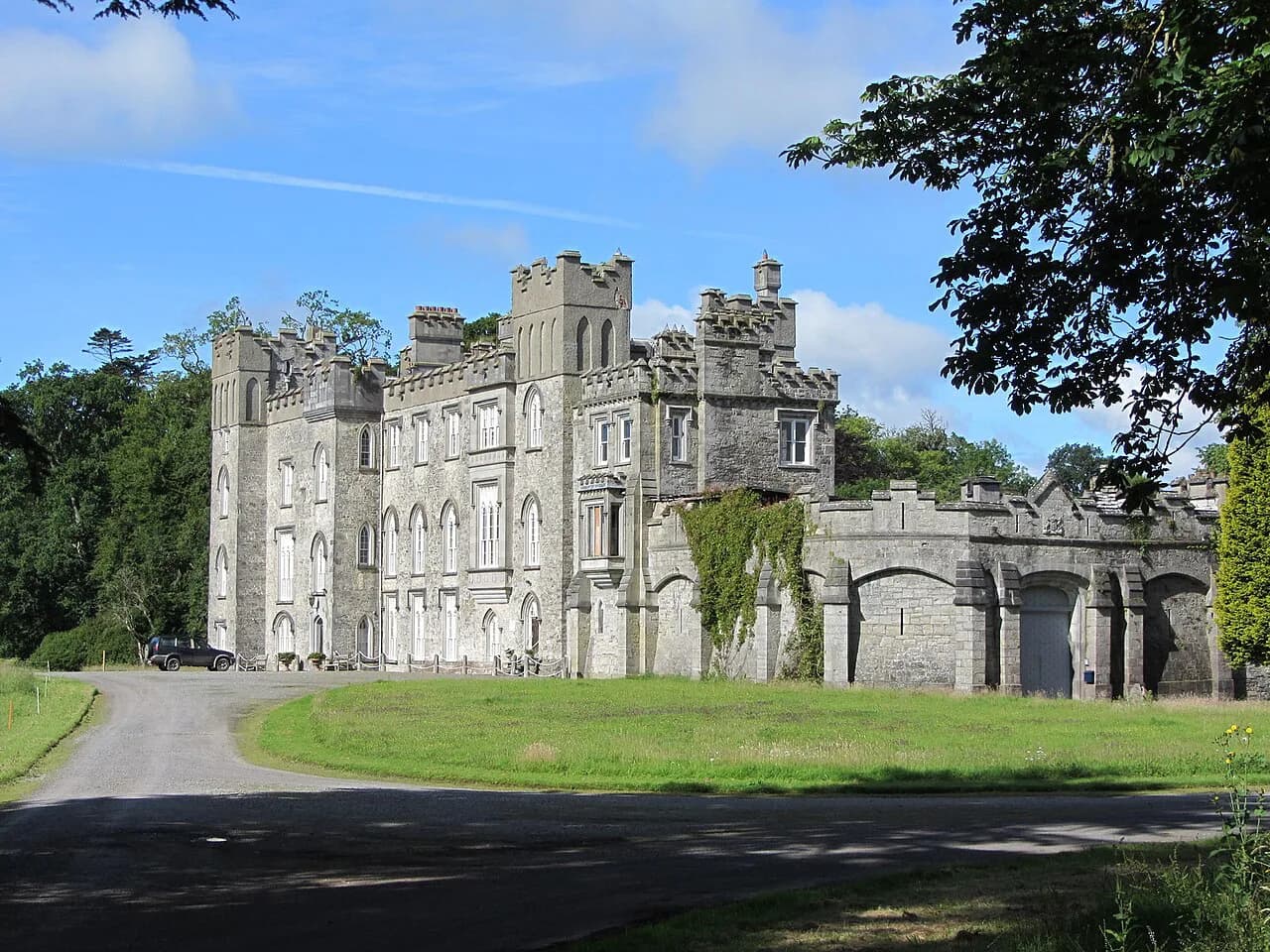
Dunsany Castle is a private country house standing outside the village of Dunsany in County Meath, and the key point for any visitor is that it is not a walk-in attraction. Interior access is arranged in advance by email with the estate office, and the owner's published regular 2026 tour season, which ran from 20 June to 23 August, had ended before late October 2026. As Meath County Council's heritage appraisal records, this is one of Ireland's oldest surviving country houses and probably the oldest associated with a single family, with construction attributed to around 1181.
Origins and the Plunkett Ownership
The county's architectural conservation appraisal traces the castle's beginnings to around 1181, attributing construction to Hugh de Lacy, and records that the property was owned by the Plunkett family. That hedge of "around" matters: the council presents the date as an approximation rather than a documented foundation ceremony, so treat 1181 as a working date rather than a precise one. De Lacy was a central figure in the Norman settlement of Meath, and his name recurs at other fortifications in the county, including the great keep at Trim, which is covered in the guide to castles in meath alongside other sites of the same period.
Continuity of ownership is what gives Dunsany its particular character. The council describes the house as probably the oldest in Ireland still associated with one family, which is an assessment rather than a settled record, since such claims depend on how ownership gaps and transfers are counted. Visitors hoping for a single dramatic story should instead expect a house that accumulated layers because the same family kept adapting it across generations rather than rebuilding from scratch.
Eight Centuries of Reshaping
Dunsany has been modified repeatedly since its medieval beginnings, but the appraisal singles out one phase with unusual clarity: substantial changes made in the 1840s under the architect James Shiel. Because those alterations were recorded while earlier work largely was not, the house is easier to read as a nineteenth-century remodelling than as a medieval castle, even though the medieval core survives within it. The council's point is that this long sequence of change is itself the significance, offering a compact view of how country-house taste shifted from the first such houses to the present.
For anyone trying to understand the difference between a castle and a country house, Dunsany is an instructive case. Its defensive origins belong to the late twelfth century, but the building that stands today reflects centuries of domestic comfort, fashion and estate management. Comparing it with a primarily military structure such as Trim Castle shows how Irish fortifications diverged into fortified strongholds on one hand and lived-in family seats on the other, each demanding a different kind of attention from the viewer. The same choice between a fortified stronghold and a lived-in seat recurs at the castles in county galway, where Athenry and Aughnanure make the contrast plain.
Reading the Demesne From Outside
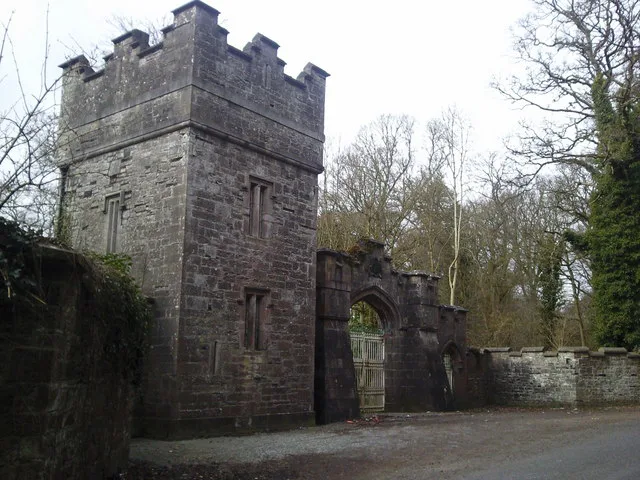
Even without an interior tour, an interested visitor can understand a great deal about Dunsany from the estate landscape documented by the county. The appraisal lists gates and gate lodges, stables, outbuildings, an estate church and cottages, demesne walls, a bridge and a wayside cross outside the Gothic gate. These are the working parts of a country estate, and their survival as a group tells you more than any single building: this was a self-contained economic world, not merely a grand house with a garden.
Note what the appraisal does and does not say. It describes these features as part of the demesne, but it establishes no public right of way, walking trail or garden opening, and the grounds should be treated as a private working estate rather than a park with perimeter paths. Read the list as a way of recognising what you are looking at from public ground, not as an itinerary to walk through gates and across lawns.
The Designed Landscape: Ha-Ha, Walled Garden and Icehouse
Beyond the buildings, the appraisal records designed landscape features that repay a little explanation. A ha-ha is a sunken fence that keeps livestock off a lawn while leaving the view uninterrupted from the house, so its presence tells you the front lawn was meant to be seen as continuous open parkland. A walled garden provided shelter and controlled growing conditions, and an icehouse stored winter ice for later use, both features that reveal how a large estate fed itself and its household before refrigeration and modern supply chains.
These features also explain why the estate is treated as a single designed whole rather than a collection of separate old buildings. The parkland setting is the reason the house reads as it does, and any change to the surrounding land affects the view the building was made for. When you compare Dunsany with other places nearby, the distinction between a preserved building and a preserved setting becomes clearer, and the value of landscape features that many visitors would overlook becomes obvious.
Older Layers: The Mottes and the Ruined Church
The demesne contains three mottes, the raised earthen mounds that marked Norman strongholds, and the county identifies the eastern one as likely the site of the original stronghold. The hedge is deliberate on the council's part, so treat the identification as the most probable reading rather than a certainty. Beside the mound stands a ruined manorial church, another indication that this landscape was organised for defence, worship and farming long before the present house took its shape.
Mottes can be hard to appreciate without context, since they often survive as little more than grassy mounds. Knowing that they were raised to support timber defences, later sometimes replaced in stone, helps explain why so many Irish fortified sites look unremarkable at first glance. For readers building a wider picture of earthwork and stone monuments, the overview of ancient sites in Ireland gives the sequence in which these forms appeared, which makes a modest mound far more legible when you encounter one.
Why the Demesne Is Protected
Dunsany Castle Demesne is designated an architectural conservation area in Meath County Council's consolidated development plan for 2021 to 2027, as varied. The designation is recorded in the plan's appraisal of historical development and built form, and the plan's objectives are aimed at preserving the character of the demesne and its designed landscape. A 2024 notice on the council's consultation page relates to that consultation process and says nothing about whether the castle is open or closed.
In plain terms, the plan's objectives limit new development inside the demesne and require any maintenance, repair or alteration to use appropriate materials and workmanship. That protects the group of buildings and landscape features as they relate to one another, rather than treating the house in isolation. It does not grant or describe public access, create a visitor facility or oblige the estate to open, so designation and admission are separate matters that are easily confused.
Planning an Interior Visit
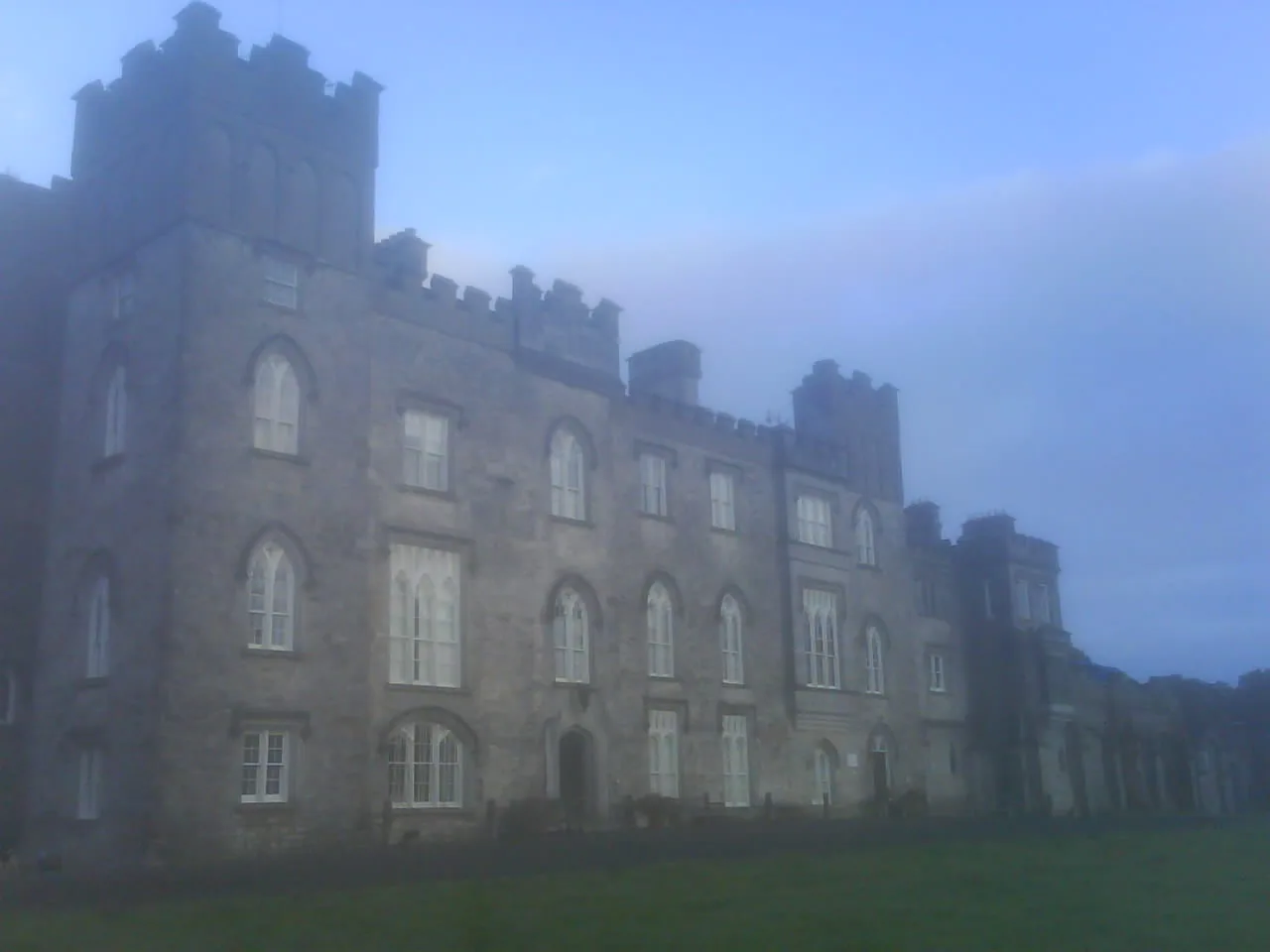
Interior castle tours at Dunsany are requested by email to the estate office rather than booked through a ticket desk, and the owner's site notes that email replies come during office hours, Monday to Friday, 10am to 4pm. Those are reply hours, not public opening times, so do not treat them as a window in which to arrive at the gates. Write early with your preferred dates, since the answer depends on what the estate can accommodate.
The owner published 2026 interior tour prices of €25 for adults, €20 for pensioners and €15 for students, with children 12 and under free, for a regular season running from 20 June to 23 August. The same page states that interior tours before or after those dates cost €50 per person, if available. As of 23 October 2026 the regular season has passed, so the honest position is that any interior visit now falls under the outside-season wording and is not guaranteed. Ask the estate directly about later-2026 or 2027 arrangements before making plans.
The owner's page also notes National Heritage Week as 5 to 23 August 2026, which coincided with the estate's regular season. That is the estate's own note rather than an independently confirmed schedule of events, so if a particular week matters to you, ask what, if anything, is planned rather than assuming a programme. Group rates, additional dates and concessions beyond the published list are not recorded, so raise any such question in your enquiry.
Rewilding and Nature-Reserve Tours
Dunsany also advertises rewilding tours on the nature reserve, and these are arranged through a different email address from the castle interior tours. The two offerings are separate on the owner's own page, so a message to one address should not be assumed to cover the other. If both interest you, make two enquiries and state plainly which you want, rather than bundling them into a single request and hoping it reaches the right person.
It is worth keeping the two experiences distinct in your expectations as well as your inbox. A nature-reserve visit looks at habitat and land management, while an interior tour looks at the house itself; neither is described as including the other. The published details give dates and prices for interiors and a contact address for rewilding, but do not explain what a rewilding tour involves in detail, so ask about duration, terrain and group size before committing to a date.
Practical Trade-Offs to Weigh
The central trade-off at Dunsany is access against atmosphere. A house that has stayed in one family for centuries retains a coherence that more heavily presented sites often lose, but the price of that coherence is that visiting depends on the estate's convenience rather than a published timetable. Plan around a flexible window, keep your enquiry specific and be prepared for a negative answer, particularly outside the summer season.
Two reminders cover most of the practical risk. First, confirm current arrangements directly with the estate before travelling, since the dates and prices published for 2026 are the owner's arrangements for that season and have not been extended. Second, treat everything beyond the arranged tour as private ground: the demesne features are documented heritage, not a public trail. With those points settled, Dunsany rewards the effort as a place where eight centuries of continuous occupation can be read in one building and its setting.
A House Best Approached in Advance
Dunsany Castle suits travellers who prefer a layered, lived-in country house to a staged monument, and who are willing to plan around a private owner's calendar. Its importance lies less in any single date than in the accumulation of medieval origins, nineteenth-century remodelling and an estate landscape of mottes, church ruin, walled garden and parkland. The county's appraisal and the owner's own site together give an accurate picture without overstating what a visitor can see.
Write to the estate office well ahead of your trip, state your dates clearly, and separate any nature-reserve enquiry from a castle interior request. If the answer is no for your chosen window, the surrounding county offers plenty of comparable ground, and a broader survey of castles in Meath helps you choose a substitute without losing the thread of Norman settlement and later country-house life. For another heritage guide, read about Athlumney Castle.
Explore more Ireland guides
Frequently Asked Questions
Can you visit inside Dunsany Castle?
Interior access is by prior arrangement with the estate office, not by turning up at the gate. The owner asks visitors to request interior tours by email, with replies during weekday office hours. The regular 2026 season ran from 20 June to 23 August and has ended, so any interior visit now depends on what the estate can offer outside those dates.
How do you book a Dunsany Castle interior tour?
Send an email to the estate office address given on the owner's website, stating the dates you have in mind. Replies come during office hours, Monday to Friday, 10am to 4pm, which are reply times rather than opening hours. Include the size of your group and any concession categories so the estate can answer accurately in one exchange.
How old is Dunsany Castle and who built it?
Meath County Council's heritage appraisal attributes construction to around 1181 under Hugh de Lacy, with the property held by the Plunkett family. The council uses hedged wording, presenting Dunsany as one of Ireland's oldest surviving country houses and probably the oldest associated with a single family, so treat the superlative as an assessment rather than a settled record.
What can you see in the Dunsany Castle demesne?
The council's appraisal lists gates and gate lodges, stables, outbuildings, an estate church and cottages, demesne walls, a bridge, a wayside cross, a ha-ha, a walled garden, an icehouse and parkland, plus three mottes and a ruined manorial church. These are recorded heritage features on private land; the appraisal establishes no public right of way or walking route through them.
Are the rewilding tours at Dunsany booked the same way as castle tours?
No. The owner's site gives a separate email address for rewilding tours on the nature reserve, distinct from the office address used for interior castle tours. If you want both, send two enquiries and say clearly which one each refers to, rather than assuming a single booking covers both offerings.
Is the 2026 tour season still running?
No. The owner published the regular 2026 interior tour season as 20 June to 23 August, which has passed. The same page mentions a higher per-person price for interior tours before or after those dates, if available, so contact the estate about any later arrangements rather than assuming a tour can be arranged.
Sources
You might also like



Continue reading
More guides you'll find useful





