
Trim Castle: Ireland's Largest Anglo-Norman Fortification
Trim Castle is Ireland's largest Anglo-Norman fortification, built around a 20-sided cruciform keep. Learn what to read in the stonework and plan around works.
On this page
Trim Castle is the biggest Anglo-Norman fortification in Ireland, and the centrepiece of a County Meath town that still holds a dense collection of medieval buildings. The Office of Public Works, publishing through Heritage Ireland, sets out the scale of the site and the layered defences of the keep. This guide explains what you are looking at, where access is limited, and how to time a visit.
What Trim Castle Is and Where It Stands
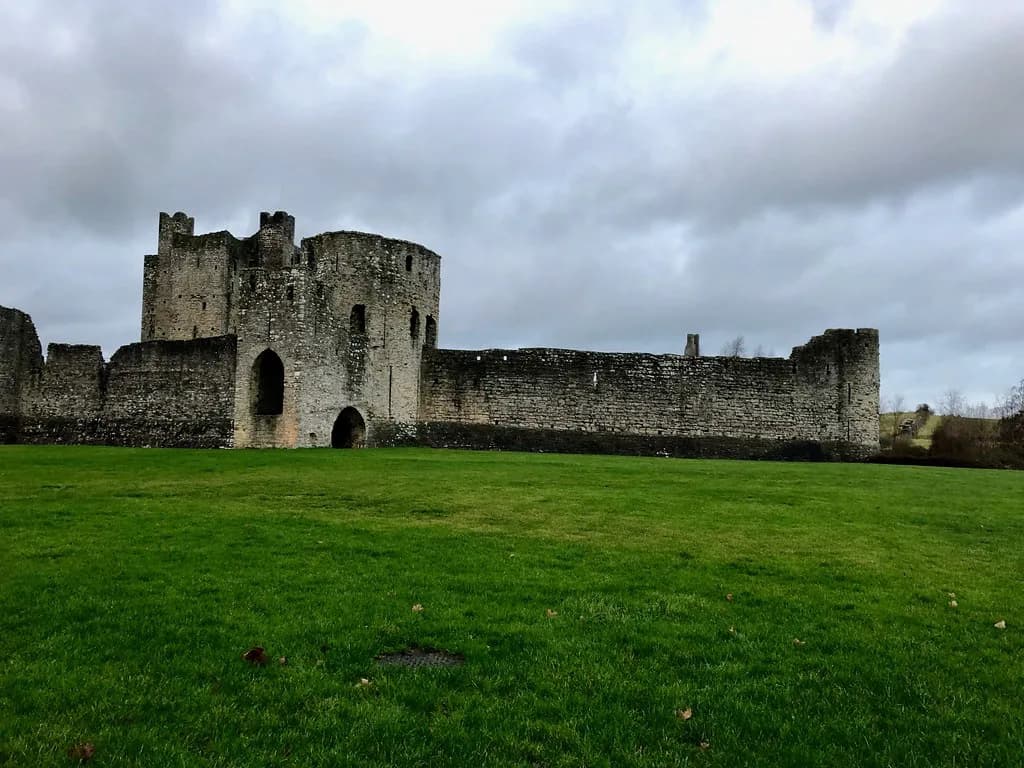
The castle sits at Trim in County Meath, on a slight bend of the River Boyne. The independent Irish Heritage School heritage project notes that it has dominated this landscape for more than 800 years, which is a useful way to hold the site in view: it is a river-crossing fortification as much as a town monument, and the water beside it explains part of its strategic logic.
Building was a long project rather than a single campaign. Heritage Ireland records that Hugh de Lacy and his successors took 30 years to construct the castle, so the fabric reflects several generations of decisions rather than one architect's plan. The surviving keep, curtain wall and gates preserve the result of that long campaign.
For a wider frame on fortified sites across the county, it helps to know that Trim is the largest of a broader group rather than an isolated curiosity. Compare its scale and setting with the rest of the castles in meath to see how river access and later reuse shaped what survives.
Reading the Keep and Its Defences
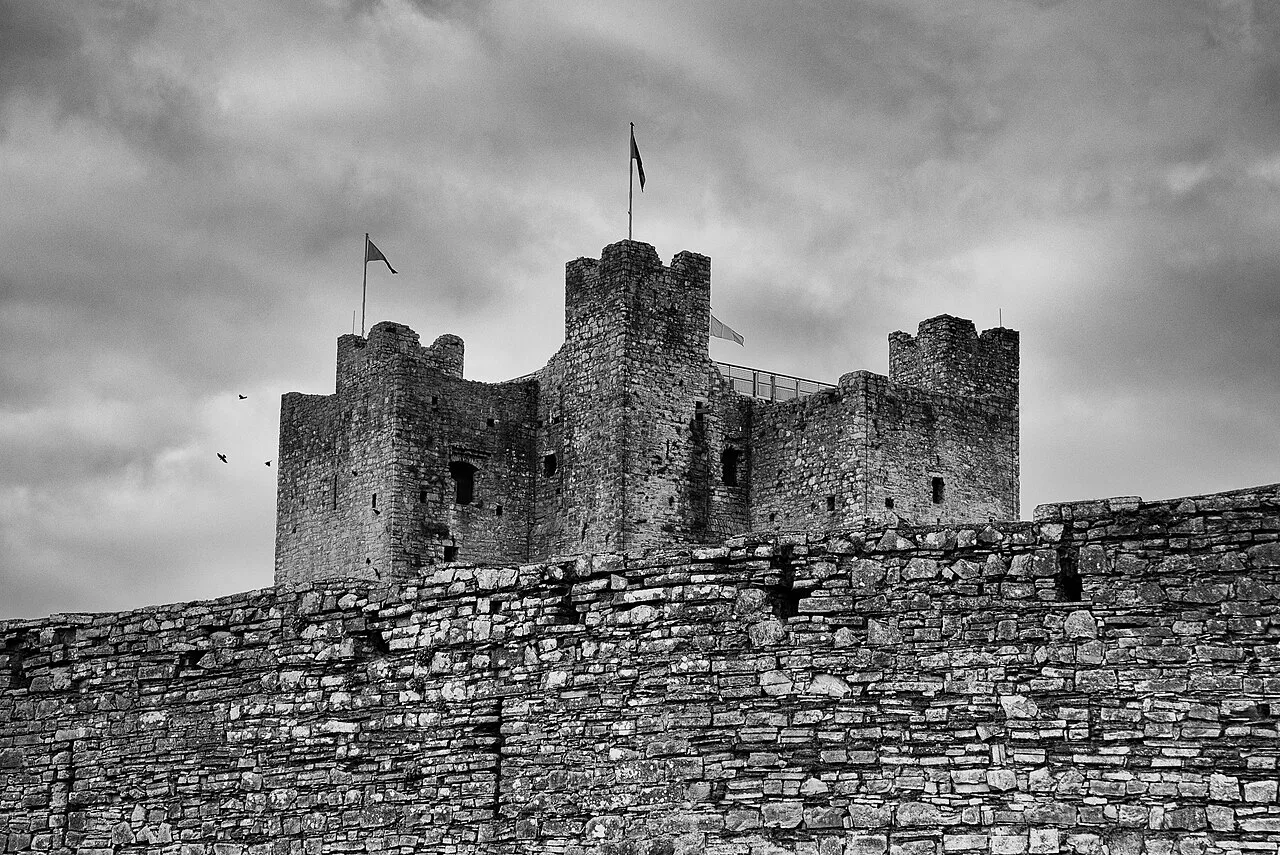
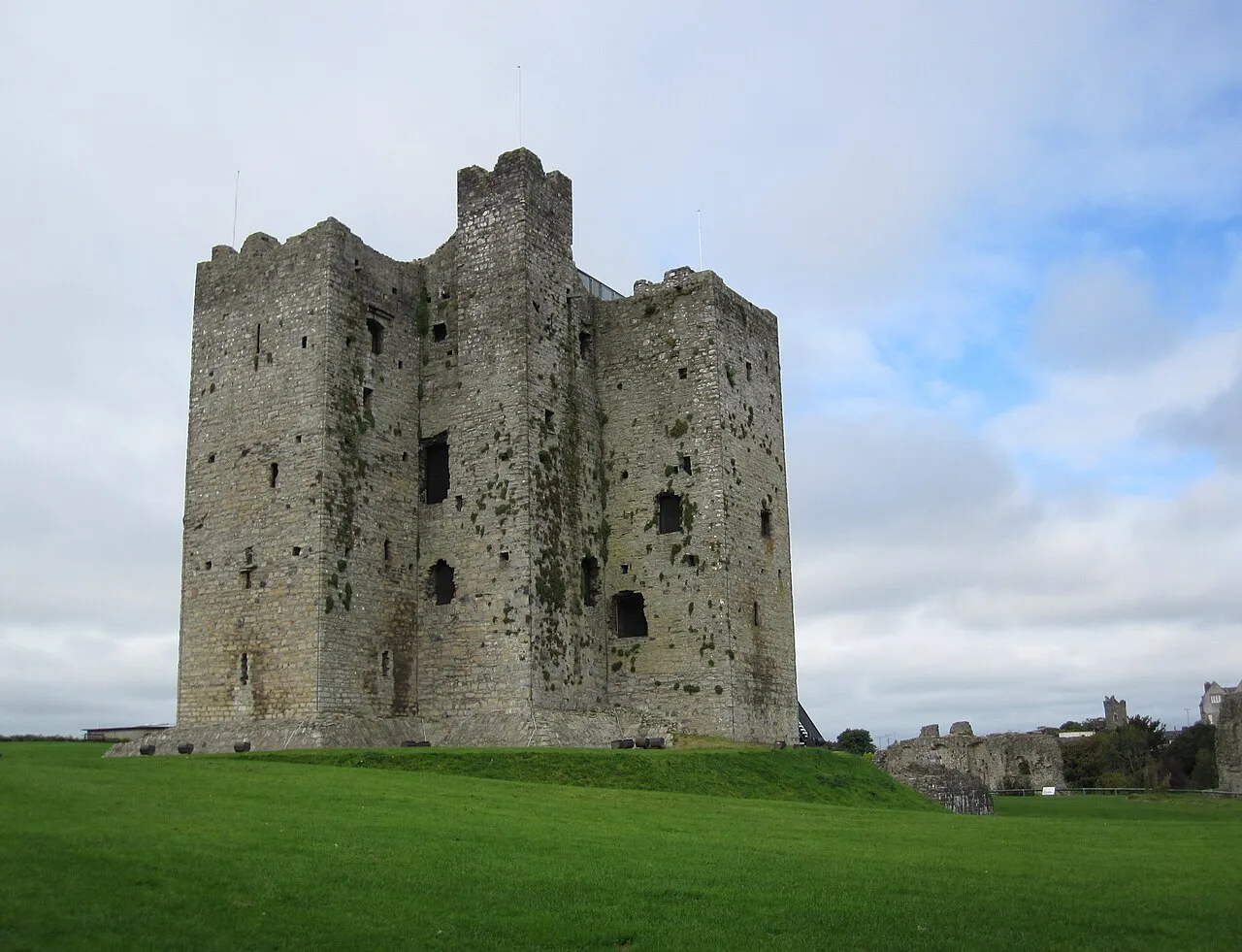
The central structure is a massive keep with twenty sides arranged in a cruciform shape, rising three storeys. The unusual form is the thing to notice: many visitors expect a square tower, and this faceted plan presents a different face to an attacker at every angle. Heritage Ireland calls it all but impregnable in its day, and the geometry is the reason to pause at each face rather than photograph the tower once and move on.
The keep did not stand alone. A ditch, a curtain wall and a water-filled moat enclosed it, layering obstacles between an attacker and the tower. As you move around the grounds, trace the line of the curtain wall and the ground levels that mark the ditch; these works are often easier to read than the standing stone, because they show the sequence in which a visitor would have been funnelled towards the gate.
Modern walkways let you look down over the keep interior, which is the practical way to appreciate the thickness of the walls and the sheer volume of the structure. Heritage Ireland notes that some of the stairs in the keep are very steep and narrow, and that the keep itself is not accessible for visitors with disabilities. Treat the interior as masonry and space rather than a furnished tour, and expect the walkways to set a clear boundary between ground-level viewing and the more demanding climb.
If you are building a heritage itinerary around several counties, the same questions recur at every site: who built it, what did the landscape give them, and what survives. The ancient sites ireland collection is a useful companion for that habit of reading, since earthworks, enclosures and stone circuits reward the same patient attention you give Trim's defences.
Royal Names and the Story Behind Them
Heritage Ireland notes that Trim Castle is often called King John's Castle, but adds an important corrective: when John visited the town, he preferred to stay in his tent on the other side of the river. That detail is worth carrying with you, because it separates the popular name from the actual royal use of the building. Popular names for castles often attach to a famous monarch rather than to the person who commissioned the works.
The site also has a later royal episode. Heritage Ireland records that Richard II visited Trim in 1399 and left Prince Hal, later Henry V, as a prisoner in the castle. The episode points to the castle's continued political importance well after its initial construction, and it is a reminder that a fortress can serve as a place of custody as readily as a place of residence.
Decay, Stone Reuse and Excavation
The castle you walk through is a survival, not an untouched original. The Irish Heritage School project records that by the late seventeenth century the site was falling into disrepair, with the north tower of the keep collapsing around that time. In 1822 the castle was sold, and many structures inside the curtain wall were subsequently torn down and their stone reused. Knowing this helps explain why the enclosure reads differently from a complete fortress.
Archaeology has reshaped how the site is understood and presented. The same source records excavations in 1971 to 1974; in 1981 the castle became a pitch-and-putt course, and in 1994 it was used as a film set for Braveheart. These phases show how quickly a ruin can pass through unrelated uses before conservation returns it to public heritage. The source also records that the Office of Public Works carried out a multi-million euro programme of excavation and conservation from 1995 to 1998, with the aim of making the site publicly accessible, realised in 2000.
More recent work has been digital. In 2016 and 2017 the Irish Heritage School partnered with a University of Colorado Denver researcher to carry out 3D laser scanning of the keep exterior and interior, the barbican gate, the curtain wall and surrounding medieval landscape, including the Yellow Steeple. The data was shared with the Office of Public Works as a conservation and monitoring tool. For a visitor, this is a reminder that the site is still being studied, and that the record of its stones now exists in more than one form.
What Access Actually Looks Like
Access at Trim is not uniform across the site. Heritage Ireland states that disability access is very restricted: the keep is not accessible for visitors with disabilities, and access to the grounds is restricted. Interpretation panels in the grounds support self-guided viewing, so a visitor who stays at ground level can still follow the story of the defences and the building sequence without climbing.
Some stairs in the keep are very steep and narrow, which matters when you decide whether to go up. The operator also warns that this is a very busy site and that visitors may face delays in summer, with access not guaranteed; arriving early is the stated advice. A downloadable social guide is offered to help first-time visitors, families and people with developmental and learning disabilities prepare, which is worth reading before you travel.
If you are comparing fortified sites in the region, check each place separately rather than assuming that one routine covers several castles. A dunsany castle visit, for example, involves a different kind of property and its own arrangement with its owners, so confirm details with each site before setting out. That habit prevents wasted journeys across the county.
Planning Around the Closure for Works
The key practical point is timing. Heritage Ireland states that Trim Castle will close for works from 1 November 2026 to 1 April 2027. As of 23 October 2026 that closure is only days away, so anyone hoping to see the keep should treat the coming days as the last window before the works begin, and anyone planning a spring trip should check the site's status before booking travel.
The operator's Trim Castle page is the place to confirm current status, entry arrangements and any update to the works schedule before you set out, rather than relying on a secondary summary. Because the published closure begins on 1 November 2026, anyone planning a visit in that window should verify the position directly.
Extending the Visit in the Town of Trim
Trim rewards a walk rather than a quick stop, because the castle is embedded in a town with a deep medieval fabric. The Yellow Steeple is named in the Irish Heritage School's conservation record, scanned alongside the keep and curtain wall as part of the same medieval landscape. Use it as a point of orientation while you move between the riverbank, the castle grounds and the streets around them, rather than as a separate tick-box sight.
The most useful way to structure the day is to read the castle first from the outside, then go into the grounds, then step back into the town to see how the streets relate to the walls. Heritage Ireland notes that few places in Ireland contain more medieval buildings than Trim, which makes the town itself part of the visit rather than the backdrop to it.
If your trip continues westward into Connacht, the castles of that region make an interesting counterpoint to Trim's river-crossing stronghold. Reading two regions in sequence sharpens your eye for what is local invention and what is a shared defensive grammar, but base each comparison on what you can see and confirm on the ground. The riverside setting at Trim finds an echo further south at King John's Castle, Limerick: A Visitor Guide to the Riverside Fortress, another fortification whose story is bound to the water beside it.
Plan Your Visit
Trim Castle is worth planning around rather than stumbling upon, because its value lies in the sequence of defences, the unusual keep and the visible record of decay and conservation. Decide in advance whether you want the climb or the grounds-only experience, and read the operator's access notes so the day matches your abilities and expectations. The town of Trim supplies the wider context that makes the castle legible.
With the works window starting on 1 November 2026, the immediate decision is simply whether you can visit before it, or whether you should plan for later in 2027 and check the position on the operator's page. Either way, confirm current arrangements before travelling, since site conditions can change. For another heritage guide, read about Athlumney Castle.
Explore more Ireland guides
Frequently Asked Questions
How long did Trim Castle take to build?
Heritage Ireland records that Hugh de Lacy and his successors took about 30 years to build the castle. That long campaign helps explain why the fabric reflects several generations of work rather than one uniform design, and it is why the site repays slow looking rather than a single circuit of the walls.
What makes the keep at Trim Castle unusual?
The keep is a three-storey tower with twenty sides arranged in a cruciform plan, which is a more complex shape than the square towers many visitors expect. Heritage Ireland describes it as all but impregnable in its day, protected by a ditch, curtain wall and water-filled moat. Modern walkways let you look down over the interior to appreciate the wall thickness.
Why is Trim Castle sometimes called King John's Castle?
The nickname attaches a famous monarch to the site, but Heritage Ireland notes that when John visited the town he preferred to stay in his tent on the other side of the river. Treat the name as popular tradition rather than evidence of royal residence, and look instead at the documented royal episode: Richard II visited in 1399 and left Prince Hal, later Henry V, as a prisoner.
Can you go inside the keep at Trim Castle?
Heritage Ireland describes modern walkways that look down over the keep interior, and notes that some stairs in the keep are very steep and narrow. The keep is not accessible for visitors with disabilities. Whether the interior route is open depends on the live site status, so check the operator page before relying on it, particularly around the works period.
Is Trim Castle accessible for visitors with disabilities?
Access is very restricted according to Heritage Ireland: the keep is not accessible for visitors with disabilities, and access to the grounds is restricted. Interpretation panels in the grounds allow for self-guiding. A downloadable social guide is offered to help visitors prepare, and reading it before travelling is sensible.
When is Trim Castle closing for works?
Heritage Ireland states that the castle will close for works from 1 November 2026 to 1 April 2027. Anyone planning a visit in that window should check the operator page for the current position rather than assuming the site is open, and should not rely on a reopening date beyond the one published.
What else can you see on foot in Trim?
Heritage Ireland notes that few places in Ireland contain more medieval buildings than the town of Trim, so the streets around the castle are part of the visit. The Yellow Steeple appears in the Irish Heritage School's conservation record as part of the same medieval landscape and gives you a second landmark to orient by while walking the town.
Sources
You might also like



Continue reading
More guides you'll find useful




