Churches in Cork: Four Historic City Churches Worth Visiting
Four historic churches in Cork city, from the Shandon bells to St Fin Barre's Cathedral, with what each building offers and how to plan a visit.
On this page
The most straightforward answer for a visitor is a short, selective set rather than a long list. Four Cork city churches offer clearly documented history and buildings: St Fin Barre's Cathedral, St Anne's Church at Shandon, St Patrick's Church and Ss Peter & Paul's on Paul Street. They span two traditions and roughly a century and a half of building, from an early Georgian parish church to a Victorian cathedral.
This guide sets out what each community's own institution says about its building and history. For broader context on the city's past, see this companion piece on cork history. Note the practical distinction that runs through the piece: worship schedules and self-guided visiting are not the same thing, and only Shandon's parish page explicitly advertises a visitor offering such as self-guided tours and tower climbs.
St Fin Barre's Cathedral: A Victorian Rebuilding
St Fin Barre's is the Church of Ireland cathedral of Cork, and the present building is a Victorian work. The cathedral's own account states that William Burges was appointed architect in 1862, that the foundation stone was laid in 1865 by Bishop John Gregg, and that the cathedral was consecrated on St Andrew's Day in 1870.
The financial story is part of the building's character. The cathedral records an original budget of £15,000 that rose to about £100,000 by completion, a scale of overrun that helps explain the density of ornament inside. Read those figures as the cathedral's own account of its construction rather than as any comment on visiting today.
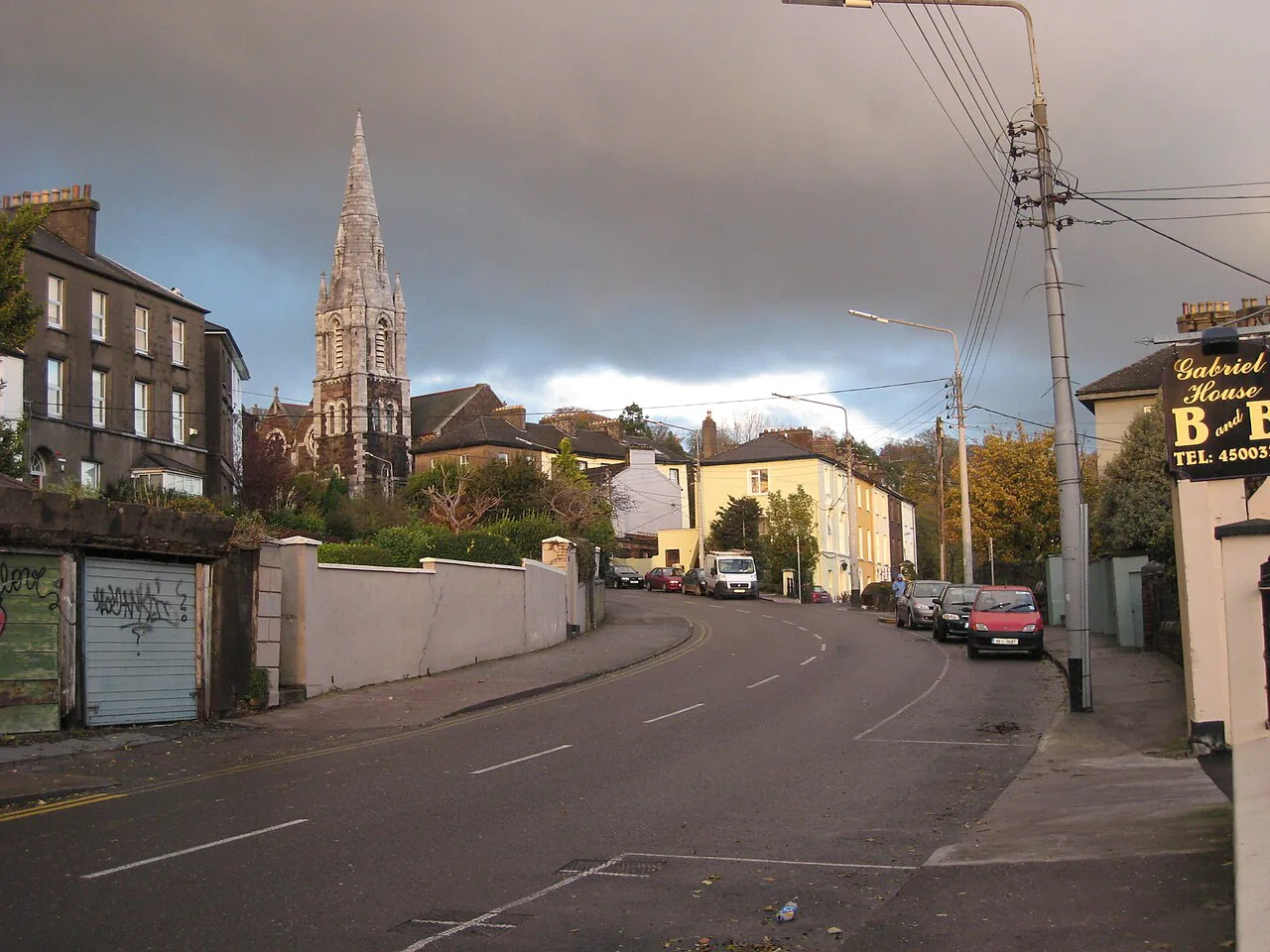
What to Look For Inside St Fin Barre's
The materials repay close attention before the decoration does. The cathedral describes towers and spires in Cork limestone, a good deal of red Cork marble in the interior, and walls of Bath stone holding stained glass it rates among the finest in Ireland. Looking for those three stones in sequence gives the interior a structure beyond a general impression of richness.
Burges's design extended past the shell into the sculpture, mosaics, furniture and metalwork, so the smaller fittings are part of the scheme rather than later additions. Allow time to look at the detail work as well as the windows. If architectural history is your main interest, this building sits naturally alongside a wider look at Cork architecture across the city.
Before travelling, check the cathedral's published opening hours rather than assuming the doors are open through the day. Worship and music listings on the same page describe services and livestreamed or recorded worship, not general sightseeing access.
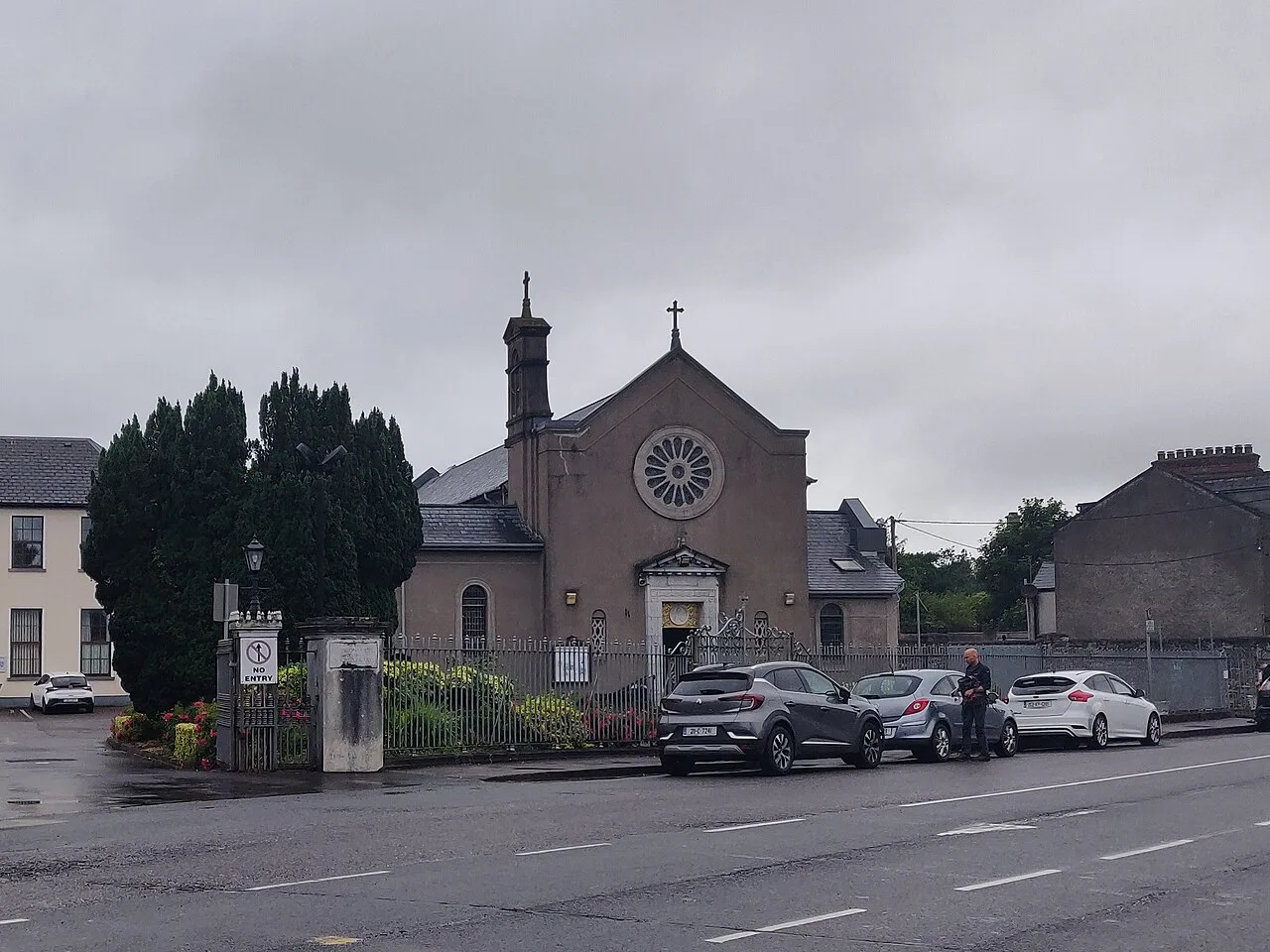
St Anne's Church, Shandon: The Oldest Claim in the City
St Anne's belongs to the Church of Ireland and sits within the United Diocese of Cork, Cloyne and Ross. The parish describes weekly worship and an active congregation since 1722, and presents the church as the oldest still in continuous use in Cork City. Treat that as the parish's own statement about its history rather than an independently verified ranking.
For a sense of why the building matters beyond its age, the parish quotes a 2001 Architectural & Archaeological Appraisal by Colin Rynne for Southgate & Assoc., which calls it one of the most important early eighteenth-century churches in Ireland and notes that it retains its original eighteenth-century bells. But check that the wording is attributed to the named appraisal itself rather than to the parish's own assessment: the bells are not a modern installation.
Climbing Shandon Tower and Playing the Bells
Shandon is the one church in this selection that openly sets out a visitor experience. The parish invites people to self-guided tours alongside worship and lists three things to do: play the Shandon Bells, see the inner workings of the four-faced clock, and climb the tower for 360-degree views over the city.
The tourism authority's description adds the physical detail that matters most for planning. Discover Ireland puts the tower at 50 metres, reached by narrow stone steps, with eight bells weighing six tonnes and sheet music available for anyone attempting a tune. Those narrow steps are the real trade-off: the climb is short in distance but not generous in width.
The same description notes a stone baptismal font dating from 1629 and a three-metre gold fish weathervane on top, read as both an early Christian symbol and a reference to salmon in the nearby River Lee. Looking for the font inside and the weathervane from below bookends the climb neatly.
St Patrick's Church: A Chapel of Ease in Cork Limestone
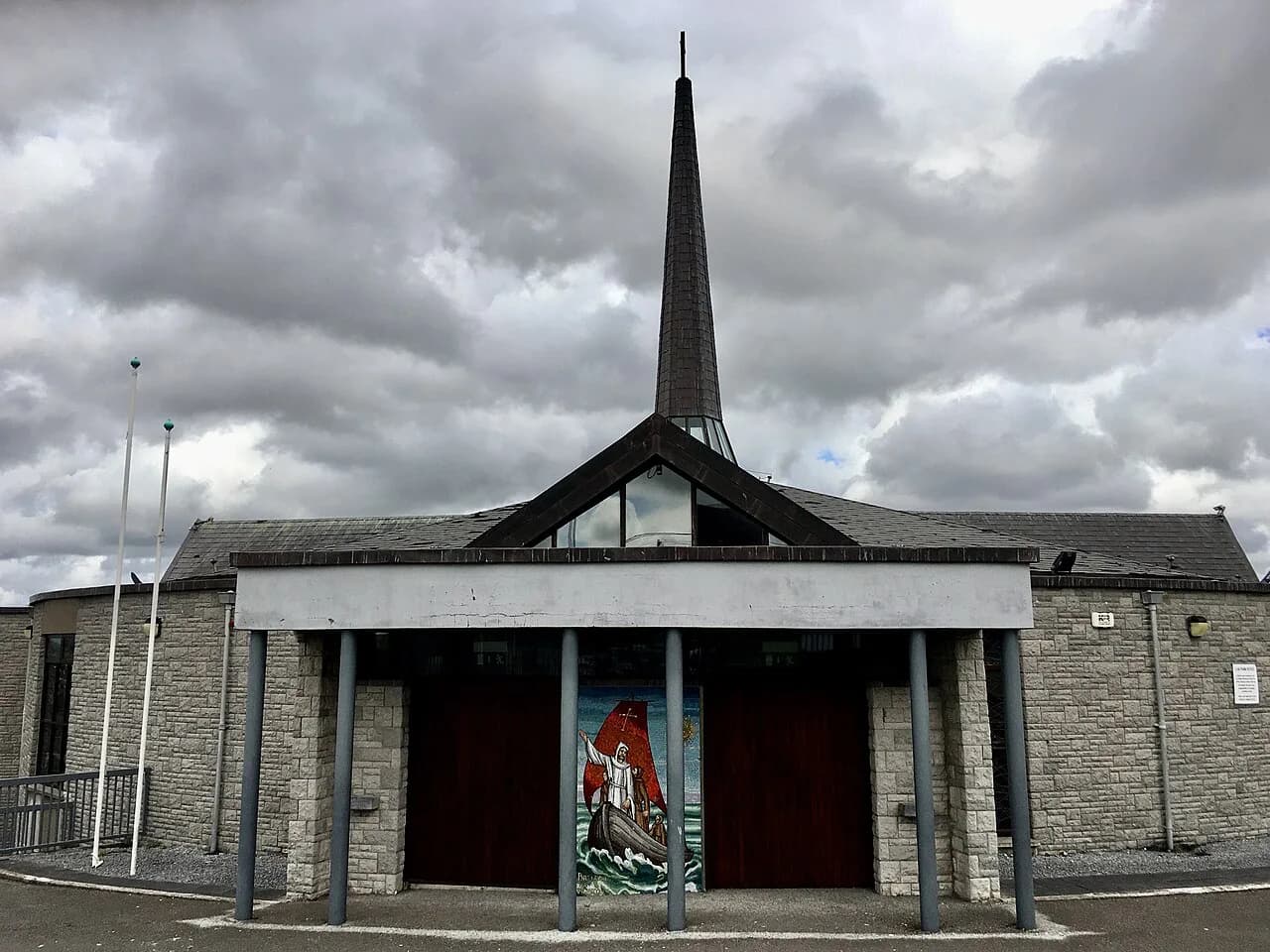
St Patrick's is a Catholic parish church with a building history longer than its dates suggest. The parish history records that building began in 1832 as a chapel of ease replacing the Brickfield Masshouse, with the London architect George Pain planning a classical building in Cork limestone. The same page is candid that the exact dates of design and commencement are unknown, which is worth remembering when you see the 1832 date quoted elsewhere.
Construction ran well past the first use: the church was first used for Sunday Mass on 11 October 1836 but was not completed for many years afterwards. The bell in the tower carries the inscription McSweeney 1843, and side aisles were added in 1894–95 through the generosity of the Honan family, who had made the building possible in the first place.
St Patrick's was elevated to the dignity of a parish church on 1 July 1848. A curate of the North Chapel, Patrick W. Coffey, drove the building project from start to finish, organising collections and pushing on the decorative work; a plaque in the church commemorates him.
The Bells of Shandon Poem and Its Owned Place
The famous poem about the Shandon bells has a documented author, and his connection is recorded on the St Patrick's page rather than at Shandon. The parish history notes that Fr Sylvester Mahony, who wrote under the name Fr Prout, is best remembered as the author of 'The Bells of Shandon'.
Keep the two threads separate when you visit: the poem belongs to a literary history attached to a Catholic parish figure, while the bell tower itself is St Anne's. The link is a useful piece of context, not evidence about the bells' age or the tower's design.
Ss Peter & Paul's on Paul Street
Ss Peter & Paul's is the second Catholic church in this selection and the most centrally placed. The parish page dates the church on Paul Street to 1866 and describes a parish covering most of the city centre, stretching from Oliver Plunkett Street to the north channel of the Lee. That geography makes it an easy stop if your day is already built around the centre.
The page gives no architectural or decorative detail beyond the date, so plan around location and atmosphere rather than a checklist of features. Its Mass and confession times are worship information, not opening hours, and should not be read as a guarantee that the church is open for wandering.
Practical Contact Routes Before You Set Out
For Ss Peter & Paul's, the parish office is at 34 Paul Street, Cork, and the page lists weekday office hours — Monday 11am to 1pm, with morning hours later in the week. Those are office hours for enquiries, not church visiting hours, and the office phone number is listed on the same page. Check the current listing before relying on a particular day.
St Patrick's page is a history rather than a visitor notice, so contact the parish directly if you want to know whether the church can be seen inside. For St Fin Barre's, the cathedral publishes opening hours, so check the current listing close to your visit rather than relying on an old timetable.
Choosing Between the Four
Read as a sequence, the four churches trace the city's religious building across distinct eras: 1722 at Shandon, a first Sunday Mass in 1836 at St Patrick's, 1866 at Ss Peter & Paul's, and consecration in 1870 at St Fin Barre's. That span makes the selection useful as a historical walk as much as a set of interiors.
If you want one clear visitor experience, choose Shandon, where the tower, bells and clock are explicitly on offer. If architecture and Victorian craftsmanship are the draw, choose St Fin Barre's and give the interior proper time. If you are already in the centre, Ss Peter & Paul's and St Patrick's fit around other stops, and a planned route helps: a walking tour of the city can position them without turning the day into a church crawl.
These four are not a ranking and not a full inventory of churches in Cork. They are simply the buildings whose own parishes or cathedral publish enough about them to describe honestly. If your interests lean to collections rather than buildings, the city's museums in cork make a natural companion to this route.
Plan Your Visit
Start with the building you most want to see inside, then confirm access before you go. Shandon states self-guided tours; St Fin Barre's publishes opening hours you should check; for St Patrick's and Ss Peter & Paul's, contact the parish if seeing the interior matters to you.
Two checks cover nearly everything. Confirm current opening hours at St Fin Barre's on the cathedral's own page, and confirm worship times at any of the four only if you intend to attend a service rather than look around. Both change seasonally, and a schedule copied from an old listing is the most common way a church visit goes wrong.
Explore more Cork guides
Frequently Asked Questions
Which churches in Cork city can you actually go inside as a visitor?
St Anne's Church at Shandon is the clearest case: the parish states that self-guided tours are available alongside worship, and sets out playing the bells, seeing the clock mechanism and climbing the tower. St Fin Barre's Cathedral publishes opening hours, so check those directly. For St Patrick's and Ss Peter & Paul's, the published pages describe history and worship rather than visitor access, so contact the parish to ask before making a special trip.
How long does the Shandon tower climb take and is it difficult?
No source gives a duration, so plan by the physical description instead. Discover Ireland notes that the tower stands 50 metres high and is reached by narrow stone steps. That suggests a short climb in distance but a tight one in width, and anyone uneasy in confined spaces should weigh it before starting. Ask at the church about current conditions on the day.
Can you ring the Shandon Bells yourself?
The parish lists playing the Shandon Bells as one of the things visitors can do, and Discover Ireland describes sheet music being available for would-be bell-ringers tackling the eight bells. Neither page sets out booking or supervision arrangements, so follow whatever instructions are given on the day.
Is St Fin Barre's Cathedral Catholic or Church of Ireland?
St Fin Barre's is a Church of Ireland cathedral. Its own account describes the present building as a Victorian work by William Burges, appointed architect in 1862, with the foundation stone laid in 1865 and consecration in 1870.
How old is St Anne's Church in Shandon?
The parish describes weekly worship and an active congregation since 1722 and presents the church as the oldest still in continuous use in Cork City. That is the parish's own claim about its history rather than an independently verified ranking, so treat it as an attributed statement.
What is the link between the Bells of Shandon poem and St Patrick's Church?
The St Patrick's parish history records that Fr Sylvester Mahony, who wrote as Fr Prout, is best remembered as the author of The Bells of Shandon. The connection is literary and attached to a figure in that parish's history, not a claim about the bell tower at Shandon itself.
Do you need to book to visit a church in Cork city?
None of the published pages state a booking requirement, and no admission prices are given. Shandon describes self-guided tours without mentioning advance booking. For the other churches, the honest answer is to ask the parish directly, especially if you are travelling specifically to see an interior.
What can you see inside St Fin Barre's Cathedral?
The cathedral describes towers and spires in Cork limestone, a substantial amount of red Cork marble inside, and Bath stone walls holding stained glass it rates among the finest in Ireland. Burges's design also covered the sculpture, mosaics, furniture and metalwork, so the fittings are part of the original scheme.
Sources
- St Fin Barres Cathedral: Historic Landmark in the Heart of Cork City
- St. Anne's Church, Shandon Tower & Bells, Cork
- Visit Shandon Bells & Tower, St Anne's Church with Discover Ireland
- History of St Patrick's Church - Cork Cathedral Family of Parishes
- Ss Peter & Paul’s - Cork Cathedral Family of Parishes
You might also like

Continue reading
More guides you'll find useful