Cork Cemeteries: A Records-Led Guide to the City's Burial Grounds
Cork's city cemeteries are working municipal grounds, not visitor attractions. Here is what the Council and archives hold, and how to trace a grave.
On this page
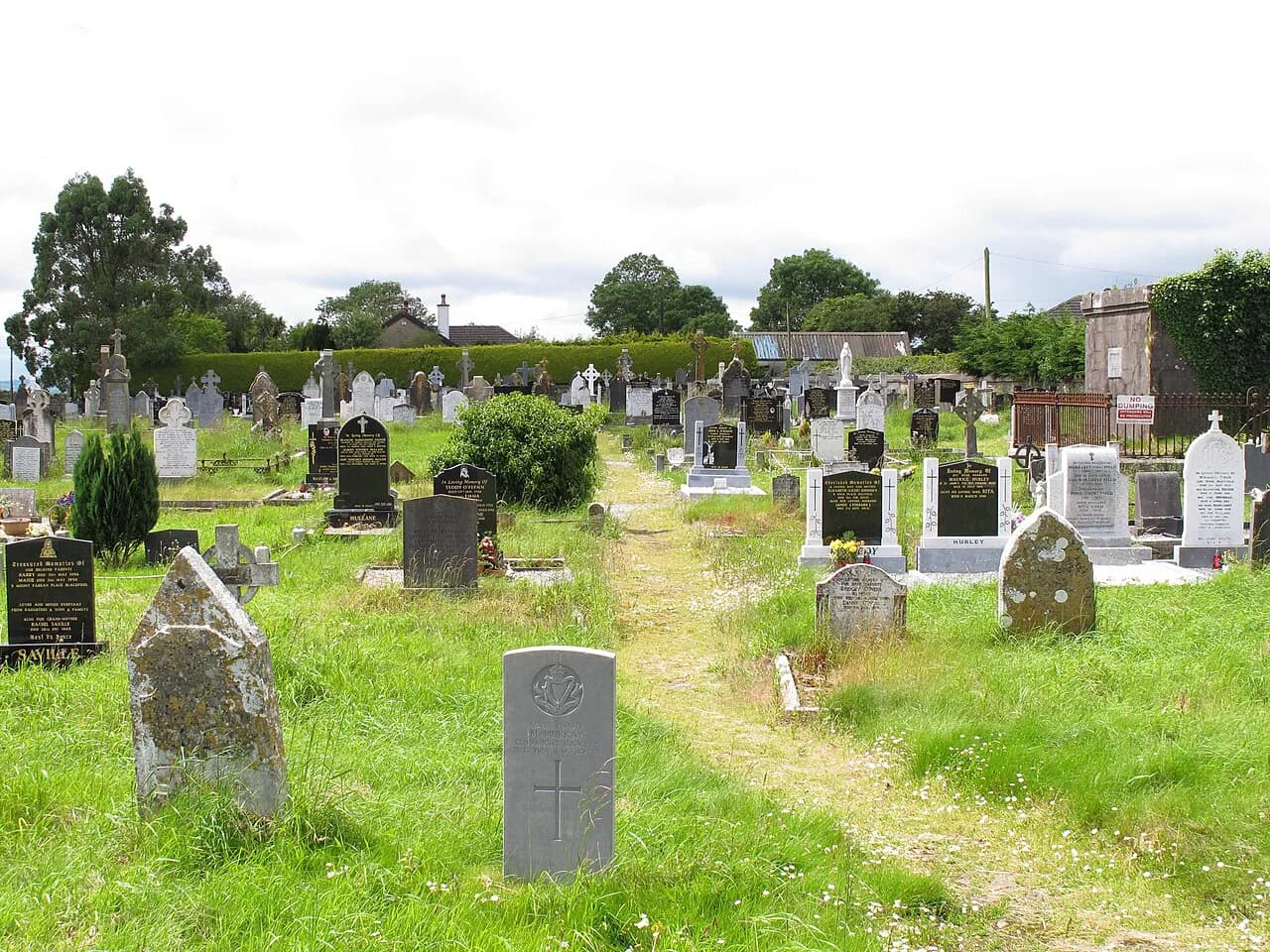
Cork's city cemeteries are working municipal burial grounds, not heritage attractions. Cork City Council manages them, and the practical reason a visitor looks one up is usually a name in a family tree rather than a day out. The useful information therefore sits in two places: the Council's cemetery pages and the burial registers held by Cork City and County Archives. If you are comparing approaches, Dublin cemeteries such as Glasnevin are presented as heritage sites with visitor facilities, whereas Cork's are research-first grounds.
This guide sticks to the city side, covering the grounds the Council and the Archives name and the date ranges of the records attached to each. County burial grounds follow a separate local-authority framework and are noted only briefly at the end. Anyone heading into the city centre afterwards may also find the wider set of museums in cork useful for context on how Cork institutions hold and present their collections.
City Grounds and County Grounds Are Not the Same Thing
Cork City Council runs its own cemeteries, and its page lists them individually with contact details for each. Cork County Council, by contrast, sets the framework for burial grounds outside the city, where registrars handle plot sales and some graveyards are maintained by parishes or local groups. Mixing the two produces unreliable answers, so check which authority covers the ground you are interested in before you ask about a grave.
In county areas, all burials must be registered with Cork County Council and the grave location noted by the registrar. The county authority also states that it is digitising historical burial records and making them available through a burial records database. That is county-scope information, and it does not describe the city grounds discussed below.
What Cork City Council Says About Access
Cork City Council states that all City Council cemeteries are open twenty-four hours, seven days a week. Treat that as the Council's general statement about its grounds rather than a guarantee about every gate or entrance, since no per-cemetery access notice is published alongside it. If you are travelling to a specific grave, confirm the details with the cemetery contact listed on the Council's page before setting out.
The same page illustrates its cemetery table with Rathcooney near Glanmire and gives phone contacts for individual grounds, while the Archives supplies the street addresses for St Finbarr's and St Joseph's. The Archives is also where the Council directs ancestor tracing. Nothing in either source suggests tours, visitor centres or interpretive displays, so plan a cemetery visit as a straightforward call at a working ground, in the same spirit as approaching the city's historic churches as active buildings rather than monuments.
St Finbarr's Cemetery, Glasheen Road
Cork City and County Archives describes St Finbarr's as a major municipal cemetery on Glasheen Road. Its registers for 1867 to 1930 are available online, which makes the cemetery the natural starting point for nineteenth-century Cork city families. The first date marks the beginning of the surviving register series rather than the founding of the ground, so read the span as a record of what the Archives holds.
For burials after 1930, the Archives directs enquirers to the parks section of Cork City Council rather than holding the later records itself. It gives the Council's recreation email address as the contact for those later entries. A search that returns nothing online may simply fall outside the digitised span, so check the date before concluding that no record exists.
St Joseph's Cemetery, Tory Top Road
St Joseph's on Tory Top Road is the second major municipal cemetery identified by the Archives. Its registers for 1877 to 1917 are online, while other records covering 1874 to 1947 exist in hard copy. The two spans do not match exactly, which matters if an ancestor died before 1877 (covered only in hard copy) or after 1917 (where the online register stops but hard-copy records continue).
Records after 1947 for St Joseph's sit with the Council parks section, as they do for later St Finbarr's entries. If your research question is simply where a grave lies, the Council office is the correct first contact. If it concerns what a register says, the Archives is the body that can supply a copy.
Rathcooney, Old Kilcully and Curraghkippane
Rathcooney lies near Glanmire on the north-eastern edge of the city, and the Archives lists two separate register spans for it: October 1896 to March 1941 and March 1941 to October 1961, both online. The division into two runs is worth noting, because a single search may only reach one of them. Cork City Council separately lists Rathcooney in its cemetery table with its own telephone contact.
Old Kilcully, just north of the city, has registers online for July 1931 to August 1974. Curraghkippane's Old Section, St Mary's at Mackey's Cross, is covered by a register of interments running from 22 November 1896 to 18 September 1962, also online. Each of these grounds therefore has a defined digitised window, and a name that falls outside it needs a different approach.
Reading a Register Range Correctly
A date span attached to a burial register describes the records, not the cemetery's age or importance. St Finbarr's registers begin in 1867 because that is the start of the register series the Archives holds, not a statement that the ground was unused before then. Reading the range accurately prevents both false leads and false conclusions about a family's absence from the record.
It also helps to know that the Archives presents these as holdings rather than as a complete national index. It says it can supply a transcript or copy of a burial record on request, with charges applying. It does not claim that every burial in a given ground appears in the registers it lists.
Other Holdings: Military Survey and Quaker Lists
The Archives also holds a survey of graves in the Military Cemetery, British Army, at Assumption Hill in Cork City, undertaken in 2009 and covering graves from roughly the mid-1800s to the early 1900s. It further lists burial lists for the Society of Friends in the Cork area from 1812 to 1894. Both are described as archival material, and neither entry documents public access to the site itself.
The Archives also holds a large collection of County Cork gravestone inscriptions compiled by Richard Henchion, covering around 620 locations, alongside indexes and surveys for places such as Bantry, Caherlag and Whitechurch. These are useful when a family moved between city and county, but they are finding aids rather than a single searchable index of every grave in Cork.
How to Request a Burial Record
The Archives asks for three things before it will look up a burial: the deceased's name, the date of death and the cemetery of interment. It states plainly that it cannot undertake extensive research, so a request framed around one known burial is far more likely to succeed than an open-ended family reconstruction. Gather those details from family papers or a death certificate first.
Requests go to the archivist by email, and the Archives notes that charges apply for transcripts and copies. Where a death falls inside a digitised span, you may be able to answer the question from the online register without a written request. Where it falls outside, the email route is the practical one.
Using the Archives Research Room
The Research Room operates by appointment only. Readers register in advance and follow the access rules and conditions the Archives publishes. That means a visit needs planning rather than a walk-in, and it is worth settling the appointment before booking travel around it. The Archives provides guidance on preparing for a visit and on what to do before you arrive.
Appointment arrangements and reader registration requirements can change, so confirm them with the Archives directly rather than relying on a description written elsewhere. For anyone combining research with a wider look at Cork's institutional collections, the city's art galleries and museums offer a sense of how public bodies present material to visitors.
Administrative Rules You May Encounter
Cork City Council states that plots are purchased through an undertaker rather than directly by the public, and that plots are not available in some cemeteries. It also requires all stonework, including headstones and kerbing, to be carried out by approved contractors who apply to the Council on the client's behalf. These are burial administration rules, and they explain why a family arranging an interment deals with an undertaker first.
The Council also handles plot transfers, duplicate deeds and exhumation licence applications through its cemeteries section. Visitors reading headstones will not need any of this, but it is useful background when a family is deciding who holds the right of burial in an older grave.
County Context in Brief
Outside the city, Cork County Council explains that registrars manage plot sales for each burial ground where plots remain available, and that the purchase is confirmed by a certificate of right of burial once payment is received. It notes that many graveyards are already full and that some cemeteries restrict advance purchase. Those statements apply to county grounds and should not be read across to the city cemeteries described above.
The county authority also publishes a divisional breakdown of burial ground details with registrar contacts for North, South and West Cork. If your search has moved outside the city boundary, that is the correct starting point rather than the city Council's cemetery table.
Plan Your Visit
Decide first what you actually need. If you want to stand at a grave, the relevant cemetery contact on Cork City Council's pages is your starting point; the Council's general statement that its cemeteries are open twenty-four hours a day, seven days a week is a broad description of its grounds, so confirm the specific cemetery before you set out. If you want to know what a register says, the Archives is the body to approach.
Before contacting anyone, write down the name, the date of death and the cemetery. Check whether that date falls inside the digitised span for that ground, because a mismatch explains most dead ends. Then either search the online register or email the archivist with your single, specific question.
Explore more Cork guides
Frequently Asked Questions
Are Cork's city cemeteries open to visitors?
Cork City Council states that all City Council cemeteries are open twenty-four hours a day, seven days a week. That is a general statement about its grounds, so if you are travelling to a particular grave, check the individual cemetery contact listed on the Council's cemetery page beforehand.
Where are St Finbarr's and St Joseph's cemeteries?
Cork City and County Archives identifies St Finbarr's as a major municipal cemetery on Glasheen Road and St Joseph's as a major municipal cemetery on Tory Top Road, both in Cork City.
Which Cork cemetery records can I search online?
The Archives lists online registers for St Finbarr's from 1867 to 1930, St Joseph's from 1877 to 1917, Curraghkippane Old Section from 22 November 1896 to 18 September 1962, Old Kilcully from July 1931 to August 1974, and two spans for Rathcooney, October 1896 to March 1941 and March 1941 to October 1961.
Where do I find St Finbarr's burial records after 1930?
The Archives directs enquirers to the parks section of Cork City Council for St Finbarr's records after 1930, using the recreation email address given on the Archives page. Records after 1947 for St Joseph's also go to the parks section rather than the Archives.
What information does the Archives need to look up a burial?
Three details are required: the deceased's name, the date of death and the cemetery of interment. The Archives states that it cannot undertake extensive research, so frame your request around one specific burial.
Do I need an appointment to use the Archives Research Room?
Yes. The Research Room is by appointment only, and readers must register and follow the published access rules and conditions. Confirm current arrangements with the Archives before you travel.
Sources
You might also like

Continue reading
More guides you'll find useful