
Victorian Quarter Cork: A Heritage Guide to MacCurtain Street

The Victorian Quarter is a traders' branding label for the area centred on MacCurtain Street in Cork, not a municipal boundary or formal place name. Visitors who arrive expecting a defined quarter with gates or a single period streetscape will instead find a working city street whose identity has been argued over, marketed and rebuilt within the last decade.
The name has a traceable history: it was coined by local businesses, drew on the street's Victorian-era building stock, and later attracted criticism that reached Cork City Council. For a visitor, knowing that story is the difference between seeing a themed shopping street and reading a genuinely layered piece of urban heritage.
What the Victorian Quarter actually names
The label describes a stretch of Cork's north-centre rather than an administrative unit. Newspaper coverage of the traders' rebranding sets the area from Bridge Street and Coburg Street east along MacCurtain Street to St Luke's and Penrose Dock, lying between St Patrick's Quay and Wellington Road. That is a working definition of a commercial district, not a boundary on any statute.
Treating the name as a brand matters when you plan a walk. There is no single entrance, no enclosed precinct and no uniform architectural period across every side street; the quarter is a cluster of streets whose traders chose a shared identity. Cork holds several historic quarters, and this one sits alongside others such as Shandon, each with a different claim on the visitor's time.

MacCurtain Street before the brand
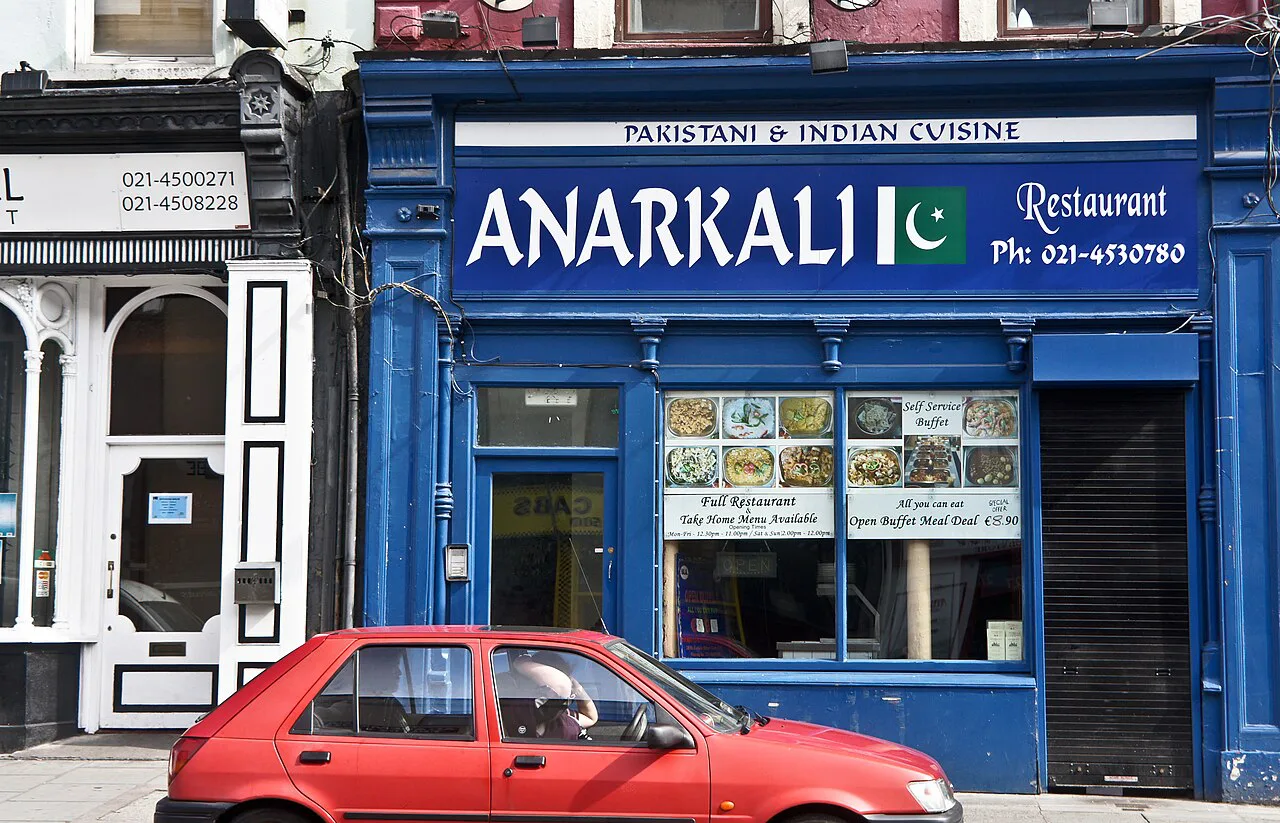
The street carries an older name. Promotional material from the street's traders records that MacCurtain Street was formerly King Street, a reminder that the current name is itself a dedication rather than an ancient label. The same traders' material promotes the area under its Victorian Quarter branding.
The dedication honours Tomás MacCurtain, a former lord mayor of Cork, and that association is precisely why the naming debate became charged. In April 2022, Cork City Council minutes record a motion that the council use only MacCurtain Street in its own publications and encourage others to follow, explicitly setting the name against the Victorian Quarter; the same minutes record the Director of Services advising that any branding change come through consultation with traders. For a contrasting historic quarter elsewhere in the city, see the South Parish guide.
Why Victorian, and why the label drew criticism
The Victorian element was not arbitrary. Reporting on the rebranding explains that the quarter was branded for the Victorian-era architecture on MacCurtain Street, which gave traders a recognisable hook for promotion. That is a selective reading of the streetscape, built around one street's commercial frontage rather than a survey of every building in the area.
The name also carried a political cost. The same reporting notes that some criticised the Victoria association, and that the label fuelled rows, including a council exchange in December 2019 ahead of War of Independence commemorations in which councillors described it as an insult to MacCurtain's memory. Traders later described retiring the tag as a deliberate move to remove a barrier to conversation about the area.

What the council record actually says
It is easy to overstate the outcome of that debate. The April 2022 minutes show the Director of Services characterising the Victorian Quarter as a branding initiative driven by traders who had mobilised to revitalise the area, and crediting their efforts with turning the street into an attractive commercial hub. The recorded position was that a branding change should not be imposed without consultation and agreement with those businesses.
So the honest way to describe the situation is a contested label under discussion, not an abolished one. A visitor will still meet the phrase in marketing and online, and will also see the council's preference for the street name. Both usages are live, and neither should be presented as the settled official designation of a district.
The streetscape today
The physical street has changed more than its name. Cork City Council states that the MacCurtain Street Public Transport Improvement Scheme, funded by the National Transport Authority, delivered public realm improvements along with new and improved bus, pedestrian and cycle facilities, and was officially opened in November 2023. It is part of the council's stated shift toward a more sustainable transport system.
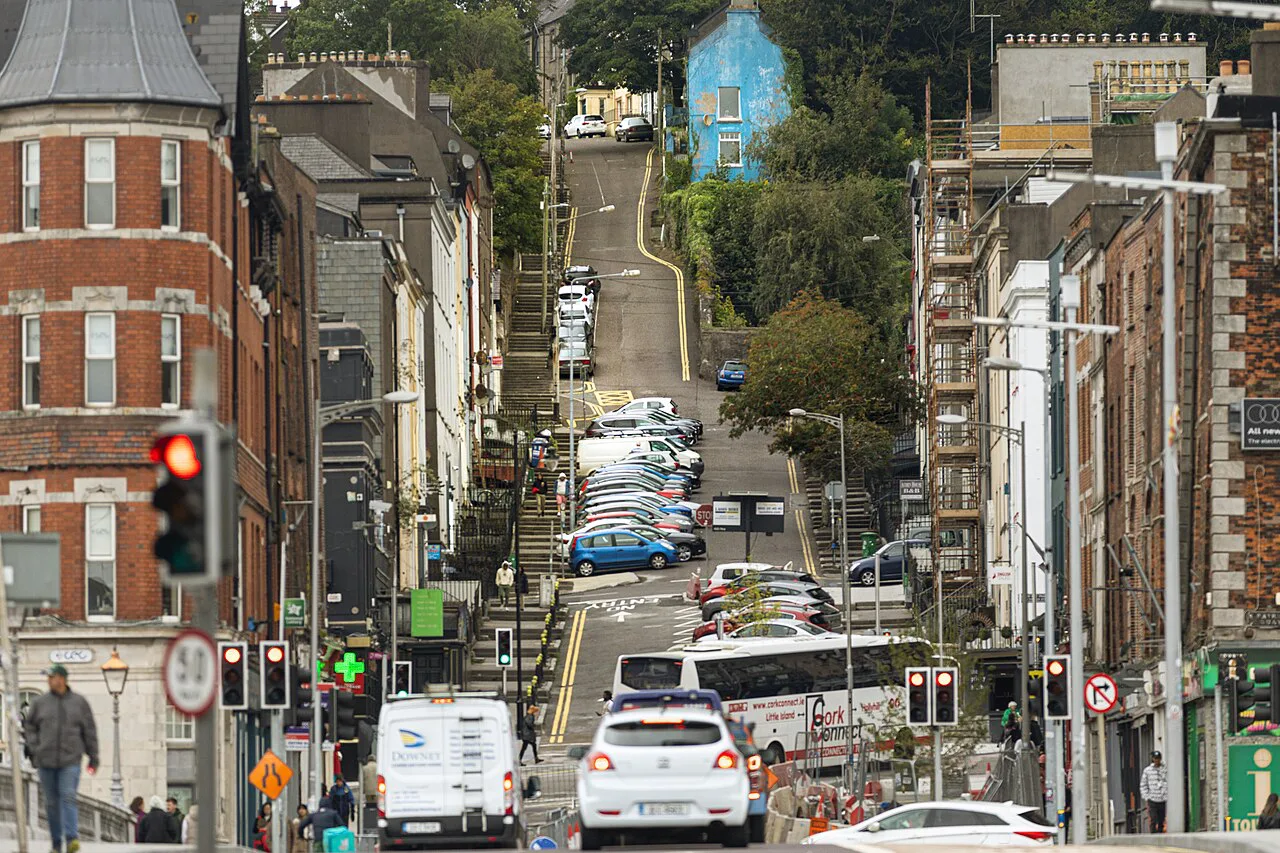
For anyone walking the area, the practical consequence is that revised traffic arrangements now apply on MacCurtain Street and adjoining streets, according to the council, with changes also made on the city quays. The street is configured to be more accommodating for pedestrians and cyclists. Read the surface you are standing on: widened footways and reorganised junctions are the visible residue of that scheme, not period detailing.
The Everyman: a building in layers
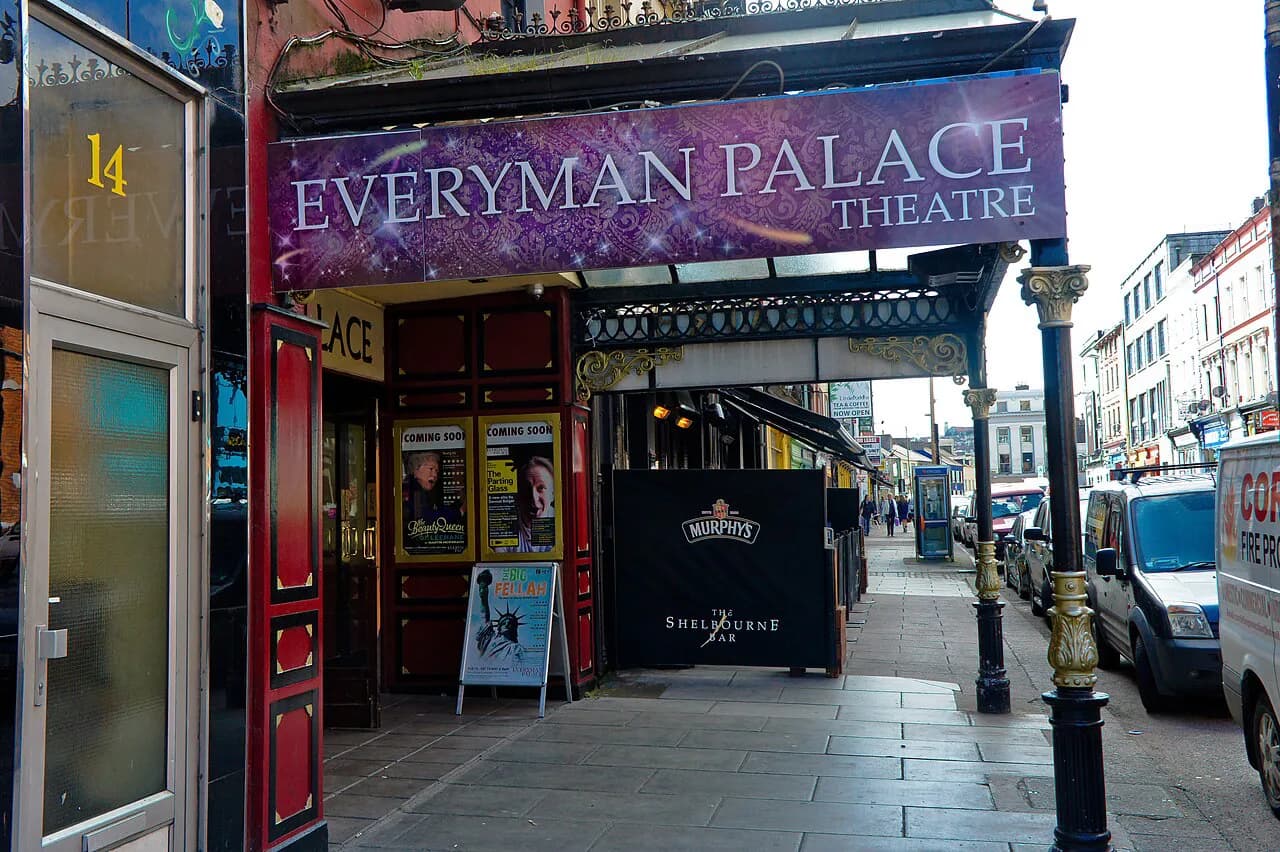
The Everyman at 15 MacCurtain Street is the area's best-documented heritage building and the clearest place to read the street's history. Cork City Council's heritage listing records that it was designed by H. Brunton and built around 1840 by John O'Connell as a terraced two-bay, three-storey house, originally part of a group with the adjoining houses to its east and west.
Its theatrical life began later. The same listing records that in 1897 Dan Lowrey opened the building as the Cork Palace of Varieties, a luxurious new theatre, and that during the music hall heyday to 1912 leading performers of the day appeared there. That roll-call belongs to the council's listing and should not be embellished.
The next conversion followed the wider entertainment industry. The Palace became a cinema in 1930 with the arrival of talking pictures and remained one until 1988, then reopened as a theatre in 1990 after the Everyman Theatre Company purchased it. The venue's current name is a compression of that history, once the Everyman Palace Theatre and now simply The Everyman.
Reading the interior and the street around it
Inside, the building preserves its Victorian theatrical character rather than its house origins. The council listing describes an ornate proscenium arch, boxes, and a balcony and ceiling of decorative plasterwork restored to their earlier state. Look for those features as evidence of the 1897 conversion; the c1840 domestic fabric survives mainly as the terraced shell on the street front.
That single building explains why the Victorian label stuck, but it also shows the label's limits. The Everyman's significance is theatrical and cumulative, spanning a nineteenth-century house, a music hall, a cinema and a modern producing theatre, and it is documented by the council rather than claimed by marketing. Other premises along the street should be read for what they visibly are, since no source here establishes construction dates for them.
For a wider frame on the city's collection-based heritage, museums in Cork sit in different quarters and reward a separate outing rather than a detour squeezed into this street walk. Keeping the two apart makes each visit sharper.
Visiting with care: a working street
MacCurtain Street is a functioning city street, not a heritage park, and the council's scheme has reallocated space for buses, bikes and walking rather than freezing the scene. Walk it as a resident would: expect traffic movements at junctions, obey revised signage, and treat the terraced frontages as buildings in use rather than exhibits.
The Everyman is a live theatre, so its interior is normally seen through performances or organised tours rather than casual entry from the pavement. The council's heritage listing noted a behind-the-scenes tour as part of a particular heritage open-day event, which is a past occasion and not a standing schedule. Check the theatre's own programme for what is currently on and whether any tour is running.
Across the city, other districts offer contrasting walking experiences for travellers who want to compare Cork's quarters rather than see only one. The Blackrock, Cork guide covers a separate southern suburb for a second half-day on foot.
Plan Your Visit Around the Street
Approach the Victorian Quarter as a naming story attached to a real street. Start with what the label means, note the council's preference for MacCurtain Street itself, then walk the length from the Bridge Street and Coburg Street end toward St Luke's and Penrose Dock. The Everyman at number 15 is the one interior worth arranging in advance.
Before travelling, confirm two things directly: the current traffic arrangements on the street and quays, and the theatre's own listings for performances or tours. Those are the only details likely to change a visit. Everything else here is naming, architecture and documented history that stays put.
Cork Attractions covers the city's other visitor sites if you want to extend the day beyond this street, and the wider Cork Neighborhoods: 4 Area Guides help you place MacCurtain Street within the city's quarters.
Frequently Asked Questions
Is the Victorian Quarter an official district of Cork?
No. It is a branding label created by traders for the commercial area centred on MacCurtain Street, covering roughly Bridge Street and Coburg Street east to St Luke's and Penrose Dock. It is not a municipal boundary or official place name, and Cork City Council's own publications use MacCurtain Street.
Why is MacCurtain Street called the Victorian Quarter?
Traders adopted the name to promote the area and drew on the Victorian-era architecture of MacCurtain Street. The label was a marketing device for a commercial district rather than a description of a uniform architectural period across every street in the area.
Why was the Victorian Quarter name criticised?
Some objected to the association with Queen Victoria, and the name became entangled with the memory of Tomás MacCurtain, the former lord mayor after whom the street is named. Reporting records that the issue was raised at council level ahead of War of Independence commemorations.
What did Cork City Council decide about the name?
Minutes of 11 April 2022 record a motion that the council use only MacCurtain Street in its own publications and encourage others to do the same. The Director of Services described the Victorian Quarter as a traders' initiative and advised that any branding change come through consultation with those businesses.
What is the history of The Everyman on MacCurtain Street?
Cork City Council's heritage listing records a house built around 1840 to designs by H. Brunton, opened in 1897 by Dan Lowrey as the Cork Palace of Varieties, converted to a cinema in 1930, and reopened as a theatre in 1990 after purchase by the Everyman Theatre Company.
Can you go inside The Everyman without seeing a show?
The building operates as a theatre, so the auditorium is normally experienced through performances or organised tours rather than by walking in off the street. Check the theatre's own programme and booking information for current events and any tour availability.
What changed on MacCurtain Street after the public transport scheme?
Cork City Council states that the scheme, funded by the National Transport Authority and officially opened in November 2023, delivered public realm improvements plus new and improved bus, pedestrian and cycle facilities. Revised traffic arrangements now apply on the street and adjoining streets.
Sources
- MacCurtain Street: Cork’s Victorian Quarter – MacCurtain Street Traders
- MacCurtain Street Public Transport Improvement Scheme - Cork City Council
- Historic Cork City streets to retire 'Victorian Quarter' tag
- CorkCityCouncil April11 2022 minutes — MacCurtain Street branding
- The Everyman - Cork City Council