
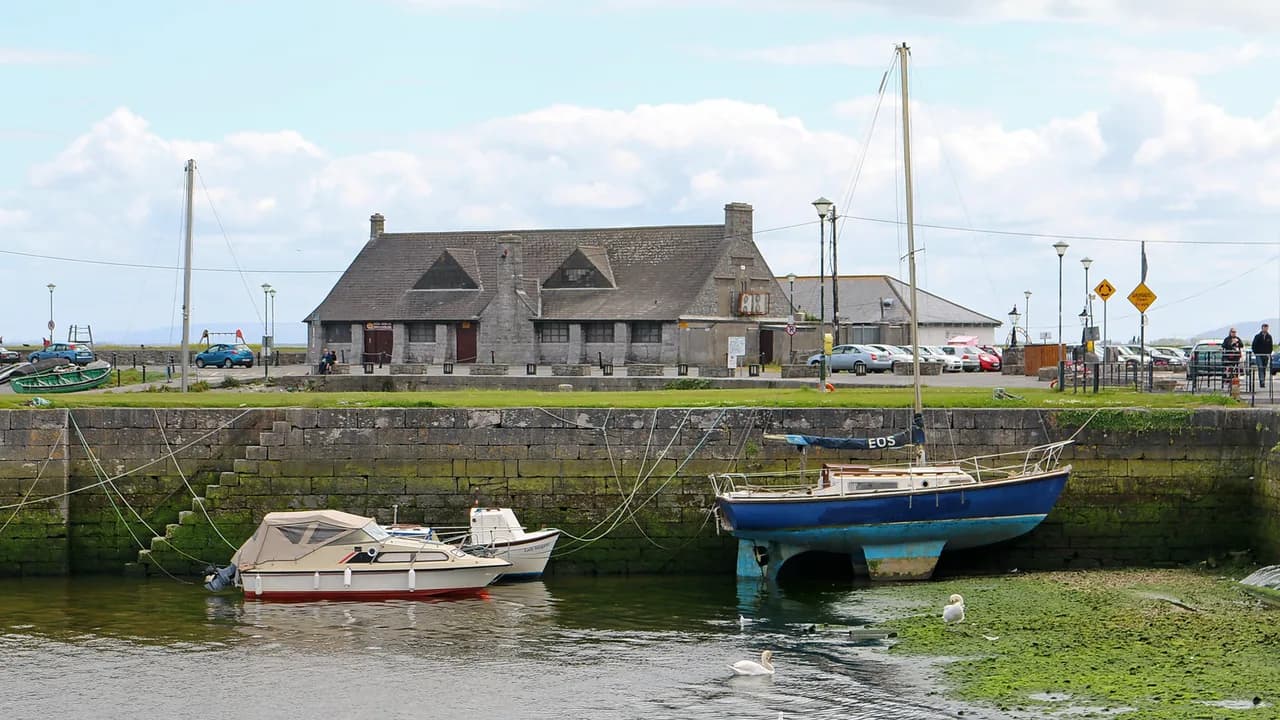
Claddagh, Galway: The Fishing District Behind the Ring
The Claddagh is a historic fishing district on the west bank of the River Corrib where it meets Galway Bay, a flat walk west of Galway's centre. Visitors looking for a preserved thatched village will not find one: the old settlement was cleared in the 1930s and replaced with housing. What survives is the quayside setting, the community's story, and the ring that took the district's name around the world.
Why the thatched village no longer stands
Galway's Claddagh was a close-knit fishing community for centuries, but its roughly 468 thatched cottages were demolished in the 1930s following a tuberculosis outbreak and replaced with council housing. That clearance, as described in a local guide to the district, means there is no old streetscape to wander today.
What occupies the district now is ordinary and working: St Mary's Dominican Church, a school, a community centre and the quay. Treat these as the current fabric of a living neighbourhood rather than as exhibits. The church and the community buildings are not heritage displays, and a visit here is an outdoor walk first.
Who the Claddagh suits, and who it does not
This is a good area for travellers interested in how a place's history has been lost, rebuilt and retold, and for anyone wanting a short waterfront walk with a story attached. The quay is an open, free setting with bay views, and it works well early in the morning or toward dusk when the light falls on the water.
It is not the right stop for anyone expecting a postcard fishing village, indoor attractions at every turn, or a full afternoon of ticketed sights. The district is compact and its heritage largely intangible. If you want a contrasting western-Galway walk, Salthill, Galway offers a different seaside outing, and the wider Galway Neighborhoods: 5 Area Guides helps you compare areas before committing a day.
The setting and the old fishing community
The Claddagh sits where the River Corrib pours into Galway Bay, and for centuries it was an Irish-speaking community set apart from the walled merchant city, with its own fishing fleet and customs. That separateness is the key to understanding the district: it was a working maritime place with its own social order, not an extension of the merchant town.
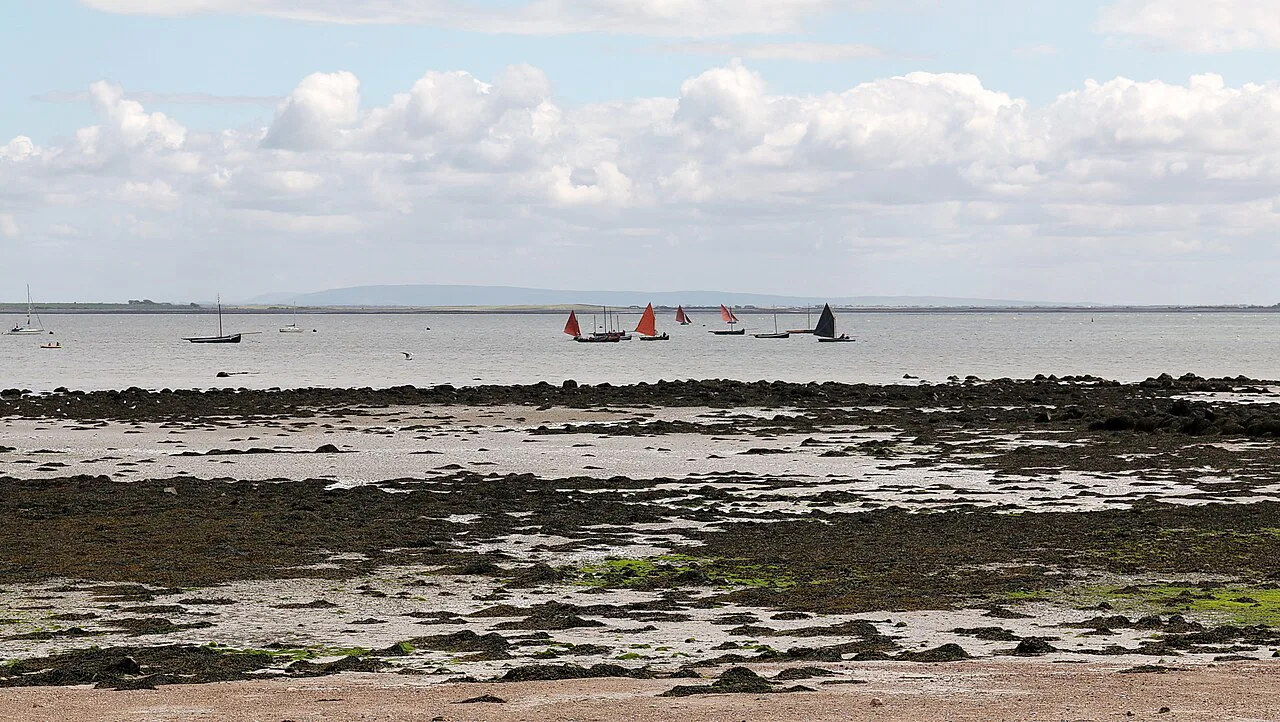
Boat life is the clearest surviving thread. Galway Hookers, the traditional working boats with high russet sails, keep the district's maritime identity visible on the water even though the fishing village itself is gone.
The 'kings of the Claddagh'
The community historically had its own leader, known as the King of the Claddagh, who led the boats and settled disputes. The title is now ceremonial rather than a form of civic authority. A local account records that the last true king, Martin Oliver, died in 1972, and that the honorary title currently rests with Michael Lynskey.
For visitors, this is context rather than an event to attend. There is no published schedule for ceremonies or appearances tied to the title, so do not plan a trip around one. The story is best read as part of the district's wider identity while walking the quay.

Walking the quay
The paved promenade follows the river mouth with open views across the bay, resident swans and the occasional Galway Hooker. This waterfront, rather than any museum, is the reason to come to the Claddagh, and it is free and open at all hours. Allow enough time to walk the length of it slowly rather than treating it as a quick photo stop.
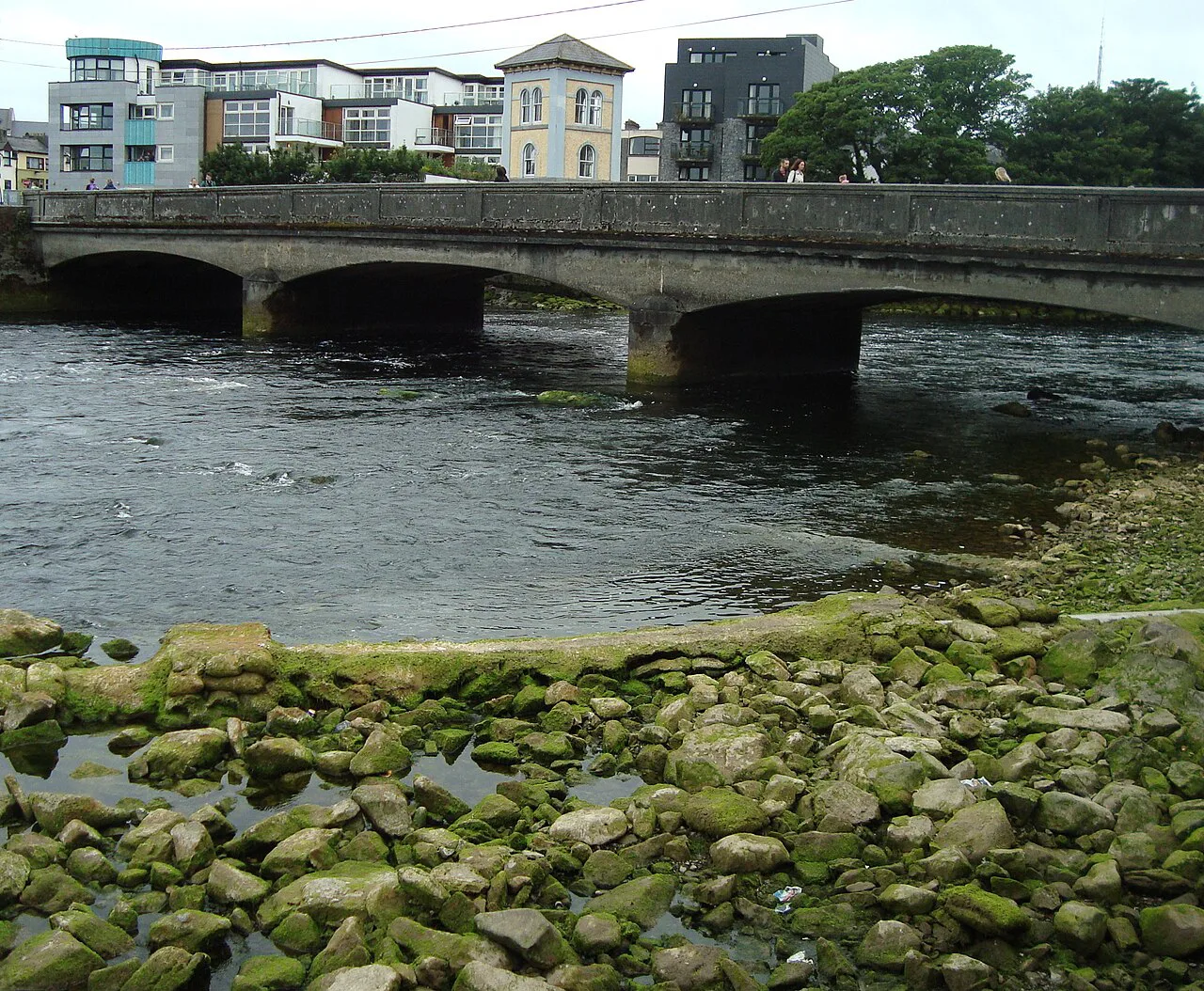
From the quay you can cross Wolfe Tone Bridge to the Spanish Arch, the surviving gate of the medieval city wall, and to the Galway City Museum beside it. Both belong to the city centre rather than to the Claddagh district itself, so treat them as the next stage of a walk rather than part of the Claddagh's own fabric. If you are weighing a wet-weather stop, the museums in Galway guide compares the city's indoor options.

The Claddagh ring: what is documented
The ring's design, two hands clasping a crowned heart, belongs to an old European family of clasped-hand rings known as fede rings. Making has continued in Galway since around 1700, though the name 'Claddagh ring' only came into use in the 1830s. The ring takes its name from the fishing village just outside the city, which is why the district and the jewellery are so closely linked in popular memory.
The heart, hands and crown are commonly explained as love, friendship and loyalty, a reading repeated by Galway jewellers. It is a cultural interpretation rather than a documented original meaning, so treat it as tradition rather than as settled fact.
The origin legends, told as legends
Two origin stories compete, and neither is proven. One tells of Margaret Joyce, a wealthy Galway widow whose good works were rewarded when an eagle dropped the first ring into her lap. The other, more historical in tone, follows Richard Joyce, a Galway man captured by pirates in the seventeenth century, sold to a goldsmith in North Africa and said to have made the ring for his sweetheart after his release.
The Legend of the Claddagh Ring visitor centre presents the Richard Joyce version through a short film, so visitors will encounter the captivity story as narrative rather than as archival history. Read it as folklore with a historical kernel rather than as documented scholarship. The centre also lets you see ring crafting in an in-house thatched workshop.
A commercial jeweller's retelling dates Joyce's release to 1689 and places examples of his work in the National Museum in Dublin, but that should be read as a brand's version, not independent scholarship. The oldest known Claddagh ring is attributed by Tourism Ireland, a promotional platform rather than scholarship, to Richard Joyce and is held at Galway City Museum, whose collections trace the city's history.
Where to see the ring story
Two Galway sites are the main places to encounter the ring's story. Thomas Dillon's on Quay Street is a long-established maker whose on-site museum displays historic rings including the world's smallest, and Tourism Ireland describes it as the ring's original manufacturer. The Legend of the Claddagh Ring centre, near the corner of Shop, Market and Mainguard Streets, runs a looping film and hosts a thatched workshop where you can watch a ring being made.
Opening hours and interior access vary, so check directly with each site before making a special trip. The Legend of the Claddagh Ring centre also covers family coats of arms and the tribes of Galway, which broadens its appeal beyond jewellery buyers.
Katie's Cottage and the walk onward
Near the quay, Katie's Cottage is a restored Claddagh thatched dwelling fitted out as the fishing families would have known it, and it serves tea and home baking by the fire. The adjoining Claddagh Arts Centre sells Irish-made crafts. Hours change with the season, so confirm before travelling.
The route onward over Wolfe Tone Bridge links the Claddagh to the Spanish Arch and the city's Latin Quarter. From the quay, the whole circuit makes a coherent half-day on foot. If you want to extend the heritage theme, the museums in Galway guide covers indoor options for a wet afternoon.
Practical orientation
The Claddagh is a flat ten-minute walk west from Galway city centre over Wolfe Tone Bridge. The waterfront is open at all hours and needs no ticket. Parking on Quay Street is limited, and there are larger car parks near Claddagh Church and behind the Arts Centre; confirm current arrangements before you travel.
If you want a contrasting stop in the same city, Woodquay is a different neighbourhood with its own character, and the Galway Attractions: 9 Visitor Guides hub can help you place the Claddagh alongside other sights. For an indoor contrast nearby, the museums in Galway offer a dry-weather alternative to this waterfront walk. Pick the Claddagh for a short, honest waterfront walk rather than for a reconstructed past.
Plan Your Visit
Approach the Claddagh as a living district with a difficult history, not as a folk park. The old cottages are gone, but the quay, the Hookers and the ring story give you reasons to spend an hour or two. Check seasonal hours at Katie's Cottage and the ring centres before a special trip, because those sites do not keep fixed year-round timetables.
Explore more Galway guides
Frequently Asked Questions
Is there still a thatched Claddagh village in Galway?
No. The thatched cottages were demolished in the 1930s after a tuberculosis outbreak and replaced with council housing. What stands today includes St Mary's Dominican Church, a school, a community centre and the quay, not an old village streetscape.
How far is the Claddagh from Galway city centre?
It is a flat walk of about ten minutes west from the centre, crossing Wolfe Tone Bridge. The route is easy on foot and links naturally to the Spanish Arch and the Latin Quarter.
What is there to see at the Claddagh today?
The main draw is the waterfront promenade at the mouth of the Corrib, with bay views, swans and Galway Hookers. The ring story is told at named centres and shops in the city, and Katie's Cottage presents a restored thatched interior.
Did Richard Joyce really invent the Claddagh ring?
It is one of several competing legends and is not proven. The Margaret Joyce eagle story is another version. The Richard Joyce tale is presented as drama at a visitor centre, and the oldest known ring is attributed to him by Tourism Ireland at Galway City Museum.
Where in Galway can you learn about the Claddagh ring?
Thomas Dillon's on Quay Street has an on-site museum, and the Legend of the Claddagh Ring centre shows a short film and has a thatched workshop. Opening arrangements vary, so check before travelling.
Which way should a Claddagh ring be worn?
Wearing conventions are retold as cultural tradition rather than fixed rules. Commonly, the heart pointing outward suggests an open heart, and the heart turned inward suggests a heart already joined with another.