
Irish Céilí Dance: History, Group Dances and Archive Research
Irish céilí dance is a tradition of group figure dances. Learn how it began, how the repertoire was codified, and where to research it in Irish archives.
On this page
Irish céilí dance is a tradition of group figure dances, not a single dance or a fixed costume show. The dances are performed in units of differing sizes, ranging from straightforward figures such as the Siege of Ennis and the Walls of Limerick to demanding formations like the Sixteen-Hand Reel and the High Caul Cap. That range of difficulty, rather than one signature piece, is what defines the form as it is documented in the Irish Traditional Music Archive's published history.
The documented history is unusually well recorded in Irish institutions. The Irish Traditional Music Archive at 73 Merrion Square in Dublin and the National Dance Archive of Ireland at the University of Limerick both hold research material, and neither is a performance venue. Knowing what each one actually offers is the difference between a productive afternoon and a wasted trip.
What a Céilí Dance Actually Is
Céilí dances are the group figure dances of Irish tradition, as distinct from solo step dancing. They are built for different numbers of dancers within a unit, which is why a hall of hundreds can take part in some of them while others suit smaller groups. The Archive's published paper by Nicholas Carolan describes them as ranging from the simple Siege of Ennis and Walls of Limerick through the Haymakers' Jig to the complicated Sixteen-Hand Reel and High Caul Cap.
The distinction matters for anyone reading about Irish dance, because the vocabulary overlaps. A visitor who expects the hard-shoe solo style seen in stage shows will find something different: formations, exchanges of place and patterns that depend on cooperation rather than individual display. The group-dance strand also has a documented relationship with older and newer creations, so treating every céilí dance as ancient is misleading. The wider tradition is traced in a companion guide to irish dance history.
The Word Before the Dance
Céilí is a northern Irish and Scottish Gaelic word for a social gathering, and it did not originally mean a dance at all. In Donegal Town in 1898 a branch defined it as a concert, tea and a ball, and Belfast Gaelic Leaguers advertised a céilí that would be followed by a dance. The dance meaning took hold in Gaelic League circles early in the twentieth century, as dancing began to overshadow the singing and instrumental music on those social programmes.
That shift explains a confusion that persists online, where the word and the figure dances are often treated as identical. They are not: a céilí was once an event, and céilí dances are one element that came to dominate it. Keeping the two ideas apart makes the historical record much easier to follow, especially when reading accounts from the 1890s and early 1900s.

The London Beginning of 1897
The London branch of the Gaelic League organised the first League céilí on 30 October 1897 at Bloomsbury Hall, beside the British Museum. The surviving programme shows a concert of uilleann piping, songs, exhibition step dances and speeches, with Scottish and Welsh performers, followed by social dancing. Crucially, the dancing was quadrilles, waltzes, polkas, schottisches and two-steps performed to Irish airs, not the figure dances later called céilí dances.
The London branch had been set up in October 1896 with Francis A. Fahy as president and Fionán Mac Coluim as honorary secretary, and its early dancing was mostly step dancing of jig, reel and hornpipe. Group dancing relied on quadrille sets members brought from home. This is the context in which the newer figure dances arrived, and it is why the 1897 event belongs to the story without matching what a modern audience would recognise as a céilí.
Dancing Masters and the 1902 Handbook
Transmission came through dancing masters. Mac Coluim found Patrick Reidy, from Castleisland in north Kerry, living in Hackney; Reidy had taught on a circuit through north Kerry and west Limerick and brought group dances that were easier than step dancing and more enjoyable for ordinary members. The London group later collected further dances in Kerry, including from Tadhg Sheáin Ó Súilleabháin at Glenbeigh and from a John O'Reilly at Killorglin, adding long dances and four-, eight-, twelve- and sixteen-hand reels to their repertoire.
In 1902, Seamus O'Keeffe and Art O'Brien of the London branch produced A Handbook of Irish Dances, which preserved descriptions of twenty-six figure dances, most taken from the teaching of Reidy and Ó Súilleabháin. The practitioner account maintained by Cairde Rince Céilí na hÉireann likewise credits the handbook to O'Keeffe and O'Brien and notes the Kerry sources behind several dances. For researchers, that handbook is the clearest single printed link between named teachers and the repertoire.
Dispute, Exclusion and Re-admission
The new figure dances spread to Ireland and met resistance. Some objected that they had never seen them; others considered them modified quadrilles and therefore un-Irish, and the rows were sharpest over the four-hand and eight-hand reels rather than the jig-figure dances. The Oireachtas committee set up a sub-committee in 1901, which recommended a commission; that commission met in May 1903, heard witnesses from six counties and included Patrick Reidy among its members.
The commission's decision excluded the four-hand and eight-hand reels from Oireachtas competitions from 1904. A later decline in the number of dancers entering the Oireachtas competitions led to a full revision of the dancing rules in 1912, and the two reel forms were readmitted in 1913. Reading this sequence is a useful corrective to the assumption that the repertoire was settled early: competition rules shaped what was danced in public for at least a decade.
Codification Through Teaching and Examinations
Standardisation came through organisation. An Coimisiún Le Rincí Gaelacha's own history records that in 1931 the Gaelic League's Easter Congress approved a three-page rules and regulations document for the body, which began activity in 1932, and that an examination scheme for teachers and adjudicators arrived in 1943 where previously no recognised structure existed. Candidates studied Ar Rinci Foirne, the collection of céilí dances, alongside the differences between traditional music forms.
That body now describes itself as legislating Irish dance in more than twenty countries, with examinations moved overseas from 1967 onward. The practical consequence for a visitor is that céilí repertoire is taught from a documented, examinable canon rather than passed on informally alone. When a class teaches the Siege of Ennis, it is working inside a structure with printed rules and trained teachers behind it.
Twentieth-Century Practice and the Revival Record
Popularity statements need dating. Carolan's paper, delivered in 1990, observed that céilí dancing had been in decline since the 1960s and peaked around the late 1950s, with set dancing by then drawing the larger crowds; those are historical observations, not a description of the present. The same source notes that céilí dancing continued, sometimes mixed with set dancing, long after its supposed eclipse.
Cairde Rince Céilí na hÉireann gives bounded organisational context: Fíor-Chéilí clubs, mainly in Ulster, persisted after the 1960s decline, summer schools multiplied in the revival years, and a committee formed in late 1996 to mark the 1997 centenary of the first formal céilí before continuing as a national voluntary body promoting non-competitive céilí dancing. Treat its folklore, such as the fairy-rath story attached to The Sweets of May, as legend rather than history.
Research Visit One: the Irish Traditional Music Archive
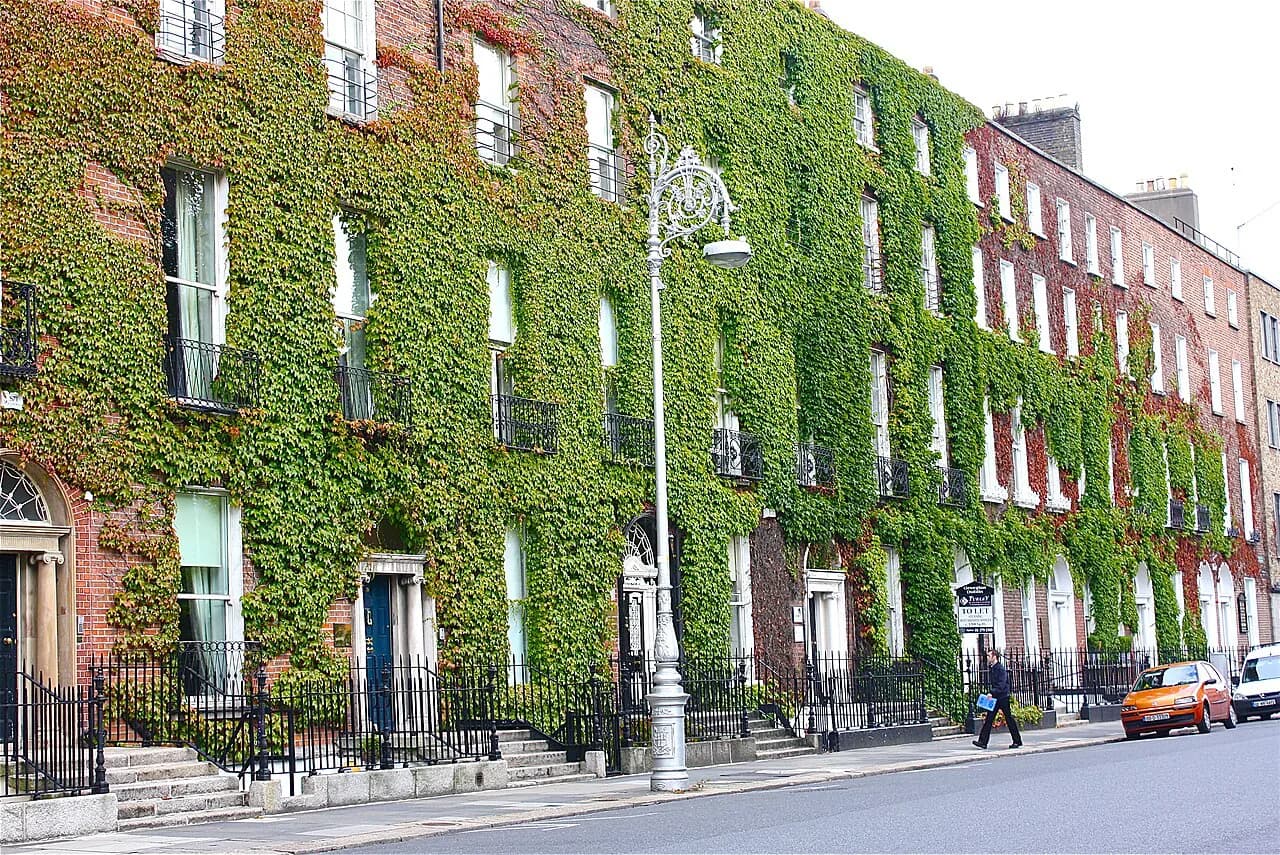
The Irish Traditional Music Archive sits at 73 Merrion Square, Dublin 2, and ordinarily needs no appointment for archive access. Its main reading room is open five days a week, Monday to Friday from 10 am to 1 pm and 2 pm to 5 pm, closed over lunch and on the state holidays it lists, including the October bank holiday. Wheelchair access is at the back of the building via the Fitzwilliam Place entrance, and staff can assist with the car park. If the Georgian setting prompts a wider look around, our Merrion Square, Dublin: Georgian Square and Park Guide covers the square itself.
Phone ahead if you are part of a small group or want to speak to a particular staff member, and confirm the current timetable before travelling. The catalogue and main collections are on the ground floor in the Special Collections Room. It is a working archive rather than a visitor attraction, so plan your questions and request material by name where you can, rather than expecting a display to explain the collection for you.
Research Visit Two: the National Dance Archive of Ireland
The National Dance Archive of Ireland is held in the Glucksman Library at the University of Limerick. It was founded in 2010 with Dance Research Forum Ireland, the Irish World Academy of Music and Dance and the Arts Council, and it collects material across dance genres on both sides of the border, from programmes and costumes to recordings. Its guide names specific collections relevant to traditional dance, including the Joe and Siobhán O'Donovan papers and the Michael Meehan recording made to accompany Ar Rinncidhe Foirne.
Access is by appointment, and the guide asks researchers to say in advance which items they want to view. Access is largely unrestricted, but recordings on magnetic tape are unavailable because of fragility, and a digitisation programme is under way that may make digital copies available on request. Contact staff with item numbers from the catalogue, and ask early whether an alternative format exists for any tape you hoped to hear.
Choosing Between the Two Archives
The trade-off is between open access and depth. ITMA suits a traveller with a free weekday in Dublin who wants to consult catalogues and collections without an appointment, though a lunchtime closure splits the day and holiday closures are frequent enough to check. NDAI suits a researcher with a specific collection in mind, who can plan around a single booking and is prepared to submit item requests in advance.
Neither institution should be planned as an evening out. There is no claim here of a weekly céilí, a beginner class or a live session attached to either archive, so pair research with whatever dance event you have independently confirmed. If your interest extends to instruments, the wider context is covered in a companion guide to irish musical instruments and their players, which is useful for reading archival recordings with more confidence.
Plan a Research Visit Around the Record
Start with the definition: céilí dances are group figure dances with named formations and documented teaching lineages, not a single spectacle. Then follow the dates in order, from the London event of October 1897 through the Oireachtas disputes to the codification of the repertoire in printed collections and examinations. The record is detailed enough that a careful reader can tell legend from history and a 1990 opinion from a current fact.
For the visit itself, choose ITMA if you want a weekday reading room without booking, and NDAI if you can plan ahead around an appointment and specific catalogued items. Confirm opening hours and appointment requirements shortly before you travel, since both depend on the institution rather than on the history. Further context on the wider tradition is available in a companion guide to irish dance history.
Explore more Ireland guides
Frequently Asked Questions
What is the difference between céilí dancing and set dancing?
Céilí dances are the group figure dances documented in Irish tradition, such as the Siege of Ennis and the Sixteen-Hand Reel. Set dancing uses quadrille-derived sets, which the historical record treats as a separate strand. The Irish Traditional Music Archive's published paper notes that set dancing drew larger audiences than céilí dancing in the later twentieth century, which is a historical observation from 1990 rather than current data.
When and where was the first Gaelic League céilí held?
The London branch of the Gaelic League held it on 30 October 1897 at Bloomsbury Hall, beside the British Museum, per the Irish Traditional Music Archive's paper by Nicholas Carolan. The surviving programme shows a concert of piping, songs, step dances and speeches followed by social dancing of quadrilles, waltzes, polkas, schottisches and two-steps to Irish airs. A practitioner history maintained by Cairde Rince Céilí na hÉireann also records the 30 October 1897 Bloomsbury Hall event, while separately referring to an earlier May 1897 céilí, so it is worth checking the source behind any specific date claim.
Why were four-hand and eight-hand reels excluded from Oireachtas competitions?
Critics argued they were modified quadrilles rather than traditional Irish forms, and the dispute focused on those reels rather than the jig-figure dances. An Oireachtas sub-committee in 1901 recommended a commission, which met in May 1903 and excluded the reels from 1904. A later decline in dancers entering the Oireachtas competitions led to a revision of the dancing rules in 1912, and the reels were readmitted in 1913.
Do I need an appointment to use the Irish Traditional Music Archive?
Ordinarily no, according to the Archive's visit page. Appointment is advised for small groups, special requirements or a consultation with a particular staff member. The reading room opens weekdays with a lunchtime closure and shuts for listed state and bank holidays, so check the current timetable before travelling. It is a research archive rather than a performance space.
Can I view dance recordings at the National Dance Archive of Ireland?
Access is by appointment, and you should request specific items in advance using the online catalogue. Most material is unrestricted, but recordings on magnetic tape cannot be issued because of fragility and a digitisation programme is in progress. Ask staff whether a digital copy of the item you need is available before booking an appointment in Limerick.
What is Ar Rinci Foirne?
It is the collection of céilí dances studied within the examination system of An Coimisiún Le Rincí Gaelacha. The Commission's history describes candidates learning it alongside the differences between traditional music forms. The National Dance Archive of Ireland holds a recording made to accompany it, although tape formats may be unavailable, so confirm access and alternatives with staff first.
Sources
You might also like



Continue reading
More guides you'll find useful



